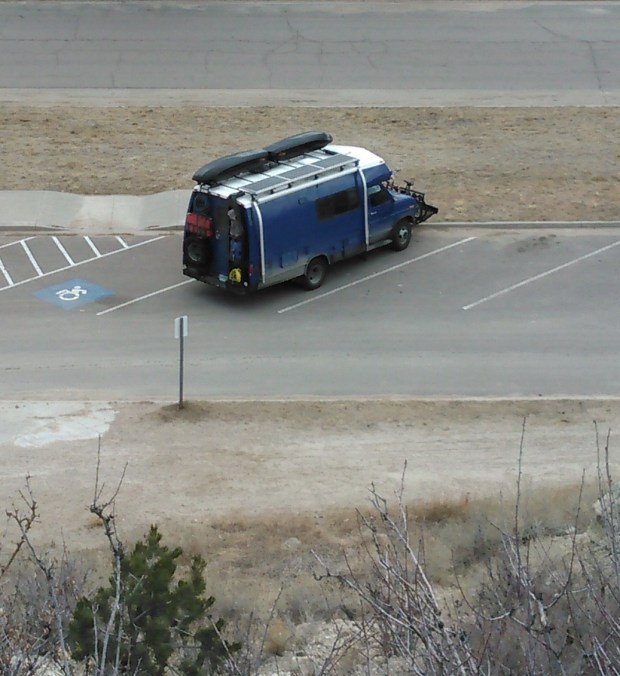
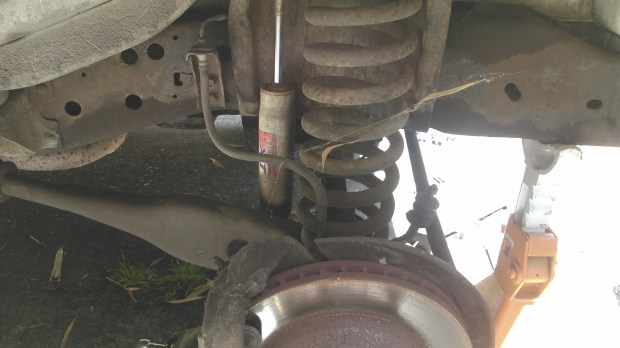
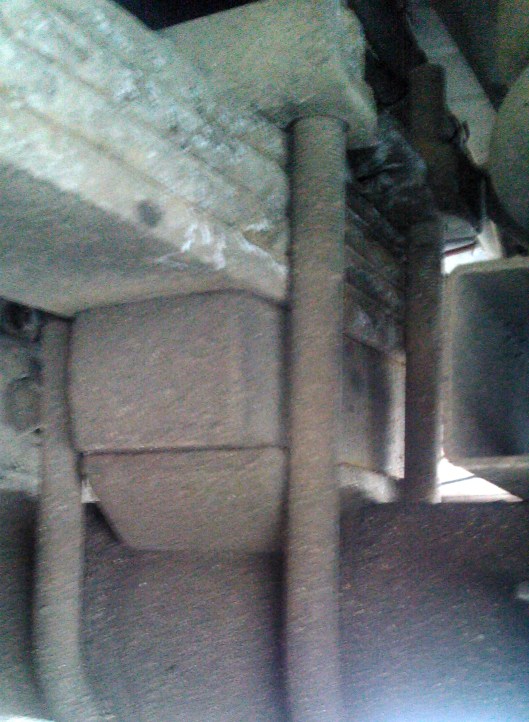
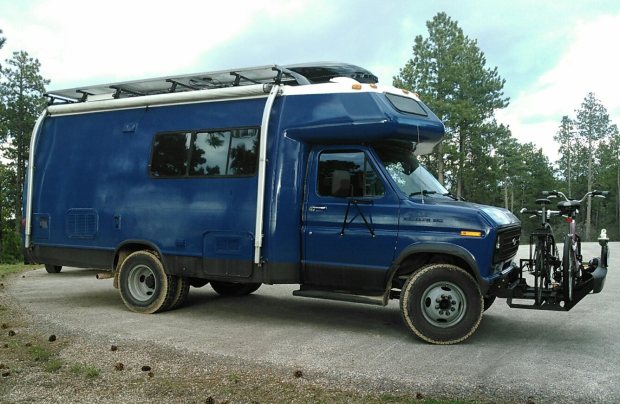
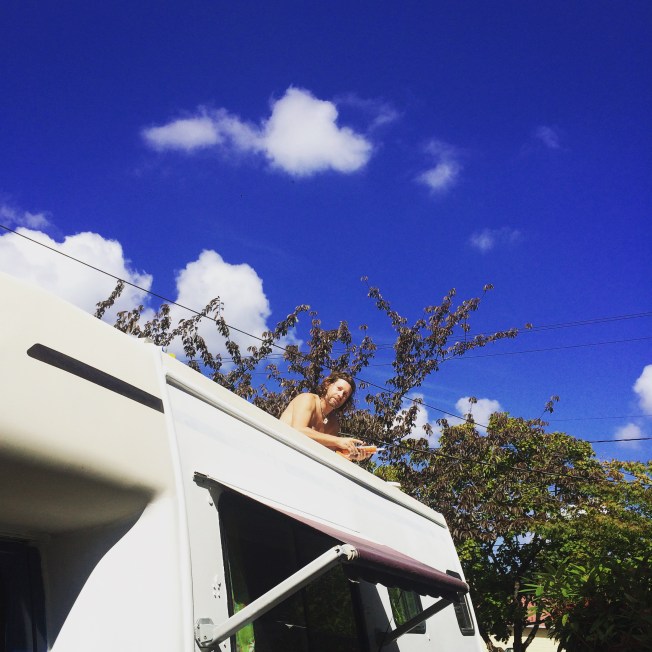
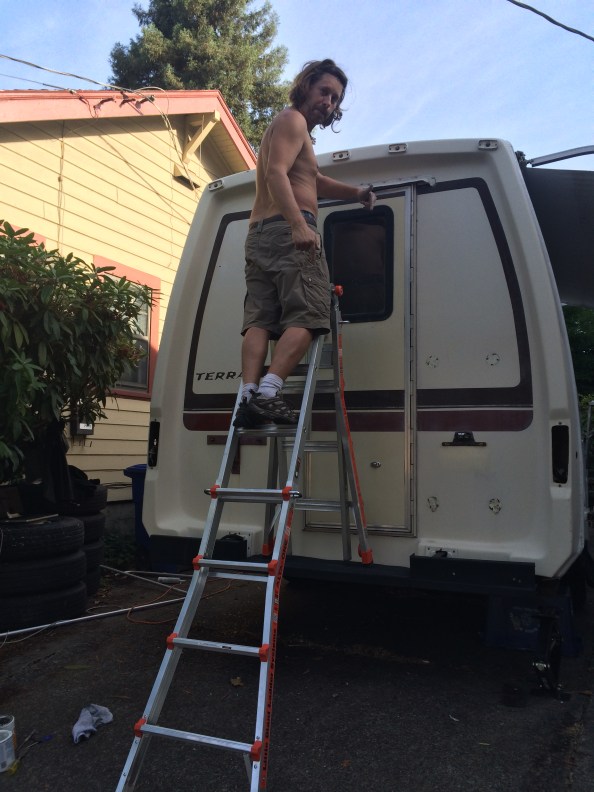
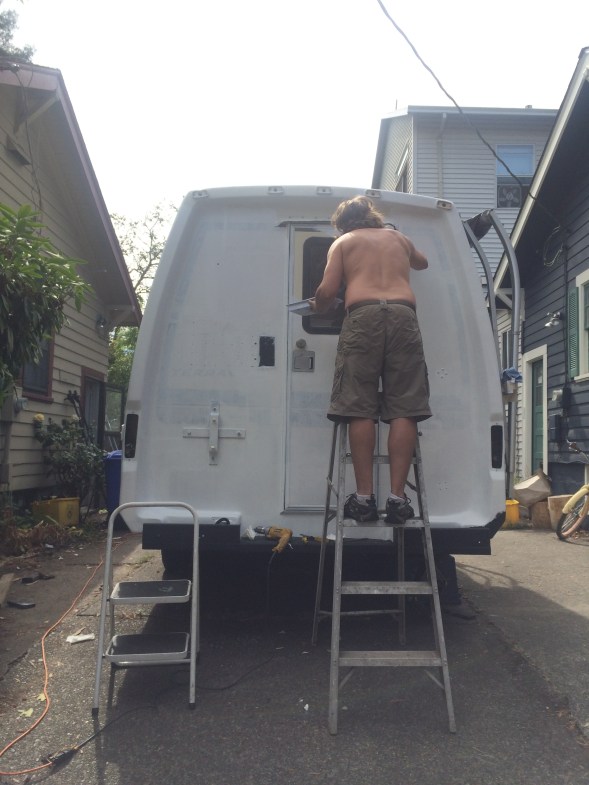
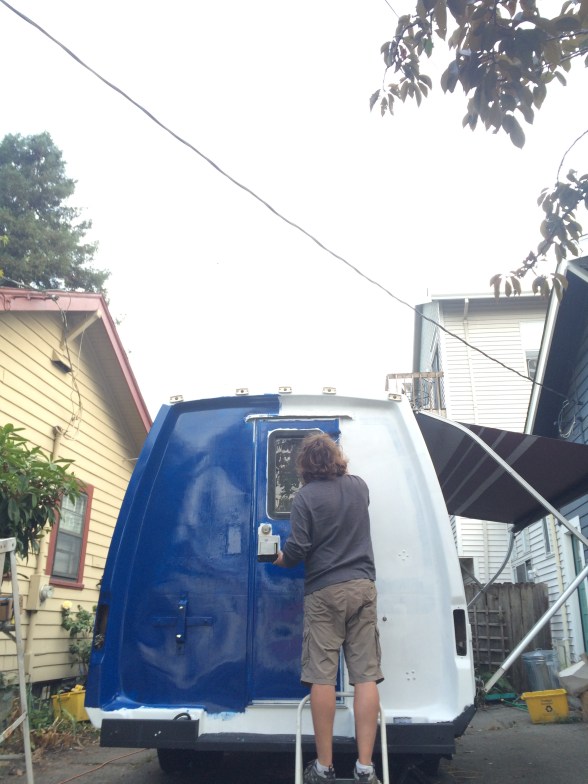
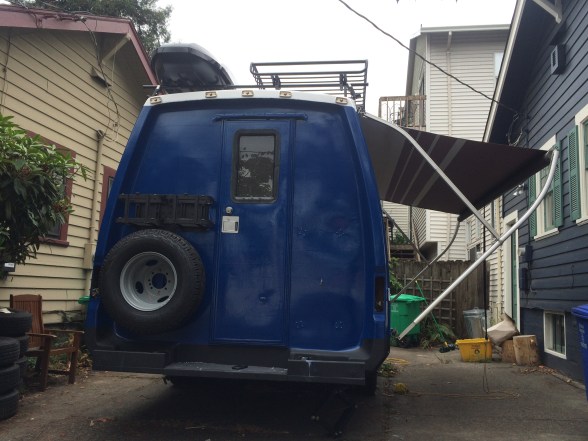
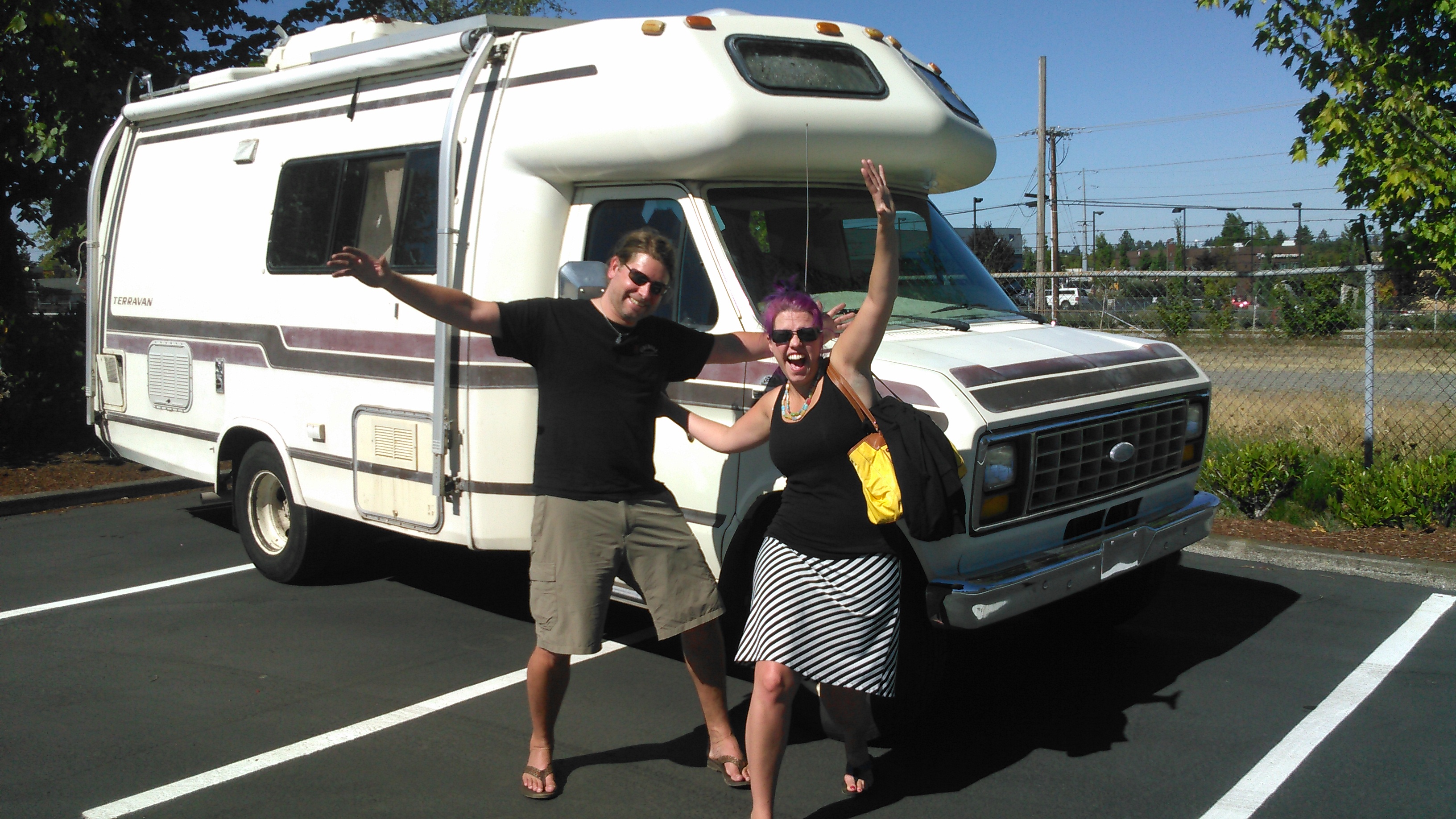
Before

Let’s Refurbish a Van – Part 8: Hood Scoops (By Andy)

A post by Andy

{Modified the title theme some. We think of ourselves much more as a big van than a small RV. I now want to start prefacing this and future posts to be more representative of our self-image.}

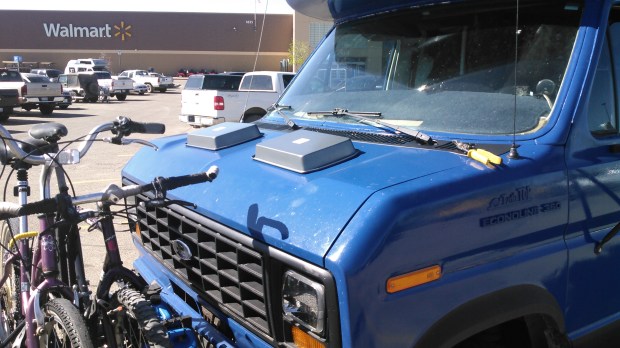
So, to the meat of the subject. I just finished our hood scoops! Why did I make hood scoops? Well, for one, they look pretty cool and I needed a prominent place to put my new go-fast emblems that I ordered from Amazon.

KIMG0530

Mainly, we are trying to get as much power out of the engine so we can get our heavy old self up the high steep hills. In that vein, I have been playing with the spark timing, carb mixture, and intake airflow. By tweaking and adjusting these parameters we are working to get the most power and efficiency out of our old engine. Specifically, advancing the timing can get the engine to produce more power, but too much spark advance causes engine problems—pinging and preignition. If the engine is cooler, one can run with more advance. Another way to look at it is that with a given timing advance, if the engine and intake air get hotter, then the timing is too far advanced.

Maybe a side note about my “go-fast” emblems. Car companies try to sell cars. Sometime fancy cars come with racing stripes, cool graphics, and badges on the side about engine stuff. A joke among car people is the question “How much horsepower do the stripes add?” The answer is, of course, none. But… they do look cool. Look around, they are everywhere: M3, AMG, Hemi, 440, HiPo. The only thing the badge or stripes could actually do is add an immeasurably small increase in drag, or some unneeded paint weight. They are simply for the people in the car next to you. All the same, they look sporty, so I bought some that state the displacement of our engine and say it is “High Performance”. What I’m saying here is they do nothing, but they truly do look great!

So, I wanted more air to get in and out of the engine compartment to cool the engine, and have the air flowing into the air cleaner be as cool (and dense) as possible. To make sure I had an understanding of the pre-hood-scoop environment, I first taped the probe end of my digital temperature gauge to the air cleaner. Over a few weeks in different driving conditions and different altitudes, we took notes about the temperature measurements of the air cleaner and air filter. You can see the wire to the probe, and the tape holding it in one location.
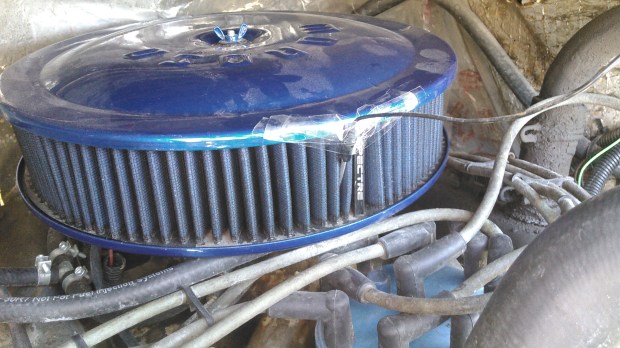
KIMG0451

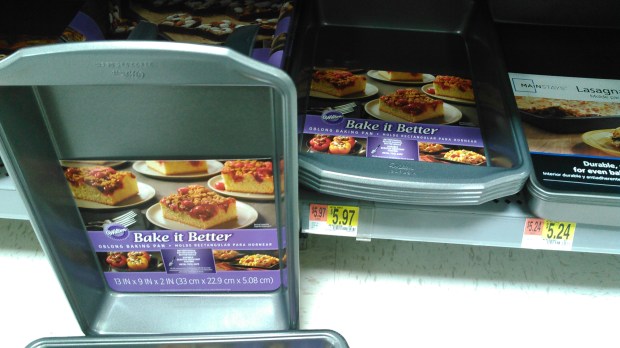
Overall, we are in the 150º–160ºF range under the hood after the engine gets warmed up and when the ambient temperature is in the 70º–80ºF range. So, to get more outside air in and more inside air out we need some kind of venting. I looked online, and $50+ plastic vents and scoops can be found, but they were not really van-sized, and seem flimsy. Metal ones can also be found, but are more expensive, and again, really don’t fit. Apparently there is an untapped market of people who want to mod 1985 Ford vans! (Investors be wary—the market may be small.) I finally hit on the idea that rectangle cake pans are about the size I wanted, and they are inexpensive, and they are made of metal designed to withstand 500ºF+. Going with this thought, while we were camping in El Malpais National Monument, I made some cake pan-sized cardboard mockups and spray painted them with a blue that I had.

Test fitting…

I thought that looked good, so a few days later when we were in a town, we got some cake pans.
KIMG0454

KIMG0455

One morning, a few weeks later, when we where camping at the Great Salt Lake, I got out the pans, tin snips, sandpaper, and primer, and got to work remaking our sweet cake pans into even sweeter performance hood scoops (please note the word play).

Here they are.

Test fitting.

We stashed them away for a bit and traveled onward. Another week later we had a free day while visiting our friends the Higdems in Kimberly, ID. I measured, moved, marked, measured, and measured and marked again. Then I started drilling holes in the hood.

Lots of little holes now!

After fitting and drilling the mounting holes, I now knew what piece of the hood (bonnet, for any Brits out there) to cut out. Out with the jig saw.

Another side note here: When putting the Turtle together, we set ourselves up with a few DeWalt cordless tools and the battery charger that plugs into a 12V cigarette lighter. The tool charger is now wired to our solar-charged batteries, so we are using the sun’s energy to drill, cut, and modify our hood. It feels fun to know that when working on projects such as this!

For the final install, I put down a small bead of RTV sealant, aligned the scoops, and screwed in the 6 screws per scoop that I had already pre-drilled. After the RTV cured a bit, I got out our boat paint and went at it.

Included above is, obviously, a photo of what Scout and Gracie were doing at the time. A few days later, at Dave and Ryann’s place, I added more RTV to smooth the transition and put on more paint to finish it all off.

All finished now, after the last painting and with the great go-fast badges installed.

We should call this the conclusions section of the post, for you science people out there. Well, they have been on now for a week, and we don’t move fast, so we have only driven a few hundred miles. We will need to collect more data, but so far the maximum under-hood temperature we have seen in 135ºF, and most of the time it has been in the 100º-120ºF range (and we are actually in hotter weather than when we took our non-hood scoop measurements). We have also driven through crazy heavy rain and, as expected and hoped for, the small amount of water that enters through the scoops has no adverse effects on the engine. Generally, a pretty solid success, and I have since advanced the ignition timing just a bit with no pinging.

Oh, maybe a cost breakdown. The sum total of the cake pans, primer, quantity of screws, RTV, and paint used is less than $20. The go-fast badges were $11 each. Dave suggests I sell it as “The whole project was less than 45 dollars.” I think I shall adopt that tract!

All that for less than 45 dollars!!!

Let’s Refurbish a Van – Part 7: Our Batteries Phase 1 (By Andy)

A Post by Andy

{Note: The work detailed in this part of the post was completed over the summer of 2015, before we moved into the Turtle. I am just getting to writing the post now.}

So, we like to have our computers run, have lights, have the controls for our fridge work, have a charged Wi-Fi hotspot, and have our furnace fan powered to keep us warm. For all this we need electricity, and since we want to be off-grid, we need batteries. We started with this:

HouseBattery

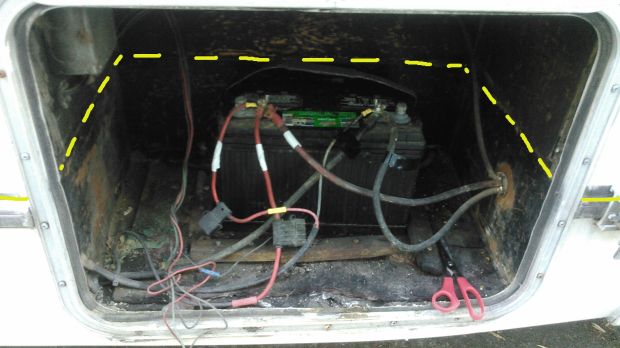
If you are familiar with the Turtle, this compartment is behind the largest access door on the passenger side- the door with the vent in it. In the following photo, I put in a dotted line where the plane of the floor on the inside intersects the compartment.

firstbattery_floorline80

The walls of the compartment above the floor line are plywood, and bump up under the couch inside. The sides and bottom below the line are made of heavy steel. I have deduced the compartment was originally designed for a generator, as there was old 120V AC wiring running to it, an unconnected fuel line that ran into the back, and the door vent.

gimpprocessedimage95

I had a hard time figuring out what all the wires were hooked to, as it was a bit haphazard in the compartment. In the above picture, (1) is a port that goes outside, below the floor of the Turtle. The wires there threaded out of the box, ran a short distance under the Turtle’s floor, then threaded up through the floor to the old inverter. There is a second hole (2) that the wires from the old 100W solar panel and the wires between the battery and main 12V distribution panel were run. (3) is the unused electrical box that had 120V AC wires run to the compartment where the shore power cable is housed.

Maybe I should back up a bit and throw out a few concepts and definitions and explanations for the terms we will be using.

  • Battery: A thing that stores electricity in chemical bonds. Here, we are just referring to 12V lead-acid batteries.
  • 12V/12VDC/DC: 12 Volt Direct Current (DC). This is what cars use for their electricity for headlights, the radio, starting, etc. It is the kind of power all the batteries we talk about will produce.
  • 120v: 120V Alternating Current (AC). This is what is in your house and in businesses you know, the typical wall plug Amy and I look for at restaurants to plug our computers into. It’s generally 120, 121, or whatever it takes.
  • Current: The flow rate of electricity.
  • Voltage: The force pushing the electricity through the wires.
  • Inverter: An electrical box that changes 12VDC to 120VAC. It changes car electricity to house-hold electricity. This is so we can plug our AC computer cords into our DC batteries.
  • Converter: An electrical box that changes 120VAC to 12VDC. The opposite of the above—pretty much a garage battery charger that you use to get your car started after you leave the lights on.
  • Charge Controller: An electrical box that changes the output of the solar panels into DC voltage, hopefully charging the house batteries.
  • House Battery: Now, I probably use this too freely. When I talk about house batteries, and I mean batteries dedicated to our living compartment. If I say house (or household) electricity, I mean 120 V AC. Got to figure this out… but, house batteries are 12V batteries separated from the car system, and dedicated to lights and heat and powering the inverter in the house part of a van. One should be able to run these dead flat, and the car will still start, as they are fully independent circuits.
  • Starting Battery: The batteries under the hood, used for starting the car, sparking the gas when the engine is running, running a radio (if you had a functional one), and lighting the headlights.
  • Shore power: Kind of a boat term, but a source of 120V AC electricity you can plug into. When you pull up at a friend’s house, and pull out your extension cord, and plug into their electricity, they are your “shore power”. (Thanks Alex and Julie, Kari and David, Connie, Mag and John, Dave and Ryanne, Mike and Becky, Blake and Martha, Roger and Mary, Chris, Dad…)

Now, back to the good stuff! To start the battery box rebuilt and modification, I first labeled the wires and removed the old battery. I then cleaned the compartment with baking soda and water to neutralize the sulfuric acid and prevent further corrosion. Lucky, the metal compartment is super stout, so it was still in great shape. As usual, after a final thorough cleaning,  I caulked the seams and painted the compartment with black Rustoleum. I can’t find a picture of the completely empty, cleaned and freshly painted compartment, but trust me, it looked good!


After getting the compartment beautified, I cut and painted a plywood plate to fit into the bottom, bolted and glued it to the metal base of the box, and mounted battery trays to it. I painted up everything with oil-based paint and used stainless steel hardware to affix everything.

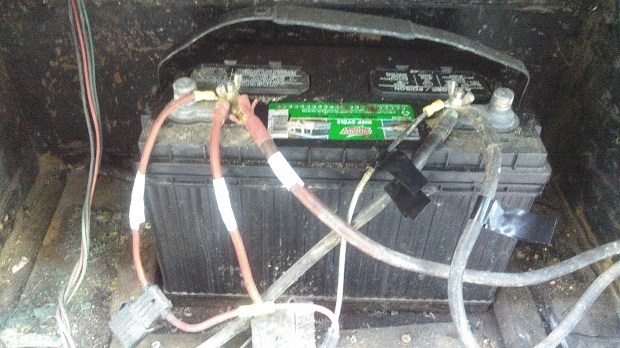
Since we had just gotten the Interlux blue boat paint, I practiced the painting technique on the top surface of the plywood base, so it is the same shiny blue as the Turtle exterior. In the following photos, you can see the two new Fullriver 115Ah 12V DC sealed AGM batteries that we started with in there, but just patched into the cleaned up existing wiring we are reusing at this point.


I decided to go with Absorbed Glass Matt (AGM) batteries. They cost a bit more than flooded batteries, but they do not spill, they will not develop corrosion at the terminals, and can be mounted sideways, if that configuration seems important. Additionally, they do not require venting, so they can be safely installed inside the living compartment, if that is necessary. Here is the site. We have been happy with this choice, and as you will find out in future posts, choosing AGM sealed batteries will allow us to make some future cold-weather modifications.

As to wiring, I was just starting to adopt the boat convention for new circuits and runs I would rewire. The convention is as follows: For 12VDC, yellow is ground, and red is positive. For 120V AC, the wires are white, black, and green for ground. Examples of the wires are here:


The reason behind adopting this convention is that at a glance, you can tell which circuit they are supposed to be wired to. Additionally, the boat 120V cable is stranded, as opposed to the household solid copper wire. Stranded wires should always be used in a vibration environment. Logically, then, a van should have no solid copper wires (though most RV builders do actually use cheaper solid copper for the 120V runs). As you might have observed, we have concluded that one should think of their van as a boat, and look to boat paints, wires, latches, and hardware for the upgrades and work. Though the boat cable is a little more expensive, it is paired and tinned for corrosion resistance, and gives a real nice finished look. Additionally, it can be purchased in any gauge.

So, at the end of our Phase 1 battery configuration we had our two new AGM batteries with a combined storage of 230Ah at 12V installed and secured, with the connections cleaned up. With this battery pack, we simply used the old converter to charge them when we were connected to shore power, and the old inverter to make our 120V for our computers when off-grid. At this point in our journey I also had just finished the install of our 300W of solar to charge the batteries (we will cover the panels and solar charging and solar controller in a different post).

That’s Phase 1 for you!

Let’s Refurbish a Van – Part 6: Roof Rack (by Andy)

A post by Andy

{Note: The work detailed in this post was completed over the summer of 2015, before we moved into the Turtle. I am just getting the time to write the post now.}

So, we have stuff to carry. And we want a place to store our solar panels. And we want to stay cool. And, if possible, look cool. So, we need to put together a roof rack…

Here are a few pictures of the old RV when we got it. It had an aluminum ladder that was old and worn, along with the typical RV aluminum tube luggage rack at the back- all bits with some of the mounts loose. We also had a big plastic storage box bolted to the top, but it was cracked and would certainly leak. As you can see, there was also one solar panel and a mount for what I’m pretty sure was a TV antenna. Good stuff, but it was all pretty worn, as it had all traveled for close to 30 years and more than 250 thousand miles.


We wanted our rack and top equipment to do a few things for us:

  1. Have a dry and accessible place to store camping and fishing and other fun gear, out-of-season clothing, and some spare parts and equipment.
  2. Have the rack removable, so we can maintain and fix the roof when the need arises.
  3. Have a location to mount the planned solar panels.
  4. Design the rack to provide us shade.
  5. Have a system that we can change, add more solar to, move things around, etc.
  6. Be able to fill and seal up all the holes prior people made when mounting things to the roof, and have a system where moving forward we will not be drilling into the roof any more.

Anyway, roof racks look great! I hear they can be useful too. In truth, we have pretty limited room and storage inside, so having a bit of room up top for our extra supplies and garage-like stuff was essential for a successful voyage.

So, to the step of getting the old stuff off and sealing up the holes. Pretty much unbolt the bolts and pry everything else off. I then used fiberglass impregnated epoxy body filler for all the big holes (I love epoxy!), maybe adding wire to support it as it cured. I then added Geocel Proflex on the seams. I read about and tried a few things, but to date, it is my go-to for exterior sealing. Here is a link.

For the (many) smaller holes, I would first clean and fill with the Geocel, then screw in a stainless steel screw the size of the hole, then cover the head of the screw with another layer of Geocel. It is a technique I read about on the internet, and it seems to have worked well so far. Again, it is not worth buying any hardware but stainless or grade 8. It does cost a little bit more, but use the savings you get for doing this yourself to get the good hardware. Plus, you don’t have to worry about some interior rust and redoing the work down the road. After sealing the holes, I put down Rustoleum on all the modified spots. The following pictures show the antenna hole through the roof, and some of the removed parts scattered in the yard.

We were lucky enough to have a friend who worked for Yakima who gave us a VIP discount card for one purchase. With the card, we got 12 A1 rain gutter towers, 6 78″ crossbars, 12 wide body rain gutters, end caps, two 12-peice lock core sets, a Loadwarrior basket, and some cargo nets. A truly impressive amount of wonderful Yakima pieces at a great savings. Boxes and boxes of sweet components!

From REI, Amy and I used our one-item 20% member discount and each of us bought a Skybox Pro 12, shipped to the Portland REI for free. We got the long and narrow boxes to configure end-to-end, and not take up too much roof area width-wise. We effectively have the roof racks for 4 vehicles, all to put up top the Turtle. It added up to a lot of initial investment, but it has been working well, and added an important comfort to be able to store a reasonable amount of things to make our small world flexible, and I think it actually has a sleeker look being made from components—as opposed to a custom-fitted rack. Since we were doing all the work ourselves, we decided to invest a bit more on some nice new hardware. After popping down to REI and loading our new Skyboxes (in their own boxes) onto the top of the old Scout, we stopped for a bite in downtown Portland. Seems fairly reasonable to me, but I imagine to some people we made a sight…

The sky boxes, along with the other hardware, sat in the house for quite awhile. After stripping and sealing the roof, it was only logical to finish painting the Tutle blue, then do the white roof paint, and then finally get to the point where we could install the new roof rack. Consequently, this is what our place looked like for quite an amount of time. (As you can see, our front room was used to store a number of Turtle parts until they were ready to install.)

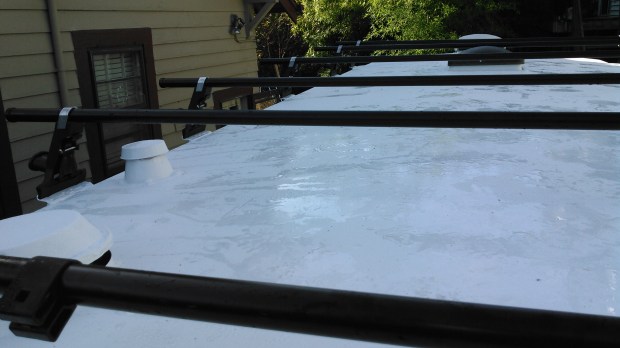
The pictures are few here, but after most of the painting was finished, I mounted the wide body mounts. I measured, marked, measured again, checked, and had the geometry figured out. On the corner of the Turtle roof, I would drill my two holes, fill with Geocel, cover the mounting surface with Geocel, align the bracket, screw in two (you guessed it) stainless steel lag bolts, then cover the seam and outside with Geocel. After it all cured, we repainted with the Interlux. It looked nicer with the black brackets and shinny bolts before the sealant and paint, but I didn’t want to risk it. And, just so you know, the asymmetric spacing along the length of the roof is due to needing to align the crossbars so they will not interfere with a roof vent when open, but also allow for the mounting points of the skyboxes. Here are the brackets installed:

kimg0798

It is a nice feeling to know that at any point we could unlock (all keyed alike, now) the 12 towers, unscrew, and remove the whole rack if we had to do some maintainence on the topside. Anyway, the pictures are limited at this point, but following are some involving the tower, crossbar, and rack install.

kimg0804

You might notice that the Yakima basket lost out to the solar panels. The basket is in the storage unit presently, and it would be great to get it up there at some point. When we were building and installing the rack, though, the geometric logistics were far too difficult for the time allocated. Anyway, to install the solar panels, I bolted two pieces of 12′ 6061 T6 aluminum square tubing to the crossbars with stainless steel carriage bolts and nuts fitted through the Yakima Universal Snaparounds.

I picked up used ones super cheap here. By the way, ReRack in Portland are nice people and can save you some money on roof racks, so check them out if you are in the area. Back to topic, after getting the aluminum properly spaced and installed, I then drilled and screwed the solar panel brackets to the the aluminum. That step was a breeze. Solar panels installed, photo taken probably a month in.

kimg0938

As to keeping it all cool. We planned on (and did), paint the roof surface with a couple of coats of Interlux topsides white boat paint. We actually painted the roof vent covers white as well. The assumption is that paint will reflect much of the sun’s heat, and be able to withstand the UV rays. So far, everything looks pretty good up there. We have some cracks in the paint where the caulking we used was not completely cured before we painted (I don’t blame the paint, we had time constraints), so we have some washing and fixing of some seams to do. Otherwise, all looks pretty good. A common approach for keeping a bit cooler is to have a couple of roofs, effectively carrying your own shade along with you.

The above old-school Rovers have a second roof with an airgap for passive cooling in the hot sun. (Side note, did anyone notice the tall skinny tyres the rovers are running on?) With the spacing added from the rack towers, and mounting the solar panels and boxes above the crossbars, we have a impressive air gap and continous shade on over 50% of the roof.

Currently, there is a middle strip free for walking, in which I will fit an additional panel at some point, then simply make some cheap synthetic or plywood panels and paint them white to increase our shade to close to 100%. So far, though, we have been to the Badlands of South Dakota in the summer, and have stayed with the ambient temperature with thoughtful venting and minimal electric fans.

To me, the goal is not to be cooler than the outside, all we need to do is not be hotter than the ambient temperature in all kinds of weather.

kimg0184

Oh, almost forgot, we want to access the roof! We need to clean the solar panels, get stuff into and take stuff out of the boxes, check on all the paint and seals, and most importantly, be able to climb up and yell with arms outstretched like you are in a movie! Anyway, the ladder…

We actually bought a car roof rack ladder as a start. The almost $200 ladder (seems crazy) was well worth the money, in the time saved. It always feels pretty weird to buy something new, remove it from the box, then start cutting it right away. So, the ladder, welding, adding more rungs for the proper length, and fixing the folding function.

Some close-to-final pictures here. We started with a 9-rung foldable ladder, and ended with a 12-rung rigid ladder that bolts to the bumper and the top rack. Again, it was designed to bolt to the bumper and rack, so it is removable…

I’m pleased with the removability of the ladder, because we crushed it a bit when we backed into a tree one day, about a week after it was finished and installed. The ladder was subsequently unbolted, straightened, and remounted. From the side, it now does have a bit of ripple (below the designed joint and by the spare tire)—this is what we call life.

kimg0186

To sum up a bit, up in the boxes right now we have a few fishing poles, extra wire and parts and unfinished projects, cloth for sewing projects, extra window insulation, snow shoes and masks and fins, river tubes, my old tent. A pair of driving lights I have yet to wire up. Some cheap speakers I plan on installing in the doors. You get the picture. We call it our attic.

img_1863

We have a completed rack now. It holds our solar panels, is our attic, and still has room to exapand.


Let’s Refurbish a Van – Part 5: Suspension (By Andy)

A post by Andy.

{Note: The work detailed in this post was completed over the summer of 2015, before we moved into the Turtle. I am just getting the time to write the post now.}

We wanted a little more ground clearance, fender and frame spacing for the taller tires, and a good, safe ride. We initially hoped to find an off-the-shelf lift kit. . . no soap. People make them for Ford trucks and Broncos, nothing for 80’s vans. I suppose that makes sense; the van market must be pretty small. So I guess we’ll just have to design and install a complete suspension overhaul and customization ourselves. This is where we started…

KIMG0366.jpg

In the front we have what Ford calls a twin I-beam suspension with what I infer is an aftermarket sway bar, and the rear is just a simple leaf spring configuration, though there are functional aftermarket Firestone airbags that have been added.

Let’s address the rear first; that is comparatively easy. We found some 2″ lift blocks from Action Van (http://www.actionvansuspension.com), that fit between the axle and leaf spring. Action Van actually makes full lift kits, but only for ’92 and newer Ford vans. Lucky, the rear suspension was the same, so we were able to use their blocks for the back.

With some breaker bars on the end of the socket wrench and a little groaning, the blocks were pretty easy to install. Lots of jacks and heavy-duty jack stands were employed in this step! Here is a poor photo of the suspension when I was starting the modification.

1433618343139.jpg

Here is a photo of the installed blocks. Always remember that it is a good idea to drive a bit and then retorque all the bolts for suspension components after making changes- things can settle under the vibration.

kimg0176

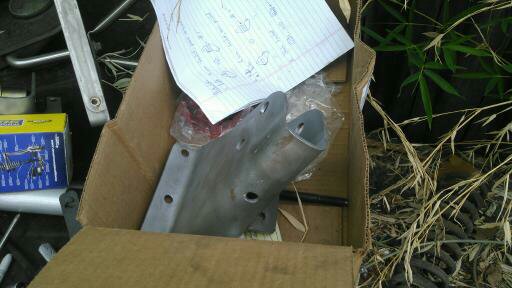
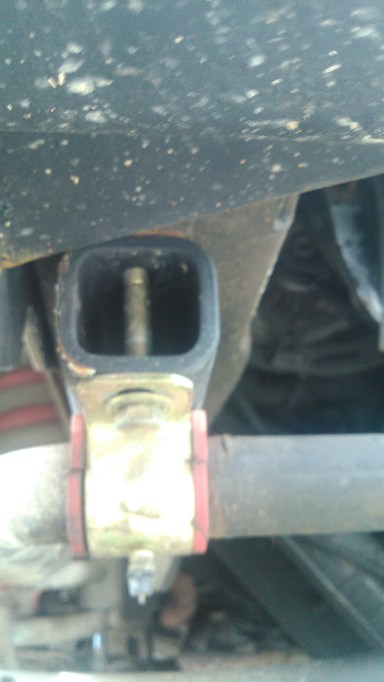
After adding the lift blocks, the rear airbags were adjusted by cutting, drilling, and painting 2″spacers from hollow square tubing and bolting into place between the axle and bottom of the air bags with new grade 8 hardware. Sorry for the bad photos (at the time, the important thing was to get stuff done, so the documentation suffered), but what you can see in the following is the original airbags and the blocks and hardware cut, drilled, and painted.

And a current photo of the final installed version- a little dirty, as we have been trekking about for a little over a year now.

Pretty straight-forward modification, and after a few thousand of miles everything is very solid.

cropped_1

Now the front suspension. The modifications needed were: 1) taller coil springs 2) adding air bags 3) fitting the new shocks 4) dropping the sway bar 5) dropping all 4 I-beam pivot points 6) replacing all the suspension bushings in the process.

I was able to find taller MOOG coil springs and front airbags, cranked everything apart, and got those pieces installed.

You can see that at this point with the added spring height but no change to any of the I-beam pivot points, the camber is extreme.

KIMG0371.jpg

The next step was to remove the suspension mounts. This was a true pain, as there were many frame rivets to remove. Depending on the accessability, I would drill, grind, hammer, cold chisel, or simply swear at for long enough to remove. I would consider it a solid success if I came home from work, spent all evening, and got only one removed. I blocked it out, but there were somewhere between 16 and 20. Anyway, after getting the pivot points removed, I made some drawings describing the desired changes needed to drop the pivot points 2″ lower, then took the parts to a fabricator. I weld myself, and made the grill guard, and all other metal modifications on the Turtle, but I wanted really great welds on these parts, so we paid to have someone with more skills do the modification. Plus, it was pretty darn magical to just drop the parts off and pick up the finished pieces a few weeks later. So, some of the suspension pieces back from the welder:

1440187262716

Painting, almost ready to install. I had ordered new MOOG bushings for all the pivot points, so these were installed at this point too.

1440192040722

Except for reusing a few special Ford bolts, the bolts and frame rivet locations were replaced with 1/2″ grade 8 hardware. Some current pictures of the completed front suspension.

Here is a photo of the dropped sway bar pivots with the new greasable bushings installed, again, everything is grade 8 hardware. I never buy anything else (except maybe stainless for chassis fixturing or the interior).

kimg0182

New Bilstein shocks were ordered for all four corners. The stock fit for the rear has enough travel to handle the 2″ lift, so we got the heavy-duty RV ones, and that was easy. We had to calculate the new front geometry to size the front, and went extra fancy with the front shocks and got an external reservoir setup. They look cool! (I ordered them from shockwarehouse.com, part number 25-177480 and 24-184663.)

Here is the front suspension a year into our travels. I was replacing the brake pads, so I took the opportunity to clean everything up, and also paint the hub with Rustoleum. We have had no problems with the suspension thus far.

kimg0047

The lift was added to enable us to have the taller tires, and to have more ground clearance. There have already been a number of cases where we figure we would have likely damaged something on the underside if we did not have the clearance we have. Additionally, with the clearance and narrow tires, we have made it through some pretty deep snow without problems. It has proven to be a successful modification. Plus, it makes the Turtle look cool!

Leaving Bozeman Harbor

We’re back on the road! It’s super, super exciting. When you’ve spent a year roaming and adventuring and then suddenly sit still for a while, the call of the road is stroooong. But even though we were looking forward to moving on down the road, we got a lot of valuable things accomplished in Bozeman Harbor, mostly lots of family time, and it was two months very well-spent.

We originally posted up for a bit to do some Turtle work before winter hits, and after a year of being in the Turtle, we finally finished the bathroom! Andy really killed it on the vanity and faux toilet tank. The “tank” is actually storage (our favorite word these days), but he even made a little flusher you can pull, whose only practical function is to be charming. Andy always goes the extra mile!

You could say it’s come a long way from when we first bought the Turtle. . .

I’d like to make it clear here that it didn’t look like the above photo while we’ve been living in it. . . That’s a BEFORE “before” photo. 🙂 We got a good amount of progress done before we hit the road, but as you can see in the photos below, the vanity was still completely inefficient for storage and took up a ton of room in the small space. And we still had that sink in there, which we didn’t find useful since there’s a kitchen sink three steps from this one, and we’d rather have the storage! But with all the work we had to do in the rest of the Turtle before hitting the road, this portion of the renovation was put on the back burner.


But now it’s done! And we loved our extended stay in Bozeman. We parked the Turtle at my Mom’s house, and while Andy reveled in his huge garage/shop space and engineered all kinds of new fancy Turtle improvements, I got to spend lots of quality time with my mom, sister, brother-in-law, nieces and nephews. I had the best time getting to be a local for a while, and my love tank is filled to the brim. 🙂

We even had a pasta party night, where we made homemade 4-cheese ravioli, sausage ravioli and fettuccini, and three kinds of sauces. If you’re thinking about inviting me to a party, I can promise I’ll come if it’s this kind of party.

img_5959


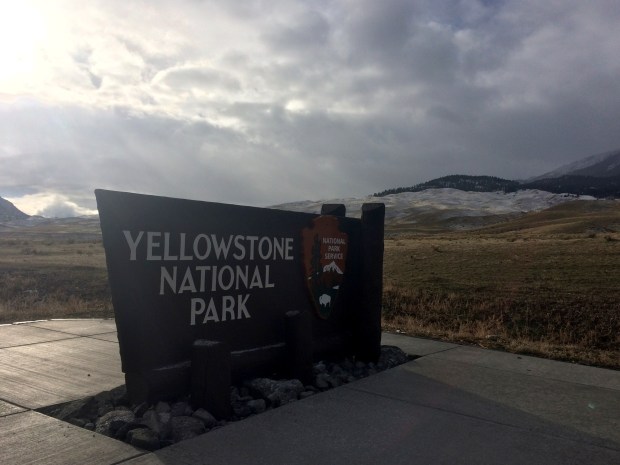
We had a fulfilling and productive stay in Bozeman, and I was only able to leave knowing that we’d be back for one more short stint since I have to return on the 8th to walk the green mile go to a dentist appointment. In the meantime, let’s go to Yellowstone National Park!

img_6209


Let’s Refurbish a Van – Part 3: Tires (by Andy)

A Post by Andy

Maybe you noticed the tires. Maybe, like me, you love tires. We have fancy tires, and I would like to tell you all about them. Let’s start with what we had.

Pretty standard look for an 80’s era Class-C RV. The Turtle’s stock tire size was 215/85R16 on 8-bolt Ford rims. Single wheels in front, and dully rear.

We wanted to be able to go most everywhere, up dirt roads, over snowy passes, through water and mud, so we wanted a taller tire for more clearance, with an aggressive mud and snow tread. Also, as a general rule I am a fan of tall, skinny tires. Pizza cutters, some people refer to them as. Lots of trucks these days have big, fat tires, and they look pretty cool, but for most conditions they are less than ideal. I really like the Cooper A/T3 tread and have run it on other vehicles, so that was the choice for sure. As to the size: to get added clearance, a greater load rating, and to keep it nice and narrow, we went with 235/85R16.

Image source

The new tires are almost 32″ tall- a significant improvement over the stock height of about 30″- so we gain almost an inch of clearance with the new tires. Additionally the 235’s have a load rating of 3042 lbs per tire vs. 2680 lbs for a typical 215. The additional load rating does not increase the load we can carry, but it is just a stronger tire so they will live a long and happy life rolling along far below their load limit.

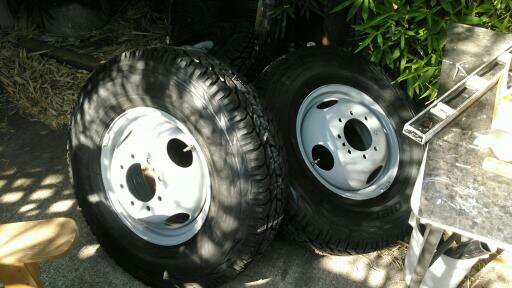
After selecting a tire and size, special consideration was given to the rims. It seemed reasonable to replace the 30 year-old rims, and due to the tire size change, this was actually necessary. You see, dual tires need an air gap between them to stay cool. The gap is a function of how wide the tires are, and the distance between the center of the rim and the plane where the rim bolts to the hub (a measurement called wheel off-set). Because the new tires chosen will be slightly wider, we needed rims with a greater offset, so we ordered 7 new rims with a 5.35″ offset (the old rims had a 5.15″ offset).

The rims actually lived in our house for many months before we were ready to get the tires. Though they did finally get their tires attached.

And they finally made it onto the Turtle.

Some additional touches included new lug nuts all around, and lug nut covers. We could only find the covers in stainless steel, so we ordered them, had the 32 brand new covers powder coated black for $40, and installed them. They add a nice, finished look, and will keep the threads clean too!

You can see we have a nice narrow tread but a taller traction tire. I did add a 1/4″ wheel spacer for the front tires to cancel out the additional offset of the rims and preserve (within 0.05″) the stock wheel center line for the steering. Luckily, the front hub was just proud enough to accommodate that and still have the hub-centric wheels centered properly.

1440607039365

The spacing between the rear tires actually increased slightly. All in all, it really worked out pretty great. The new tires will keep us safely stuck to the road in all kinds of weather and terrain, and I sure think they look pretty nice too! Maybe someday we’ll get even bigger tires…

1443392534009.jpg

Let’s Refurbish a Van – Part 2: Exterior Paint

Hello everyone! I hope your New Year has been off to a great start!

We’ve been spending much of our time lately getting ready to hit the road—we have just a little more than two weeks before we leave! While we’re as excited as can be to start the adventure, it’s also a bittersweet process as we fill up our social calendar to say our goodbyes. So for now I’m going to pretend I have plenty of time to discuss that aspect of the journey, and instead we’ll go into how we made a brown Turtle blue!

Shortly after we bought the Turtle, we began dreaming up plans for change. Right away, Andy was envisioning the rack and its sky boxes, beefy new bumper, and fancy new tires. For my part, I could hardly wait to cover it from top to toe in an exciting new color! So while Andy created scale model paper pieces of the roof and the racks he wanted to attach, we yelled out colors and mentally tried them on for size. The moment we imagined the Turtle in a bright Crayola blue, we were sold.

Just to get a reference point, we looked into having it done professionally. Needless to say, it was a lot. There is a lot of surface area on this vehicle! So Andy did some research (those words will be seen frequently on this blog) and decided our best bet was to buy some boat paint and do it ourselves. As we looked further into the process, we were really happy with the plan to use marine grade paint. Unlike car paint, we could paint it with a brush instead of a spray can or gun. And unlike other paints that could potentially be applied with a brush, it is made to be super durable in the elements. When Andy found a brand he liked, we looked at their color options and found, to my delight, the absolutely exact shade of blue I had been dreaming of! It was meant to be.

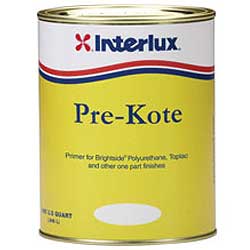
We sanded down the entire Turtle with wet/dry sandpaper, and primed it with white //ws-na.amazon-adsystem.com/widgets/q?ServiceVersion=20070822&OneJS=1&Operation=GetAdHtml&MarketPlace=US&source=ac&ref=qf_sp_asin_til&ad_type=product_link&tracking_id=blueturtlecro-20&marketplace=amazon&region=US&placement=B0017KKKDO&asins=B0017KKKDO&linkId=fc0af2f1af67f4d14ae20361bec4c6d2&show_border=false&link_opens_in_new_window=false&price_color=333333&title_color=0066c0&bg_color=ffffff“>Interlux Pre-Kote primer. The Interlux paints we used ran between $40 and $50 a quart, but compared to the cost of having the job done, it’s a great deal.

Pre-Kote


IMG_1637

Then it was time for the serious business of painting an RV. Neither of us had any experience here, but thankfully Andy’s love of research saved the day again. The method most commonly used to paint boats is called “Rolling and Tipping.” One person uses a small roller to apply a thin layer of the top coat in small sections, then the other person follows behind and quickly but carefully uses a high quality brush to smooth out the bubbles. It’s important to make each section small in order to be able to blend it all together smoothly before the previous section dries.

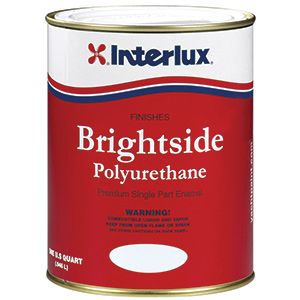
For our project, we used a badger hair brush and //ws-na.amazon-adsystem.com/widgets/q?ServiceVersion=20070822&OneJS=1&Operation=GetAdHtml&MarketPlace=US&source=ac&ref=qf_sp_asin_til&ad_type=product_link&tracking_id=blueturtlecro-20&marketplace=amazon&region=US&placement=B001BWF718&asins=B001BWF718&linkId=d2af3fdcae720aa23812e2cc28f381b9&show_border=false&link_opens_in_new_window=false&price_color=333333&title_color=0066C0&bg_color=FFFFFF“>Interlux Brightside paint in Sapphire Blue.

Brightside


Before we began painting, I was incredibly nervous that I would make mistakes and the Turtle would look like a bad kindergarten arts and crafts project. But as we neared completion of the three coats it required to cover the Turtle, I think we both gave up on the need for perfection, as it was astonishing enough that we were just two people and we were painting an RV! The paint goes on super smoothly, and it’s pretty incredible to watch as the brush glides over the bubbles and melts the texture into a glassy sheen. If you look closely at the surface, you can see light striations in the paint, but overall we are extraordinarily proud of ourselves! It took weeks to sand, prime, and paint three coats, but in the end we spent far less than we would have if we would have had it professionally done.

In addition to the blue, we painted the top of the Turtle with Interlux Brightside White, and the bottom with Rustoleum flat black. Though it adds visual interest, the primary reasons were practical. The white top will keep us cooler when the sun is beating down, and the black hides mud and dirt and camouflages hatch doors. We have small cans of all three colors on board, so if the Turtle gets scratched or dinged, we can easily mend it ourselves. We found that taping off the layers still resulted in leaks and a super uneven line, so I just used a small brush to freehand the transitions. So don’t look too closely there. 🙂

I’ll share some lessons we learned for those of you who are thinking of tackling a similar project. But first, some process photos!

IMG_1646

IMG_1777

IMG_1780

IMG_1902


It was a bunch of work, but our sense of ownership and accomplishment is a great payoff. Here are a few things we learned throughout the painting process:

  • It’s best to paint on a cool, overcast day. Otherwise, the paint dries quickly after rolling, and by the time you begin tipping it’s impossible to blend sections well.
  • We had better results when tipping if we lightly dipped the very end of the brush in mineral spirits.
  • It’s easier to blend the sections if you tip into the previous section.
  • Edge around windows first so you can move more quickly over the main surface. We started by edging as we went, and it made for a more frantic painting session.
  • Relax and be realistic. We wanted so badly for our very first vehicle paint job to be as perfect as those we saw in YouTube videos, but as we painted we realized that we’re beginners, and that’s OK. Sometimes bugs land on the paint. Sometimes the paint streaks a little. Sometimes you have to sneeze and the paint dries some while you look into the sun waiting for the sneeze, and then by the time you start tipping again the paint has dried a bit and it smudges, and then you dip the brush into mineral spirits to help it blend better, but you use too much and the now-wetter paint drips down the side and on to your shoes and driveway. After the job is done, those little details aren’t as glaring as they seem when your face is right up against the vehicle.

I’ll check with Andy to get his input about our learning process, and update the list. But that’s what I can think of so far. If we can do it, anyone can! And the results are amazingly satisfying.

cropped-img_20981.jpg

Let’s Refurbish a Van – Part 1: Flooring

Well, it’s been raining virtually nonstop for the last few weeks in Portland, and Sauvie Island seems as if it’s ready to admit defeat and just merge with the Columbia River and call it a day. So I’m working from the island today, appreciating how warm and dry I am inside, and thinking about how just a year ago I was dreaming of this very scenario, feeling like the day would never come!

*Newly-formed lakes and sunken pumpkins on Sauvie Island not pictured. It has been raining so hard, one photo would send my phone right into a bag of rice.

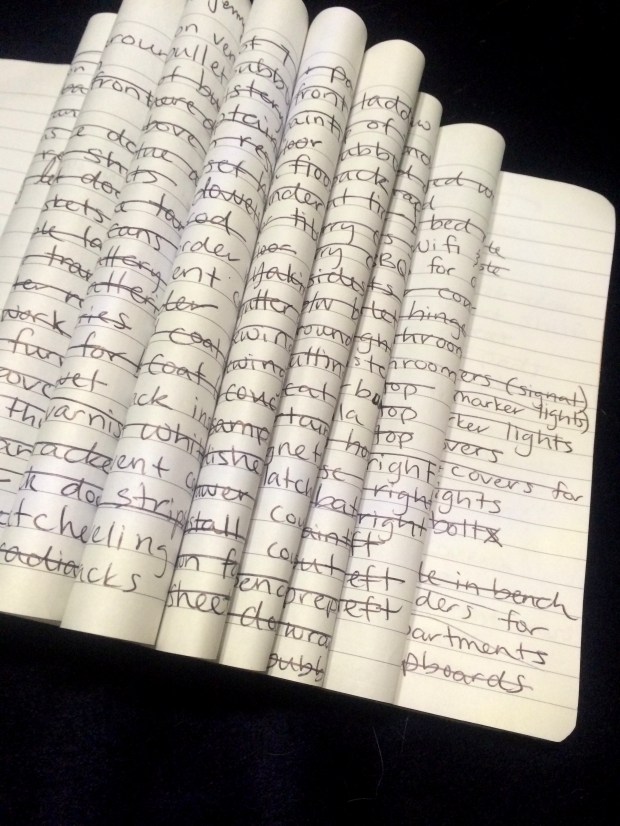
These days, as we sit in the Turtle, eating dinner at the table or climbing up the ladder into our cozy lofted bed, we sometimes take for granted how much work actually went into this project. Because we gave ourselves such a tight deadline, we didn’t have time to stop and appreciate each accomplishment as it was crossed off the list, because there was another line item right below it requiring immediate attention. The moment we crossed one finish line, we’d look up and see there was another lap ahead of us!

IMG_3452A portion of the list. 

If you’re thinking of taking on a similar project, or if you’re just curious how we got from Point A to Point B, here I’ll be discussing our process, and what we learned along the way. I will admit, our experience was made much easier due to Andy’s crazy number of useful skills! But if you’re like me and aren’t handy with welding, car mechanics, woodworking, and wiring lighting (among Andy’s many other contributions), don’t despair! The most inspiring thing about Andy is that when he comes across a job that requires skills he doesn’t have in his personal toolbox, he does research online, buys books, and reads the blogs of others who are skilled in that field. He then gets the needed tools for the job, and just gives it a go. Personally, I tend to get intimidated by new large-scale tasks that feel like they should require a professional. But throughout this project, following Andy’s lead, I found myself feeling empowered and excited to see what I could learn and accomplish. If I can fiberglass and epoxy a floor, anyone can!

KIMG0095The quality of this photo is terrible, but the cuteness is top shelf.

Our first goal in the refurbishment was to strip down the interior of everything we wanted to update. This included nearly all soft surfaces, as the Turtle is 30 years old and these tend to hold on to dirt and odor. . . and the design sensibilities of 1985.

So as it was the first change we made to the Turtle, for this portion of the blog, let’s discuss flooring.

KIMG0023This is one of the only photos we have of the carpet before Andy pulled it out – just a teeny slice visible in the bottom left corner. But you get the idea. 

KIMG0020A bit more carpet shown here. We just got so excited to get started, we didn’t get a whole lot of “before” photos before things started changing!
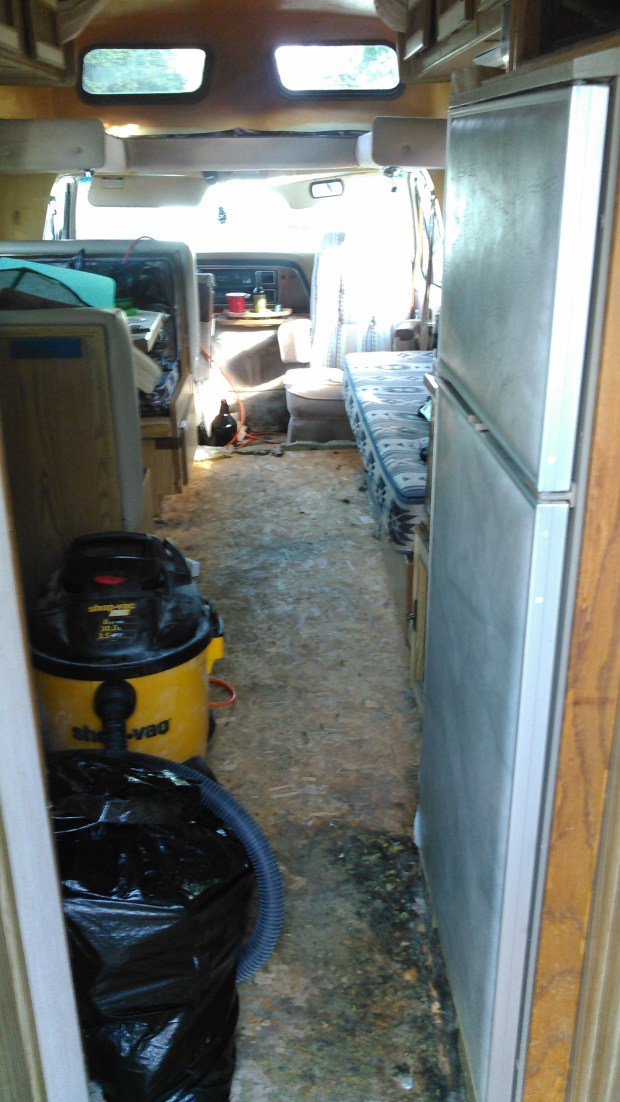
First, Andy ripped out the carpets and the subsequent one million carpet staples. I’d like to say I’m exaggerating the number, but I kind of am not. I worked on just a 30″x30″ portion and the resulting blisters were highly impressive.

KIMG0050

KIMG0041

Underneath the carpet was the OSB flooring we were expecting to find. Due to its age and thickness, it tended to sag quite a bit when walked on, so Andy proposed reinforcing it with sheets of fiberglass cloth and epoxy. At this point, I’m going to use the pronoun “we” when I discuss our work on this project, because I now am a fully qualified epoxy applier, and proud of it! Though of course Andy did much of the up-front work before training me—but I felt very pleased with myself when I realized that I can now strengthen any old floor I like!

In a few areas, the flooring had rotted out pretty significantly. Ever the optimist, Andy was pleased that it was an easy early indicator of where we had leaks that we needed to fix, before finding out the hard way when the rain hit! So he cut out the soft blackened area and replaced it with another piece of OSB that he cut to fit.

So, in small increments, we 😉 laid sheets of fiberglass cloth over the floor of the turtle and rolled thin layers of epoxy over it with a small roller, eventually covering the full surface area and applying additional layers in the weaker spots. Between each layer, we sanded it down to keep it nice and smooth, as portions of the fiberglass tend to raise up a bit here and there.

IMG_0383Halfway epoxied. (Guess which half!)

It was so smooth and shiny that Andy originally wanted to leave it as it was. Truthfully, it really had a neat industrial quality to it, but as it was going to be our home, I was hoping for something a little warmer. He cared less than I did about this issue, so we agreed to find flooring to install over the OSB.

After researching a number of ideas for the flooring surface, we decided on vinyl stick-on tiles. They’re fairly durable, inexpensive, and if any damage is done to a portion of the floor, we can just pull it up and lay a new one in its place. Considering the fact that we plan to play hard while on our adventures, neither of us wants to tiptoe around the Turtle trying to keep it pristine. But we also don’t want to take all this time just to trash it either! So it seemed like the best route.

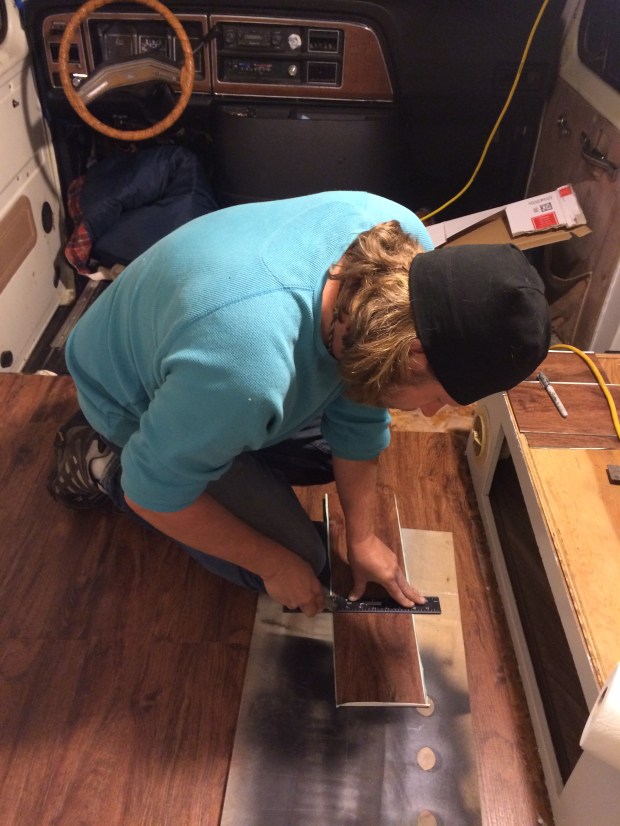
The majority of the options we found were square parquet-style tiles, which we liked, but I had my heart set on long planks. After some research, we found exactly what we were looking for at Lowes: cherry “wood” planks with some textured striations to give it a more realistic wood feel. They sell them both by the box as well as individually, and are relatively easy to cut to size.

IMG_1794-001

IMG_1714

IMG_2059

Aside from the fact that the Turtle has some ca-raaazy angles, installation was fairly painless. I’d imagine if you have a more uniform and rectangular vehicle, you’d have an easier time than we did. The Turtle, though, is made up of friendly-looking but unpredictable curves and turns, so both we and the box cutter were put to the test.

But we got it done, and there you have it! Brand new floors. They’ve been holding up great, and with all the rain and mud we’re experiencing out here lately, I’m so appreciating the ease of hard surfaces as opposed to a muddy carpet to clean! And with the recent addition of a few navy runners, it really feels like home.


The Very Beginning

The question we hear most often is, “How did this plan come about, anyway?”

The story goes like this:

Andy and I had been living in our little house in John’s Landing for a few years, and loved the space, the neighborhood and all our good friends there. We were lucky in that we were right on the bike trail that gets us all around Portland, we had walkable access to restaurants we loved, good coffee options, and our favorite tap room that allows dogs! (If you’re ever in John’s Landing, check out NW Growlers; everyone there is so friendly and there are loads of dogs to play with. Also, a sweet little pig named Q-bert who doesn’t seem to mind that Scout is obsessed with him.)

IMG_1613Scout and Q-bert: a friendship for the ages.

IMG_1847Sweet little Amos, the bartender’s dog, who our friend Lisa asserts was made in a button factory.

But the highlight of our location was that we had beach access right across Macadam Blvd., barely over a block from our front door! Our summers were spent walking back and forth from home to the Willamette River Trail with our tubes on our backs and Scout pulling anxiously on his leash for some frisbee time in the river. We’d plunk our tubes in the water, paddle out a ways, and drop anchor (a rock for me and a chunk of lead for Andy). There we’d float, drink a few beers, get some sun, and chat with the friends we’d often invite along. Most hot days, Andy would get home from work, change into his swim trunks, and we’d be on the river in 10 minutes, staying until the sun went down. Our front porch looked like a beach house with the float tubes at the ready and a consistent layer of sand!

IMG_0124Andy and our friend Jason enjoying the spot.

IMG_2796Stop taking pictures and throw the frisbee already!

So one day, Andy and I were bobbing around on the river and enjoying ourselves throughly. Andy made a comment about how he wished he didn’t have to go to work at all, and wondered how we could make that moment a lifestyle. What we had a hard time being able to justify was why we spent so much time working for the majority of our time, just to have small slivers of quality time outside, enjoying each other’s company and playing in nature!

I found this quote which summed up our conversation perfectly:

IMG_1375

We started tossing ideas around, and I think it was Andy who mentioned living in an RV and traveling. I wholeheartedly agreed, and we began making lists and plans!

IMG_3013Just a hilarious picture of Scout riding in the car. 

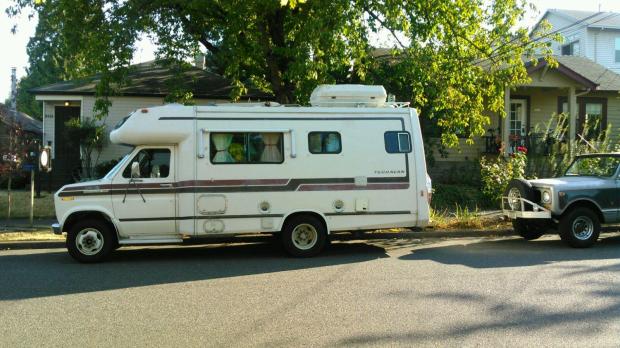
What was working in our favor was that I had recently graduated, and Andy was in a position at his job where he could potentially work remotely. He had also just sold his house in Seattle, so he was no longer tied to that project and also had a little walking around money. So we began making plans. One day about month later, I got an email from Andy with a link to a Craig’s List post for a cute little 1985 Class C RV. We went out to take a look, and once Andy determined the bones and major working parts were in good shape, we bought it!

KIMG0013This was just 10 minutes after we bought the Turtle, when we pulled in for a little lunch and celebration!

Our original plan was to just work away on it in our free time, and move in when the project was complete. But as the year went along, we realized that it was going to take us exactly the amount of time we gave ourselves to complete it. With an infinite deadline, we’d just work and work until it was perfect, which would take an infinite amount of time! We also realized how much project time we were going to lose once the Portland rain and shorter days hit.

In the spring of 2015, we decided to make the deadline the end of September. As we all now know, that deadline did get pushed back by a month, but after months of hard nonstop work, we did it! We had to remind our friends what our faces looked like afterward, but it was worth it. With a deadline, we pushed ourselves much harder, and made quicker decisions. It made it easier to prioritize tasks, and helped us not to dwell on small details. We still have some things we’d have like to have completed, but the Turtle is comfortable and livable, and let’s be honest, at this point we wouldn’t know what to do with ourselves without some projects on the list. 🙂

Why We’re Here

Hello!

So as you and everyone within earshot knows, we are absolutely loving life in the Turtle! It is a great experiment and a serious adventure. So while we’re starting out here, I thought I’d briefly explain that as we are very new to this lifestyle, I began the blog for two purposes. The first is to document our journey so family, friends, and anyone at all who is interested can follow along with us and enjoy our exploits.

IMG_0068Andy adventuring.  

The second–and the one we are most passionate about–is to discuss the process and how much we’re learning in order to help out others who may be interested in a similar venture! Especially for those who are adopting an older vehicle to refurbish, we have learned so much that we’d love to share, and we want to be the resource for others that we felt we were lacking when we started out.

IMG_1580Gracie adventuring.

The bulk of the full-time RV-ing books we found are written for those who are retired, bought a relatively new vehicle, and plan to live primarily in RV parks. We will certainly find ourselves in parks as needed, and as our first few weeks on Sauvie Island have proven, it’s a comfortable and relaxing way to enjoy your RV. But our main goal is to generally be surrounded by nature for most of the time, with the remaining time spent visiting friends who we aren’t able to see nearly as much as we’d like to, due to jobs, and bills, and air fare, and never, ever enough vacation time.

IMG_2642Scout adventuring.

So keep up with us for whatever reason suits you best!

IMG_0616Amy adventuring.

If you’d like to hear specific tips on gutting and refurbishing your RV, we are excited to share! We did nearly everything on our own, from painting the exterior, to upholstering the interior, to welding the front bumper so we could bring our bikes along, to installing solar panels so we can boondock for longer periods of time.

If you’re interested in seeing what National Parks we explore first (we’re aiming to see them all!), tales from of all corners of the US (and eventually South America), and most importantly, lots of photos of Scout and Gracie (obviously), then we’d love to have you join us!

IMG_2451

Oh, and please bear with me as I learn the ins and outs of WordPress. The posts will eventually look brilliant, I promise, but for now at least they’re live! 🙂