After

Let’s Refurbish a Van – Part 5: Suspension (By Andy)

A post by Andy.

{Note: The work detailed in this post was completed over the summer of 2015, before we moved into the Turtle. I am just getting the time to write the post now.}

We wanted a little more ground clearance, fender and frame spacing for the taller tires, and a good, safe ride. We initially hoped to find an off-the-shelf lift kit. . . no soap. People make them for Ford trucks and Broncos, nothing for 80’s vans. I suppose that makes sense; the van market must be pretty small. So I guess we’ll just have to design and install a complete suspension overhaul and customization ourselves. This is where we started…
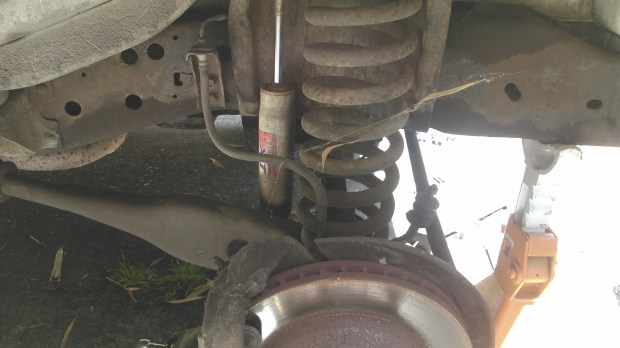
KIMG0366.jpg

In the front we have what Ford calls a twin I-beam suspension with what I infer is an aftermarket sway bar, and the rear is just a simple leaf spring configuration, though there are functional aftermarket Firestone airbags that have been added.

Let’s address the rear first; that is comparatively easy. We found some 2″ lift blocks from Action Van (http://www.actionvansuspension.com), that fit between the axle and leaf spring. Action Van actually makes full lift kits, but only for ’92 and newer Ford vans. Lucky, the rear suspension was the same, so we were able to use their blocks for the back.

With some breaker bars on the end of the socket wrench and a little groaning, the blocks were pretty easy to install. Lots of jacks and heavy-duty jack stands were employed in this step! Here is a poor photo of the suspension when I was starting the modification.

1433618343139.jpg

Here is a photo of the installed blocks. Always remember that it is a good idea to drive a bit and then retorque all the bolts for suspension components after making changes- things can settle under the vibration.
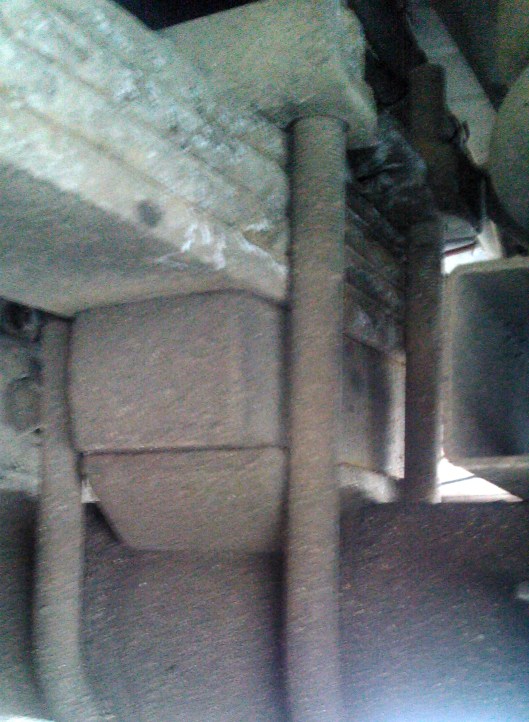
kimg0176

After adding the lift blocks, the rear airbags were adjusted by cutting, drilling, and painting 2″spacers from hollow square tubing and bolting into place between the axle and bottom of the air bags with new grade 8 hardware. Sorry for the bad photos (at the time, the important thing was to get stuff done, so the documentation suffered), but what you can see in the following is the original airbags and the blocks and hardware cut, drilled, and painted.

And a current photo of the final installed version- a little dirty, as we have been trekking about for a little over a year now.

Pretty straight-forward modification, and after a few thousand of miles everything is very solid.
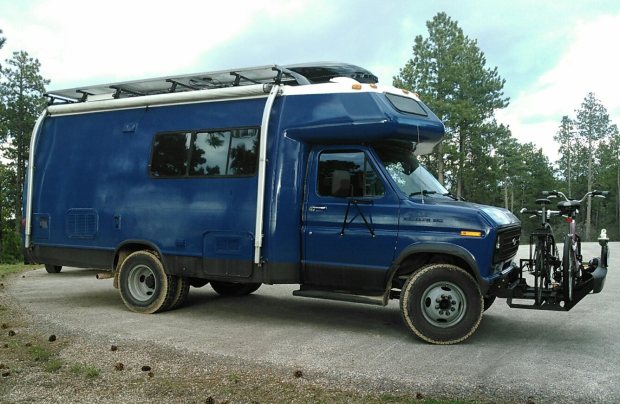
cropped_1

Now the front suspension. The modifications needed were: 1) taller coil springs 2) adding air bags 3) fitting the new shocks 4) dropping the sway bar 5) dropping all 4 I-beam pivot points 6) replacing all the suspension bushings in the process.

I was able to find taller MOOG coil springs and front airbags, cranked everything apart, and got those pieces installed.

You can see that at this point with the added spring height but no change to any of the I-beam pivot points, the camber is extreme.

KIMG0371.jpg

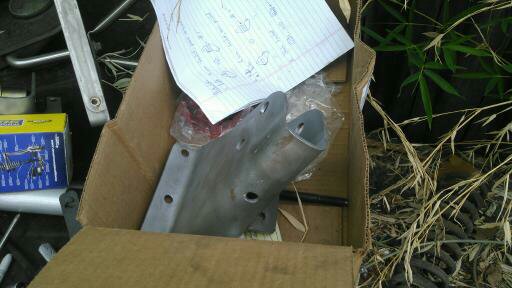
The next step was to remove the suspension mounts. This was a true pain, as there were many frame rivets to remove. Depending on the accessability, I would drill, grind, hammer, cold chisel, or simply swear at for long enough to remove. I would consider it a solid success if I came home from work, spent all evening, and got only one removed. I blocked it out, but there were somewhere between 16 and 20. Anyway, after getting the pivot points removed, I made some drawings describing the desired changes needed to drop the pivot points 2″ lower, then took the parts to a fabricator. I weld myself, and made the grill guard, and all other metal modifications on the Turtle, but I wanted really great welds on these parts, so we paid to have someone with more skills do the modification. Plus, it was pretty darn magical to just drop the parts off and pick up the finished pieces a few weeks later. So, some of the suspension pieces back from the welder:
1440187262716

Painting, almost ready to install. I had ordered new MOOG bushings for all the pivot points, so these were installed at this point too.

1440192040722

Except for reusing a few special Ford bolts, the bolts and frame rivet locations were replaced with 1/2″ grade 8 hardware. Some current pictures of the completed front suspension.

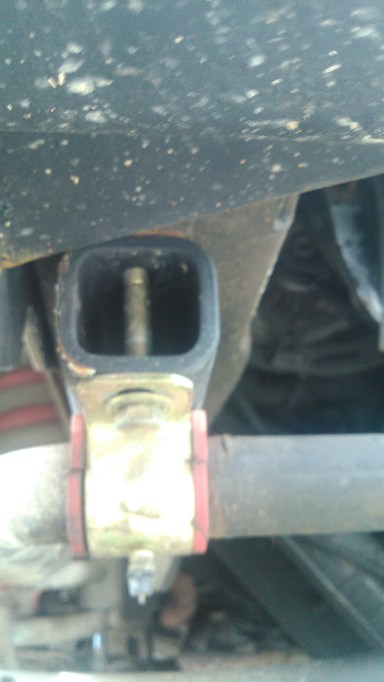
Here is a photo of the dropped sway bar pivots with the new greasable bushings installed, again, everything is grade 8 hardware. I never buy anything else (except maybe stainless for chassis fixturing or the interior).
kimg0182

New Bilstein shocks were ordered for all four corners. The stock fit for the rear has enough travel to handle the 2″ lift, so we got the heavy-duty RV ones, and that was easy. We had to calculate the new front geometry to size the front, and went extra fancy with the front shocks and got an external reservoir setup. They look cool! (I ordered them from shockwarehouse.com, part number 25-177480 and 24-184663.)

Here is the front suspension a year into our travels. I was replacing the brake pads, so I took the opportunity to clean everything up, and also paint the hub with Rustoleum. We have had no problems with the suspension thus far.

kimg0047

The lift was added to enable us to have the taller tires, and to have more ground clearance. There have already been a number of cases where we figure we would have likely damaged something on the underside if we did not have the clearance we have. Additionally, with the clearance and narrow tires, we have made it through some pretty deep snow without problems. It has proven to be a successful modification. Plus, it makes the Turtle look cool!
Let’s Refurbish a Van – Part 4: Curtains

Of all the updates one can make to an RV, in my opinion the most drastic change for the least amount of effort is the curtains. It’s a way to infuse color, pattern and texture into the small space, especially in a vehicle like the Turtle, which has zero wall space for art. We almost have zero wall space for walls! Even if you aren’t a world class seamstress, it’s a simple shape to tackle, and honestly nobody even notices if your hemlines wobble a bit. I really encourage you to give it a try!

IMG_3047

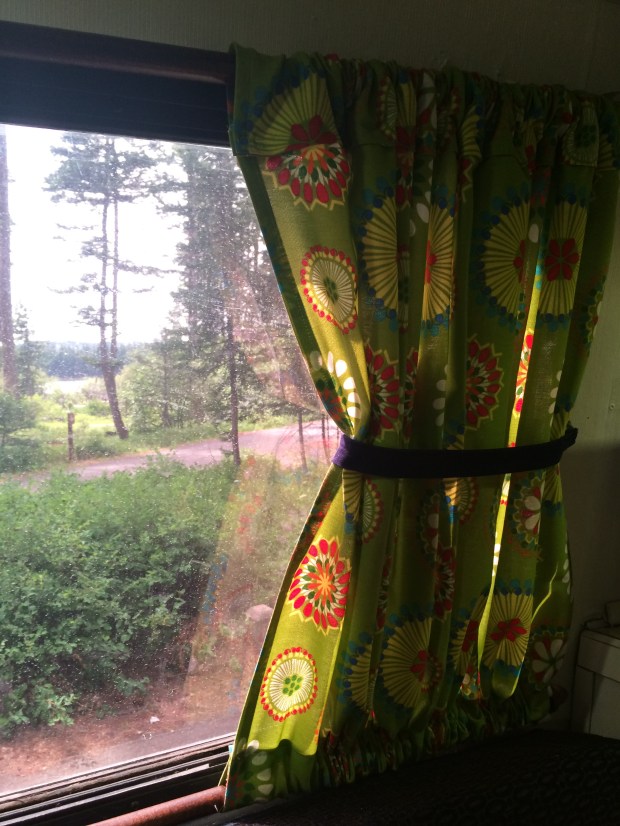
When we got the Turtle, I knew I wanted to plan all my color choices around the curtains. It’s the best place for statement patterns, and I love-love-love a bright and colorful interior space, so I wanted to see what was available before making further paint or fabric decisions. Actually, it was the first decision I made at all, and I think I had the fabric in hand within the first week of owning the Turtle! I love a whimsical graphic print, and the green shade is so friendly and cheerful.

IMG_0108

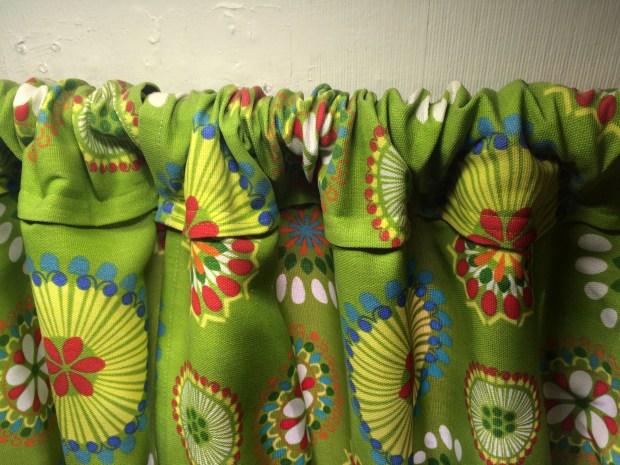
When picking your curtain fabric, I highly recommend choosing outdoor fabric. This may sound obvious, but the selection of outdoor fabric is often pretty slim, and the allure of an entire store full of pattern and color choices seems like a fine trade-off for less sturdy material. But the outdoor fabric won’t fade as quickly as other fabric. It’s also mold and mildew resistant, which doesn’t seem like a big deal until you’re boondocking on the Oregon coast and the hygrometer reads 93% humidity and the windows are weeping and mold is knocking at the door. The last thing you want is to find your curtains flocked with green fuzz! Ours stood up to the damp like a champ.

Something to keep in mind about outdoor fabrics, though, is that due to their durability, they are slightly more stiff, and don’t bunch or ripple like regular fabrics. But if you take that into consideration, you can work around it by reducing the ripple a bit or giving your curtain rod span a few extra inches to account for the thickness when the curtains are pulled open.

IMG_3219

IMG_3228.JPG

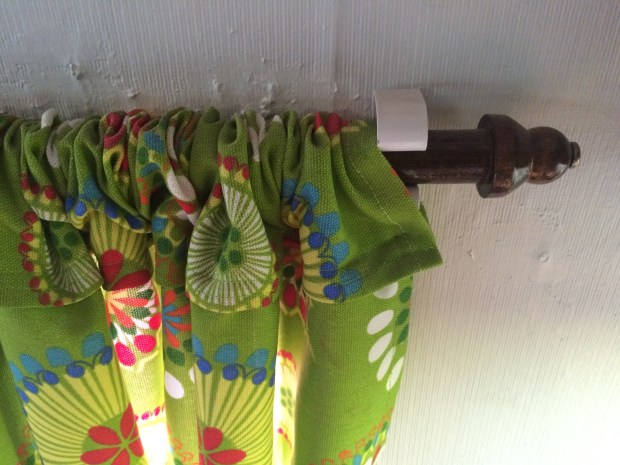
As you can see, I opted for a gentle ripple, and at the top and bottom it’s still pretty thickly bunched. Additionally, since we don’t have a ton of room on either side of the windows in the Turtle to add rod span, that extra fabric to make the ripples does take up a little window space when they’re pulled open. So it’s good to pick the fabric you like, then decide how you’re going to mount the rods and how much the ripple will affect the length of each panel.

With that in mind, it’s time to determine yardage so you can buy that awesome fabric you found! What I needed to consider with our curtains was the fact that the Turtle’s walls are curved, so I’d need rods on the top and bottom to avoid them hanging far from the wall at the bottom. (I’d actually recommend this even for straight walls, as it keeps more light out and doesn’t blow around.) So I hemmed pockets on top and bottom, and made a double-fold hem on all sides. The double-fold isn’t necessary, but it’s a nice detail. Just fold the hem over, press it with an iron, then fold it over again, press it, pin it, sew it down! Do this to all four sides before sewing the pockets so the rods can slide through.

IMG_3233

Then fold the top and bottom pockets over, press them, pin them, sew them! This part can be tricky if you’re using two rods, as it needs to be nearly perfect so that the curtains stay taut but don’t pull on the rods or just not fit altogether. Even after explicit measuring, I ended up spending some quality time with my seam-ripper as I tried to get the fit just right.

IMG_3220

Oh, did I mention I had a hard time getting the fit right? Yes I did. It was difficult getting them to not balloon out, and when I took them in they strained the rods since they were a little too short. In the end, I had to make another pocket and sew it to the top of the curtains. This made it easier because I could adjust the pocket right on the rods and pin it in place before sewing it. If I did it again, I’d just plan on approaching it that way to save a headache! Luckily I love the way it looks, and if anyone asks, you can tell them I totally did it on purpose.

IMG_3232

IMG_3229

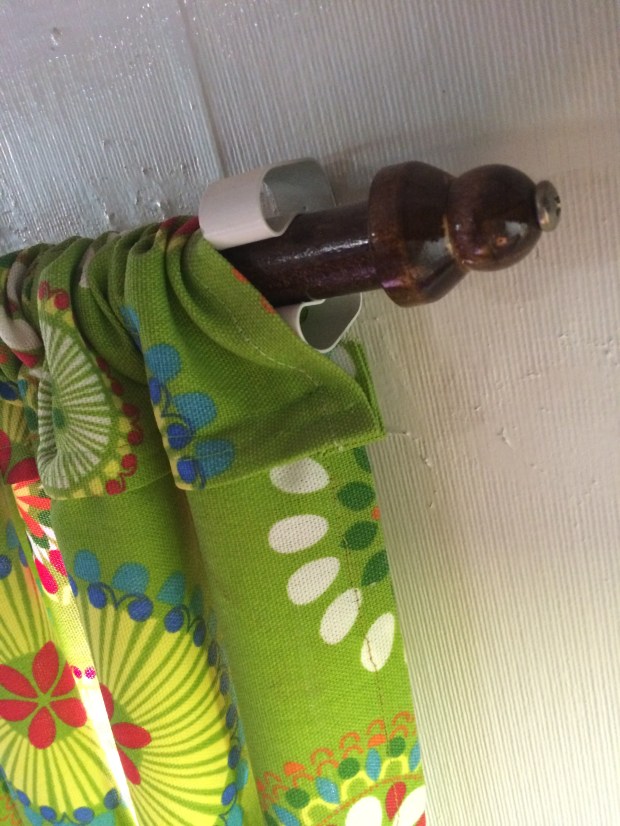
For the rods, I bought some dowels from Home Depot and some wood end pieces from JoAnne for the finials. Cheap! Andy sanded, stained and varnished them for me, and screwed the finials into the dowels. The benefit of doing it this way was that we could cut them to the exact size we needed inexpensively, and the wood end pieces already had holes through them, so screwing them in was really simple.

IMG_3217

Andy’s genius came in handy as we tried to figure out a way to mount the rods. He found some utility tool hangers at Home Depot that fit our rods perfectly and hold onto them tightly enough that they don’t slide back and forth. We painted them white, and done!

IMG_3218

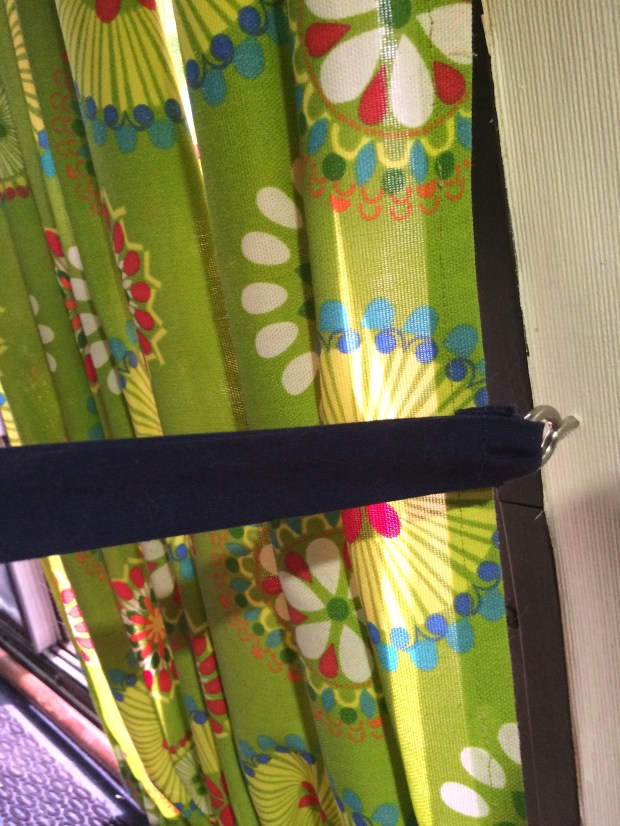
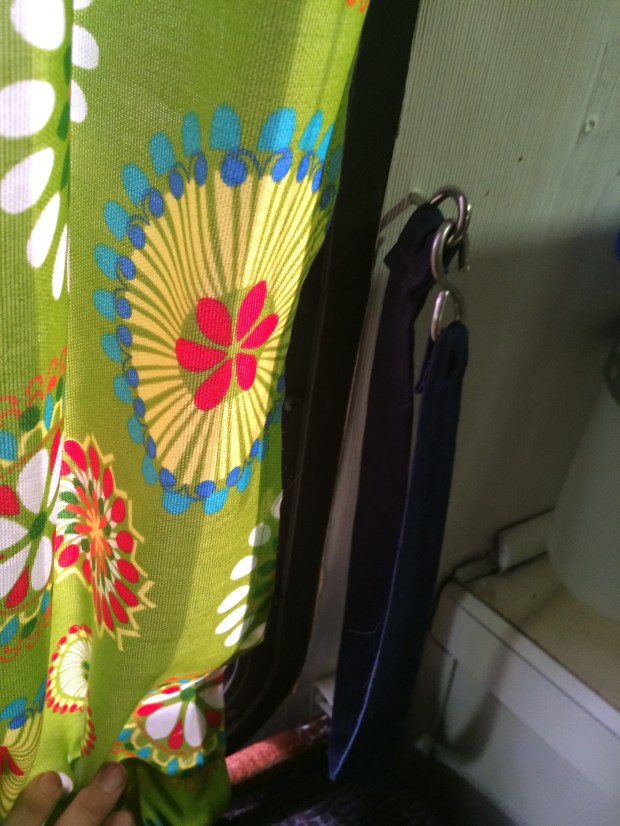
For the tie-backs, I just sewed a strap with some navy fabric I found in the remnant bin at Mill End, and attached one end of each to some stainless steel eye screws I’d screwed into the wall.

IMG_3222

The other end I attached to stainless steel S-hooks.

IMG_3223

They wrap around the panels to hold them back, and then when the curtains are open, we just re-hook it so it stays out of the way (and so Gracie isn’t as tempted to bat it around).

IMG_3234

And there you have it! Inexpensive custom curtains that make a statement, liven up your small space, and are a nice splashy backdrop for pictures of your pets.

IMG_2948

If you have any questions about the process, let me know! As with any How-To post, I’d be happy to explain any parts in greater detail to help get you started on your own project. 🙂