blue

On Top of the World: North on The Dalton Highway to Deadhorse, AK

Andy loves maps. So when we got our Milepost to plan our trip up to Alaska and it had a big Alaska map included, he was super excited. He unfolded it and we started pointing at places we would visit, and finding new places we didn’t know existed, like Chicken, Alaska. I noticed the Deadhorse dot way at the top of the state and said, “So are we going to the top of Alaska too, then?” Immediately I could see Andy’s wheels turning. We did a little quick research. And thus began our two-month-long back-and-forth decision/indecision about making the drive up the Dalton High to Deadhorse, Alaska.

Screen Shot 2017-09-17 at 8.55.58 PM.png

The reason the decision wasn’t obvious is that the Dalton Highway has a bit of a reputation. It’s been featured on BBC’s World’s Most Dangerous Roads, America’s Toughest Jobs, and was the focus of four seasons of Ice Road Truckers. It’s a beast.

Here’s the rundown:

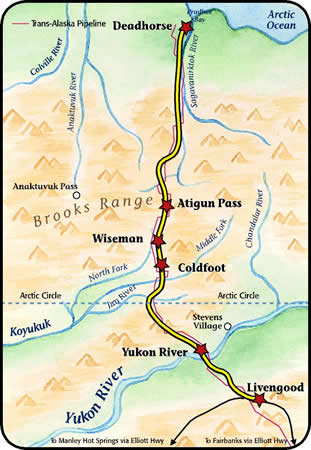
  • It’s a 414-mile road between Livengood and Deadhorse.
  • Nearly the whole route is dirt and gravel and in rough condition, with grades up to 12%.
  • It is one of the most isolated roads in the US, with only three towns along the route: Coldfoot (pop. 10), Wiseman (pop. 14), and Deadhorse (permanent pop. 25-50 but there are several thousand workers living there at any given time).
  • As the longest stretch of unserviced road on the North American continent, the Dalton is totally remote and has no cell service along the entire route until Deadhorse.
  • There is one gas station in Coldfoot and one in Deadhorse.
  • It gets cold up there. In 1971 it was the location of the coldest temperature ever recorded in North America at -82 degrees.
  • Atigun Pass through the Brooks Range is at elevation 4,739 feet and is considered quite treacherous, especially in unfavorable conditions.
  • It was built as a service road during the construction of the Alaska pipeline and is still used primarily by supply trucks—about 160 daily in the summer and 250 daily in winter and they’re all driving at top speed and have the right of way.
  • Travel tips on various sites include bringing two spare tires, plenty of extra fuel, survival gear, and your own surgical supplies.
  • The road ends at Deadhorse, which is not a town in the traditional sense but an industrial camp in the Prudhoe Bay oil fields. So there’s not much to do once you get there.
    DaltonHighway.jpg

According to a NY Times article, “In addition to these numerous privations, there is also no good reason for a nonprofessional driver to drive the Dalton Highway.” When we asked around, most Alaskans and fellow travelers we talked to about making the drive told us emphatically that it was a bad idea and just don’t do it.

So there was that.

You’d think that would be enough to make the decision quick and easy. Buuuuuut. . . we were also feeling compelled by the other characteristics of that most remote wilderness. For example:

  • Just south of Coldfoot you pass into the Arctic Circle!
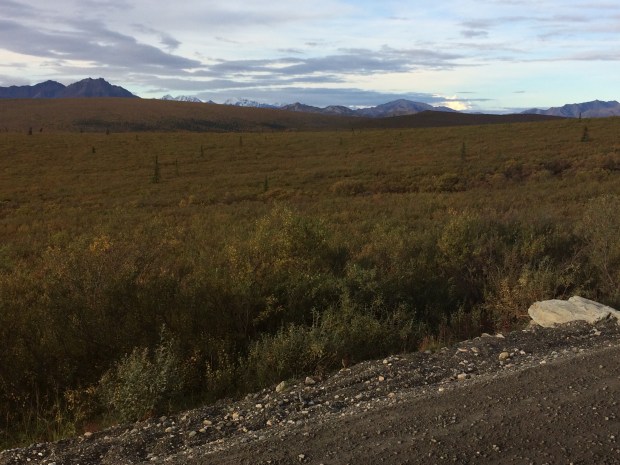
  • We’d get to see arctic tundra and (hopefully) arctic wildlife.
  • The Arctic Ocean is just beyond Deadhorse, and though the area is blocked by security, there is a tour company that will take you right to the ocean, after you pass a security check and pay them $70 a person.
  • Gates of the Arctic National Park sits on the west side of the highway, and though you can’t access the park by car, you can hike in on foot from a few parking areas.
  • The terminus at Deadhorse is the farthest north you can drive in North America. And we have plans to drive to Chile one day, so it would be pretty freakin’ cool to have driven the continents from top to bottom.
  • Apparently it’s really, really beautiful up there.
  • It’s almost completely wild.
  • Adventure calls!

I think by now you have a pretty good idea of where we landed on this one, especially if you read the title of this post. (We decided to go.) A few final pushes in that direction came from our friend Sam, who is a native Alaskan and knows all the information contained in both above lists and said that he wouldn’t recommend it to just anyone, but he knows the Turtle is capable and so are we, and that we should definitely do it. That’s all Andy needed to hear, so he was locked in. I was at 98% until my friend Lexie sent me a video by a pair of overlanders who had made the trip just a week earlier in their truck camper, and the scenery was more beautiful than I’d even imagined, and also they saw a baby grizzly bear. So I was locked in.

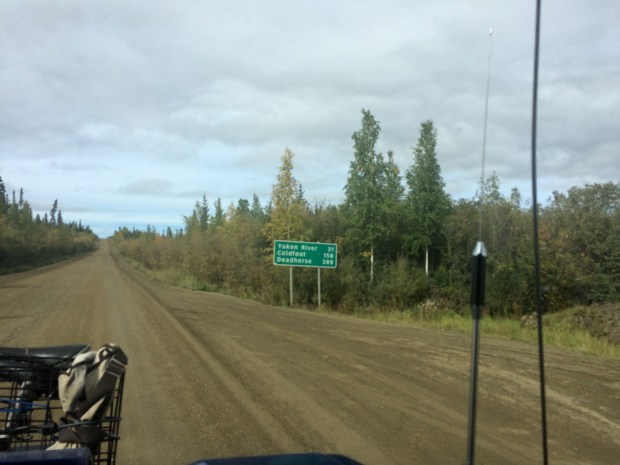
We got to Fairbanks, got all our supplies in order and bought a CB radio so we could communicate with the truckers as an added safety measure. We got up early the next morning and began our northward journey to the top of Alaska.
IMG_0029

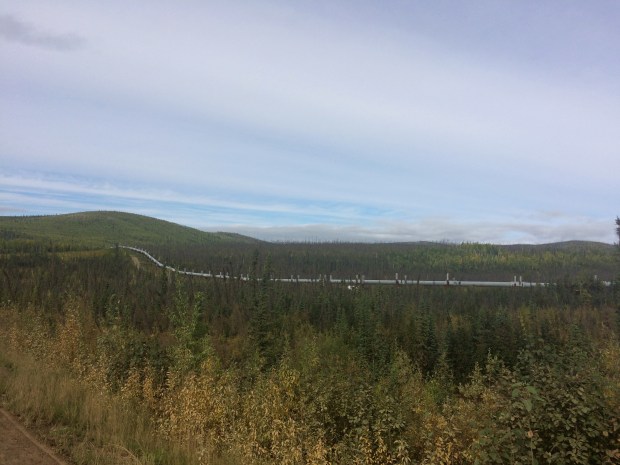
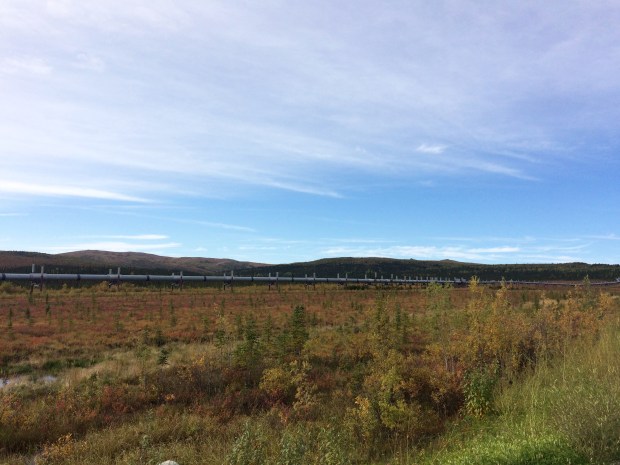
The first thing we noticed was the Alaska Pipeline, which was to be our one constant over the next few days, as it parallels the Dalton all the way to Deadhorse.
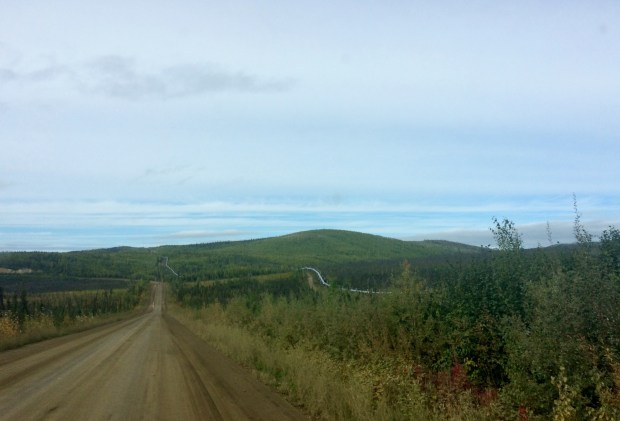
IMG_0038

IMG_9993 (1).jpg

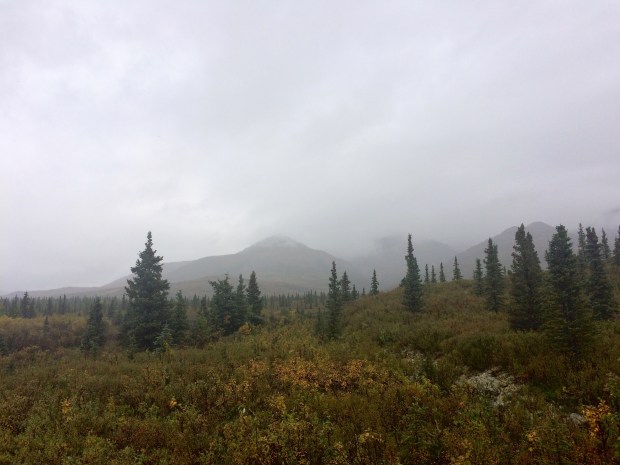
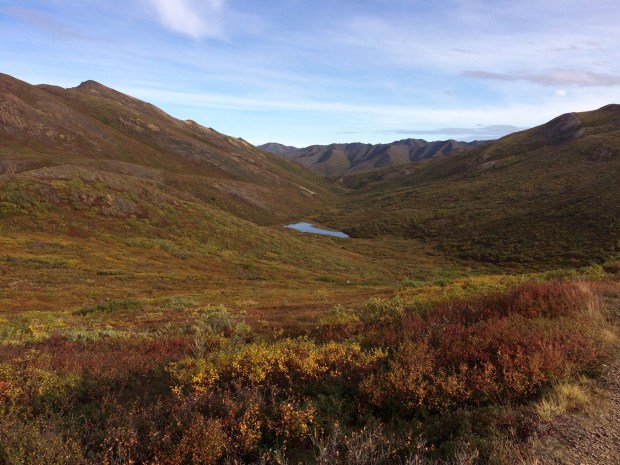
Also notable was how much more it felt like fall! It was much colder and the colors were gorgeous.

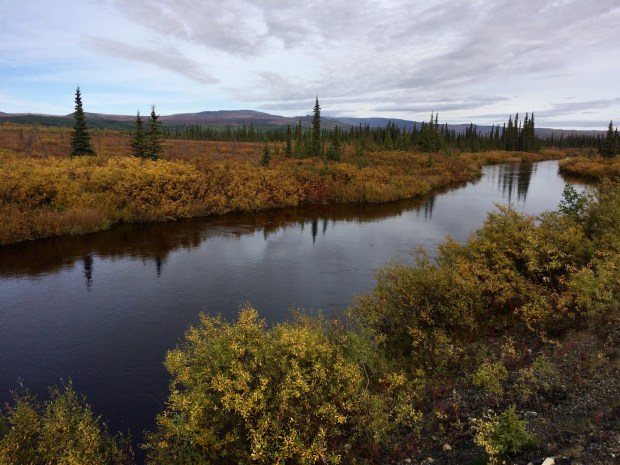
IMG_0033

IMG_0041

IMG_9988

IMG_9995

The pavement soon ended and we began the brain-rattling portion of the journey across the pitted, wash-boarded and pot-holed dirt road that would continue all the way to Deadhorse. It was a really beautiful drive, and we still felt pretty fresh when we saw the Arctic Circle sign and pulled over to take a few pictures.
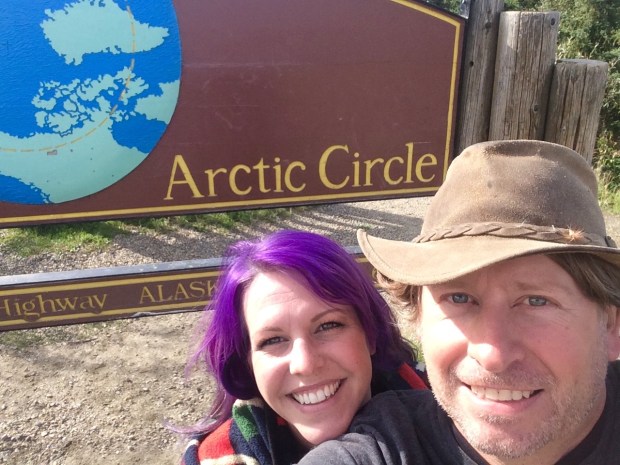
IMG_0061

IMG_0079

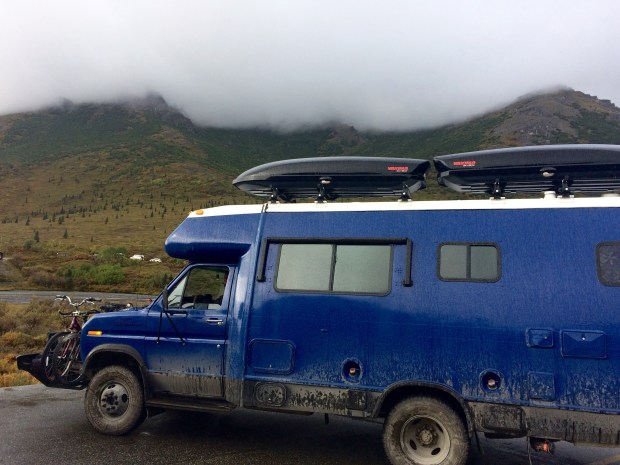
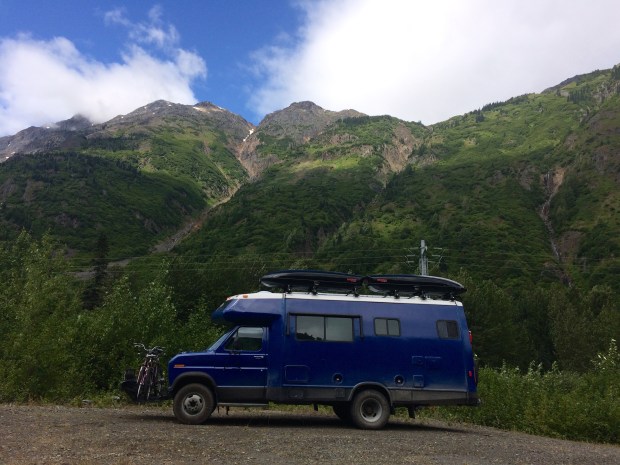
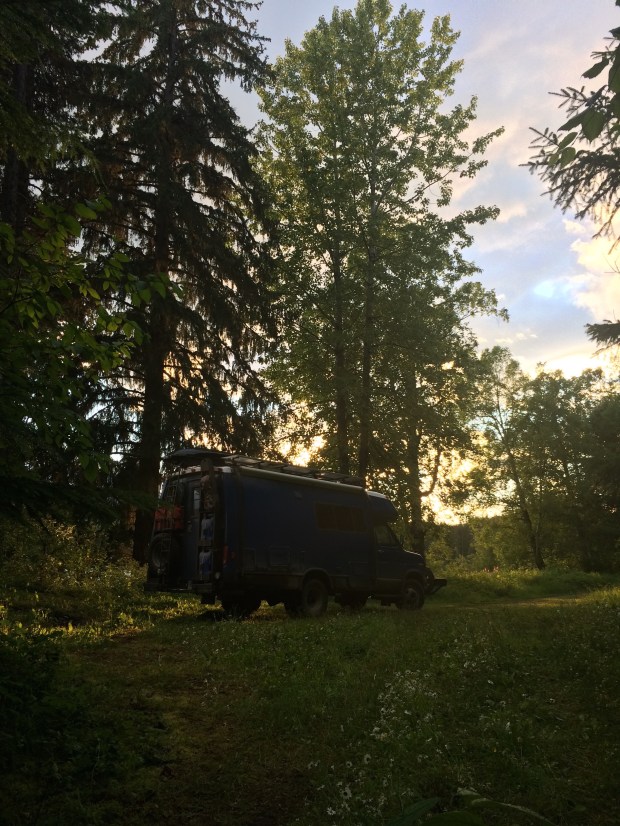
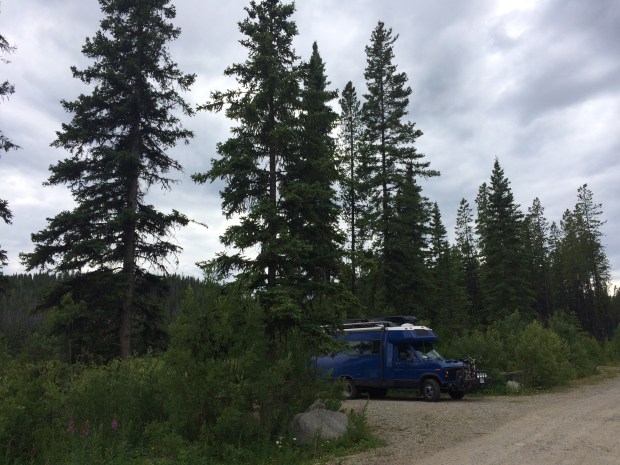
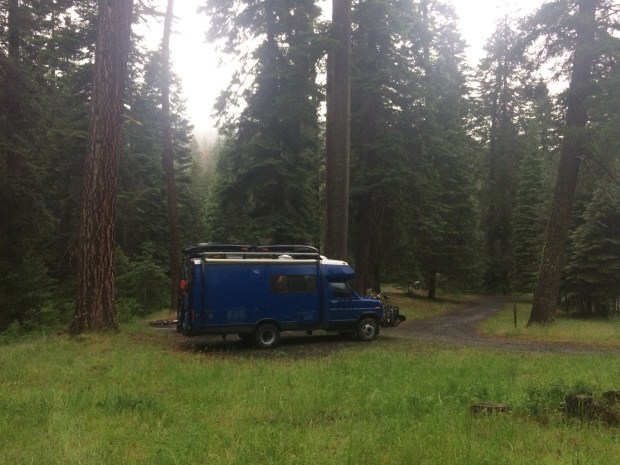
The Turtle still looked blue at this point, too! We continued on to Coldfoot, watching the lovely scenery as well as the gas gauge.

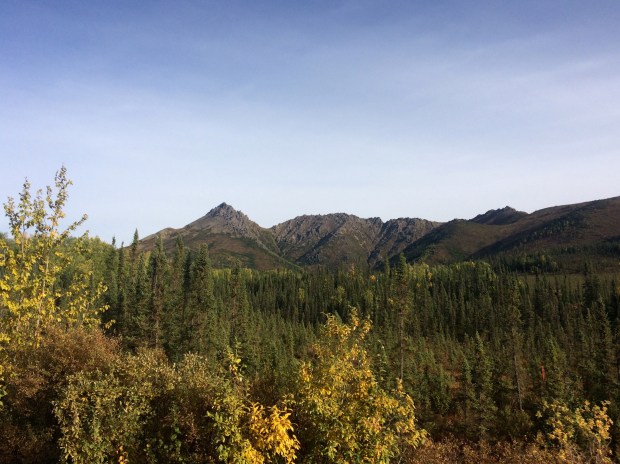
IMG_0088

IMG_0095

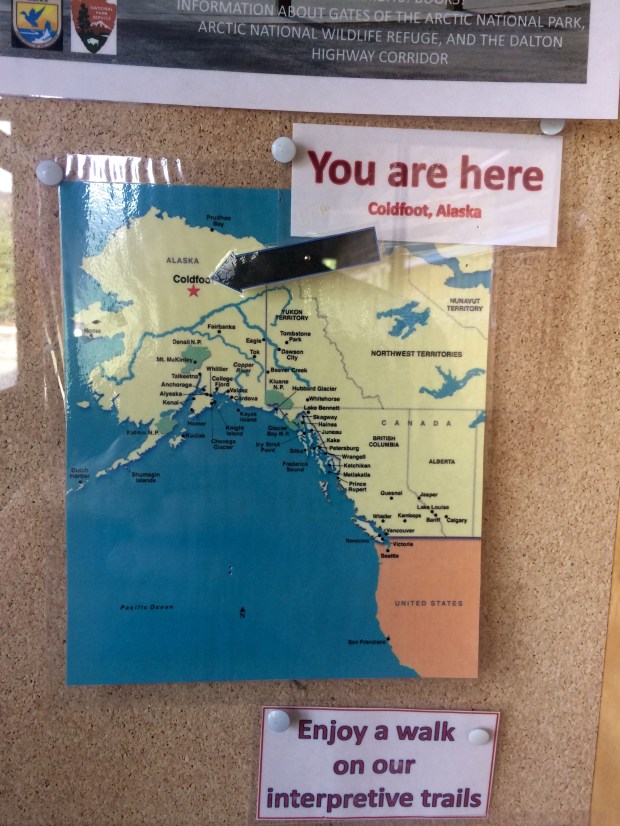
We weren’t sure what to expect when we finally reached Coldfoot after 8 long hours, and were pleasantly surprised to discover the Arctic Interagency Visitor Center tucked away on the west side of the highway. The facility is a cozy spot to learn about the Northern Lights and the flora and fauna of the area, and they have maps available and flyers with information about Coldfoot, Wiseman, and Deadhorse since there’s no cell service all along the highway.
IMG_0105

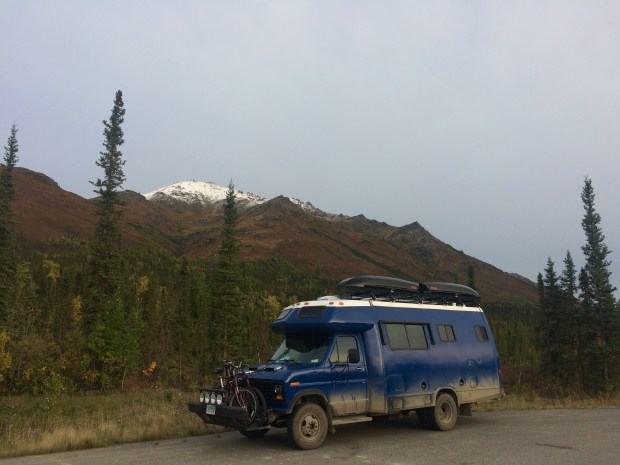
They also print out the weather forecast for the towns and the Atigun Pass, which on our visit showed snowflakes in the next day’s box. We’d already made it halfway there, so there was no turning back. We filled up with gas across the road and had a surprisingly top-notch dinner buffet at the restaurant/bar/gift shop/one building in the town that felt kind of like a church basement but really served up a mean meal. Then we drove just a bit north of town to a nice little turnout for the night.

IMG_0110

IMG_0114

IMG_0134

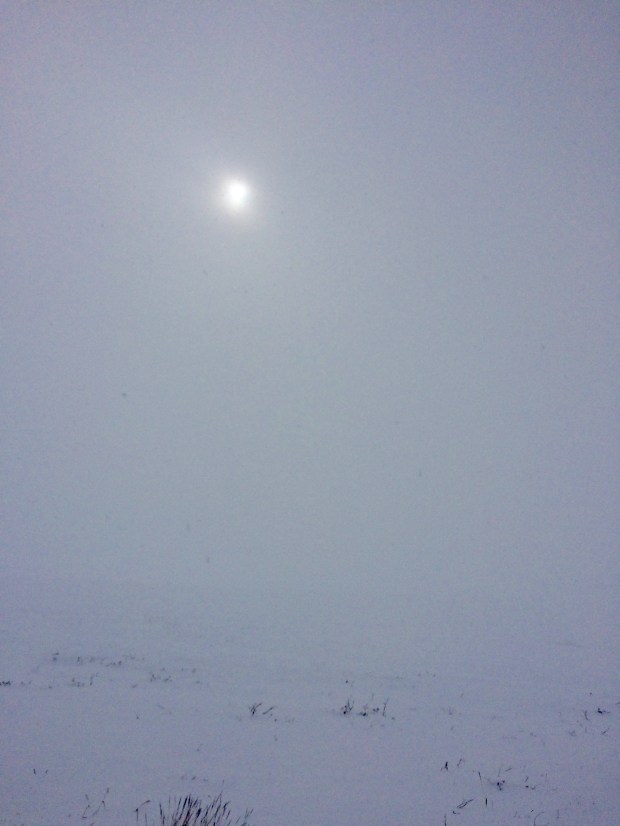
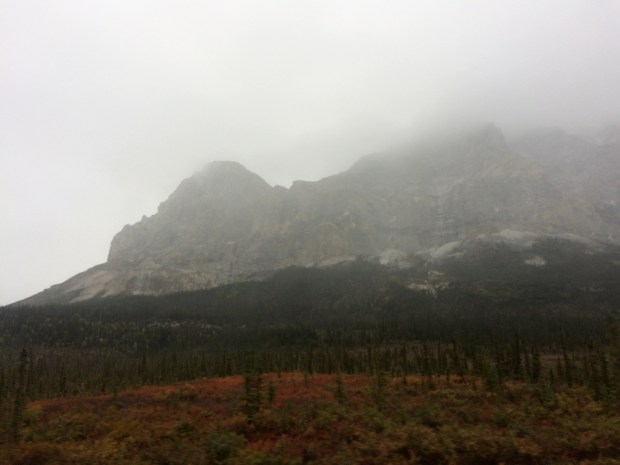
As predicted, the next day was super cold and foggy and the snow loomed on the horizon.
IMG_0148

We could barely see the scenery behind all that fog!

IMG_0154

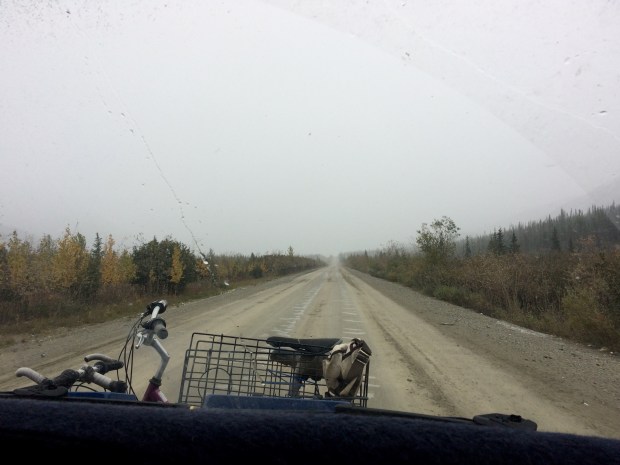
There were huge mountains on all sides but after a while we couldn’t see them even a little. It was just a blank white backdrop in every direction.
IMG_0155

As we gained elevation approaching the Atigun Pass, the snow set in so suddenly that we were climbing the pass before we realized it and it was too late to chain up. If there were any turnouts we couldn’t see them at all, and there was barely enough room for two cars to pass one another, much less to pull off enough to not get hit by other passing vehicles.
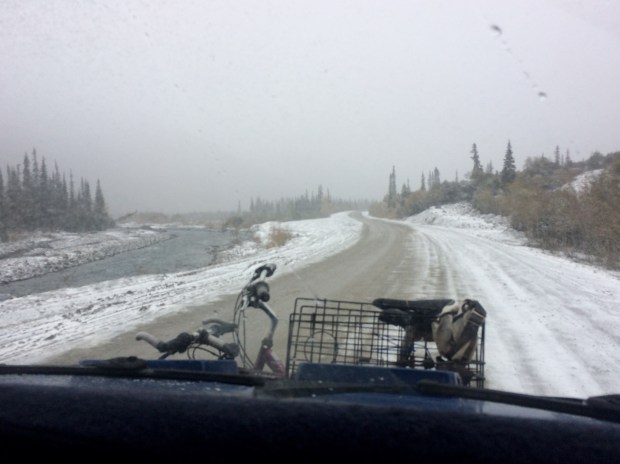
IMG_0156

We climbed and climbed, following the guard rails since that’s all we could see, and hoping against hope that the speedy ice road truckers wouldn’t blast by us.

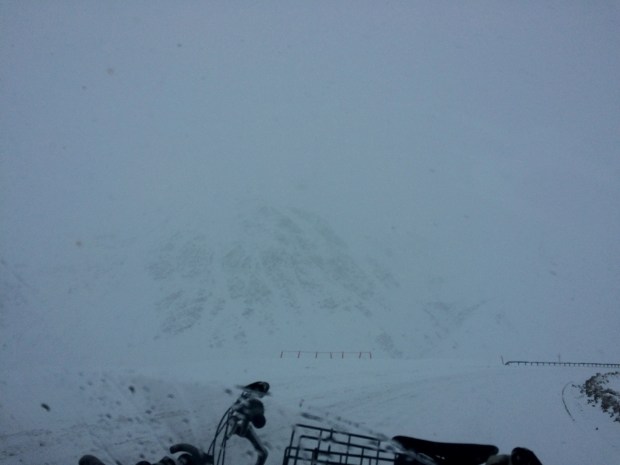
IMG_0175

IMG_0177

At least we could read the road signs. . . what does that one say? Avalance Area? Oh good.
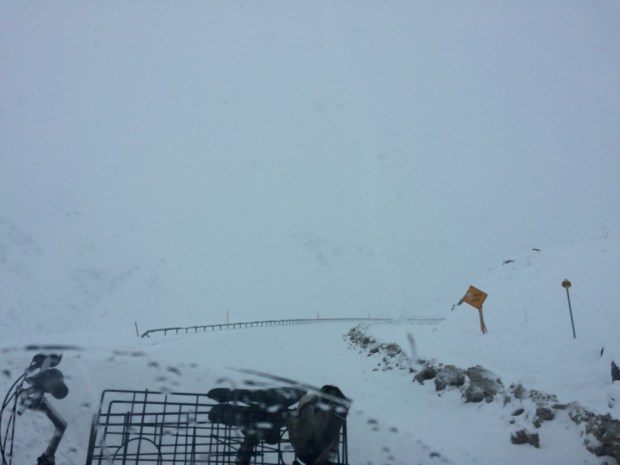
IMG_0178

Andy handled that Turtle brilliantly, and I alternated between nervous picture taking and looking at the sky so I wouldn’t have to look over the dropoff into the white abyss. We finally made it through, and amazingly encountered no trucks. But even after the pass, the roads were so slippery that we pulled over on the road that leads to Galbraith Campground to chain up as a precaution.

On the return drive, we noted this spot was where we’d pulled over and were shocked to discover that there had been mountains surrounding us the whole time, but we had no idea.
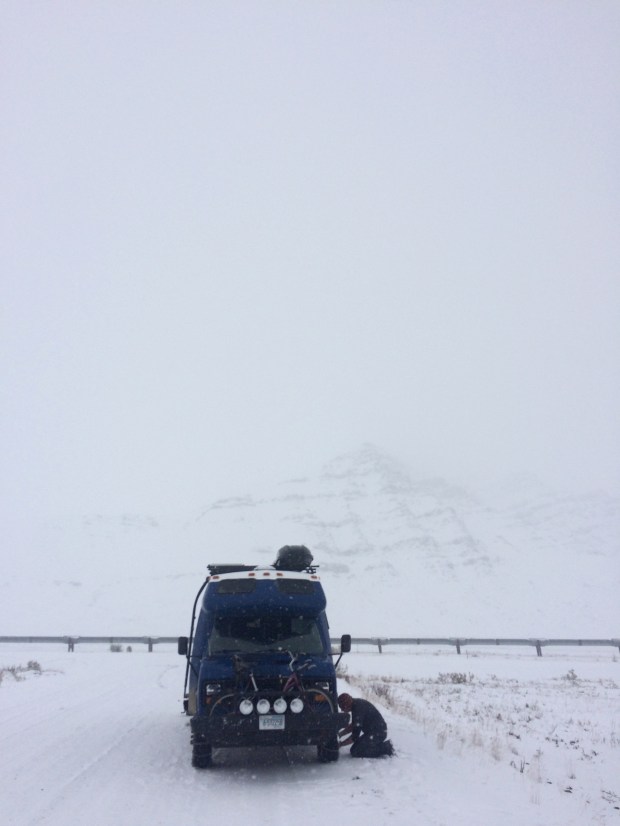
IMG_0205

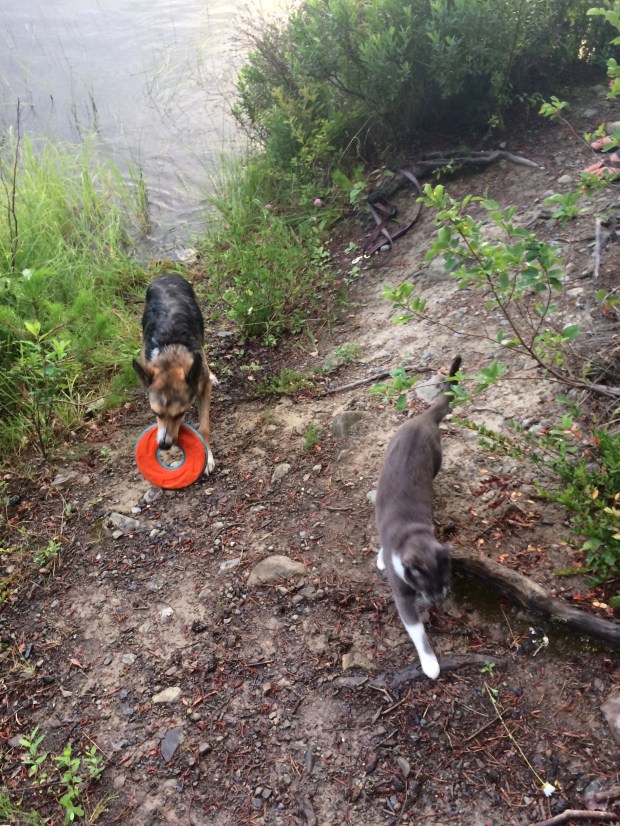
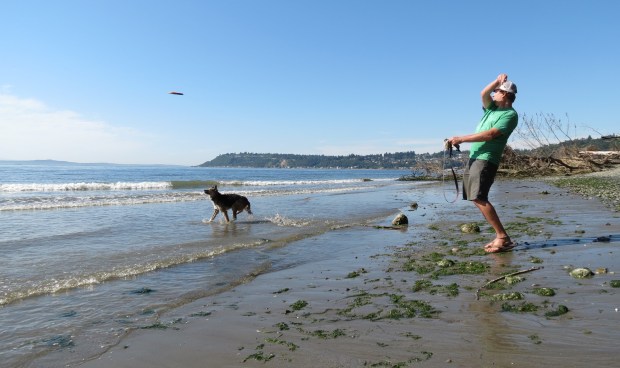
Scout loved this stop. He’s a real snow hound, and he bounded through the snow and grazed on it and tried to get me to run with him, but it was too slippery. We did get an arctic frisbee session in though.

IMG_0212

IMG_0195.jpg

IMG_0215

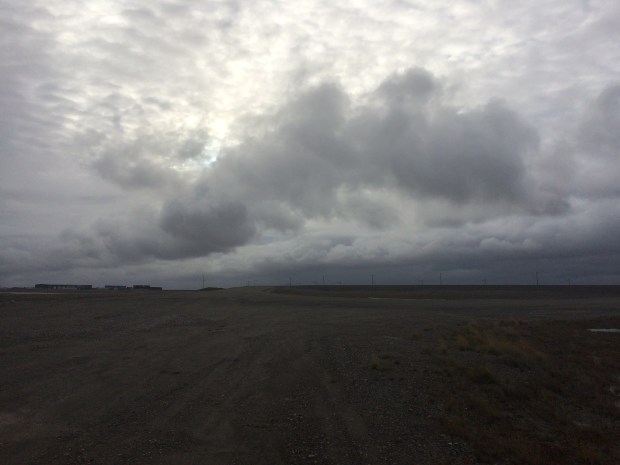
Soon the snow lessened, so we asked a driver on the CB if there was any more snow between us and Deadhorse. He said it was nothing but mud, so we removed the chains and bumped lurched down the road the rest of the way through the arctic tundra. It felt like being on another planet. It’s completely flat as far as the eye can see!
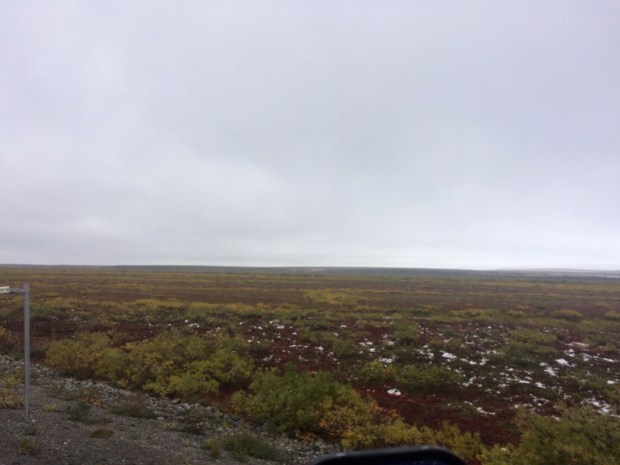
IMG_0248

From the literature we took from the Visitor Center, I learned that because the ground is all permafrost beneath the top layer, there is a lot of standing water in the tundra because it has nowhere to go. Seeing little puddles and lakes everywhere wasn’t at all what I expected, but it was really interesting and beautiful.
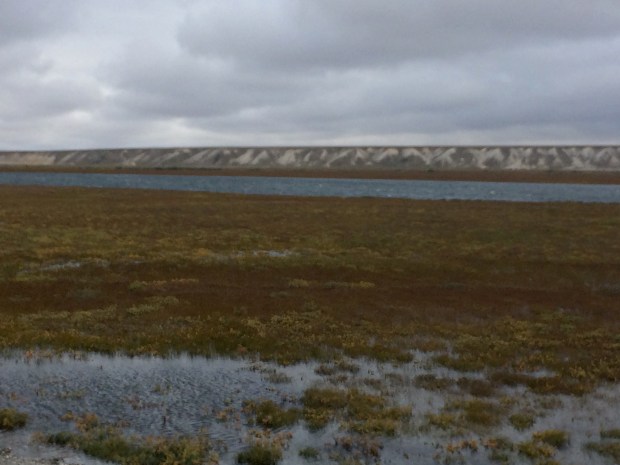
IMG_0262

After 10 exhausting, jarring hours, we made it to Deadhorse!
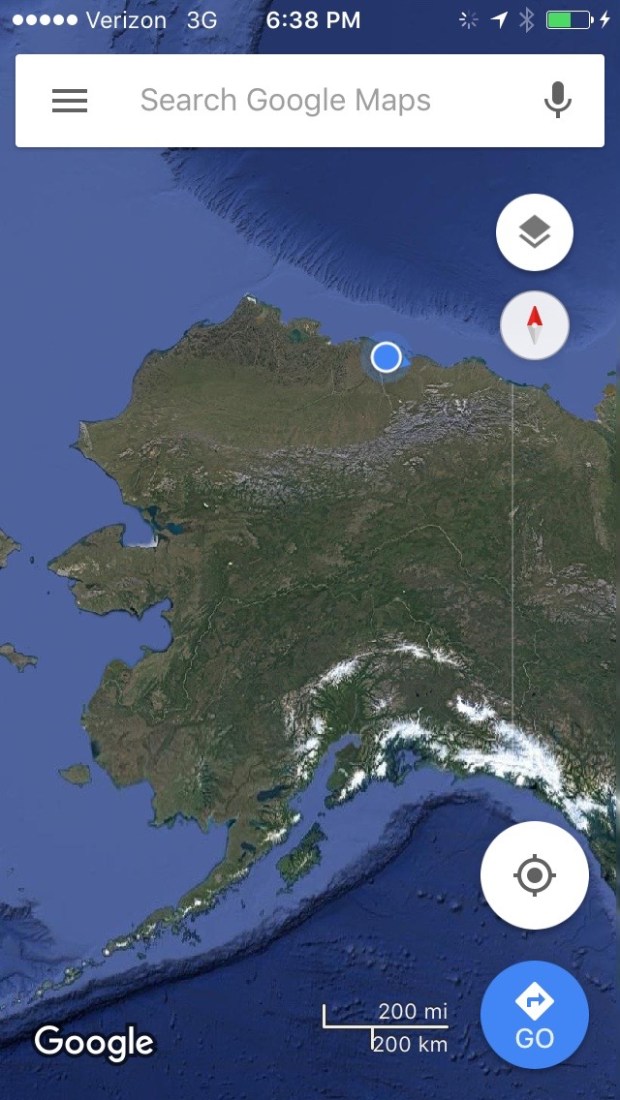
IMG_0263

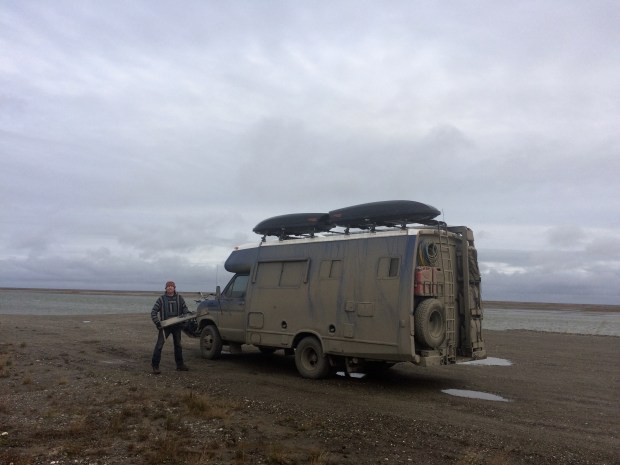
We really felt like we were on top of the world. I put on 10 layers and Andy put on his one extra layer so we could examine the Turtle and let the animals out. Gracie hopped out, felt the cold, and jumped right back in. Scout was unfazed and just wanted to play frisbee again.
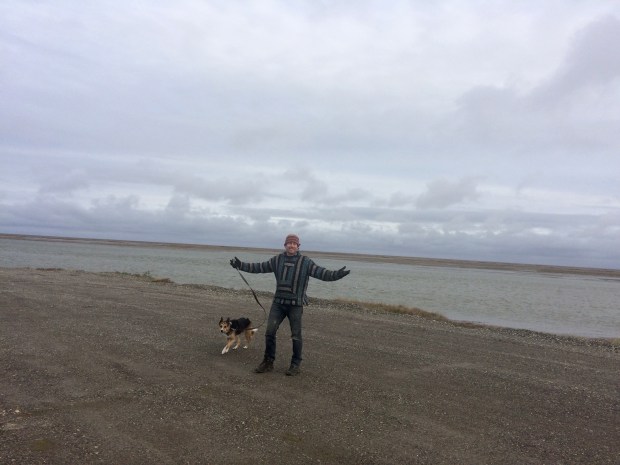
IMG_0278

We were thrilled and amazed that the only part that had come off the Turtle had been removed intentionally—as we drove with the chains on, they were slapping into the corner of the running board on Andy’s side, so he just took it off. Otherwise, we’d made it in one piece!
IMG_0271

IMG_0273

We were worn out by the drive, so we hopped back in to cozy up for the evening and admire the view out our living room windows.

IMG_0266

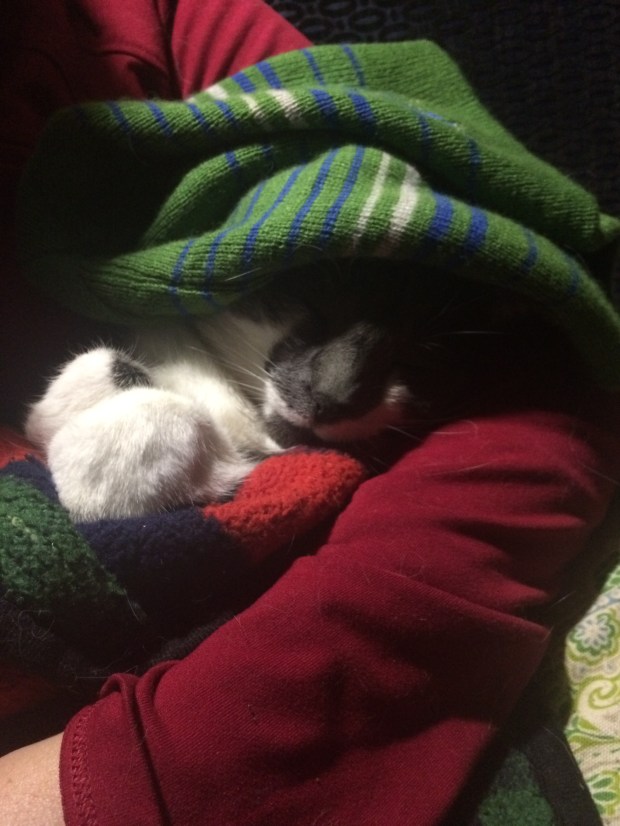
We’re all good at getting cozy, but Gracie is the professional. She zonked out so hard that when I jokingly put my hat on her head, she just slept right through it. We all could relate, and the whole gang slept like logs that night, excited to explore the northiest north the next day!
IMG_0313

The Road to Alaska – Part 8: Feelin’ Fall-y in Denali

Our adventure of a lifetime was in full swing by the time we left Anchorage for Denali National Park, which was our second park in Alaska so far.

IMG_9498

IMG_9556.jpg

IMG_9561

IMG_9548

IMG_9512

IMG_9754

Alaska has 8 National Parks:

  • Denali
  • Wrangell St. Elias
  • Gates of the Arctic
  • Kenai Fjords
  • Glacier Bay
  • Katmai
  • Kobuk Valley
  • Lake Clark

Due to the terrain and undeveloped nature of the state, however, only two are accessible by car: Denali and Wrangell St. Elias. We’d stopped at Wrangell St. Elias on our way to Valdez, but didn’t spend much time there since we were working with a bit of a deadline and the park is so huge that it could take hours just to see a small portion anyway. We did take a little walk through the park and saw both the namesake Wrangell and St. Elias ranges, and had even camped out with a beautiful view of the mountains the previous night.

IMG_8368

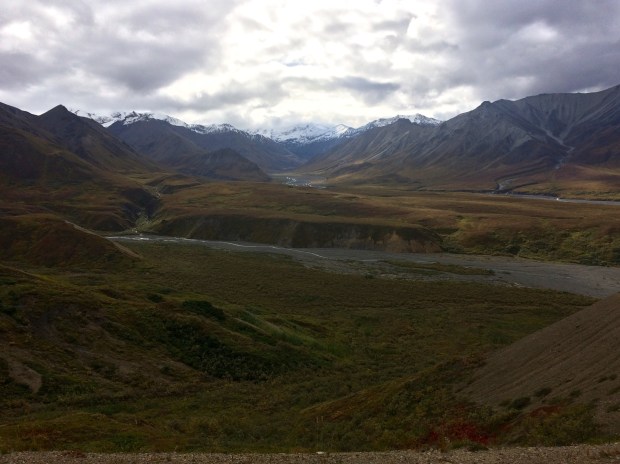
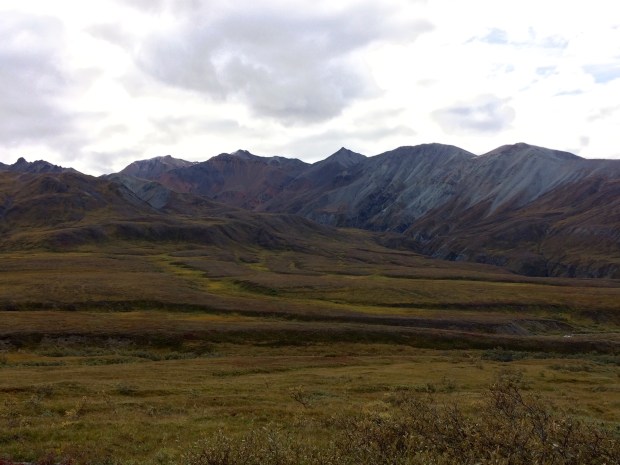
Denali was the next on our list, and we couldn’t wait to get in there and see some wildlife and hopefully Denali (a.k.a. Mount McKinley) itself. They say on average only 1 in 3 visitors gets to see the mountain, as it’s often socked in by clouds or fog, and we had a cloudy forecast. So we arrived with fingers crossed and bought our tickets for a bus tour the following day. I didn’t know this before we went, but Denali National Park is only accessible to the public for 15 miles of the 92-mile road into the park. You can drive in as far as Savage River, but after that all tourists—other than those staying at Teklanika Campground—must pay for a bus tour in order to access the remainder. Some of the tours can last as long as 12 hours, but we went for an 8-hour ride since we had a doggy at home who would need to go out. It was a chilly morning, and the windows were steamed up for the beginning of the trip, but soon they cleared and we could all sit back and watch the fall colors roll by.

IMG_9632

IMG_9629

IMG_9617

IMG_9626

It’s been startling how quickly the season has advanced as we travel north! It has accelerated the timeline, but luckily I love fall and I’m exactly in the mood for it.

On the way to the Visitors Center that would be our turnaround point, we stopped a few times and got to hike around, use bathrooms, and take pictures.

IMG_9644

IMG_9649

IMG_9651

IMG_9721 (1).jpg

Along the drive we saw ptarmigan, Dall sheep, moose, Arctic ground squirrel, and a mama grizzly bear and two little cubs in the distance running along fast! There was much speculation as to why they were running, since they’re so close to hibernation that they should be conserving calories. Our guide guessed that the mama could smell a male grizzly nearby and she was trying to protect her cubs. We stayed and watched for a long time, and still they ran and ran until we lost sight of them.

We continued on to the Visitors Center, and had a little time to walk to the lookout and admire the view.

IMG_9673

IMG_9662

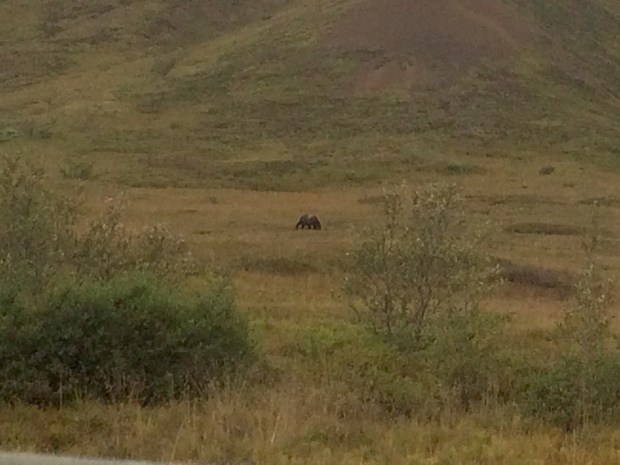
Then back onto the bus, where we had fewer people since many had started hikes and would take another bus down later. So for the whole trip back we had great views on both sides of the bus, which really came in handy when a big male grizzly was sighted on the opposite side of the bus. We hopped over and I took some pictures that are grainy, but still fun to see.

IMG_9716

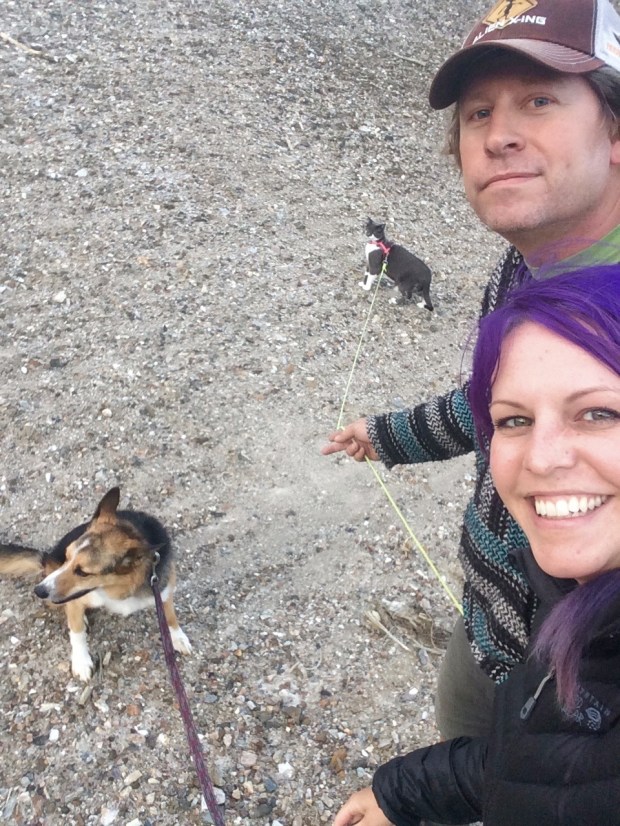
We’d found a nice spot to park for the few nights we’d be in town, so we went back and settled in for the evening, taking the animals on a nice walk and even snapped our first 4-person selfie with the pets.

IMG_9596

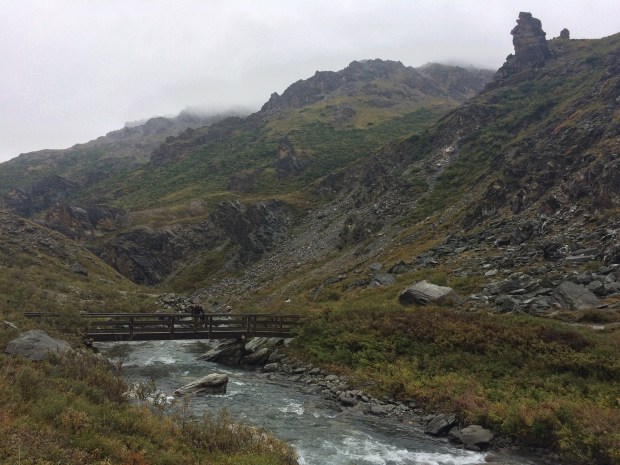
The next day we went back to the park and took a walk around Savage River, which was moody and cozy in the drizzle and fog.

IMG_9889

IMG_9776

IMG_9859

IMG_9866

IMG_9867

IMG_9873

IMG_9879

IMG_9857

IMG_9905.jpg

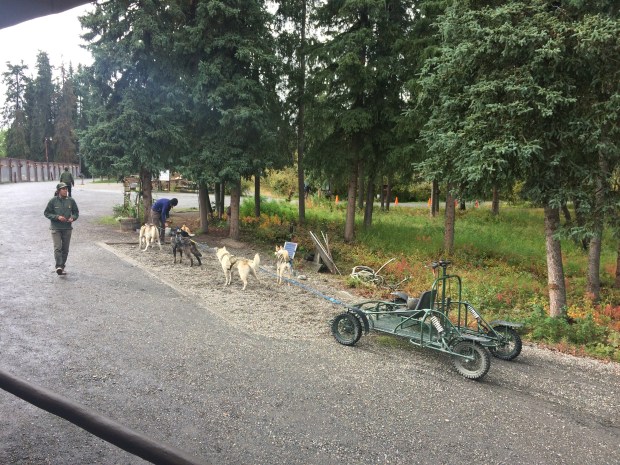
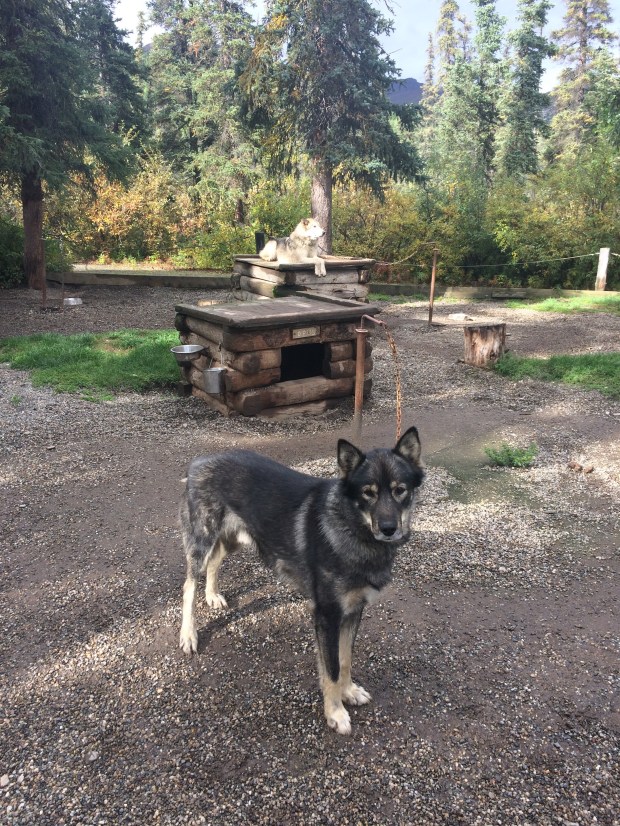
During the summer the park has three daily demonstrations with their sled dog team, which we had timed our hike’s end to attend. I was so excited to see the dogs. They are actual working dogs who spend the winter helping the rangers get around and haul supplies to the cabins and outposts around the grounds. Since the park is a designated wilderness area motorized vehicles aren’t allowed anyway, but additionally the dogs are part of the history of the park and actually much more reliable than vehicles.

IMG_9911.jpg

They are bred not for appearance in any way, but for their athleticism, double coat, closeness of paw pads (so ice doesn’t pack between them), bushy tail (to keep them warm when they sleep outside with tail over face, creating a warm pocket of air), and a trait where their arteries and veins are very close together which helps keep their blood warm as it travels around their bodies. But their appearance is still pretty darn cute too.

IMG_9918.jpg

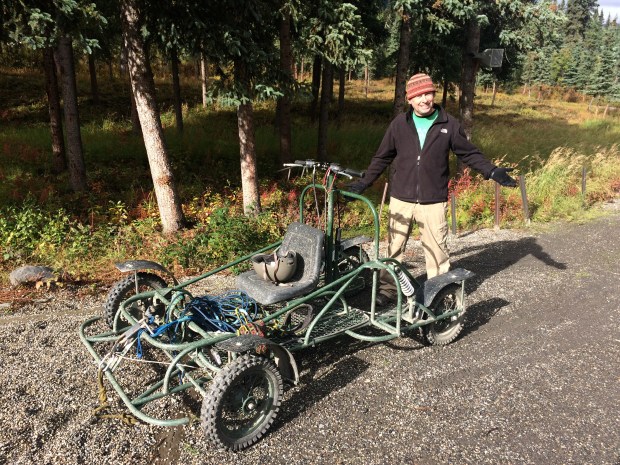
They were so sweet and eager to run. The trainer told us that they harness two fewer dogs to the summer “sled” for the demonstration than they do for the winter sleds, because if they didn’t she’d end up in the ditch!

Andy of course loved the sled.

IMG_9916.jpg

We would have loved to stay extra days to climb all the mountains and watch fall continue to move in, but we’d planned a trip up to the Arctic Ocean and every degree counts when you get close to freezing. So we pressed on Northward for what was to become one of the greatest adventures yet!

IMG_9479

The Road to Alaska – Part 6: Anchorage, AK with Friends

If I’ve said it once, I’ve said it a thousand times (I may have actually said it a thousand times): one of the best things about Turtle Life is the flexibility and freedom to visit our friends and family. And during our time in Anchorage, we were lucky enough to be able to spend quality time with both friends and family!

First we spent a week with Andy’s longtime buddy Sam and his wife Sara. Sam is a professor and has the summer off, so we took full advantage of his schedule by having a full week of fun.

IMG_8922

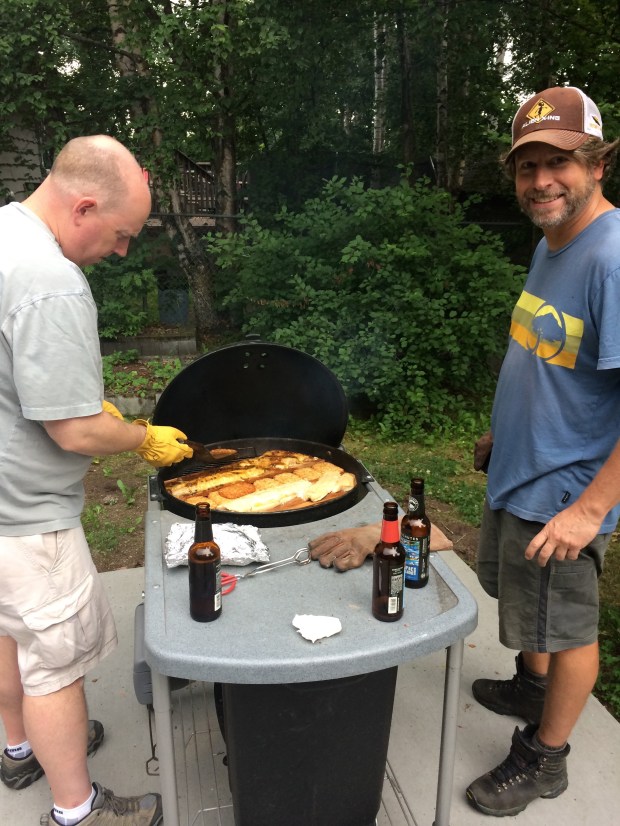
Andy and I had caught some salmon in Valdez and kept two to bring along, which Andy prepared in his famous marinade and Sam grilled up for us.

*A tip if you like delicious things: Sam also BBQ’s up frozen seasoned hashbrowns as a side dish, which were so good I just got jealous of myself when I saw this picture of the hashbrowns I was about to eat when I took the photo.

IMG_8756

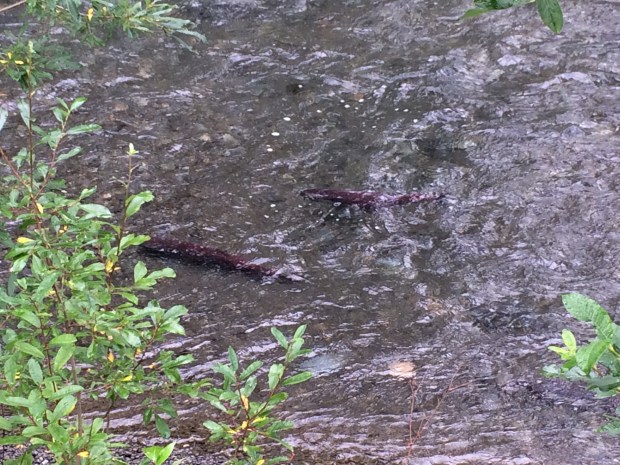
Sam took us on a field trip to the fish hatchery, where we saw loads of spawning salmon! Pictured are only two, so please just take my word for it that there were a bunch.

IMG_8781

Sam, Sara, and their son Oliver took us for a crisp and refreshing rainy-day walk up to Portage Glacier.

IMG_8844

IMG_8825

We hadn’t seen snow in a while, so we had to take advantage of the wintery playground and make ourselves a slide. I paved the way with the classic bum slide, and Andy immediately took it to the next level, as he is wont to do.

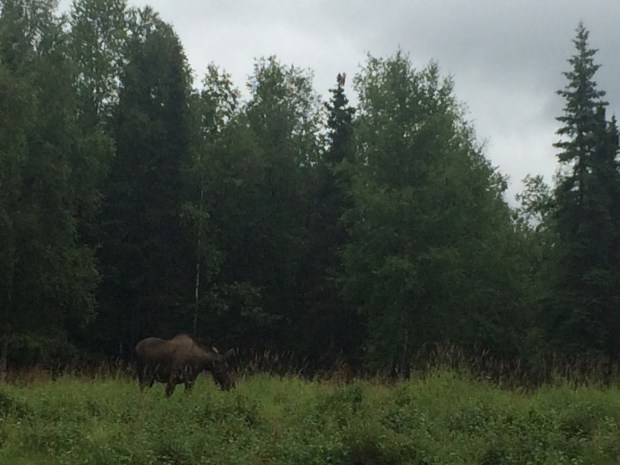
On the way home, all our dreams came true when we spotted a moose grazing right by the road in town!

IMG_8847

We were really beginning to believe the area moose were a rumor created by the Alaska Chamber of Commerce.

And luck was really on our side—or else the COC had gotten wind that we were on to them and planted that moose in two spots so we wouldn’t spread the conspiracy theory around—because a day later we saw another one!

IMG_8888

This one was on a walk through a beautiful park on the way to the beach. She had been grazing on the trail blocking hikers, and the locals who warned us about her presence smiled curiously when I threw up my hands and cheered about a moose on the trail. Somehow they could tell right away that we weren’t from around there.

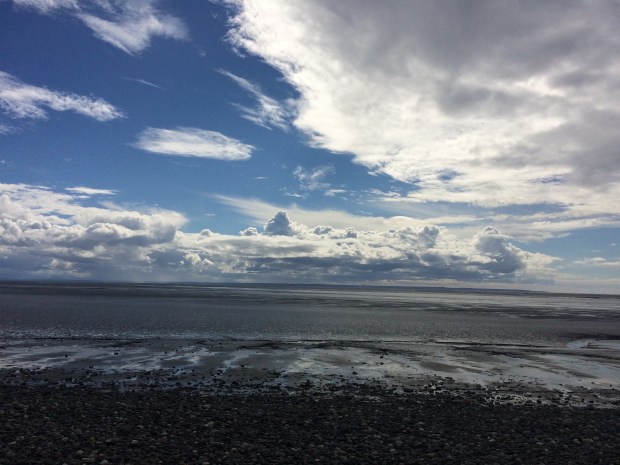
We stood up the hill from her to admire her moose-y cuteness, then walked on to the ocean since it’s weird to stare at a moose all day. And what a day for the beach!

IMG_8900

IMG_8905

IMG_8913

Another highlight of the trip was the delivery we had waiting for us at Sam and Sara’s place! After catching so many fish in Haines and Valdez, we decided we should spring for a vacuum sealer so we can pack more of our fresh fish and berry picking surpluses into the freezer and keep them for even longer. I was super happy about our newest purchase, and Andy was even a little more so. (Sam and Sara, I’m aware that I’m grossly underselling Andy’s excitement about this purchase, but if I did his joy any justice everyone would think I was exaggerating.)

Well of course we had to test the thing out. An hour and 50 vacuum bags later, Andy had made it as far as testing out vacuum sealing tortilla chips just to see what would happen, and suddenly it was bedtime.

IMG_8859

When we got back to the Turtle for the night, we found that someone had caused a little trouble back at home. The culprit still remains at large as we try to gather more conclusive evidence.

On Monday Sara was back at work, so Sam took Andy and me on a beautifully sunny and very fun walking tour of Anchorage.

IMG_8925

IMG_8930

IMG_8958

IMG_8944

I’ll have you know that we had way more than a week’s worth of fun that week. Sam and Andy are two peas in a pod, and it’s awesome to see your sweetheart having fun like the old days with his buddy.

Although we tried our best to convince Sam to blow off another week’s commitments to goof off with us some more, he somehow decided to take the responsible road. Go figure!

Before we moved onto the next leg of the Anchorage Adventure, we needed a little battery-recharge, at which point it became apparent which of our friends are helpful when it comes to naps . . .

IMG_8877

And which aren’t so much.

IMG_8785

Oh, and in case you’re still wondering what happened to the vacuum-sealed tortilla chips . . . they were all ground to corn crumbles, except for one, which stayed completely intact!

Weird and worth the suspense, right?


The Road to Alaska – Part 5: Yukon! Valdez! Gracie Cleans Her Tail!

Everything you’ve heard about the drive to Alaska is true.

Ok, wait.

I guess I don’t know what you’ve heard about the drive to Alaska. Let’s go with this instead: if you’ve heard that the drive to Alaska is mile after mile of astonishingly beautiful scenery that seems too enormous and perfect to exist in real life, then what you’ve heard is true.

Especially once you hit Yukon. I have so many photos of this drive that I promise you’re hoping I never show up at your house for a slide show. Because it would take longer to show you all the gorgeous scenery and tell the stories than it took to drive through it. But here are a few of my favorites.

IMG_8179

IMG_8221

IMG_8232

IMG_8212.jpg

IMG_8368 (1).jpg

IMG_8376.jpg

IMG_8434

IMG_8440

IMG_8442

IMG_8522

Right??

If you make the drive, be sure to multiply your estimated drive time by 2 to account for all the stoping and staring you’ll be doing.

IMG_8302

The beauty didn’t stop once we hit Alaska, of course. We went to Valdez, where we’d been told the best fishing awaited us. You’ll just have to believe me when I tell you that I caught a fish on my very first cast, and then caught two more before Andy had even finished attaching his lure! (In all fairness, he’d gallantly put mine on first, which is why I was fishing already. But it just goes to show you how good the fishing is in Valdez!) We estimate that we caught 25 fish—dollys and humpys. We kept two to bring with us and released the rest, not because we didn’t want them, but we just didn’t have any room left in the fridge after all the fish we caught in Haines. A fine problem to have, it’s true.

IMG_8563

IMG_8566

IMG_8651

From Valdez, we took a very early ferry over to Whittier. As we drank our coffee and admired the ocean, the fog made the horizon completely disappear, which was lovely.

IMG_8746

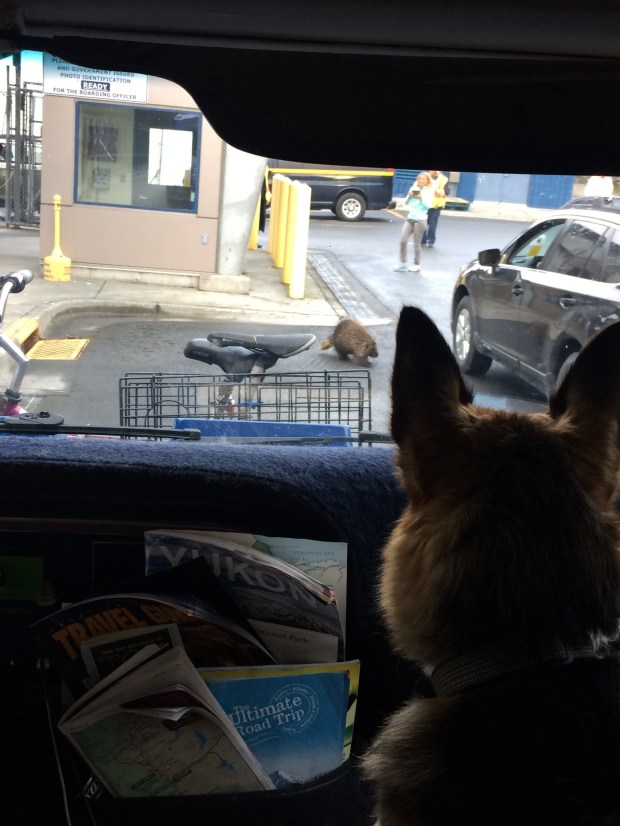
As the sun rose, a chubby little porcupine came out of the bushes and delighted everyone in the ferry line.

IMG_8721

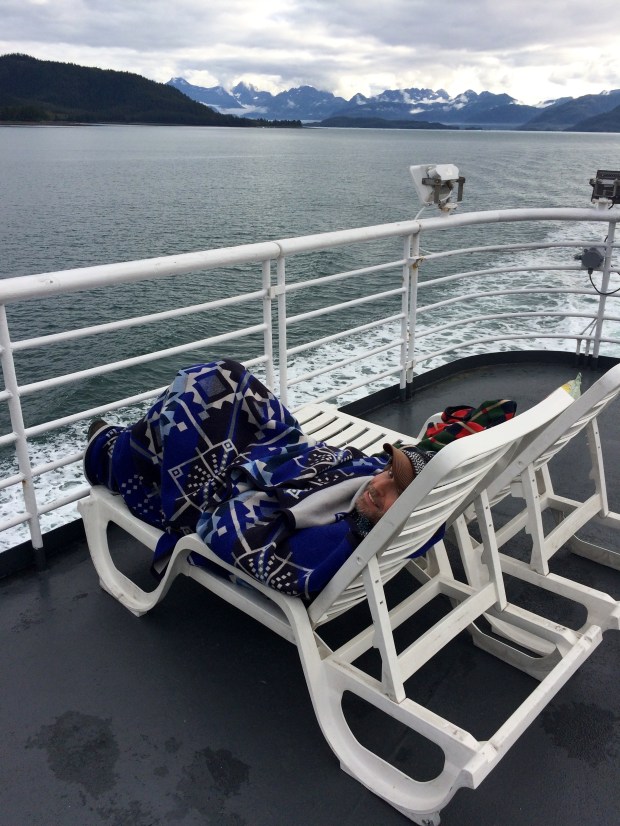
The Valdez-Whittier trip is about 4.5 hours, and so beautiful that even though it got chilly we stayed posted up on the deck under our blankets for most of the ride.

IMG_8740

Once we arrived in Whittier, we drove straight on to Anchorage. We had so much fun visiting friends while we were there that I’ll make a separate post to cover all those adventures.

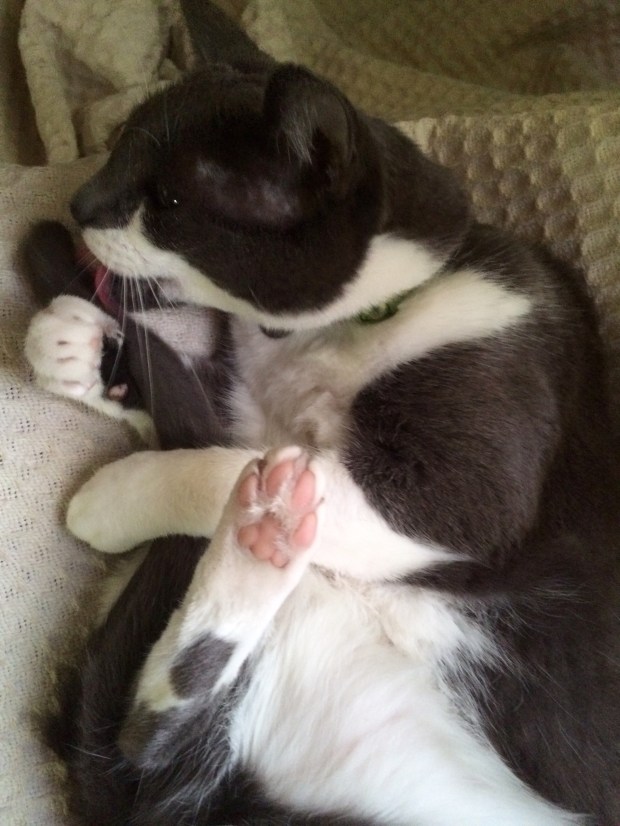
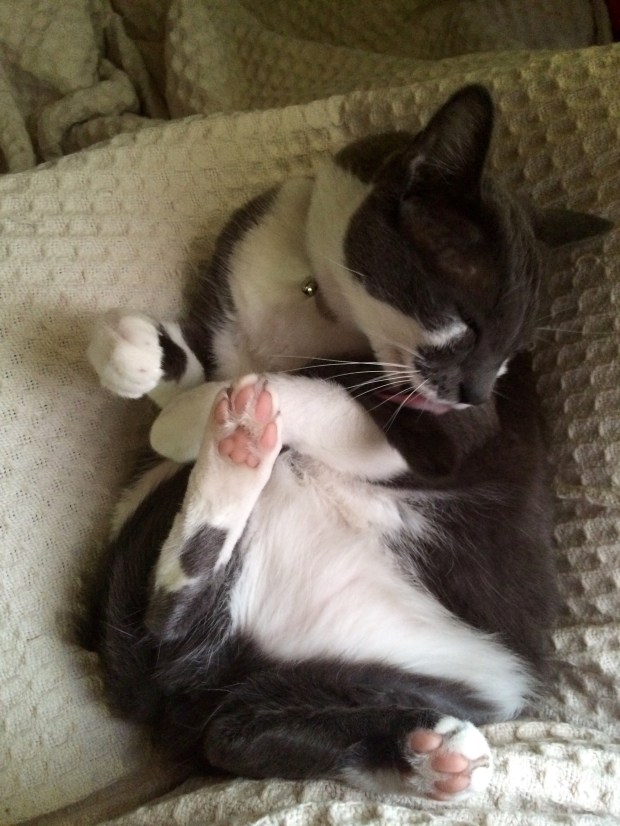
For now, I’ll make the title of the post accurate with the following pictures of Gracie cleaning her tail.

IMG_8794

IMG_8799

IMG_8802


The Road to Alaska – Part 3: New Aiyansh, Stewart, & Hyder

Holy cow, you guys.

We knew before we began the drive through Canada to Alaska that it was going to be beautiful, but somehow we weren’t even prepared for how majestic this part of the world is!

IMG_7152


IMG_6885

Every new place we go, we just look at each other, wide-eyed, and laugh out loud in amazement that we’re getting to see all this.

One of my favorite spots yet was the next stop on our map after leaving Stewart. New Aiyansh, BC and the other neighboring villages of Nisga’a are so beautiful that I can’t possibly do it any justice with words. And believe me when I say that I’ve been trying! Even when we were there, both of us were more quiet than usual.

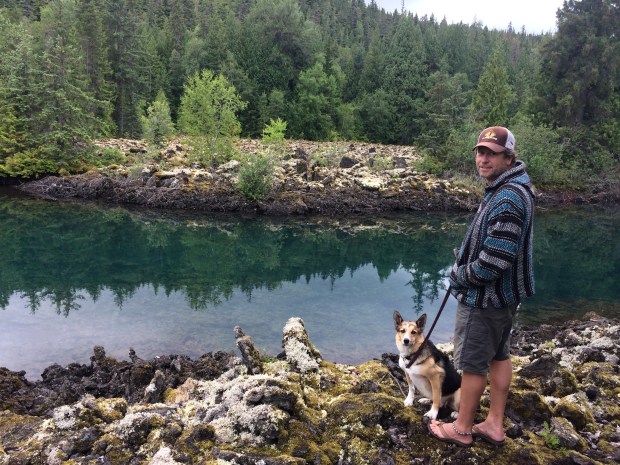
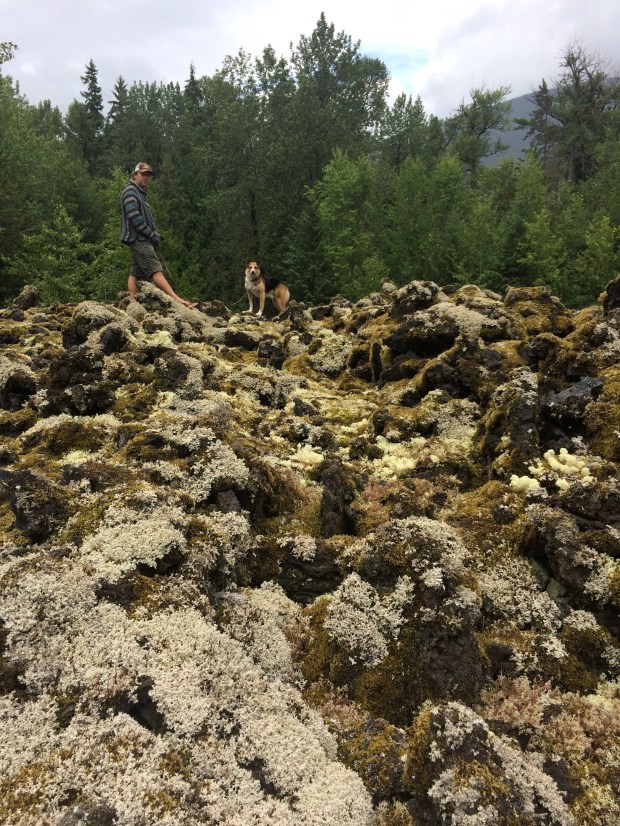
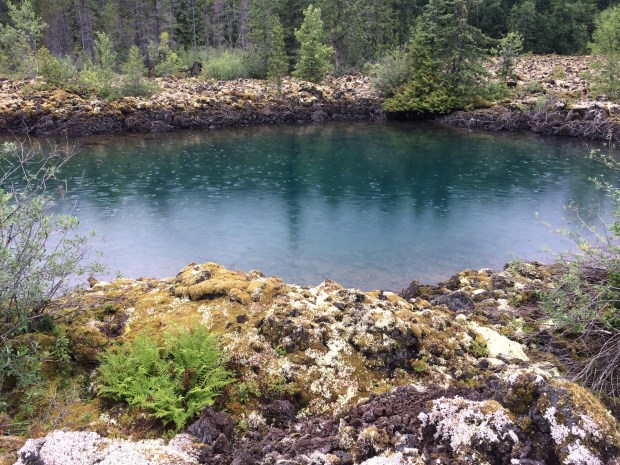
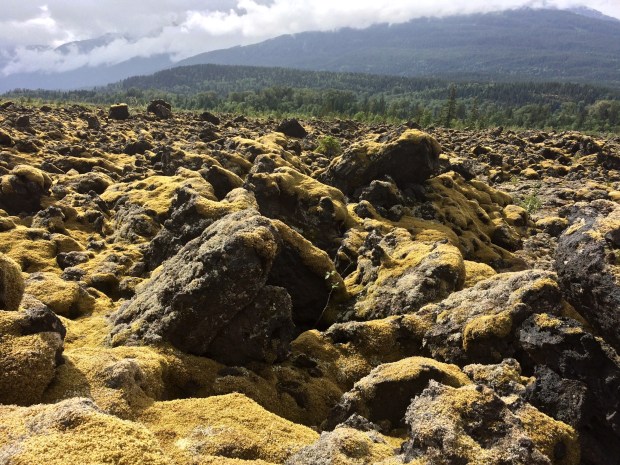
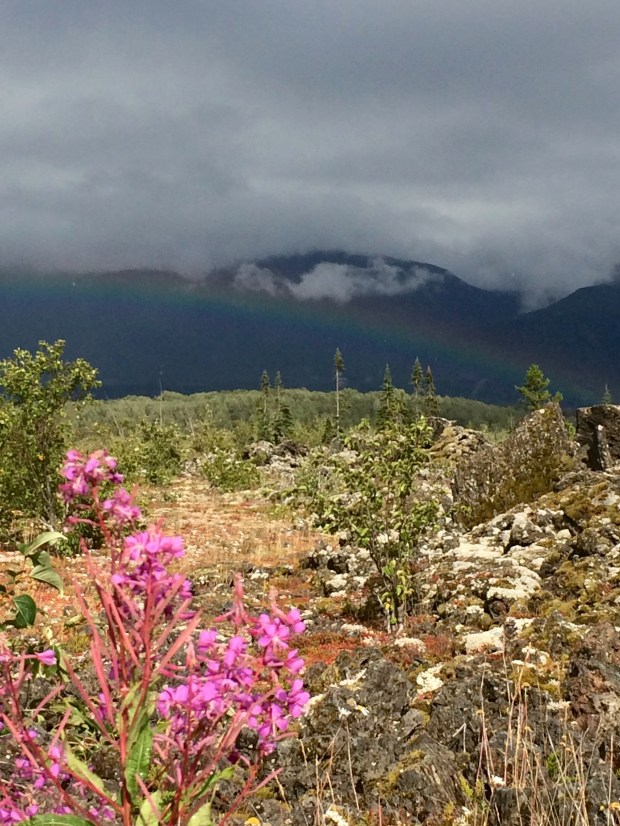
A volcano eruption in the 18th century left the area covered in lava rock, which now is blanketed in dozens of different varieties of moss, ferns and little succulents. And the pools of water scattered around the lava fields are a perfectly clear aquamarine color that felt like something out of a fairy tale.

IMG_6903

IMG_6920

IMG_6910

The Drowned Forest was a favorite stop for me.

IMG_6927


IMG_6956

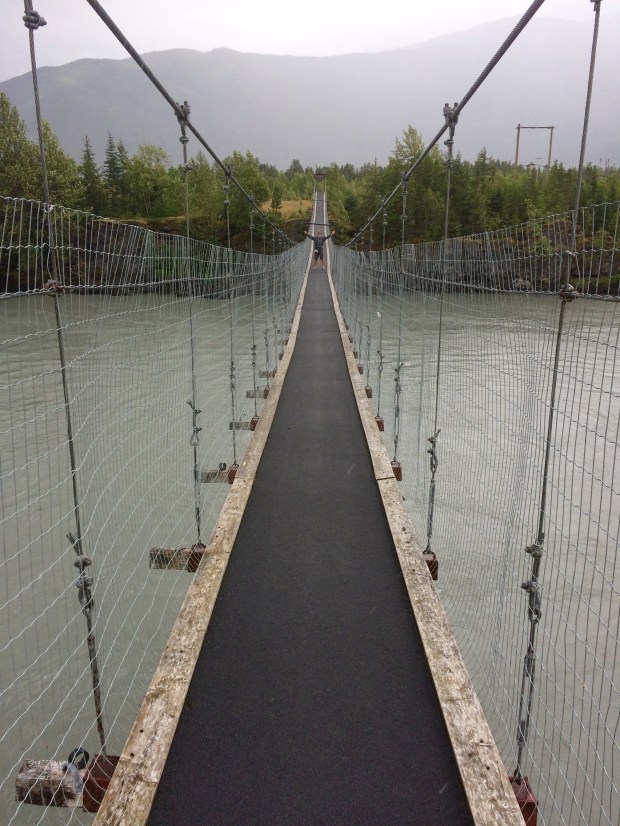
A neighboring village has a bouncy suspension bridge spanning the Nass River, so we crossed it and I quickly admired the view as I hurried to the other side. Andy, of course, loved it!

IMG_6965

IMG_6996

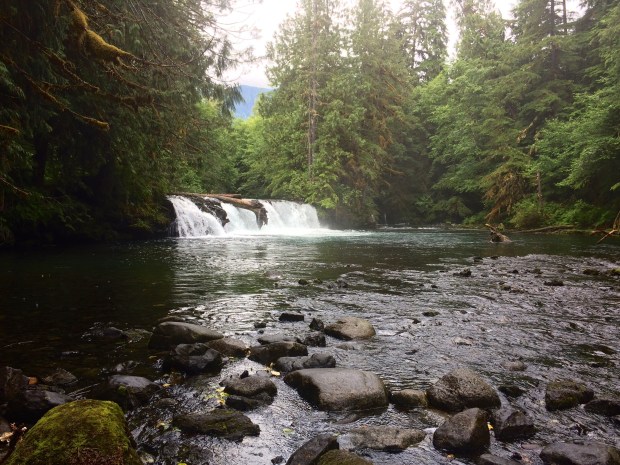
Vetter Falls was a rainforest wonderland, and we walked out as far as we could to see if we could spot the “phantom fish”—steelhead that get trapped at the falls and develop snake-like bodies with large heads—but they lived up to their name.

IMG_7029

Andy tried very, very hard though. So you have to give him credit.

IMG_7035

IMG_7042

We stayed the night at a lake near Cranberry Junction, which had a name but will now just be known as “mosquito lake” in our memory. It was a gorgeous spot for a feeding frenzy though!

IMG_7087

IMG_7107

IMG_7116

IMG_7120

Although staying indoors to escape mosquitos has its advantages.

IMG_6873

The next day, we drove to Stewart, BC, which took us five times as long as it would have had we not stopped every half mile to marvel at the mountains, glaciers, and waterfalls.

IMG_7142

IMG_7145

IMG_7196.jpg

IMG_7211

Right next door to Stewart is a little town called Hyder. . . Alaska! They’re minutes away from one another, and have a very similar vibe; they’re just separated by a border agent on the BC side.

IMG_7215

A local tradition is to get “hyderized” at the Glacier Inn, so we did. A bracing shot of Everclear later, we had our official cards!

The next day, one of the locals we’d met found us and invited us out for a day of fishing on their boat! We had a phenomenal time, especially considering the weather was clear and sunny so we could venture out on the speed boat to explore, fish and pick wild blueberries.

IMG_7281

IMG_7243

IMG_7259

IMG_7270

IMG_7279

There were other perks as well:

IMG_7347

It was such a treat and we’re so grateful we got to join! Thanks again, Kim and David!

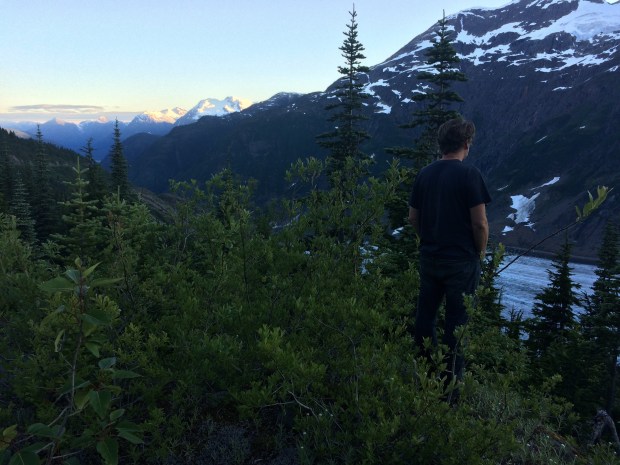
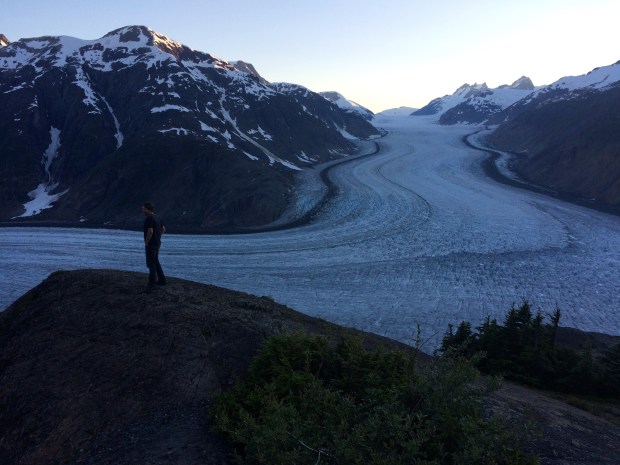
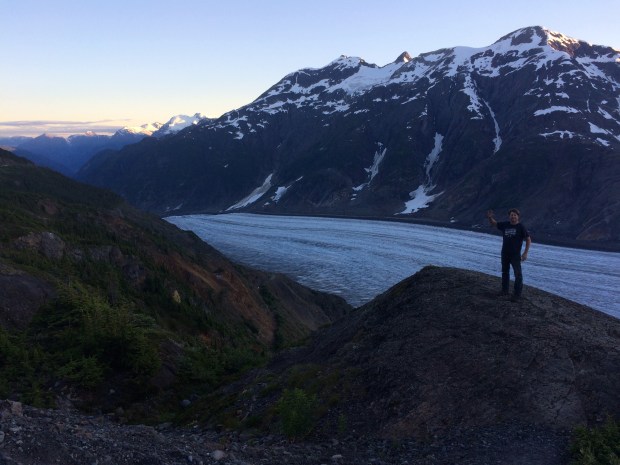
After we left the dock that evening, we drove up to the Salmon Glacier, the fifth largest glacier in Canada. Because the sun doesn’t set until 11 p.m. around here this time of year, we had plenty of time to drive up and stop for photos along the way.

IMG_7364

IMG_7371

IMG_7382

IMG_7387

IMG_7391

IMG_7396

IMG_7399

We found a great lookout to stop for the night, and watched the sun set behind the mountains.

IMG_7424

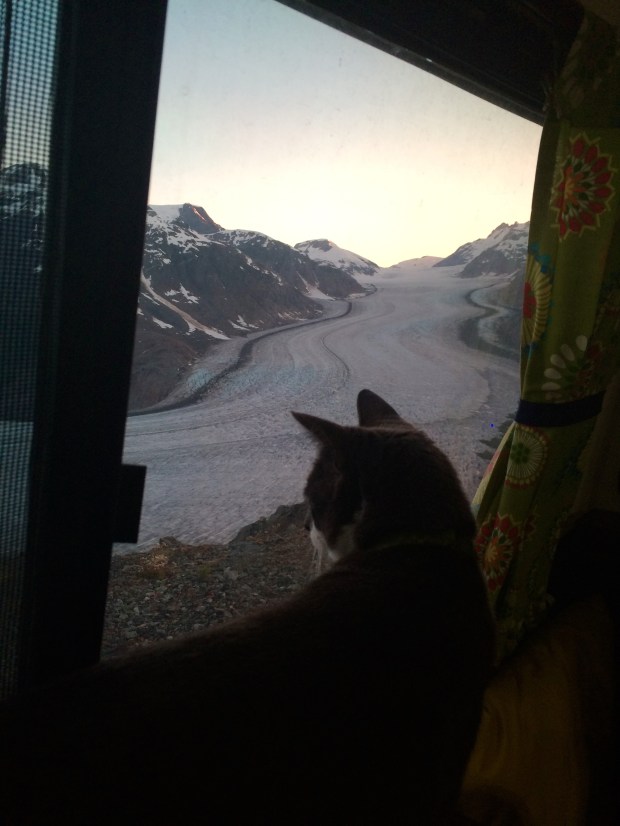
The view from our front yard when we woke up the next day was pretty incredible!

IMG_7451

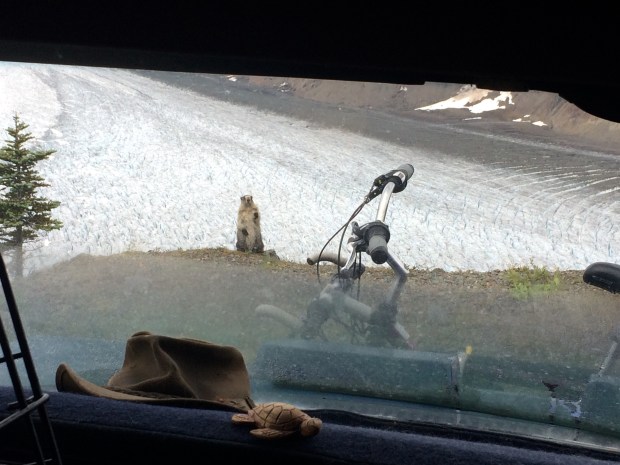
We even had friendly neighbors!

IMG_7435

Scout and I took a little walk while Andy made coffee.

IMG_7446

I love our morning coffee views these days.

We drove back down the mountain to Stewart, where we got our fishing licenses and headed out to the dock to see if we could catch a few crabs. We had great luck catching crabs, but for a little while it seemed like the only crabs in the water were females! We met a local who was also crabbing from the dock and enjoyed hanging out with him while we all released the ladies back into the ocean. By the time he had to go he’d caught a number of prawns, which he gifted to us. We were totally thrilled. I’ve never had fresh prawns before, so it was generous and very much appreciated! Thanks again, Tim! 🙂

Well, I have more tales to tell and I’m not nearly caught up all the way yet, but I just looked at the time and it’s almost grizzly bear feeding time here in Haines, and we want to see more bears!

Yes, I said more! Spoiler alert:

IMG_7580

The Road to Alaska – Part 2: British Columbia, Eh?

Greetings from Beautiful British Columbia!

IMG_6107

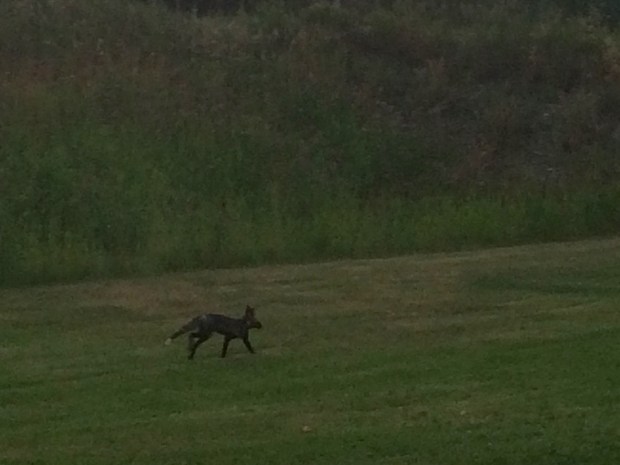
It’s been an exciting first few weeks in Canada as we make our way north to Alaska. We’ve covered some ground and have been really enjoying watching the landscape change and become less and less familiar. The road signs are more frequently featuring moose, and though we haven’t yet spotted one yet, we did see a sleek little silver fox slinking around a park as we pulled in for the evening in Prince George! So that will tide me over for quite some time.

Our first adventure over the border began in Vancouver, BC. I briefly mentioned our stay in Vancouver in my last post, but now that I have all the photos uploaded I thought I’d fill you in further on the fun we had while we were there. Especially since, despite the fact that both of us have lived in Seattle, neither had ever been to nearby Vancouver so we were really looking forward to seeing the city.

IMG_5964

One of my favorite resources as we visit new cities has been the online Atlas Obscura site, which suggests interesting attractions that aren’t found on most other “Things To Do In _______” sites. This time I told Andy that I was going to take him on a surprise tour of Vancouver and lead him to all the spots I thought sounded fun without telling him what they would be. He’s a good sport and agreed!

Our first stop was the VanDusen Botanical Gardens, which was one of the loveliest botanical gardens I’ve ever visited. The grounds are enormous, and the circuitous layout lends itself to a full day of wandering through paths and gardens reminiscent of Alice’s Wonderland.

IMG_5885 (1).jpg

Check out this delphinium garden:

IMG_5917

IMG_5919.jpg

Ok so if I’m being honest, the gardens were lovely, but the real reason for going here was something that’s been on my to-do list for as long as I can remember:

IMG_5953

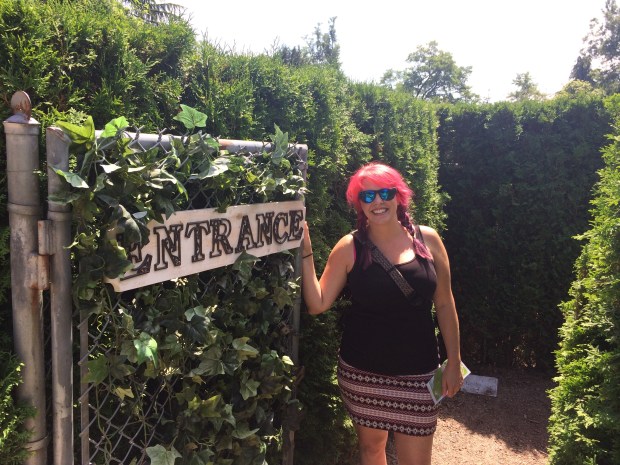
A hedge maze!

It’s one of only six Elizabethan hedge mazes in North America, and it was so much fun and more challenging than we gave it credit for going in.

Afterwards we went to the Granville Island Market, which my uncles in Seattle had highly recommended to us. It took us some time to find a spot to park, and it came in handy that Andy is a wizard. Look at this park job!

IMG_5960

We wandered around the market and were totally in love. It was a bustling throng of people and the wonderful smells of hot espresso, cooking meats, fresh flowers and herby soaps. After picking up some darling wood map pins, we had lunch at a tiny Chinese restaurant downtown and then hit the road for the next stop on the secret tour . . .

IMG_5983

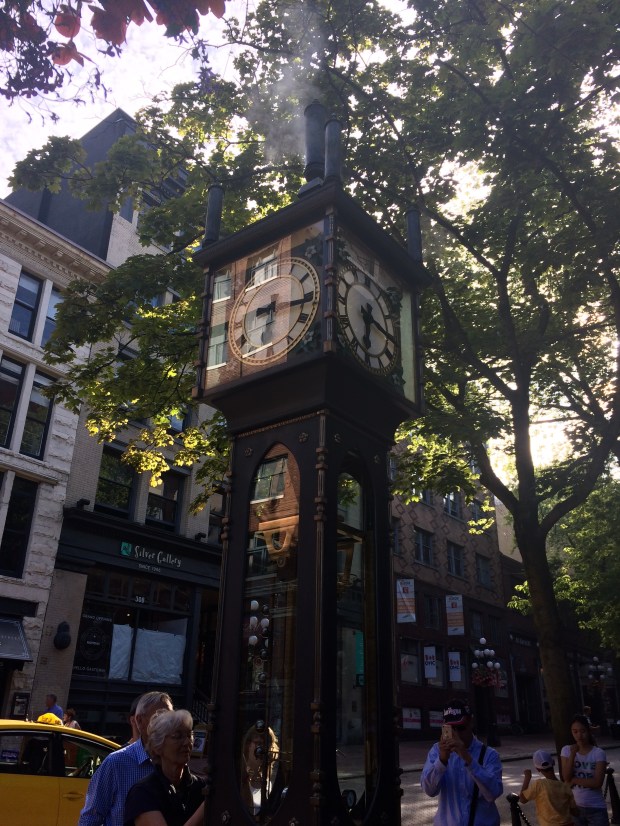
The Steam Clock in Gastown. It’s a working steam clock built in 1977, which you can look inside and see the gears and levers moving. We were even there to hear the hourly musical whistles blow. In honor of the clock, we popped into nearby Steamworks Brewing Company for a beer.

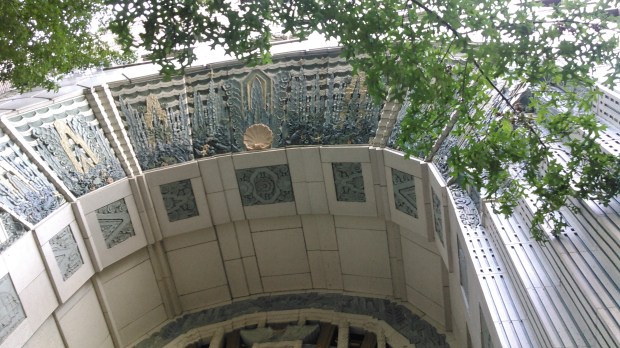
Next we walked a number of blocks to the Marine Building, a remarkable Art Deco building that was conceived to look like it had risen from the sea, and it truly does. I mean it looks like something from a movie . . . oh wait, it is! To my fellow nerds out there, it’s also been featured in a number of movies, as the Baxter Building in Fantastic Four and for The Daily Planet in Smallville. Fun!

KIMG0583.jpg

KIMG0584.jpg

Afterwards we walked to see the Digital Orca sculpture, which we weren’t able to see up close due to an event that had the terrace roped off. (If you look closely, you can see empty glassware at the tail.)

KIMG0587.jpg

It was a full day in Vancouver, and we left very satisfied. But after over a month staying in cities, I’d been so looking forward to getting back outside, and was happy to arrive at our next campsite at Gillis Lake. We stayed two nights, and got plenty of reading and swimming done.

IMG_6067

IMG_6039

IMG_6059

IMG_6014

IMG_6053

IMG_6004

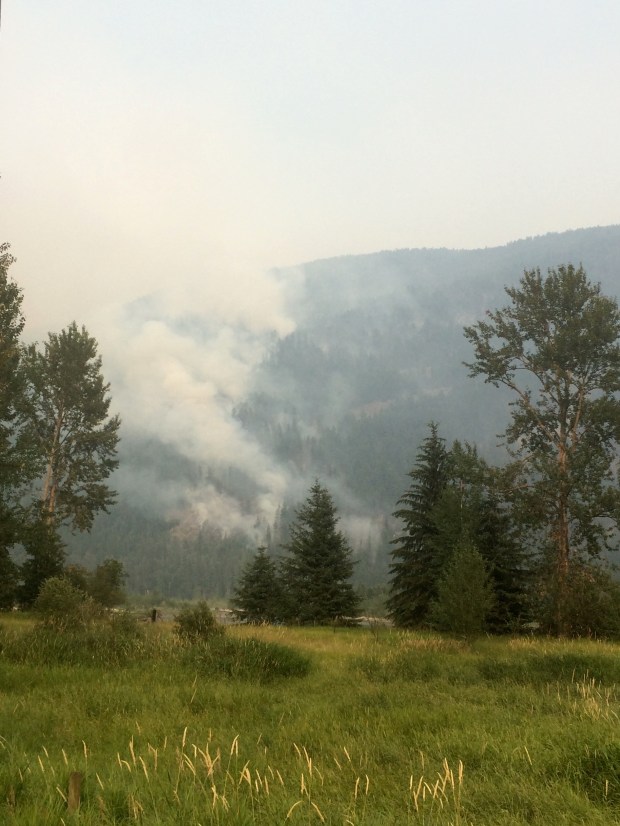
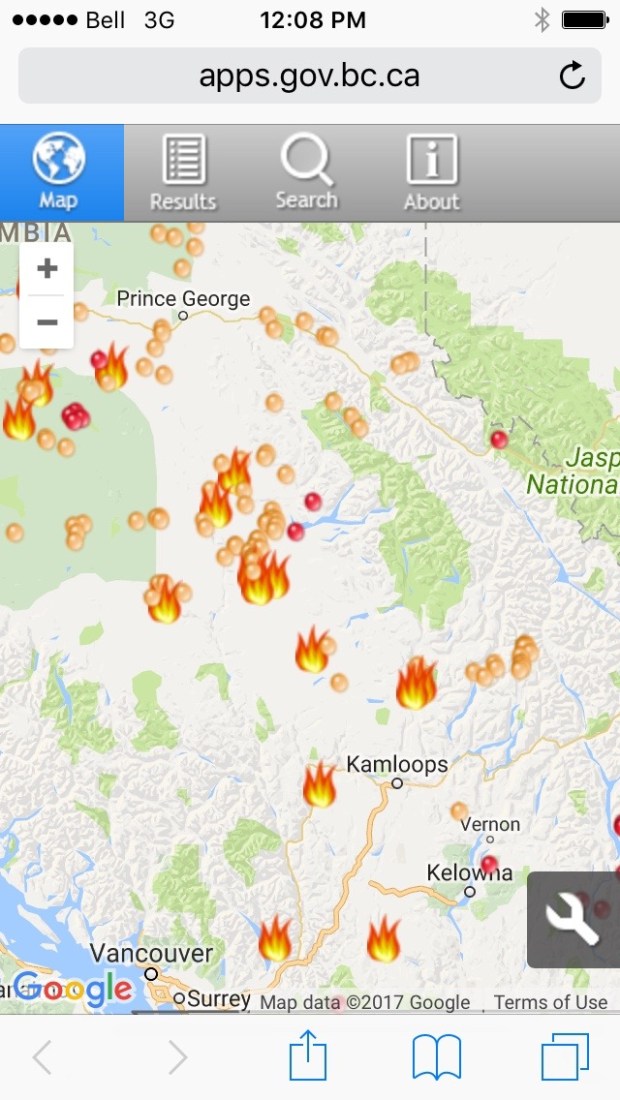
When we woke up the morning of third day, the entire forest was flooded with smoke, which we later found out was due to dozens of forest fires throughout BC. A handful of towns had been evacuated, and the road we’d planned to take was closed. So we rerouted and drove through Kamloops to Prince George, windows rolled up to minimize our smoke inhalation. It was so thick my eyes watered, and you couldn’t even see the mountains beyond the freeway through the grey. And in the areas that we could see a fair distance, we saw fires licking the mountainsides. It was unreal.

IMG_6091

IMG_6076

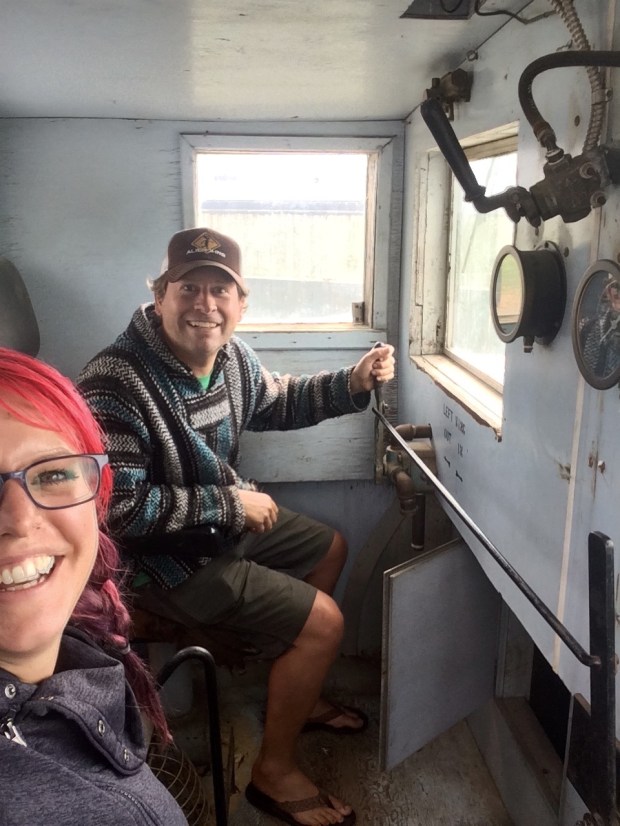
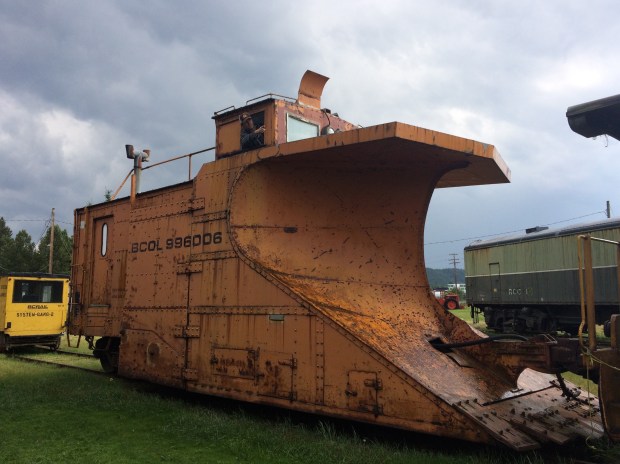
We spent a two days in Prince George, or “PG” as the locals call it. (Which is pretty cute for a city in Canada, where everything is sweet and friendly and very “rated PG”.) When we got to town, we went to one of the best Railway Museums we’ve been to so far, and that’s saying something! We go to a lot of railroad museums, apparently.

IMG_6181

IMG_6196

IMG_6205

IMG_6214

IMG_6230

We rode the little train around the grounds, and got to go inside most of the cars and engines. Andy had more fun than all the other museum-goers combined.

IMG_6234

IMG_6251

IMG_6256

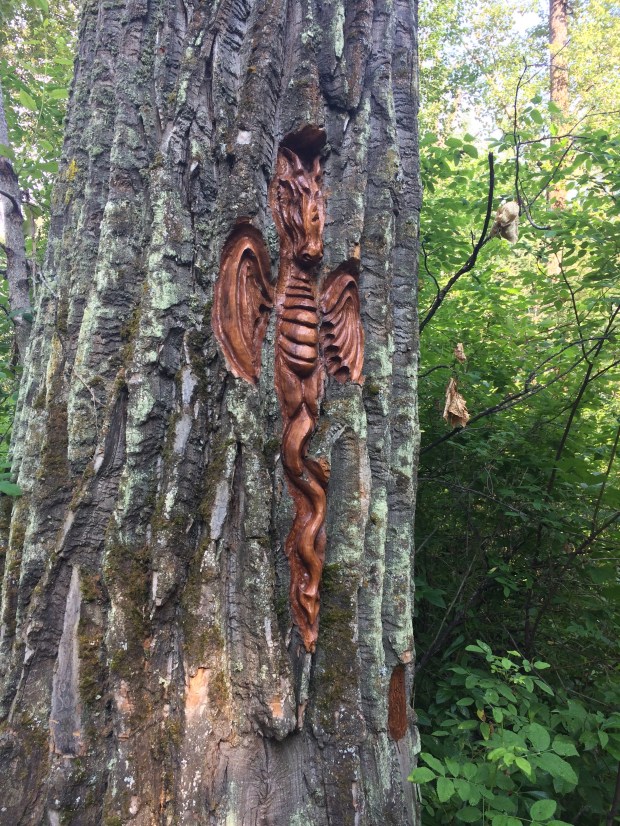
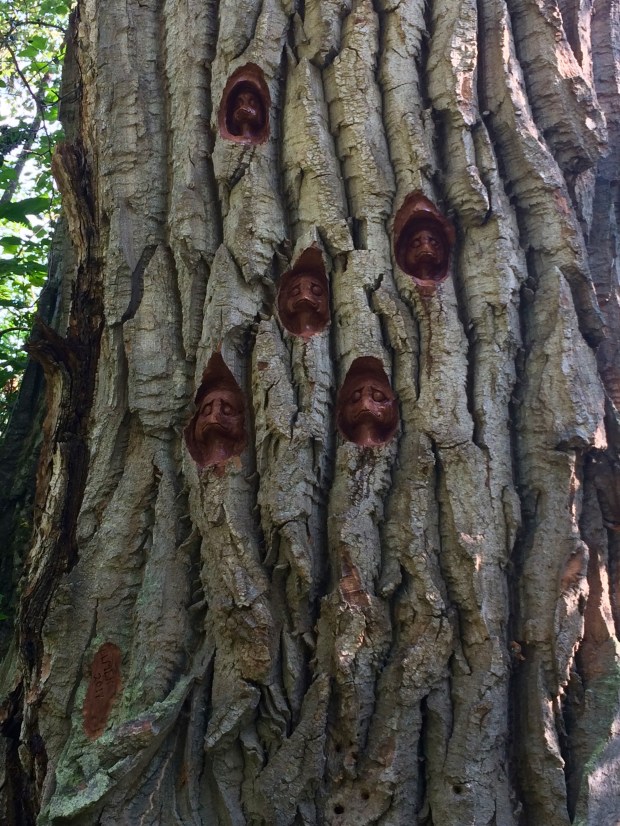
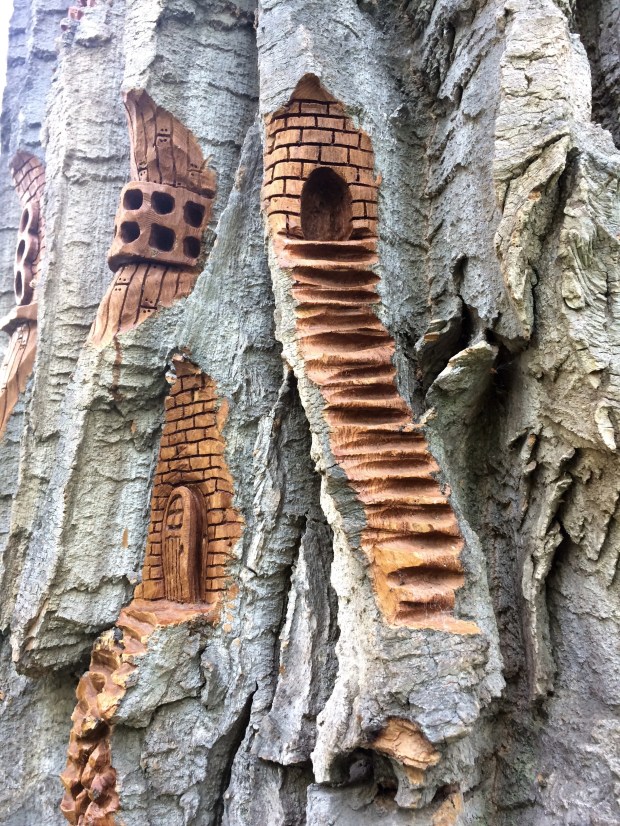
We stayed until they closed, then walked right next door to Cottonwood Island Park. I’d read that a local artist sculpted little pieces right into the trees, and as you walk through you can treasure hunt for them.

IMG_6320

IMG_6267

IMG_6274

IMG_6280

IMG_6282

IMG_6296

It likely comes as a huge surprise to nobody that my favorite was the gnome houses.

IMG_6308

We stayed the night at the park’s lot and that’s where we saw the silver fox!

IMG_6346

It’s a poor picture, but it was the best I could do at twilight while squealing with joy.

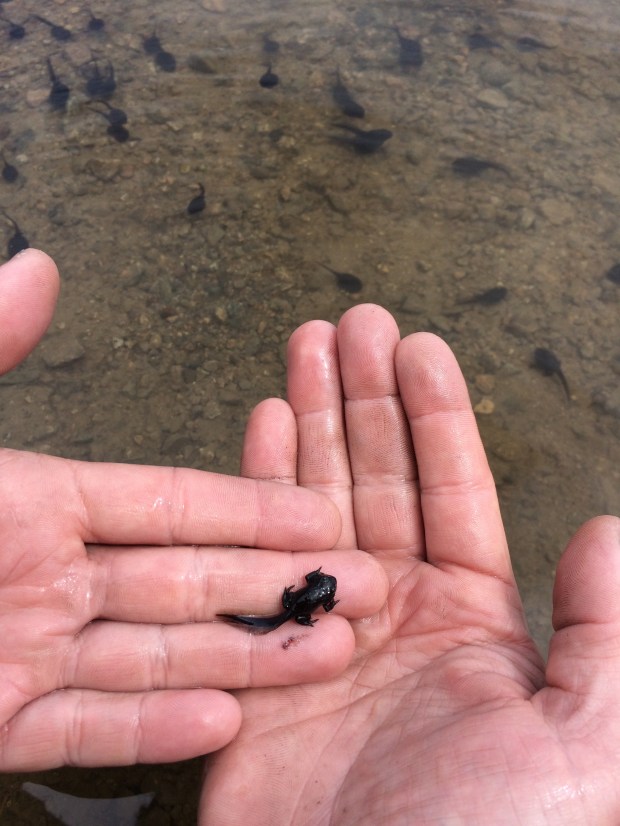
Over the next few days, we found ourselves in more picture-perfect campsites, all of which are free! We stayed a few nights at Co-op Lake, where we noticed a strange bubbling at the shoreline. As we got nearer to investigate, we saw that it was a massive mob of tadpoles!

IMG_6457

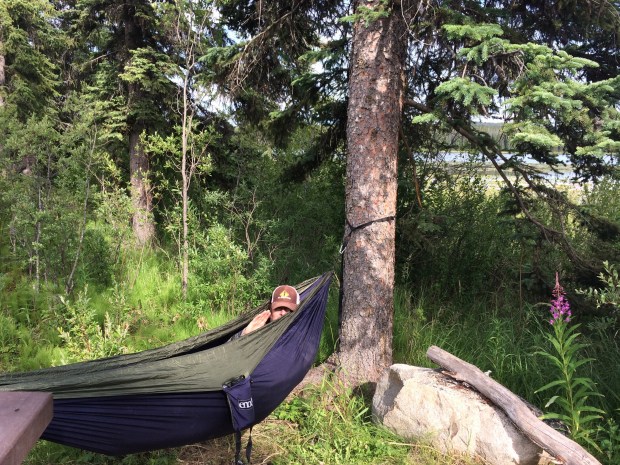
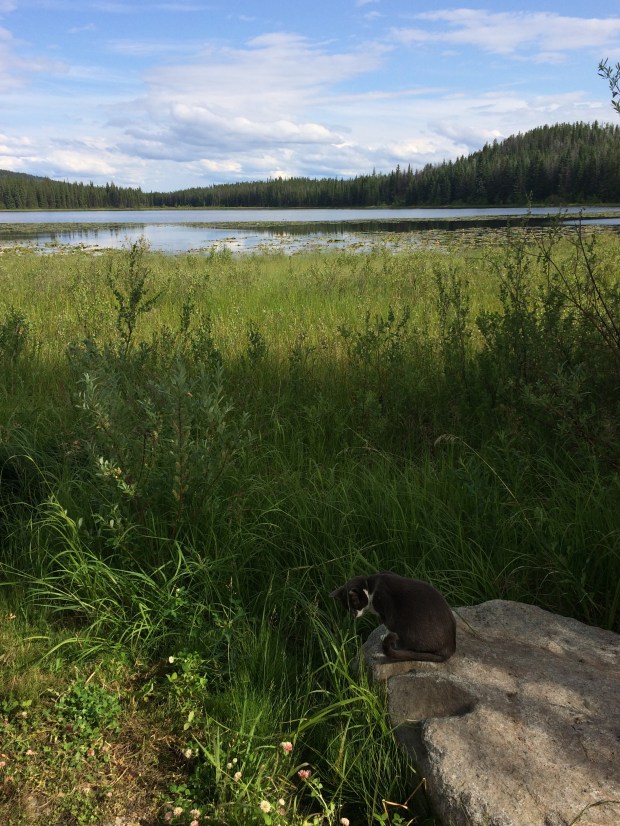
We all had a wonderful time there, reading, hammock-ing, swimming, fetching frisbees in the lake, pouncing on bugs, paddling out to the middle of the lake in our floaties and watching the clouds roll by.

IMG_6452

IMG_6449

IMG_6401

IMG_6424

IMG_6421

IMG_6461

IMG_6418

IMG_6417

IMG_6379

We then moved to another great campsite at the Eagle Creek Opal Beds, where we went on a gorgeous hike, hunted for—and found!—raw opals, discovered and ate the huckleberries along the path, and then hiked up a hill at midnight where we saw the Northern Lights flickering on the horizon. It was a pretty magical spot.

IMG_6492

IMG_6501

IMG_6530

Scout even remembered how to pick huckleberries!


I could have stayed in any one of those campsites for weeks, but there is much to see in these parts, so we pressed on. We wanted to see Prince Rupert, a darling coastal town in northwestern BC, even though it was a few hours out of the way. On our way there, other things happened and they looked like this:

IMG_5971

IMG_6158

IMG_6149

IMG_5994

IMG_6326

IMG_6358

IMG_6467

IMG_6536

IMG_6583

IMG_6608

IMG_6616

IMG_6666

When we got to Prince Rupert it was a brilliant sunny day, which—we were informed by the locals—is not usually the case. We walked all around town, in and out of cute little shops, through the Museum of Northern British Columbia, and ended up on a bright patio overlooking the ocean.

IMG_6695

IMG_6688

We looked down and noticed crabs walking along the ocean floor, and the next day’s plan was born. After all, we’ve been carrying our crab traps around for over a year!

IMG_6705

The next day we got our licenses and some bait, and headed down to the docks, where we discovered the depth off the edge was around 80 feet! We spent the entire afternoon into the evening sitting on the dock, chatting with locals, fishing, and reading books. We caught three crabs, one was a keeper, and Andy caught a small flounder.

IMG_6709

IMG_6764

IMG_6805

So all in all the day was a success, and as we packed up we were treated to a perfectly picturesque coastal sunset.

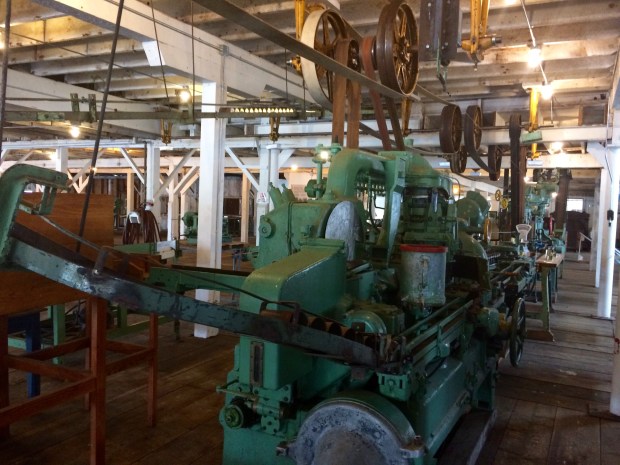
IMG_6822

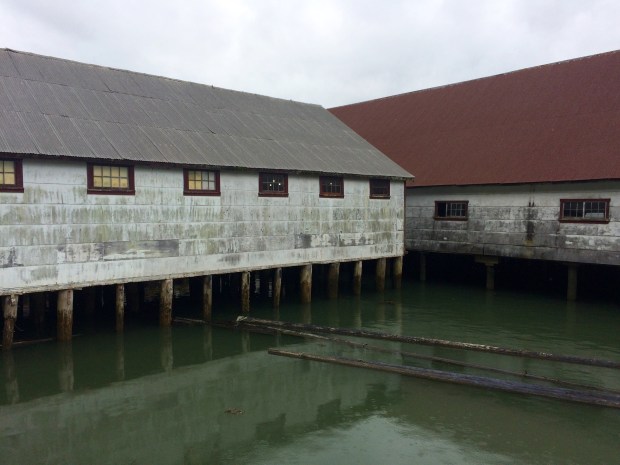
Today was our last day in Prince Rupert, and we visited the North Pacific Cannery Museum on our way out of town. We accidentally stayed three hours, and enjoyed every last minute.

IMG_6830

IMG_6833

IMG_6841

IMG_6843

We’re now back in Terrace, BC, heading north for some serious camping way-off-grid, so the next post will be on the other side of the wilderness when we have service again. And though the silver fox was a superior thrill, here’s hoping that next post will include some photos of a moose. 🙂


The Alaska Road Trip Begins!

Well hello there!

A lot has happened since the last time I updated the blog on our roving whereabouts, wild shenanigans and general goings-on, and if I could, I’d catch you up completely on what we’ve been up to since I last reported. But as I sit here writing this post, I realize how long that could take, as we’ve been moving at breakneck Turtle speed for the last few months! (Of course I’m not referring to miles-per-hour speed, as that remains as slow as ever. I’m talking about how much ground we’ve covered, which for us has been a lot in an uncharacteristically short amount of time.)

Instead, I’ve decided to pick up where we are at this moment, which is the beginning of such a fun adventure that I think you’ll agree this is the best place to begin. Because we just crossed the border into Canada, which (in our minds at least) is the official beginning of the Overland Trek to Alaska!

IMG_5838

The general plan is as follows:

The Timeframe: A month driving up to Alaska (July), a month exploring Alaska (August), and a month returning home (September). We’d stay longer, but we’d like to stay ahead of snowy road conditions and by October the roads can start to ice over.

The Route: We are going to loosely follow what some travel guides call the “Gold Rush Route” on the way up, and then follow the Alcan Highway which ends just north of Montana, so we can drop in to see family at the end of the journey.

Must See: Denali National Park, Wrangell-St. Elias National Park, The Cook Family in Anchorage, Harding Ice Fields, Kenai Peninsula, and a moose. (It doesn’t matter which one.) Other than that we’ll play it by ear, as is our general travel style. There’s a lot of Alaska up there and we want to see as much as we can without moving so quickly that we forget to relax and enjoy the quiet moments that we’ve come to love most during our travels. I’ve been surprised to find my sweetest memories are the little surprise spots we stumble across between official destinations, and we try to make sure we leave room for improvisation for that reason.

Aaaaand, honestly, that’s as far as we’ve gotten. It’s tricky to make new travel plans while you’re in the midst of traveling and enjoying your current location! So we’ve become accustomed to making detailed itineraries a day or two in advance and then making more general plans where the upcoming weeks and months are concerned. It’s just no use trying to nail things down when we could see an interesting road and end up somewhere completely different than we’d anticipated!

We just arrived in Canada yesterday, and already we’re just charmed to pieces. It’s very familiar of course, but different enough that we’re excited to see what unexpected twists we’ll encounter as we go.

Unanswered questions include:

  • How different are the regulations regarding boondocking? Can you stay overnight at any turnout or viewpoint along the highway like you can in the states we’ve visited in the US?
  • What are “good” prices for fuel and propane? Our brains are already so tangled by conversions, and then by the time we work out what the prices are in US Dollars we realize that we don’t even know if the price is good or bad for the region we’re in!
  • We were surprised by the questions they asked us at the border, but they let us in so who are we to complain? They had a lot of questions regarding our lack of jobs, even though we explained we were living off of savings, and wanted to know what jobs we had before we left them for life on the road. The agent asked to see bank account balances to ensure we had enough money to cover our trip, which makes sense. He didn’t ask about pets, even though we did have all the documentation for Scout and Gracie including immunization records, etc. The one we’re still puzzled about though is that he asked how many guns we own. Not how many we were carrying with us, but how many do we own anywhere in the world. Interesting, right? The answer is none, so I’m not sure what the outcome would have been had we said we had an arsenal somewhere in the states. But again, we’re not here to tell the man how to do his job, especially since we crossed over in very little time.

IMG_5834

Today we went to Vancouver, BC and had a great time at the Granville Island Market and VanDusen Botanical Gardens before hitting up a few points of interest including the steam clock, a “metaphysical supply store,” the Digital Orca, and the Marine Building. All awesome.

IMG_5882IMG_5917IMG_5927IMG_5953IMG_5964IMG_5971IMG_5983

We love Vancouver!

And now that we’re all up-to-date on the current adventure, here is a sampler platter of the aforementioned shenanigans we’ve been into the last month or two, for those who like pictures of cute animals, lovely scenery, fun friends, and other general niceness.

IMG_3824
IMG_4198IMG_3914IMG_5793IMG_5784IMG_3818IMG_4307IMG_0800IMG_3976IMG_4797 (1)IMG_4843IMG_5413IMG_5342IMG_0667IMG_4364IMG_0680tIMG_4191IMG_5068IMG_0762IMG_0809wIMG_3997IMG_4056IMG_5489IMG_5684IMG_5414IMG_5706IMG_5090IMG_5228IMG_4060IMG_4006IMG_0819dogIMG_5403IMG_4730IMG_4376IMG_4477IMG_3971

Everything Rolls: Lessons From the Road

Living on the road full time has proven to be even more drastically different from “real life” than we’d anticipated when we began this adventure almost two years ago. We assert that it’s waaaaaay better (for us), but there definitely have been a whole lot of lessons we’ve gradually been learning along the way. These are all things that we’d never had to consider when our house didn’t move, and it’s funny when we find that our new behaviors are now so deeply ingrained that when visiting friends in their stationary houses, we still anticipate things falling out of cabinets whenever we open them, for example.

I thought I’d list a few of the funnier lessons we’ve learned in the last year and a half.

  1. Never trust the flatness of any surface, no matter how level it may look. Everything rolls. Put that egg on the counter without hovering your hand above it for a second first, and you’ve got a cleanup job in between you and breakfast! It’s not a matter of will it roll, it’s what direction, and you better be ready.
  2. Always open liquid containers slowly, because you’ve more than likely changed altitude since you last closed it. I mopped up a whole lot of wasted sunscreen, shampoo, and ketchup before learning this lesson. You can’t trust a bottle on the road.
  3. You can’t take people’s recommendations for the “best food in town” unless you’re in your home state, or at least a neighboring state. Regional tastes vary so much that Yelp has been rendered useless to us. You just don’t know what the ideal flavor profile is. We’ve gotten tips from locals about where to go for dinner for the “most amazing Mexican food we’ll ever have” only to discover that in that state, sweet marinara-flavored salsa is the standard, among other atrocities.
  4. If you see a sign for a free dump station and potable water that’s right on your way, it’s going to be a good day.
  5. There are loads of great places to park when boondocking downtown. One of them is not the local newspaper office. At 3:30 a.m. the trucks pull up and idle while metal doors are flung open, and the workers chat loudly while tossing heavy piles of paper into their trucks. This all happens six feet away from your face. Newspaper offices may seem harmless, but they’re hazardous to your sleep.
  6. Never assume that the mess you don’t feel like cleaning up right now is your secret. A house tour could happen at any time. We vandwellers just love to check out each other’s setups, and if you meet some fun fulltimers and you slacked on clean-up duty that day, you’d better just come to terms with them being in close quarters with your dirty dishes and sandy dog cushions, because you just can’t forfeit the tour swap!
  7. Let yourself wake up enough in the morning to realize where you are before opening the back door and hopping out. Just because your back yard has been the woods for a week doesn’t mean that you won’t step out—in your pajamas and —into the middle of some town’s morning commute.
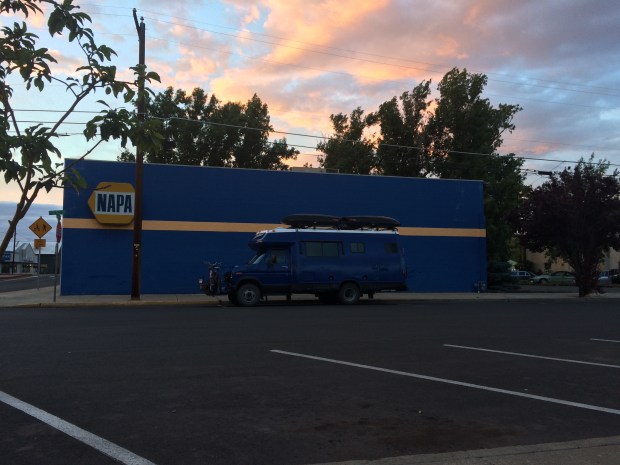
  8. We also just recently learned that we are Napa Blue. You really do learn something new every day!
IMG_4791


Let’s Refurbish a Van – Part 8: Hood Scoops (By Andy)

A post by Andy

{Modified the title theme some. We think of ourselves much more as a big van than a small RV. I now want to start prefacing this and future posts to be more representative of our self-image.}

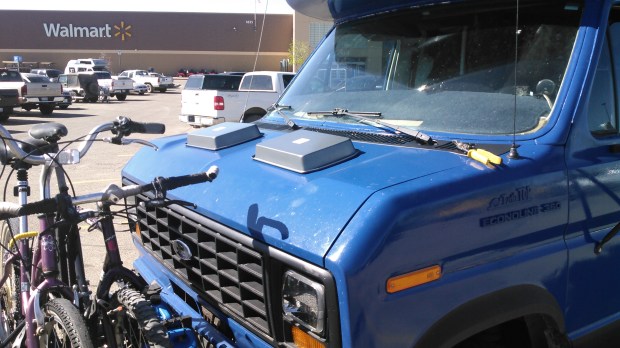
So, to the meat of the subject. I just finished our hood scoops! Why did I make hood scoops? Well, for one, they look pretty cool and I needed a prominent place to put my new go-fast emblems that I ordered from Amazon.
KIMG0530

Mainly, we are trying to get as much power out of the engine so we can get our heavy old self up the high steep hills. In that vein, I have been playing with the spark timing, carb mixture, and intake airflow. By tweaking and adjusting these parameters we are working to get the most power and efficiency out of our old engine. Specifically, advancing the timing can get the engine to produce more power, but too much spark advance causes engine problems—pinging and preignition. If the engine is cooler, one can run with more advance. Another way to look at it is that with a given timing advance, if the engine and intake air get hotter, then the timing is too far advanced.

Maybe a side note about my “go-fast” emblems. Car companies try to sell cars. Sometime fancy cars come with racing stripes, cool graphics, and badges on the side about engine stuff. A joke among car people is the question “How much horsepower do the stripes add?” The answer is, of course, none. But… they do look cool. Look around, they are everywhere: M3, AMG, Hemi, 440, HiPo. The only thing the badge or stripes could actually do is add an immeasurably small increase in drag, or some unneeded paint weight. They are simply for the people in the car next to you. All the same, they look sporty, so I bought some that state the displacement of our engine and say it is “High Performance”. What I’m saying here is they do nothing, but they truly do look great!

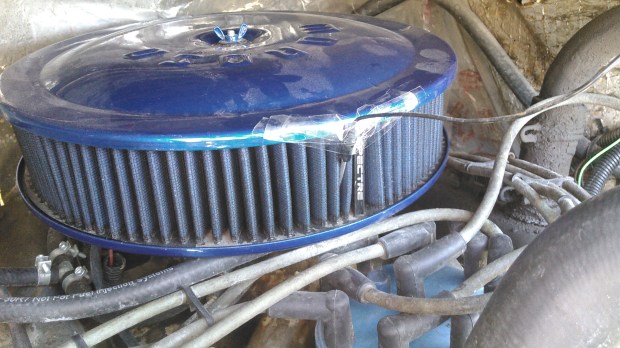
So, I wanted more air to get in and out of the engine compartment to cool the engine, and have the air flowing into the air cleaner be as cool (and dense) as possible. To make sure I had an understanding of the pre-hood-scoop environment, I first taped the probe end of my digital temperature gauge to the air cleaner. Over a few weeks in different driving conditions and different altitudes, we took notes about the temperature measurements of the air cleaner and air filter. You can see the wire to the probe, and the tape holding it in one location.

KIMG0451

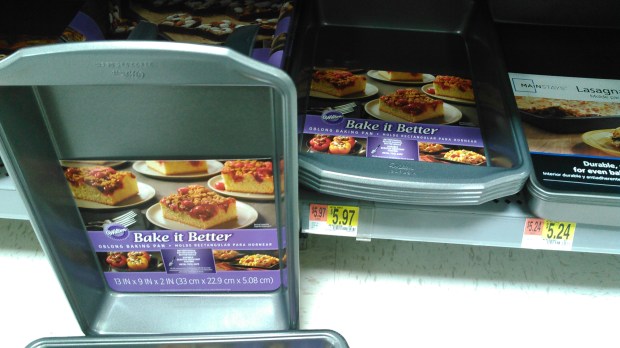
Overall, we are in the 150º–160ºF range under the hood after the engine gets warmed up and when the ambient temperature is in the 70º–80ºF range. So, to get more outside air in and more inside air out we need some kind of venting. I looked online, and $50+ plastic vents and scoops can be found, but they were not really van-sized, and seem flimsy. Metal ones can also be found, but are more expensive, and again, really don’t fit. Apparently there is an untapped market of people who want to mod 1985 Ford vans! (Investors be wary—the market may be small.) I finally hit on the idea that rectangle cake pans are about the size I wanted, and they are inexpensive, and they are made of metal designed to withstand 500ºF+. Going with this thought, while we were camping in El Malpais National Monument, I made some cake pan-sized cardboard mockups and spray painted them with a blue that I had.

Test fitting…

I thought that looked good, so a few days later when we were in a town, we got some cake pans.

KIMG0454

KIMG0455

One morning, a few weeks later, when we where camping at the Great Salt Lake, I got out the pans, tin snips, sandpaper, and primer, and got to work remaking our sweet cake pans into even sweeter performance hood scoops (please note the word play).

Here they are.

Test fitting.

We stashed them away for a bit and traveled onward. Another week later we had a free day while visiting our friends the Higdems in Kimberly, ID. I measured, moved, marked, measured, and measured and marked again. Then I started drilling holes in the hood.

Lots of little holes now!

After fitting and drilling the mounting holes, I now knew what piece of the hood (bonnet, for any Brits out there) to cut out. Out with the jig saw.

Another side note here: When putting the Turtle together, we set ourselves up with a few DeWalt cordless tools and the battery charger that plugs into a 12V cigarette lighter. The tool charger is now wired to our solar-charged batteries, so we are using the sun’s energy to drill, cut, and modify our hood. It feels fun to know that when working on projects such as this!

For the final install, I put down a small bead of RTV sealant, aligned the scoops, and screwed in the 6 screws per scoop that I had already pre-drilled. After the RTV cured a bit, I got out our boat paint and went at it.

Included above is, obviously, a photo of what Scout and Gracie were doing at the time. A few days later, at Dave and Ryann’s place, I added more RTV to smooth the transition and put on more paint to finish it all off.

All finished now, after the last painting and with the great go-fast badges installed.

We should call this the conclusions section of the post, for you science people out there. Well, they have been on now for a week, and we don’t move fast, so we have only driven a few hundred miles. We will need to collect more data, but so far the maximum under-hood temperature we have seen in 135ºF, and most of the time it has been in the 100º-120ºF range (and we are actually in hotter weather than when we took our non-hood scoop measurements). We have also driven through crazy heavy rain and, as expected and hoped for, the small amount of water that enters through the scoops has no adverse effects on the engine. Generally, a pretty solid success, and I have since advanced the ignition timing just a bit with no pinging.

Oh, maybe a cost breakdown. The sum total of the cake pans, primer, quantity of screws, RTV, and paint used is less than $20. The go-fast badges were $11 each. Dave suggests I sell it as “The whole project was less than 45 dollars.” I think I shall adopt that tract!

All that for less than 45 dollars!!!

Let’s Refurbish a Van – Part 7: Our Batteries Phase 1 (By Andy)

A Post by Andy

{Note: The work detailed in this part of the post was completed over the summer of 2015, before we moved into the Turtle. I am just getting to writing the post now.}

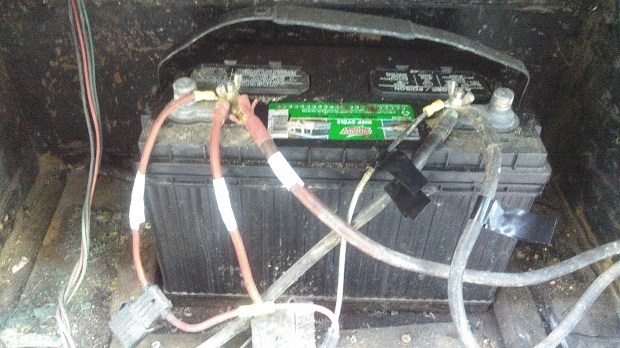
So, we like to have our computers run, have lights, have the controls for our fridge work, have a charged Wi-Fi hotspot, and have our furnace fan powered to keep us warm. For all this we need electricity, and since we want to be off-grid, we need batteries. We started with this:

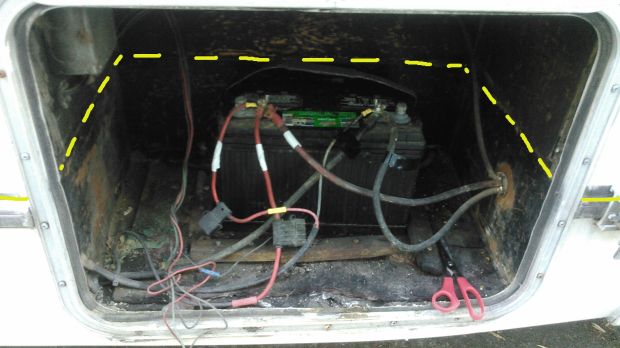
HouseBattery

If you are familiar with the Turtle, this compartment is behind the largest access door on the passenger side- the door with the vent in it. In the following photo, I put in a dotted line where the plane of the floor on the inside intersects the compartment.

firstbattery_floorline80

The walls of the compartment above the floor line are plywood, and bump up under the couch inside. The sides and bottom below the line are made of heavy steel. I have deduced the compartment was originally designed for a generator, as there was old 120V AC wiring running to it, an unconnected fuel line that ran into the back, and the door vent.

gimpprocessedimage95

I had a hard time figuring out what all the wires were hooked to, as it was a bit haphazard in the compartment. In the above picture, (1) is a port that goes outside, below the floor of the Turtle. The wires there threaded out of the box, ran a short distance under the Turtle’s floor, then threaded up through the floor to the old inverter. There is a second hole (2) that the wires from the old 100W solar panel and the wires between the battery and main 12V distribution panel were run. (3) is the unused electrical box that had 120V AC wires run to the compartment where the shore power cable is housed.

Maybe I should back up a bit and throw out a few concepts and definitions and explanations for the terms we will be using.

  • Battery: A thing that stores electricity in chemical bonds. Here, we are just referring to 12V lead-acid batteries.
  • 12V/12VDC/DC: 12 Volt Direct Current (DC). This is what cars use for their electricity for headlights, the radio, starting, etc. It is the kind of power all the batteries we talk about will produce.
  • 120v: 120V Alternating Current (AC). This is what is in your house and in businesses you know, the typical wall plug Amy and I look for at restaurants to plug our computers into. It’s generally 120, 121, or whatever it takes.
  • Current: The flow rate of electricity.
  • Voltage: The force pushing the electricity through the wires.
  • Inverter: An electrical box that changes 12VDC to 120VAC. It changes car electricity to house-hold electricity. This is so we can plug our AC computer cords into our DC batteries.
  • Converter: An electrical box that changes 120VAC to 12VDC. The opposite of the above—pretty much a garage battery charger that you use to get your car started after you leave the lights on.
  • Charge Controller: An electrical box that changes the output of the solar panels into DC voltage, hopefully charging the house batteries.
  • House Battery: Now, I probably use this too freely. When I talk about house batteries, and I mean batteries dedicated to our living compartment. If I say house (or household) electricity, I mean 120 V AC. Got to figure this out… but, house batteries are 12V batteries separated from the car system, and dedicated to lights and heat and powering the inverter in the house part of a van. One should be able to run these dead flat, and the car will still start, as they are fully independent circuits.
  • Starting Battery: The batteries under the hood, used for starting the car, sparking the gas when the engine is running, running a radio (if you had a functional one), and lighting the headlights.
  • Shore power: Kind of a boat term, but a source of 120V AC electricity you can plug into. When you pull up at a friend’s house, and pull out your extension cord, and plug into their electricity, they are your “shore power”. (Thanks Alex and Julie, Kari and David, Connie, Mag and John, Dave and Ryanne, Mike and Becky, Blake and Martha, Roger and Mary, Chris, Dad…)

Now, back to the good stuff! To start the battery box rebuilt and modification, I first labeled the wires and removed the old battery. I then cleaned the compartment with baking soda and water to neutralize the sulfuric acid and prevent further corrosion. Lucky, the metal compartment is super stout, so it was still in great shape. As usual, after a final thorough cleaning,  I caulked the seams and painted the compartment with black Rustoleum. I can’t find a picture of the completely empty, cleaned and freshly painted compartment, but trust me, it looked good!


After getting the compartment beautified, I cut and painted a plywood plate to fit into the bottom, bolted and glued it to the metal base of the box, and mounted battery trays to it. I painted up everything with oil-based paint and used stainless steel hardware to affix everything.

Since we had just gotten the Interlux blue boat paint, I practiced the painting technique on the top surface of the plywood base, so it is the same shiny blue as the Turtle exterior. In the following photos, you can see the two new Fullriver 115Ah 12V DC sealed AGM batteries that we started with in there, but just patched into the cleaned up existing wiring we are reusing at this point.


I decided to go with Absorbed Glass Matt (AGM) batteries. They cost a bit more than flooded batteries, but they do not spill, they will not develop corrosion at the terminals, and can be mounted sideways, if that configuration seems important. Additionally, they do not require venting, so they can be safely installed inside the living compartment, if that is necessary. Here is the site. We have been happy with this choice, and as you will find out in future posts, choosing AGM sealed batteries will allow us to make some future cold-weather modifications.

As to wiring, I was just starting to adopt the boat convention for new circuits and runs I would rewire. The convention is as follows: For 12VDC, yellow is ground, and red is positive. For 120V AC, the wires are white, black, and green for ground. Examples of the wires are here:


The reason behind adopting this convention is that at a glance, you can tell which circuit they are supposed to be wired to. Additionally, the boat 120V cable is stranded, as opposed to the household solid copper wire. Stranded wires should always be used in a vibration environment. Logically, then, a van should have no solid copper wires (though most RV builders do actually use cheaper solid copper for the 120V runs). As you might have observed, we have concluded that one should think of their van as a boat, and look to boat paints, wires, latches, and hardware for the upgrades and work. Though the boat cable is a little more expensive, it is paired and tinned for corrosion resistance, and gives a real nice finished look. Additionally, it can be purchased in any gauge.

So, at the end of our Phase 1 battery configuration we had our two new AGM batteries with a combined storage of 230Ah at 12V installed and secured, with the connections cleaned up. With this battery pack, we simply used the old converter to charge them when we were connected to shore power, and the old inverter to make our 120V for our computers when off-grid. At this point in our journey I also had just finished the install of our 300W of solar to charge the batteries (we will cover the panels and solar charging and solar controller in a different post).

That’s Phase 1 for you!