boondocking

On Top of the World: Deadhorse, AK + The Arctic Ocean + An Arctic Fox

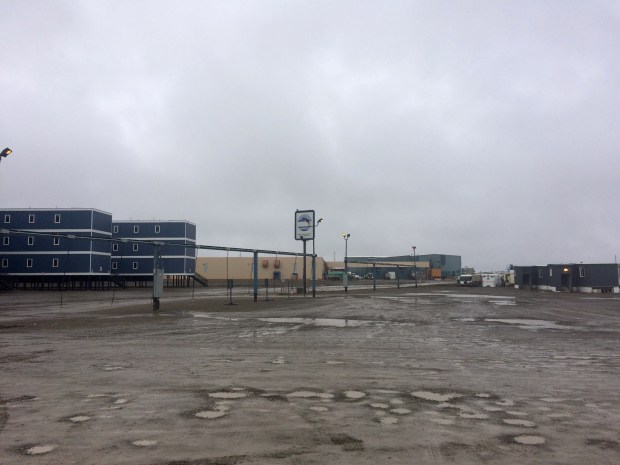
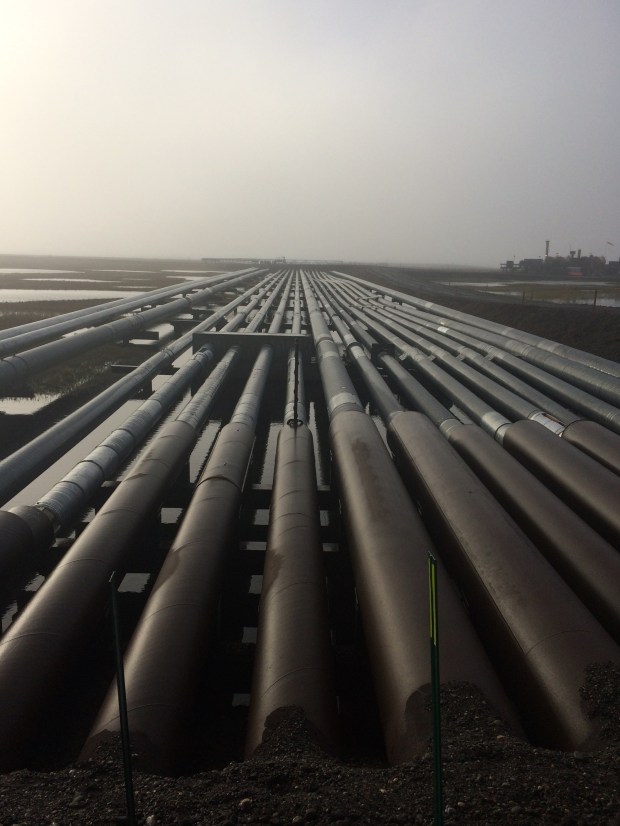
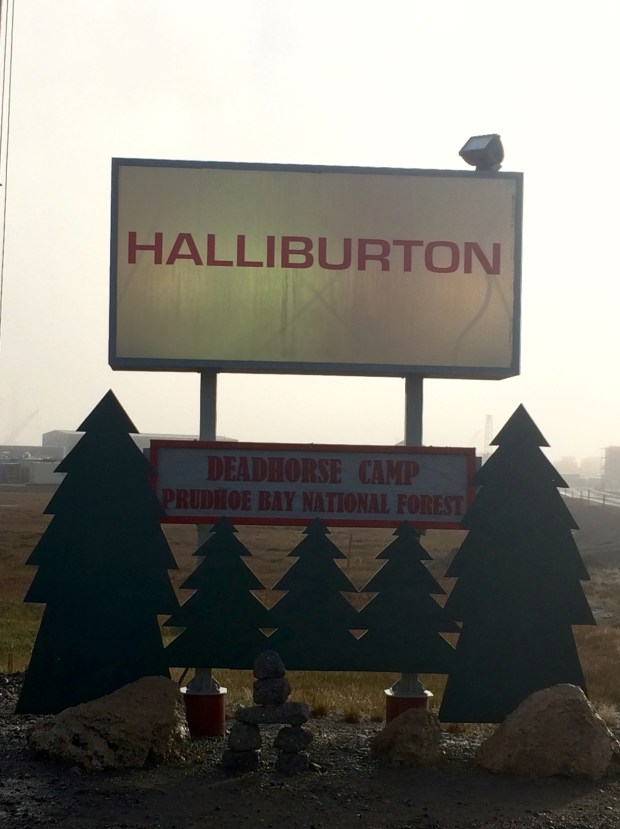
Here is what you need to know about Deadhorse, AK. It’s a small town in northernmost Alaska near the Arctic Ocean with a population that is often listed at 25-50 permanent residents. The town’s primary function is to house the workers at the Prudhoe Bay oil field, which when including the temporary workers brings the population to around 3,000. In order to house the workers, “pre-fabricated modules” (cozy!) were shipped up and put on man-made gravel pads on top of the tundra, where the workers live for the duration of their employment.
IMG_0319

Most people work 12-hour shifts daily for two weeks straight, and then have a week off. The town has a very small airport for transporting workers at no charge, so most people fly home and back in that week. Each work camp has its own building, with different amenities from camp to camp. Some have theaters or gyms or basketball courts, but these are all housed right in the work camp building.

IMG_0318

It’s not as if anyone would want to pass the time outside their camp anyway; the mean annual temperature is 12 degrees Fahrenheit, and even the warmest month—July—sees an average temperature of only 47 degrees! Lows in the winter are generally below -40 degrees. It’s freakin’ cold up there. Almost every parking spot in town comes with a power cord.
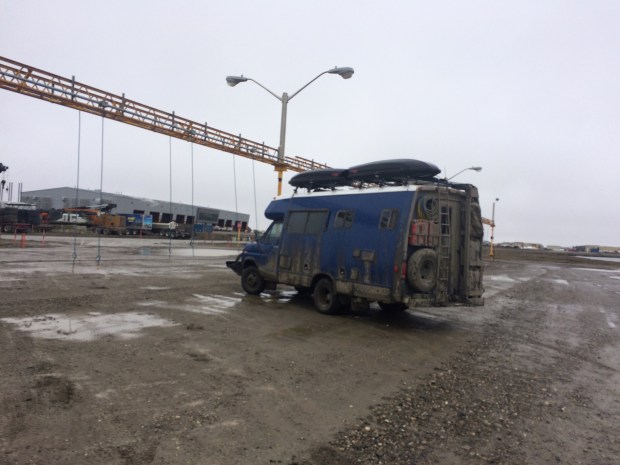
IMG_0339.jpg

What this means for tourists is that after being shaken around in your vehicle like dice in a Yahtzee cup for somewhere around 18 hours, there’s not a lot going on up there to do! Well, that’s not necessarily true, but the accomodations for tourists are limited to a gas station, general store, Napa store, a handful of buffet-style cafeterias for the workers that are open to the public during limited hours, and a hotel with a little snack shop and coffee counter inside. So we did all those things on our first full day there.
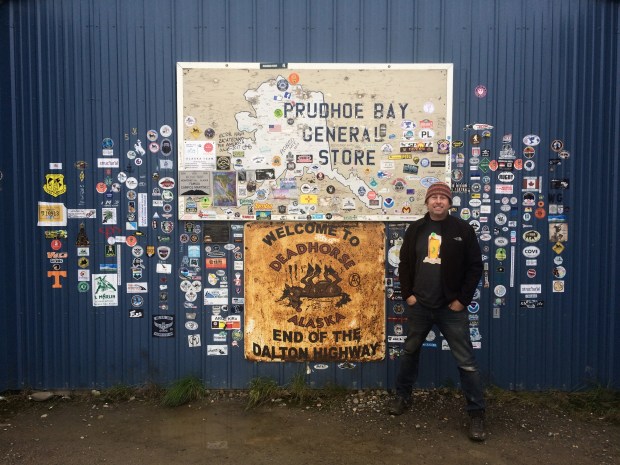
IMG_0322


IMG_0337

The white building up there is the hotel. It didn’t look any different than the housing, General Store, or gas station and the town really doesn’t waste good money on signage.
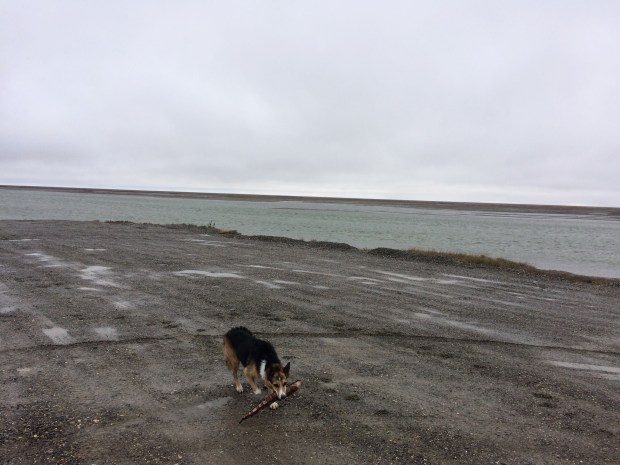
IMG_0351

We also came across one of my favorite wildlife sightings to date: a little arctic fox! He was just the sweetest little thing and stayed close enough for us to watch him scamper around for about 5 minutes.

There is also a tour bus that you can book 24-hours in advance (to run a security check), which will take you past the security checkpoint and up to the Arctic Ocean! They charge $70 per person, but once you get that far, you really have to go all the way, right?

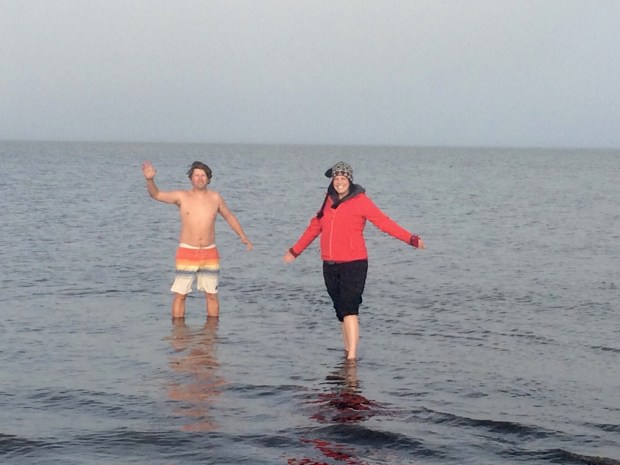
We thought so. So on our third day in Deadhorse, we took the early tour through the oil fields and saw the sights on our way to the beach. There were five others on our tour: a French couple who had flown in, and a couple from upstate New York and their tour guide who had driven them up in a tricked out Ford Escape set up by the tour company specifically for the Dalton Highway drive. Their guide jokingly asked if we’d remembered our swimsuits, to which I replied, “Actually, yes!” He laughed good-naturedly, as it was the first day of September, and said he’d be amazed if we went through with it. Challenge accepted!
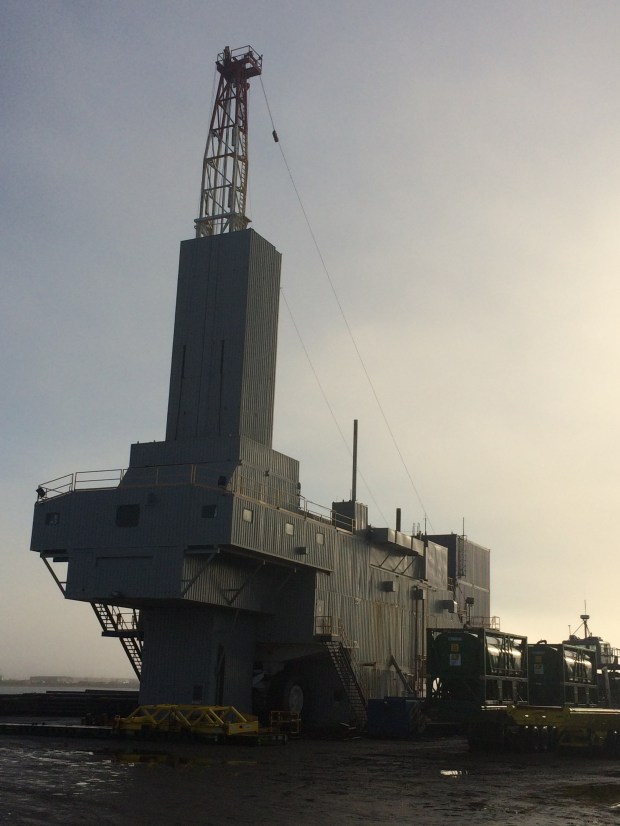
IMG_0353

IMG_0360

The beach access we were able to explore was a nice long stretch that jutted out into the ocean. When we got there, our view was especially lovely under a hazy rainbow.

IMG_0363

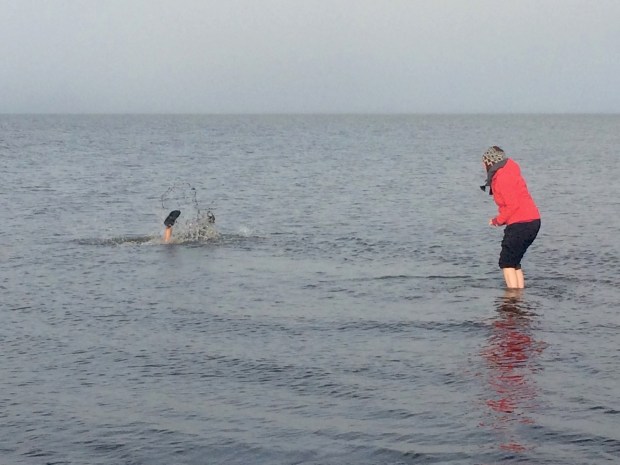
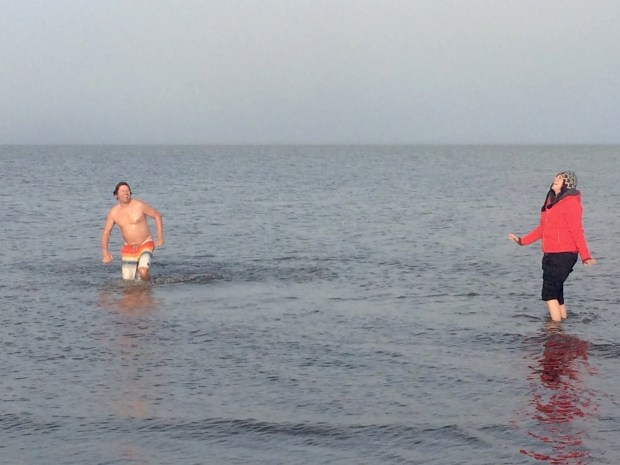
The guide volunteered to take pictures for us, and got a nice play-by-play of our walk out, and Andy’s sudden and shocking dive below the water.

IMG_0371

IMG_0375 (1)

IMG_0378

IMG_0382

What a beast! That boy knows how to have an adventure. I take longer than Andy does when it comes to decisions involving plunging my bare skin into frigid arctic water on a 30-degree day. But of course I eventually got the job done.

IMG_0393

Ok . . . half done. But I’m telling you; it was so cold that not even my five layers on top could save me from that icy shock, or the subsequent half hour of numb legs and toes! It was awesome. We are very proud new members of the Polar Bear Club, and have a pure white rock from the beach as our memento of the day we took the plunge.

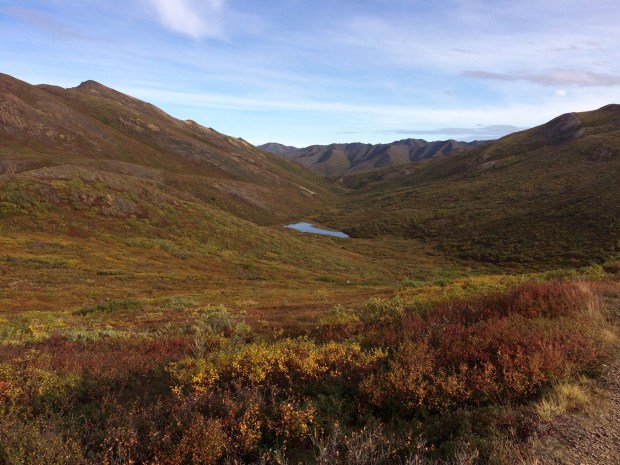
By the time we got back to the Turtle, we’d warmed up under the blanket Andy had brought along and felt ready to take on the Dalton Highway again. We decided to break the drive up into three days this time, because we wanted to check another National Park off our list by hiking into Gates of the Arctic.

We turned southward and said farewell to Deadhorse. We were so glad we made the trip, but are fairly certain we won’t be returning unless Andy will agree with my brilliant idea to build a summer home there. And so far he’s not budging. Oh well . . . goodbye, Deadhorse!
IMG_0357

The Road to Alaska – Part 8: Feelin’ Fall-y in Denali

Our adventure of a lifetime was in full swing by the time we left Anchorage for Denali National Park, which was our second park in Alaska so far.

IMG_9498

IMG_9556.jpg

IMG_9561

IMG_9548

IMG_9512

IMG_9754

Alaska has 8 National Parks:

  • Denali
  • Wrangell St. Elias
  • Gates of the Arctic
  • Kenai Fjords
  • Glacier Bay
  • Katmai
  • Kobuk Valley
  • Lake Clark

Due to the terrain and undeveloped nature of the state, however, only two are accessible by car: Denali and Wrangell St. Elias. We’d stopped at Wrangell St. Elias on our way to Valdez, but didn’t spend much time there since we were working with a bit of a deadline and the park is so huge that it could take hours just to see a small portion anyway. We did take a little walk through the park and saw both the namesake Wrangell and St. Elias ranges, and had even camped out with a beautiful view of the mountains the previous night.

IMG_8368

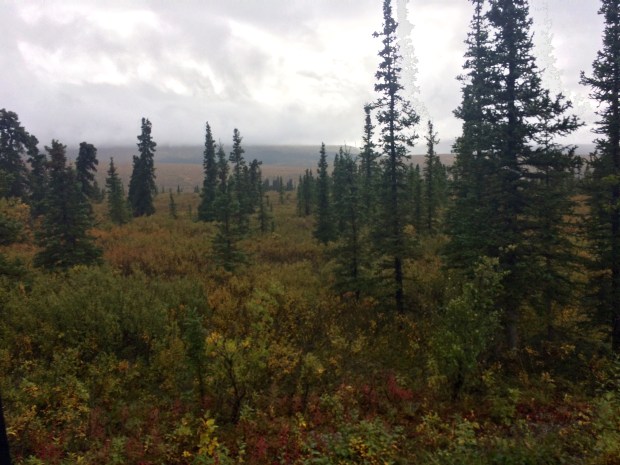
Denali was the next on our list, and we couldn’t wait to get in there and see some wildlife and hopefully Denali (a.k.a. Mount McKinley) itself. They say on average only 1 in 3 visitors gets to see the mountain, as it’s often socked in by clouds or fog, and we had a cloudy forecast. So we arrived with fingers crossed and bought our tickets for a bus tour the following day. I didn’t know this before we went, but Denali National Park is only accessible to the public for 15 miles of the 92-mile road into the park. You can drive in as far as Savage River, but after that all tourists—other than those staying at Teklanika Campground—must pay for a bus tour in order to access the remainder. Some of the tours can last as long as 12 hours, but we went for an 8-hour ride since we had a doggy at home who would need to go out. It was a chilly morning, and the windows were steamed up for the beginning of the trip, but soon they cleared and we could all sit back and watch the fall colors roll by.

IMG_9632

IMG_9629

IMG_9617

IMG_9626

It’s been startling how quickly the season has advanced as we travel north! It has accelerated the timeline, but luckily I love fall and I’m exactly in the mood for it.

On the way to the Visitors Center that would be our turnaround point, we stopped a few times and got to hike around, use bathrooms, and take pictures.

IMG_9644

IMG_9649

IMG_9651

IMG_9721 (1).jpg

Along the drive we saw ptarmigan, Dall sheep, moose, Arctic ground squirrel, and a mama grizzly bear and two little cubs in the distance running along fast! There was much speculation as to why they were running, since they’re so close to hibernation that they should be conserving calories. Our guide guessed that the mama could smell a male grizzly nearby and she was trying to protect her cubs. We stayed and watched for a long time, and still they ran and ran until we lost sight of them.

We continued on to the Visitors Center, and had a little time to walk to the lookout and admire the view.

IMG_9673

IMG_9662

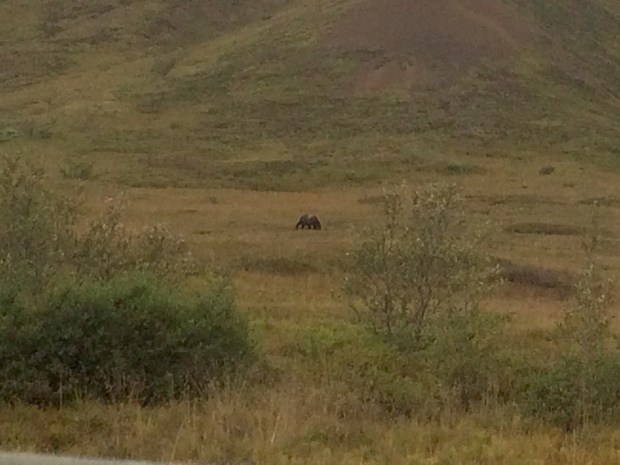
Then back onto the bus, where we had fewer people since many had started hikes and would take another bus down later. So for the whole trip back we had great views on both sides of the bus, which really came in handy when a big male grizzly was sighted on the opposite side of the bus. We hopped over and I took some pictures that are grainy, but still fun to see.

IMG_9716

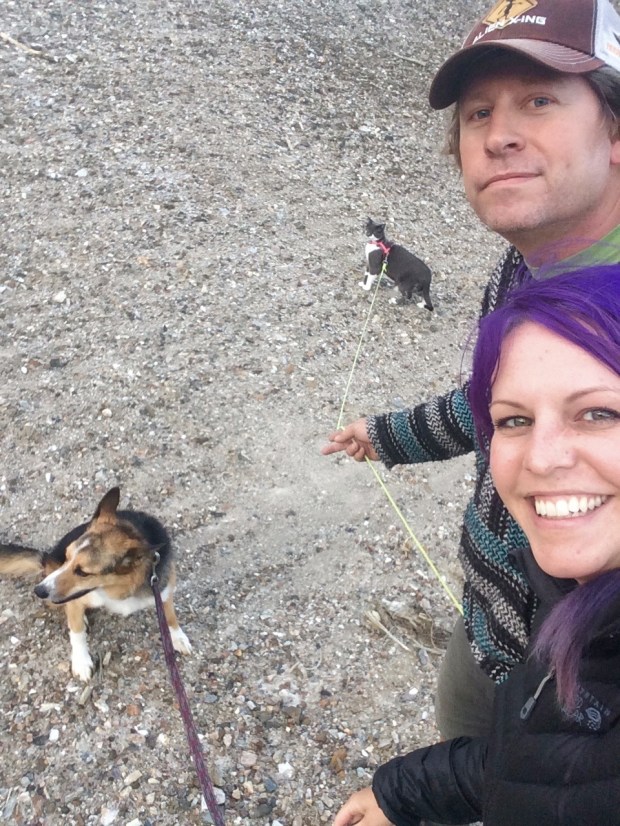
We’d found a nice spot to park for the few nights we’d be in town, so we went back and settled in for the evening, taking the animals on a nice walk and even snapped our first 4-person selfie with the pets.

IMG_9596

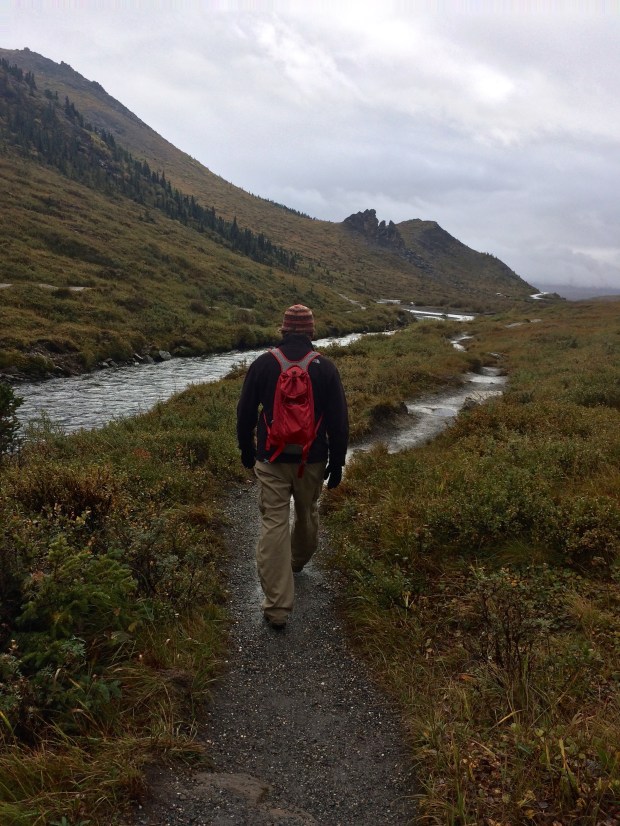
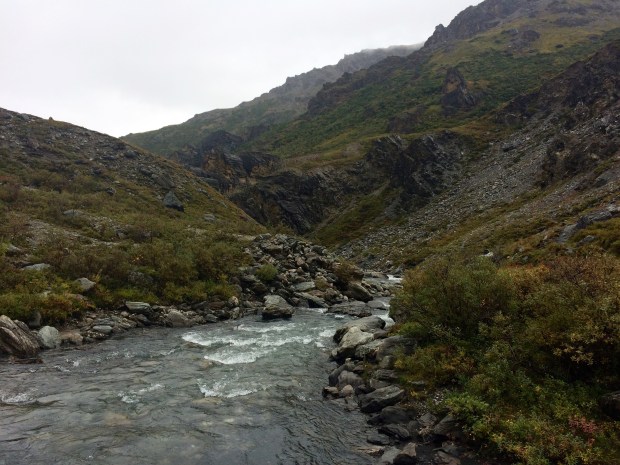
The next day we went back to the park and took a walk around Savage River, which was moody and cozy in the drizzle and fog.

IMG_9889

IMG_9776

IMG_9859

IMG_9866

IMG_9867

IMG_9873

IMG_9879

IMG_9857

IMG_9905.jpg

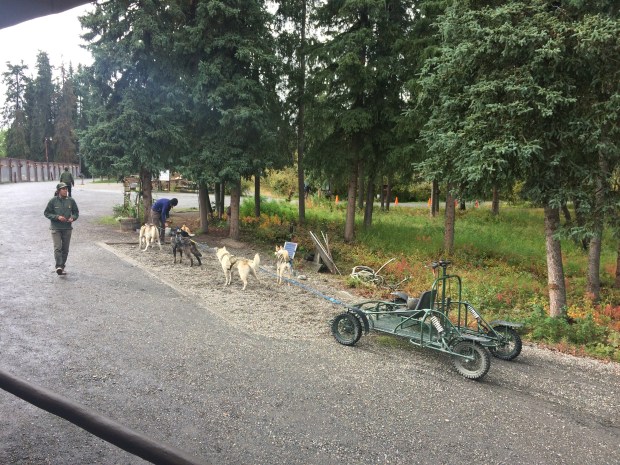
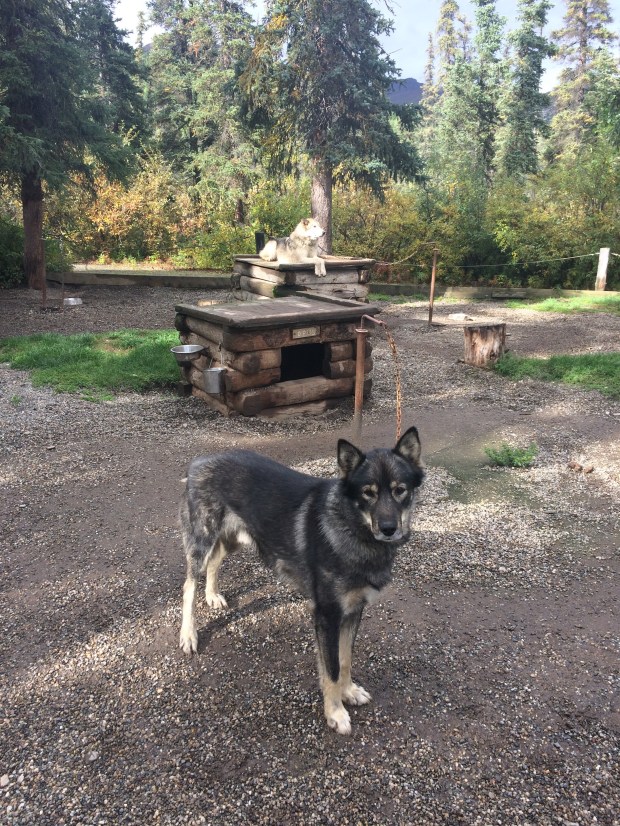
During the summer the park has three daily demonstrations with their sled dog team, which we had timed our hike’s end to attend. I was so excited to see the dogs. They are actual working dogs who spend the winter helping the rangers get around and haul supplies to the cabins and outposts around the grounds. Since the park is a designated wilderness area motorized vehicles aren’t allowed anyway, but additionally the dogs are part of the history of the park and actually much more reliable than vehicles.

IMG_9911.jpg

They are bred not for appearance in any way, but for their athleticism, double coat, closeness of paw pads (so ice doesn’t pack between them), bushy tail (to keep them warm when they sleep outside with tail over face, creating a warm pocket of air), and a trait where their arteries and veins are very close together which helps keep their blood warm as it travels around their bodies. But their appearance is still pretty darn cute too.

IMG_9918.jpg

They were so sweet and eager to run. The trainer told us that they harness two fewer dogs to the summer “sled” for the demonstration than they do for the winter sleds, because if they didn’t she’d end up in the ditch!

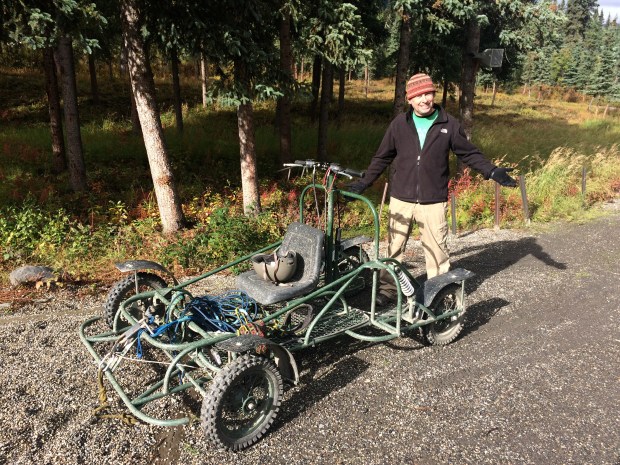
Andy of course loved the sled.

IMG_9916.jpg

We would have loved to stay extra days to climb all the mountains and watch fall continue to move in, but we’d planned a trip up to the Arctic Ocean and every degree counts when you get close to freezing. So we pressed on Northward for what was to become one of the greatest adventures yet!

IMG_9479

The Road to Alaska – Part 3: New Aiyansh, Stewart, & Hyder

Holy cow, you guys.

We knew before we began the drive through Canada to Alaska that it was going to be beautiful, but somehow we weren’t even prepared for how majestic this part of the world is!

IMG_7152


IMG_6885

Every new place we go, we just look at each other, wide-eyed, and laugh out loud in amazement that we’re getting to see all this.

One of my favorite spots yet was the next stop on our map after leaving Stewart. New Aiyansh, BC and the other neighboring villages of Nisga’a are so beautiful that I can’t possibly do it any justice with words. And believe me when I say that I’ve been trying! Even when we were there, both of us were more quiet than usual.

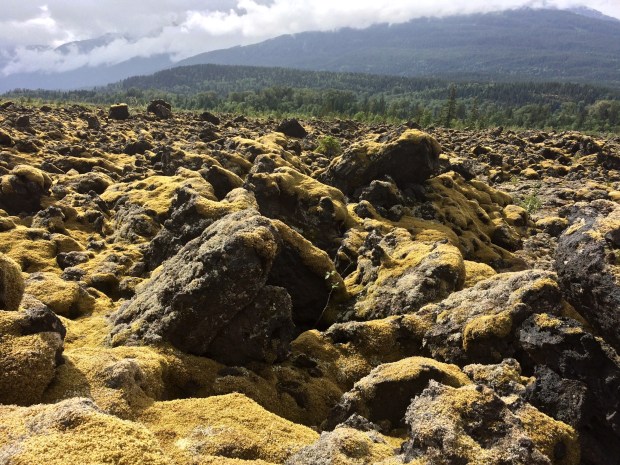
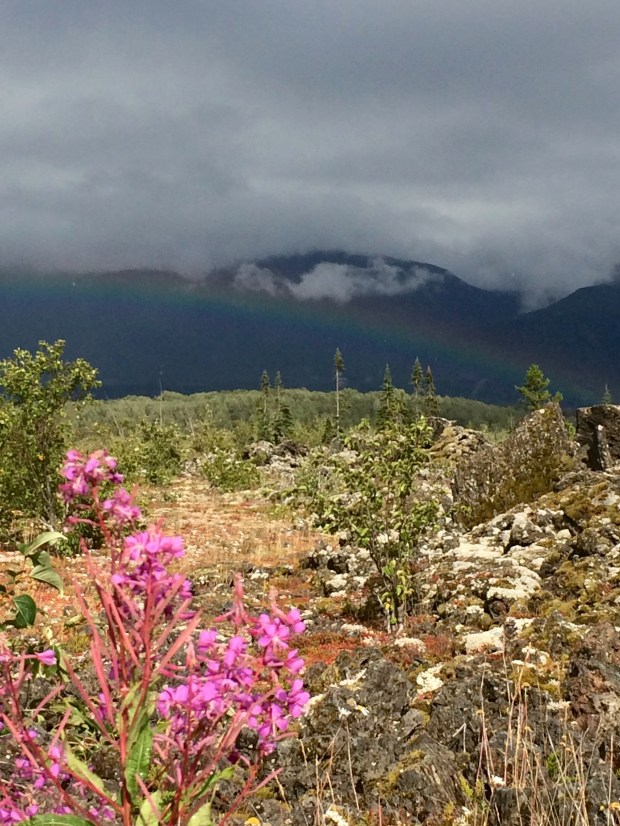
A volcano eruption in the 18th century left the area covered in lava rock, which now is blanketed in dozens of different varieties of moss, ferns and little succulents. And the pools of water scattered around the lava fields are a perfectly clear aquamarine color that felt like something out of a fairy tale.

IMG_6903

IMG_6920

IMG_6910

The Drowned Forest was a favorite stop for me.

IMG_6927


IMG_6956

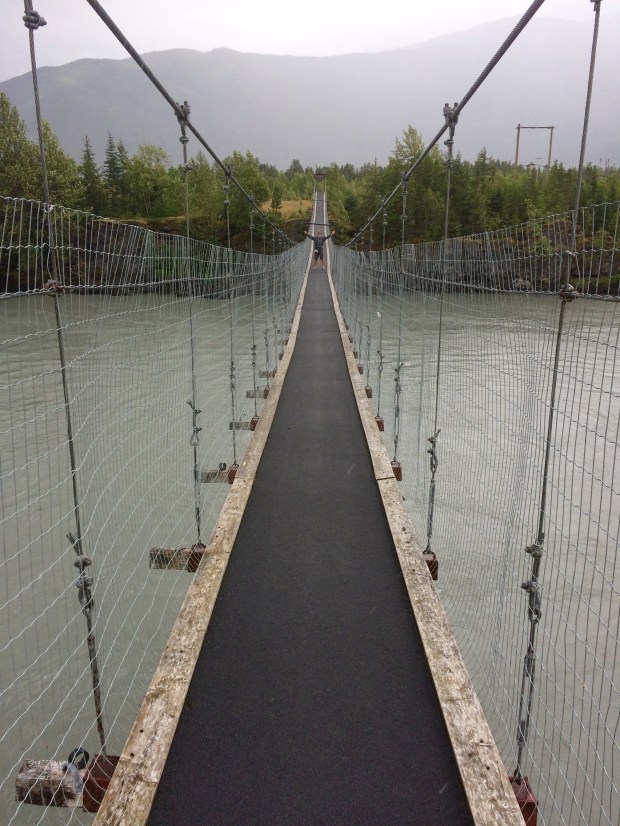
A neighboring village has a bouncy suspension bridge spanning the Nass River, so we crossed it and I quickly admired the view as I hurried to the other side. Andy, of course, loved it!

IMG_6965

IMG_6996

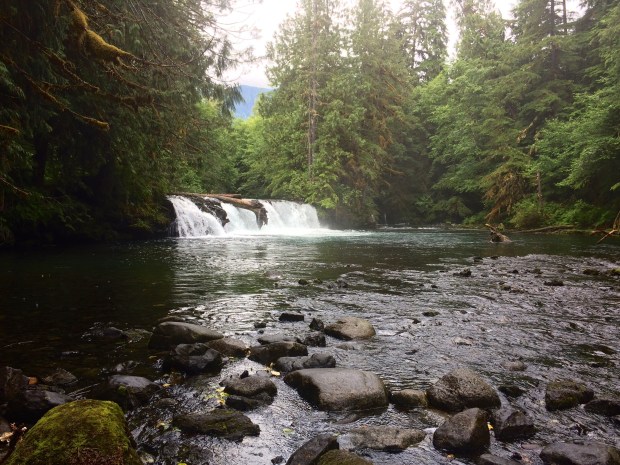
Vetter Falls was a rainforest wonderland, and we walked out as far as we could to see if we could spot the “phantom fish”—steelhead that get trapped at the falls and develop snake-like bodies with large heads—but they lived up to their name.

IMG_7029

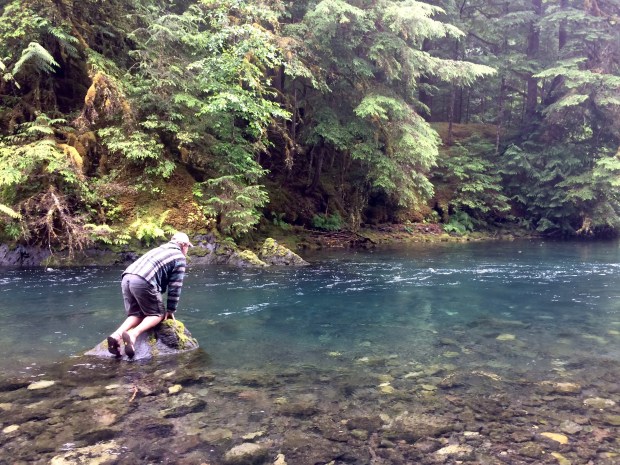
Andy tried very, very hard though. So you have to give him credit.

IMG_7035

IMG_7042

We stayed the night at a lake near Cranberry Junction, which had a name but will now just be known as “mosquito lake” in our memory. It was a gorgeous spot for a feeding frenzy though!

IMG_7087

IMG_7107

IMG_7116

IMG_7120

Although staying indoors to escape mosquitos has its advantages.

IMG_6873

The next day, we drove to Stewart, BC, which took us five times as long as it would have had we not stopped every half mile to marvel at the mountains, glaciers, and waterfalls.

IMG_7142

IMG_7145

IMG_7196.jpg

IMG_7211

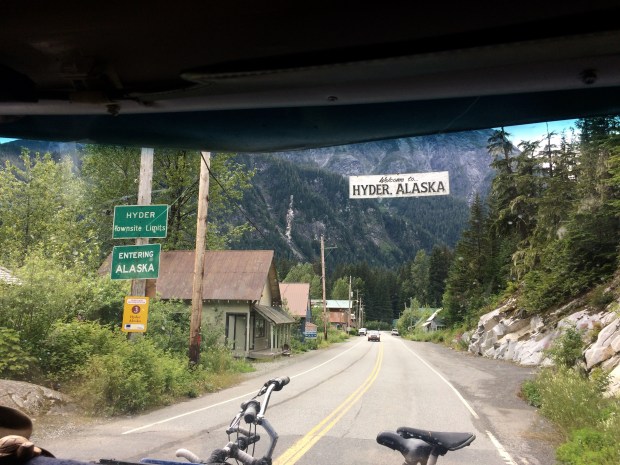
Right next door to Stewart is a little town called Hyder. . . Alaska! They’re minutes away from one another, and have a very similar vibe; they’re just separated by a border agent on the BC side.

IMG_7215

A local tradition is to get “hyderized” at the Glacier Inn, so we did. A bracing shot of Everclear later, we had our official cards!

The next day, one of the locals we’d met found us and invited us out for a day of fishing on their boat! We had a phenomenal time, especially considering the weather was clear and sunny so we could venture out on the speed boat to explore, fish and pick wild blueberries.

IMG_7281

IMG_7243

IMG_7259

IMG_7270

IMG_7279

There were other perks as well:

IMG_7347

It was such a treat and we’re so grateful we got to join! Thanks again, Kim and David!

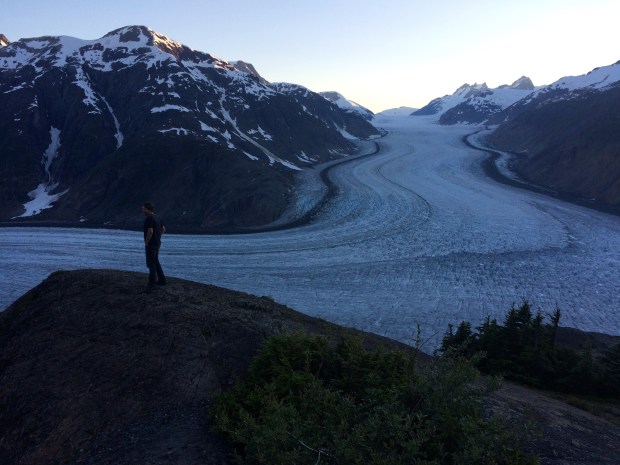
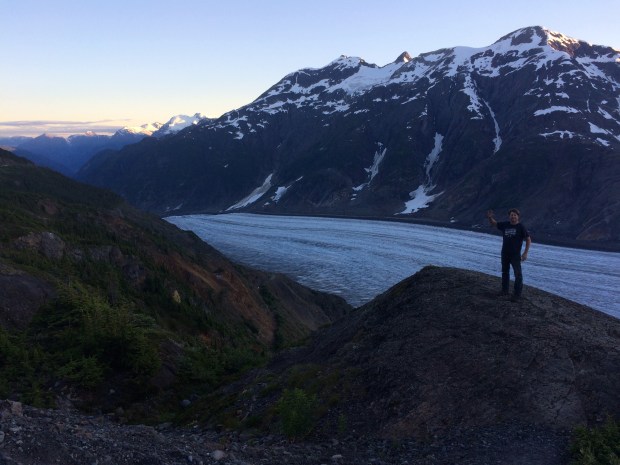
After we left the dock that evening, we drove up to the Salmon Glacier, the fifth largest glacier in Canada. Because the sun doesn’t set until 11 p.m. around here this time of year, we had plenty of time to drive up and stop for photos along the way.

IMG_7364

IMG_7371

IMG_7382

IMG_7387

IMG_7391

IMG_7396

IMG_7399

We found a great lookout to stop for the night, and watched the sun set behind the mountains.

IMG_7424

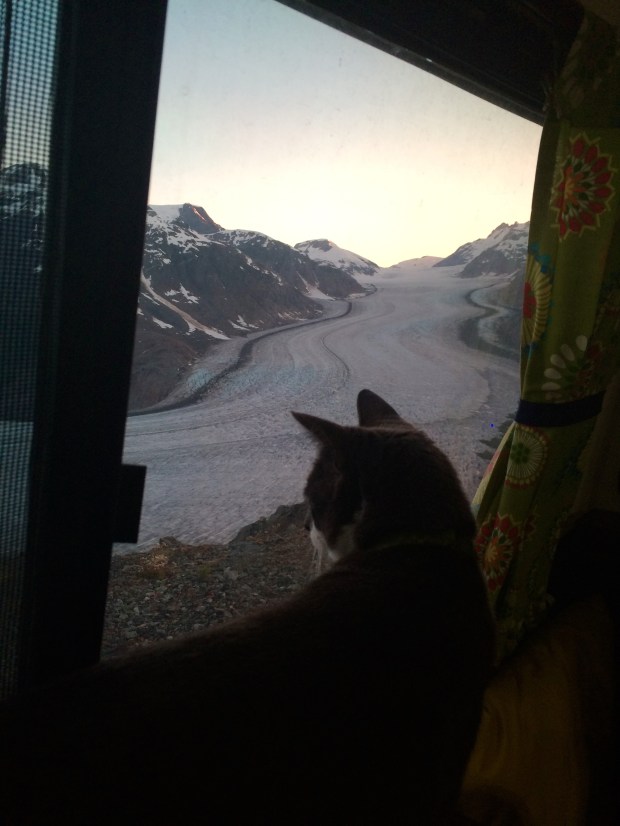
The view from our front yard when we woke up the next day was pretty incredible!

IMG_7451

We even had friendly neighbors!

IMG_7435

Scout and I took a little walk while Andy made coffee.

IMG_7446

I love our morning coffee views these days.

We drove back down the mountain to Stewart, where we got our fishing licenses and headed out to the dock to see if we could catch a few crabs. We had great luck catching crabs, but for a little while it seemed like the only crabs in the water were females! We met a local who was also crabbing from the dock and enjoyed hanging out with him while we all released the ladies back into the ocean. By the time he had to go he’d caught a number of prawns, which he gifted to us. We were totally thrilled. I’ve never had fresh prawns before, so it was generous and very much appreciated! Thanks again, Tim! 🙂

Well, I have more tales to tell and I’m not nearly caught up all the way yet, but I just looked at the time and it’s almost grizzly bear feeding time here in Haines, and we want to see more bears!

Yes, I said more! Spoiler alert:

IMG_7580

The Alaska Road Trip Begins!

Well hello there!

A lot has happened since the last time I updated the blog on our roving whereabouts, wild shenanigans and general goings-on, and if I could, I’d catch you up completely on what we’ve been up to since I last reported. But as I sit here writing this post, I realize how long that could take, as we’ve been moving at breakneck Turtle speed for the last few months! (Of course I’m not referring to miles-per-hour speed, as that remains as slow as ever. I’m talking about how much ground we’ve covered, which for us has been a lot in an uncharacteristically short amount of time.)

Instead, I’ve decided to pick up where we are at this moment, which is the beginning of such a fun adventure that I think you’ll agree this is the best place to begin. Because we just crossed the border into Canada, which (in our minds at least) is the official beginning of the Overland Trek to Alaska!

IMG_5838

The general plan is as follows:

The Timeframe: A month driving up to Alaska (July), a month exploring Alaska (August), and a month returning home (September). We’d stay longer, but we’d like to stay ahead of snowy road conditions and by October the roads can start to ice over.

The Route: We are going to loosely follow what some travel guides call the “Gold Rush Route” on the way up, and then follow the Alcan Highway which ends just north of Montana, so we can drop in to see family at the end of the journey.

Must See: Denali National Park, Wrangell-St. Elias National Park, The Cook Family in Anchorage, Harding Ice Fields, Kenai Peninsula, and a moose. (It doesn’t matter which one.) Other than that we’ll play it by ear, as is our general travel style. There’s a lot of Alaska up there and we want to see as much as we can without moving so quickly that we forget to relax and enjoy the quiet moments that we’ve come to love most during our travels. I’ve been surprised to find my sweetest memories are the little surprise spots we stumble across between official destinations, and we try to make sure we leave room for improvisation for that reason.

Aaaaand, honestly, that’s as far as we’ve gotten. It’s tricky to make new travel plans while you’re in the midst of traveling and enjoying your current location! So we’ve become accustomed to making detailed itineraries a day or two in advance and then making more general plans where the upcoming weeks and months are concerned. It’s just no use trying to nail things down when we could see an interesting road and end up somewhere completely different than we’d anticipated!

We just arrived in Canada yesterday, and already we’re just charmed to pieces. It’s very familiar of course, but different enough that we’re excited to see what unexpected twists we’ll encounter as we go.

Unanswered questions include:

  • How different are the regulations regarding boondocking? Can you stay overnight at any turnout or viewpoint along the highway like you can in the states we’ve visited in the US?
  • What are “good” prices for fuel and propane? Our brains are already so tangled by conversions, and then by the time we work out what the prices are in US Dollars we realize that we don’t even know if the price is good or bad for the region we’re in!
  • We were surprised by the questions they asked us at the border, but they let us in so who are we to complain? They had a lot of questions regarding our lack of jobs, even though we explained we were living off of savings, and wanted to know what jobs we had before we left them for life on the road. The agent asked to see bank account balances to ensure we had enough money to cover our trip, which makes sense. He didn’t ask about pets, even though we did have all the documentation for Scout and Gracie including immunization records, etc. The one we’re still puzzled about though is that he asked how many guns we own. Not how many we were carrying with us, but how many do we own anywhere in the world. Interesting, right? The answer is none, so I’m not sure what the outcome would have been had we said we had an arsenal somewhere in the states. But again, we’re not here to tell the man how to do his job, especially since we crossed over in very little time.

IMG_5834

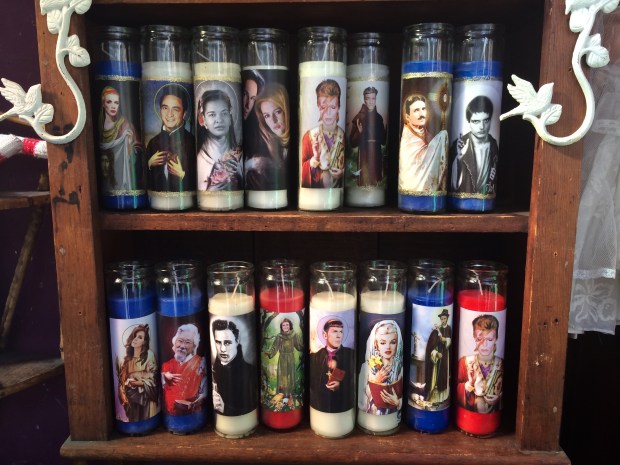
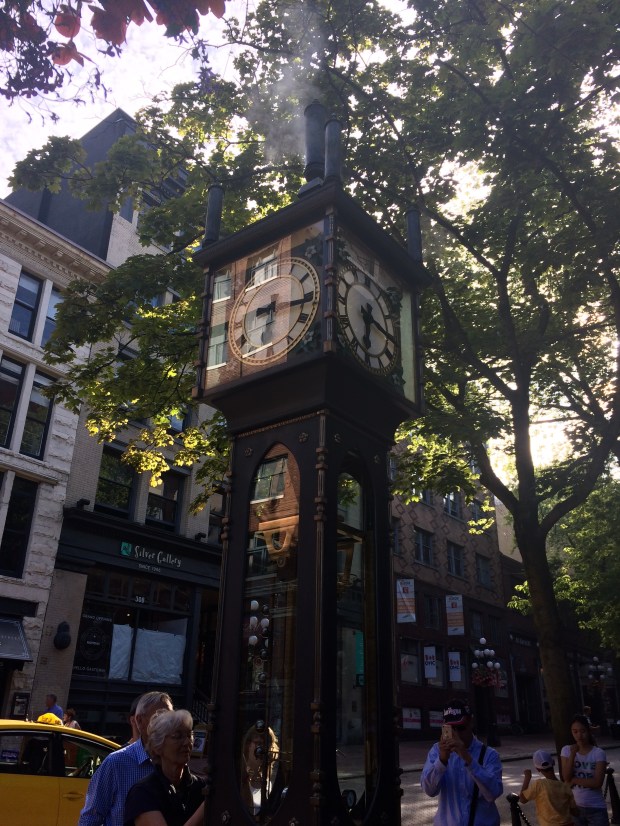
Today we went to Vancouver, BC and had a great time at the Granville Island Market and VanDusen Botanical Gardens before hitting up a few points of interest including the steam clock, a “metaphysical supply store,” the Digital Orca, and the Marine Building. All awesome.

IMG_5882IMG_5917IMG_5927IMG_5953IMG_5964IMG_5971IMG_5983

We love Vancouver!

And now that we’re all up-to-date on the current adventure, here is a sampler platter of the aforementioned shenanigans we’ve been into the last month or two, for those who like pictures of cute animals, lovely scenery, fun friends, and other general niceness.

IMG_3824
IMG_4198IMG_3914IMG_5793IMG_5784IMG_3818IMG_4307IMG_0800IMG_3976IMG_4797 (1)IMG_4843IMG_5413IMG_5342IMG_0667IMG_4364IMG_0680tIMG_4191IMG_5068IMG_0762IMG_0809wIMG_3997IMG_4056IMG_5489IMG_5684IMG_5414IMG_5706IMG_5090IMG_5228IMG_4060IMG_4006IMG_0819dogIMG_5403IMG_4730IMG_4376IMG_4477IMG_3971

Let’s Refurbish a Van – Part 7: Our Batteries Phase 1 (By Andy)

A Post by Andy

{Note: The work detailed in this part of the post was completed over the summer of 2015, before we moved into the Turtle. I am just getting to writing the post now.}

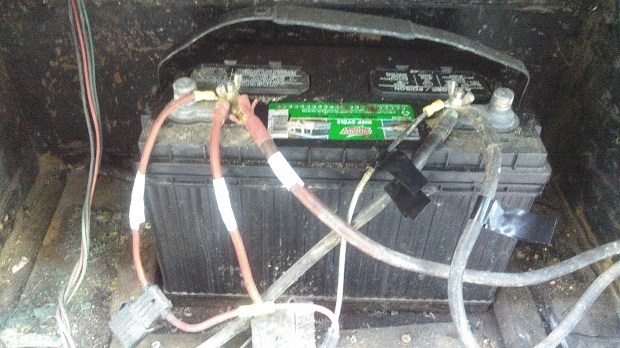
So, we like to have our computers run, have lights, have the controls for our fridge work, have a charged Wi-Fi hotspot, and have our furnace fan powered to keep us warm. For all this we need electricity, and since we want to be off-grid, we need batteries. We started with this:

HouseBattery

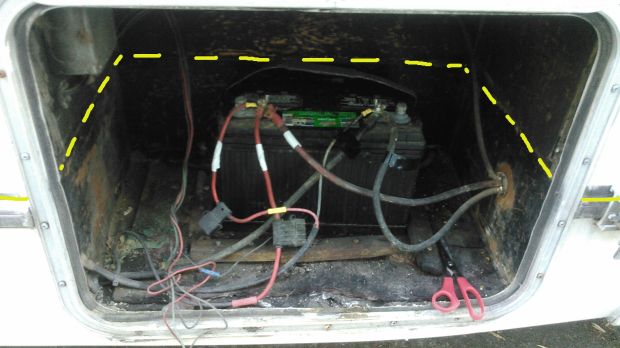
If you are familiar with the Turtle, this compartment is behind the largest access door on the passenger side- the door with the vent in it. In the following photo, I put in a dotted line where the plane of the floor on the inside intersects the compartment.

firstbattery_floorline80

The walls of the compartment above the floor line are plywood, and bump up under the couch inside. The sides and bottom below the line are made of heavy steel. I have deduced the compartment was originally designed for a generator, as there was old 120V AC wiring running to it, an unconnected fuel line that ran into the back, and the door vent.

gimpprocessedimage95

I had a hard time figuring out what all the wires were hooked to, as it was a bit haphazard in the compartment. In the above picture, (1) is a port that goes outside, below the floor of the Turtle. The wires there threaded out of the box, ran a short distance under the Turtle’s floor, then threaded up through the floor to the old inverter. There is a second hole (2) that the wires from the old 100W solar panel and the wires between the battery and main 12V distribution panel were run. (3) is the unused electrical box that had 120V AC wires run to the compartment where the shore power cable is housed.

Maybe I should back up a bit and throw out a few concepts and definitions and explanations for the terms we will be using.

  • Battery: A thing that stores electricity in chemical bonds. Here, we are just referring to 12V lead-acid batteries.
  • 12V/12VDC/DC: 12 Volt Direct Current (DC). This is what cars use for their electricity for headlights, the radio, starting, etc. It is the kind of power all the batteries we talk about will produce.
  • 120v: 120V Alternating Current (AC). This is what is in your house and in businesses you know, the typical wall plug Amy and I look for at restaurants to plug our computers into. It’s generally 120, 121, or whatever it takes.
  • Current: The flow rate of electricity.
  • Voltage: The force pushing the electricity through the wires.
  • Inverter: An electrical box that changes 12VDC to 120VAC. It changes car electricity to house-hold electricity. This is so we can plug our AC computer cords into our DC batteries.
  • Converter: An electrical box that changes 120VAC to 12VDC. The opposite of the above—pretty much a garage battery charger that you use to get your car started after you leave the lights on.
  • Charge Controller: An electrical box that changes the output of the solar panels into DC voltage, hopefully charging the house batteries.
  • House Battery: Now, I probably use this too freely. When I talk about house batteries, and I mean batteries dedicated to our living compartment. If I say house (or household) electricity, I mean 120 V AC. Got to figure this out… but, house batteries are 12V batteries separated from the car system, and dedicated to lights and heat and powering the inverter in the house part of a van. One should be able to run these dead flat, and the car will still start, as they are fully independent circuits.
  • Starting Battery: The batteries under the hood, used for starting the car, sparking the gas when the engine is running, running a radio (if you had a functional one), and lighting the headlights.
  • Shore power: Kind of a boat term, but a source of 120V AC electricity you can plug into. When you pull up at a friend’s house, and pull out your extension cord, and plug into their electricity, they are your “shore power”. (Thanks Alex and Julie, Kari and David, Connie, Mag and John, Dave and Ryanne, Mike and Becky, Blake and Martha, Roger and Mary, Chris, Dad…)

Now, back to the good stuff! To start the battery box rebuilt and modification, I first labeled the wires and removed the old battery. I then cleaned the compartment with baking soda and water to neutralize the sulfuric acid and prevent further corrosion. Lucky, the metal compartment is super stout, so it was still in great shape. As usual, after a final thorough cleaning,  I caulked the seams and painted the compartment with black Rustoleum. I can’t find a picture of the completely empty, cleaned and freshly painted compartment, but trust me, it looked good!


After getting the compartment beautified, I cut and painted a plywood plate to fit into the bottom, bolted and glued it to the metal base of the box, and mounted battery trays to it. I painted up everything with oil-based paint and used stainless steel hardware to affix everything.

Since we had just gotten the Interlux blue boat paint, I practiced the painting technique on the top surface of the plywood base, so it is the same shiny blue as the Turtle exterior. In the following photos, you can see the two new Fullriver 115Ah 12V DC sealed AGM batteries that we started with in there, but just patched into the cleaned up existing wiring we are reusing at this point.


I decided to go with Absorbed Glass Matt (AGM) batteries. They cost a bit more than flooded batteries, but they do not spill, they will not develop corrosion at the terminals, and can be mounted sideways, if that configuration seems important. Additionally, they do not require venting, so they can be safely installed inside the living compartment, if that is necessary. Here is the site. We have been happy with this choice, and as you will find out in future posts, choosing AGM sealed batteries will allow us to make some future cold-weather modifications.

As to wiring, I was just starting to adopt the boat convention for new circuits and runs I would rewire. The convention is as follows: For 12VDC, yellow is ground, and red is positive. For 120V AC, the wires are white, black, and green for ground. Examples of the wires are here:


The reason behind adopting this convention is that at a glance, you can tell which circuit they are supposed to be wired to. Additionally, the boat 120V cable is stranded, as opposed to the household solid copper wire. Stranded wires should always be used in a vibration environment. Logically, then, a van should have no solid copper wires (though most RV builders do actually use cheaper solid copper for the 120V runs). As you might have observed, we have concluded that one should think of their van as a boat, and look to boat paints, wires, latches, and hardware for the upgrades and work. Though the boat cable is a little more expensive, it is paired and tinned for corrosion resistance, and gives a real nice finished look. Additionally, it can be purchased in any gauge.

So, at the end of our Phase 1 battery configuration we had our two new AGM batteries with a combined storage of 230Ah at 12V installed and secured, with the connections cleaned up. With this battery pack, we simply used the old converter to charge them when we were connected to shore power, and the old inverter to make our 120V for our computers when off-grid. At this point in our journey I also had just finished the install of our 300W of solar to charge the batteries (we will cover the panels and solar charging and solar controller in a different post).

That’s Phase 1 for you!

Great Sand Dunes National Park: Climbing Up & Sliding Down

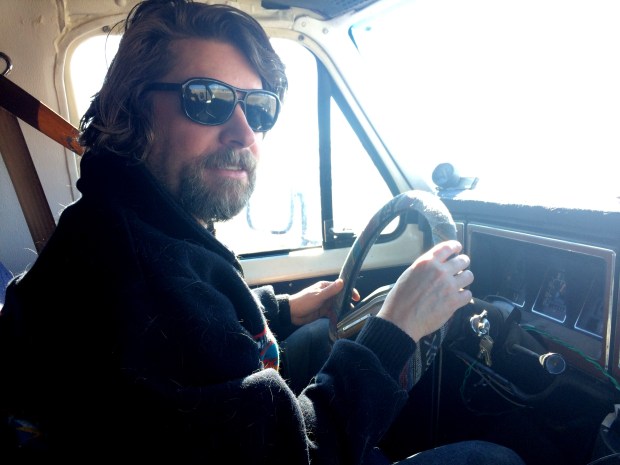
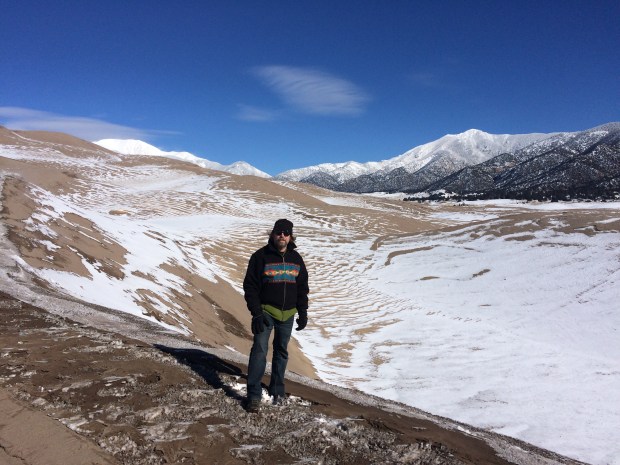
With our compass pointed south we continued our quest for some sunshine, and found it as we neared Great Sand Dunes National Park in Colorado. Andy was happy to channel The Dude with his sweet Lebowski shades as we pursued the sunny weather.

img_7869

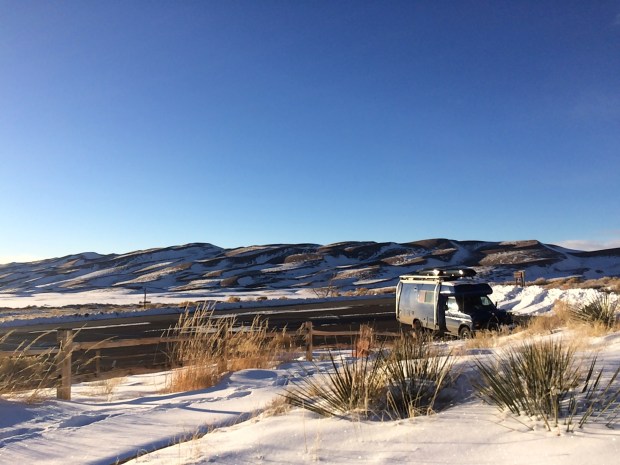
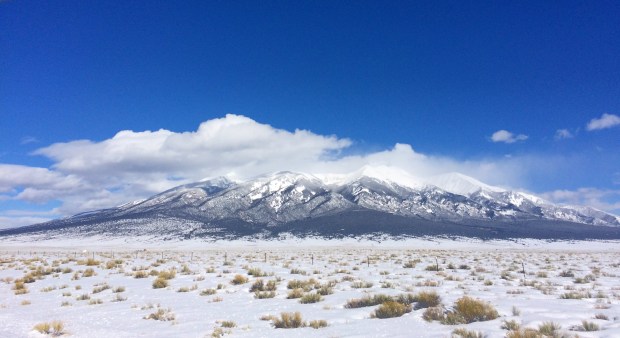
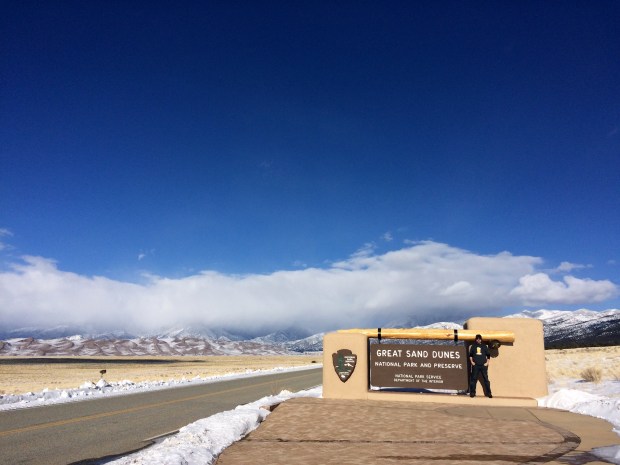
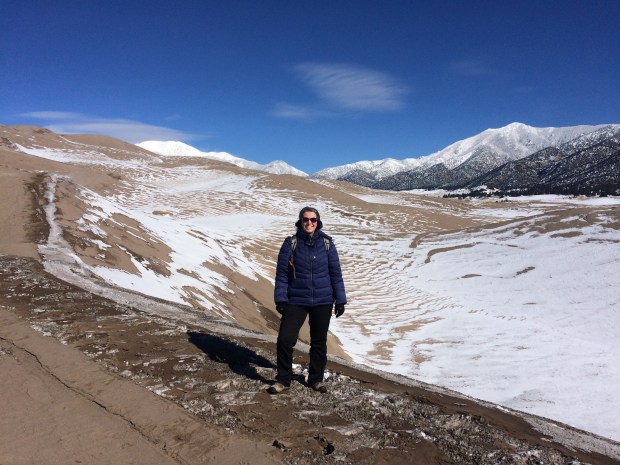
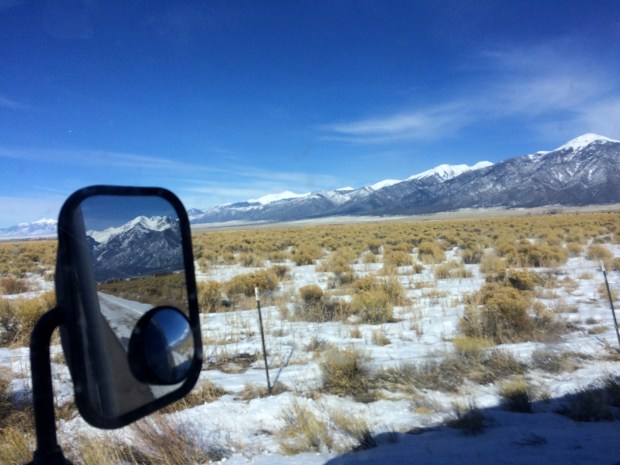
We were a little surprised to see how much snow was covering the ground, but it made for some dramatic views of the Greenhorn Mountains as we approached the entrance.

img_7878img_7880img_7894

We found a little pullout along the road into the park, and stopped to admire the view. We noted that it would make a great spot to stay the night, in case the campground was closed for the season. We had found conflicting information about whether or not any campsites would be available this time of year, so we had our feelers out in search of potential real estate in the event that we couldn’t stay in the park.

As we drove on, the snow-covered dunes came into view, and every direction we looked was just stunning.

img_7902img_7906img_7911

A quick stop at the Visitor’s Center saw our water filled and our questions answered about where we could stay the night in the park (nowhere). We had to assuage the concerns of the rangers who told us it was going to get “reeeal cold” that night if we were staying in our “car,” and we felt pretty pleased with our setup as we reassured him that we had heat, a warm bed, and a stove to cook a hot meal for the night. Ah, Turtle life.

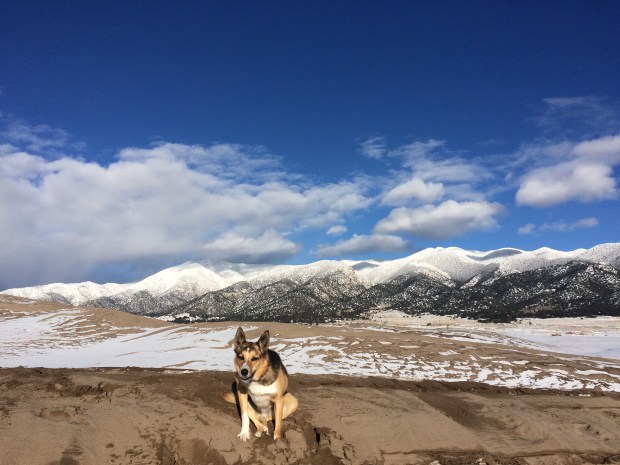
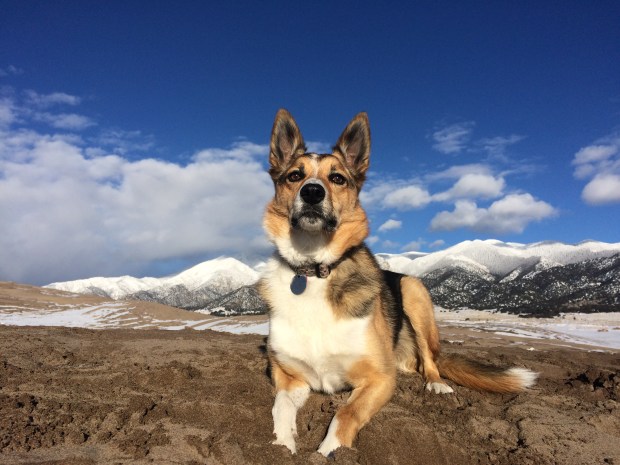
We decided we’d return to our pullout to spend the night, but in the meantime we had an hour to two to run around on the dunes! Dogs are even invited, and Scout was so happy. His two favorite landscapes are sand and snow, and he couldn’t believe his luck in getting to play on both at once. A great day for everyone! (Gracie was sleeping in a sunbeam back in the Turtle, so she was happy too.)

img_7934img_7959
I think Scout inherited my posture.


img_7967
That’s better.


img_7973img_7979

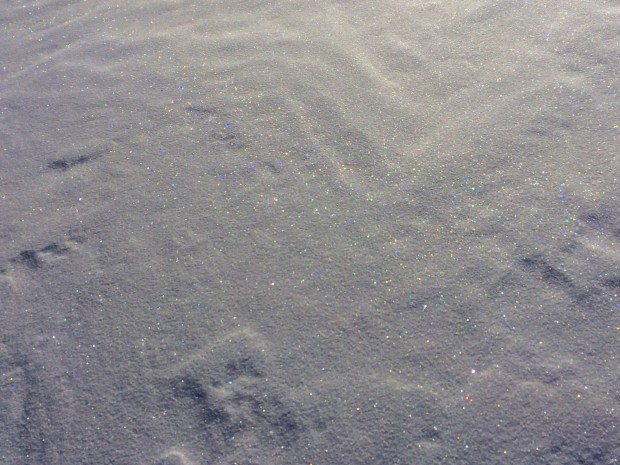
Pictures could never quite capture it, but as the sun shone on the snow it created an explosion of rainbow fragments flickering across the surface as we walked along. I’ve never seen anything like it.

img_7985

We parked near the amphitheater to explore a bit, then had to head back to our overnight spot as the sun was beginning to set. (We have a list of rules we’ve compiled for successful overlanding, and the first rule is Never Drive At Night. We break it now and then, but life is much easier when we don’t.) One obvious benefit to traveling only during daylight is that we don’t miss the scenery, and I was very pleased we made it in time for sunset so we could admire the view.

img_7988img_7991

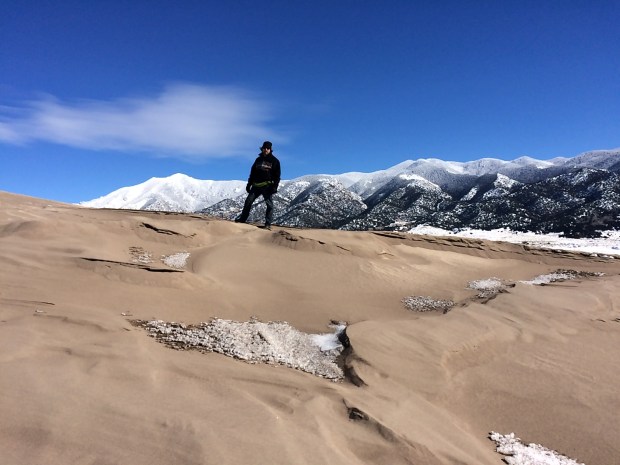
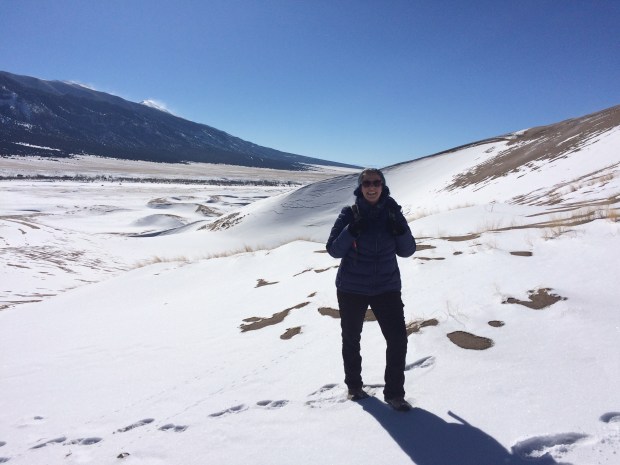
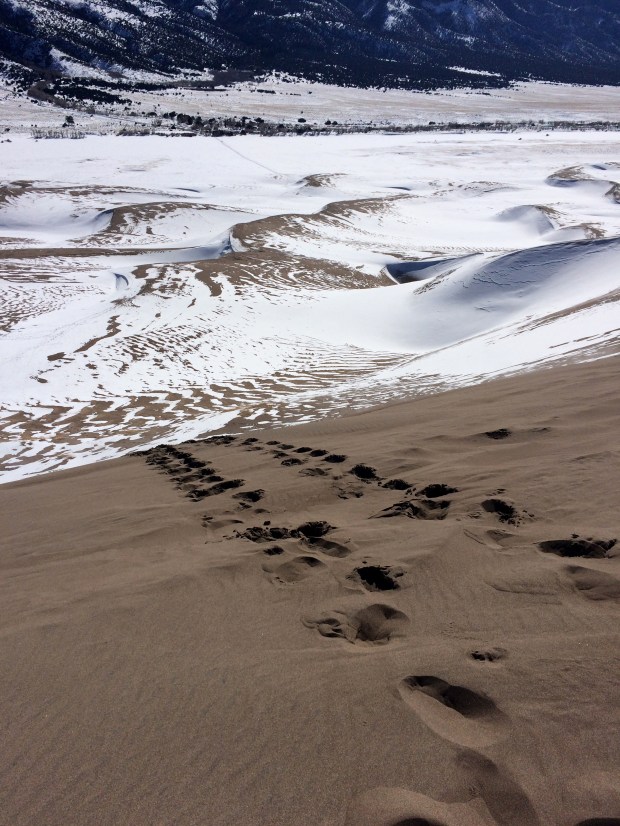
The next morning we woke up and drove right back to the parking lot outside the dunes for a long hike to the top. We packed a lunch and set out, and as we walked across the snowy dunes, Andy reminded me of a conversation we’d had earlier this year. . .

When we were visiting the Badlands, I was in such awe as we walked across Door Trail; I’d never been in such an incredible place before. It seemed so otherworldly and dreamlike, aside from the distraction of those other humans roaming around. I told Andy that I wished I could have the Badlands all to myself, for my birthday or some special day—just once. Always the voice of reason, Andy responded, “Well. . . I think that restricting public use would kind of defeat the whole point of the National Park System.”

Ok, ok, I know. But it would be SO COOL, right?

Well as we ascended the first rise at Sand Dunes National Park, Andy pointed out that there had been no cars in the parking lot, and that there was not a soul anywhere. My birthday was a just a few days away, and he asked, “Is this close enough?” Yes, it was.

img_8006

For over an hour, we were the only people on the dunes. It’s pretty exciting to accidentally have a wish granted.

img_8012img_8015

I’d like to point out here that these pictures give no sense of depth; I was actually so high up on this dune that I was a little nervous to be standing that close to the edge!

img_8034img_8041img_8042

We hiked up, up up, at an elevation of about 8,000 feet. I’m telling you, that air is thin. And the last dune was a real doozy! There was some vertical hands-and-knees climbing there at the last ascent.

img_8045

So we were thrilled to reach the top!

img_8057

img_8048

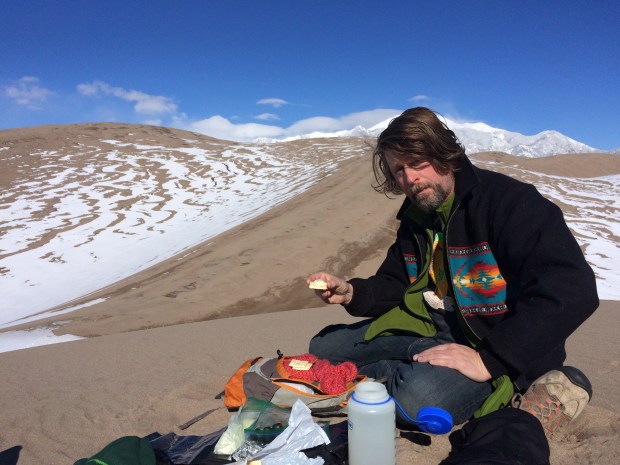
There we ate our well-earned cheese and crackers, with olives for me and onions for Andy.

img_8061

After our picnic, I had a surprise waiting for Andy: a trick up my sleeve that I borrowed from my dad, who was endlessly creative when it came to having fun. When I was a kid, on a family outing in the mountains of Montana, we happened upon a steep valley covered in snow. My dad grabbed some trash bags out of the car, and we had instant makeshift sleds to fly down that mountainside. So when I saw the dunes covered in snow, I squirreled a few black garbage backs into my pack before we left the Turtle, and once we were at the top, I handed one to Andy.

img_8067

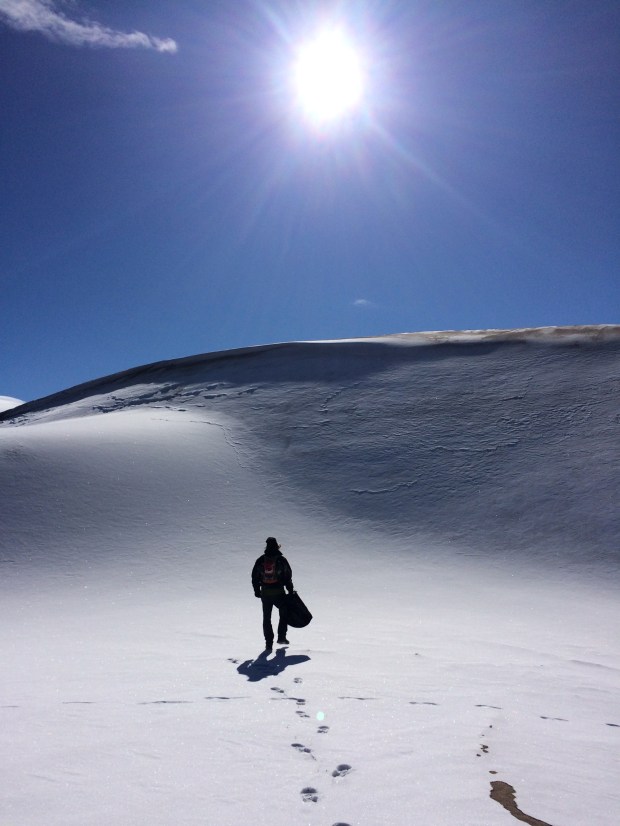
After a few trials, we learned that they worked brilliantly on the snow, and when we’d hit the sand it would slow us down quickly and stop us. So we stuck to the good patches of snow, and rode those garbage bags all the way down the dunes.

It was a short two days at Great Sand Dunes, but by the time we left we felt like we had really made the most of it. As we travel from one National Park to another, it never fails to amaze me how diverse and beautiful this country is. We can’t wait to see more!

img_8092

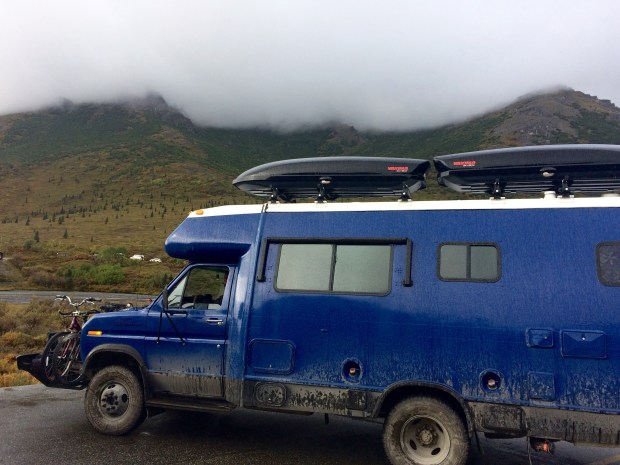
Sleepin’ On The Streets: A Beginner’s Guide To Boondocking

One of my favorite Andy quotes happened outside the Baghdad Theater in Portland a few summers ago, when we still lived in a house.

We were sitting on the patio after a matinee, drinking a beer and talking about how excited we were to begin our upcoming vandwelling life. I said something about wishing we lived in the Turtle already, and how much fun it would be if we could just walk a block down Hawthorne and be “home.” Andy beamed and said, “Isn’t it exciting? By this time next year we’ll be living the dream: sleeping on the street with our half-wild dog and our garbage cat.”

It’s become our motto.

On that note, I recently realized that I’ve neglected to discuss a topic that is super fun and potentially useful to other wanderers, so. . . let’s talk about boondocking!

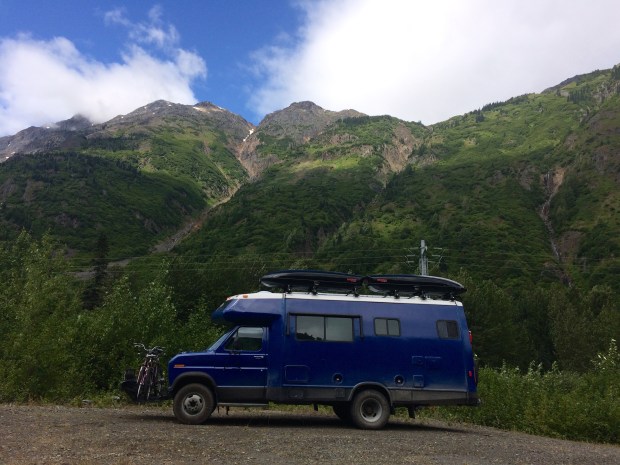
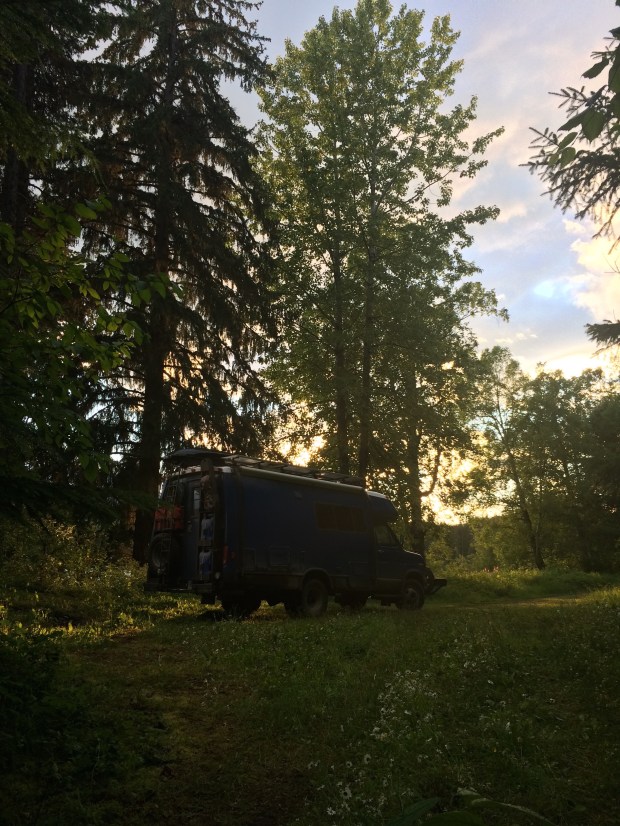
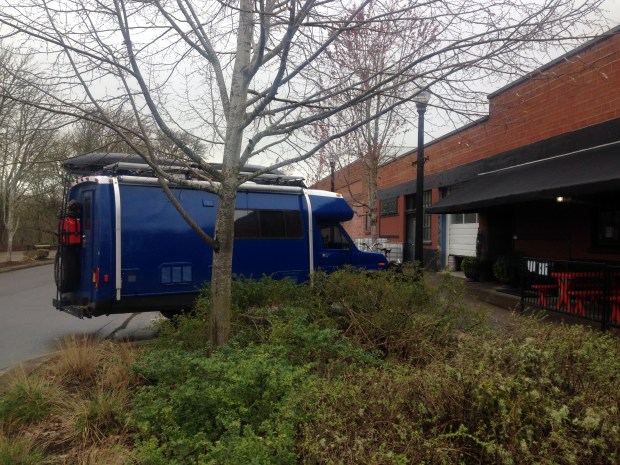
img_0842A place we lived for a night in Corvallis, Oregon

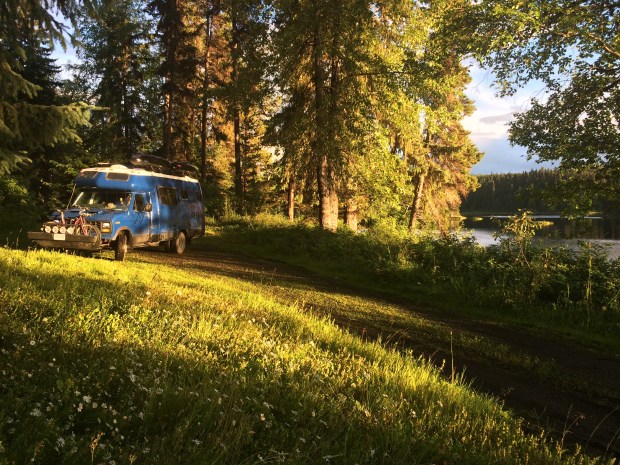
One of our favorite things about full-time vandwelling is the freedom we have to roam around without worrying about where we’ll stop for the night, allowing ourselves to really live in the moment. We have the ability to go where our interests blow us without worrying about planning around a place to sleep. At this point we’re a year into off-grid Turtle Life and feel completely comfortable and confident pulling over and finding places to stay overnight, but when we started out it was pretty daunting and we spent a lot more money staying in RV parks and camp sites when we didn’t need to. I know we still have lots to learn, but I’m here to share what we wish we would have known a year ago!

*An important note here is that the type of boondocking I’m referring to is not a long-term off-grid stay in the woods. I’m talking about the type of boondocking common with full-timers, which is traveling down the road and stopping for the night as we pass through an area, waking up, packing up, and continuing along our travels. Once we get into long-term boondocking, we begin talking about on-board fuel supply, second alternators, etc. and that’s a whole different conversation.

img_2263
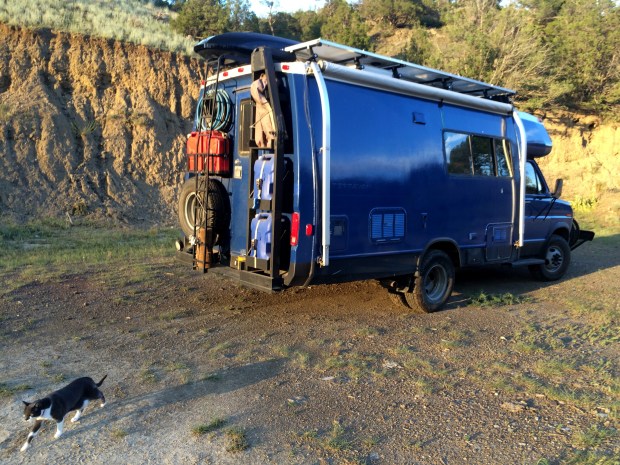
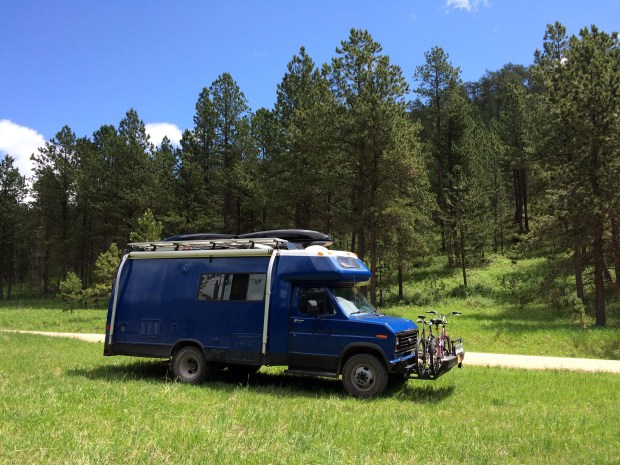
Some BLM Land near Jewel Cave National Monument, in South Dakota

It’s so liberating to realize how easy it is to get around when your house is on your back and you can just stop wherever you want! But you do need to get equipped first.


Let’s start off with the things we’ve determined necessary for comfortable boondocking:

  • Heat supply: Diesel or propane
    • We’ve got a propane heater wired into the Turtle which is wonderful, and effective in heating up our small space quickly. Diesel works great too.
  • Power supply: Either a generator or solar panels and batteries
    • Andy will write a technical post on this one at some point. Lots to say here! We’ve got solar panels and three batteries that, with regular sun, will keep us charged indefinitely. This includes our computers, interior lights, etc.
  • Water storage
    • The Turtle has a water tank plumbed to the sink and bathroom, but when we bought it the water pump wasn’t working, and we lived happily with refillable water jugs for a good long time.
  • “Some sort of bathroom” is how Andy worded it. . . 🙂
    • If you have a bathroom in your vehicle it’s pretty magical! If you don’t, you can get away with boondocking at rest areas, and using the facilities at the big box stores that let you stay overnight, and of course there’s always the great outdoors. (Andy suggests empty jugs, but he also lived way out in the bush in Kenya for a number of years, so. . .) But if you’re deciding between two vehicles and one has a bathroom, I recommend the one with the loo. It just frees up loads more off-grid options.
  • Food storage and preparation
    • This can be a simple plan, but it’s worth adding to the list. Keep some food with you and have a way to prepare it. You know, like life.
img_2968
Breakfast in Garnet Ghost Town Parking Lot

Now let’s talk about where you can stay:

  • Wherever you want!
  • Just kidding; there are restrictions. But fewer than you might think.

As I mentioned, when we started full-timing we weren’t sure how the boondocking was going to work out. Most of the literature we read about full-timing was written by and for an audience who planned on spending most of their time in RV parks. We enjoy when we stay in parks very much, but we’ve primarily got our sights set on simplifying and being independently mobile. Also, there were a few books we read in which the author was paranoid about getting harassed by the police for staying somewhere overnight, and at first we thought it was something to hide and be nervous about. (It’s not.) So it took us a while to find what worked best for us, and what we discovered is that there are loads of legal options!

img_2766
Public land somewhere between Bozeman and Missoula, Montana
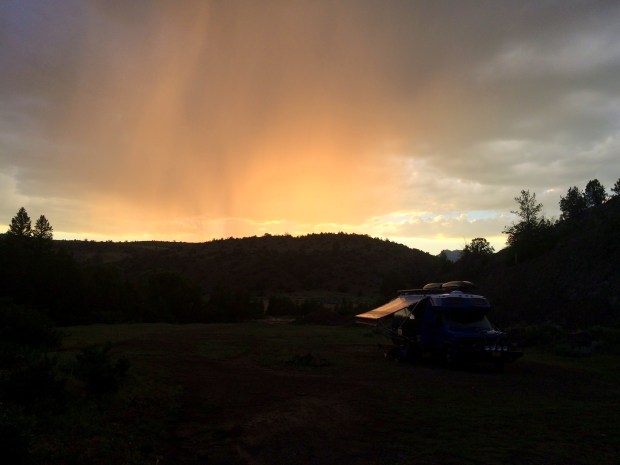
img_2798The sunset at that spot, later that evening. . . a pretty nice backyard

Here are the things we’ve learned about where it’s legal to stay overnight:

  • Most states that we’ve researched allow for overnight parking unless otherwise posted, usually for 10-12 hours max. And where it’s not allowed, it’s very clearly posted. And where it is legal, you can usually find signs stating the rules.
  • This includes parking in towns, because in the states we’ve visited at least, it’s only illegal to “live” in a vehicle on the road for more than 72 hours. It will likely vary from state to state, but we’ve never had any trouble just staying overnight in an area that didn’t have posted parking restrictions.
  • Lots of spots that allow overnight parking will post “No Camping,” which we have learned means that you can’t have a camp fire, put chairs outside, extend any slide-outs, or roll down your awnings. Basically you can’t do anything but park, which is all we need! I always thought it meant no overnighting of any kind, but you can stay there as long as you don’t start setting up your living room outside your vehicle.
  • Rest stops are actually places to stop and rest! We see lots of other RV’s and vans parked overnight at rest stops now that we’re paying attention, and the nice thing is that they’re usually well-lit, have bathrooms and potable water, and often have nice spots to walk the dog (and if you’re us, the cat). It had honestly never occurred to me that you could spend the night at a rest stop, because I’d never needed to. But there you go!
  • We’ve enjoyed very much the realization that you can stay at scenic viewpoints and historic pull-outs along the interstate. Again, each state determines how long you can stay, but in our experience it’s always a night’s sleep worth—around 10-12 hours or so. We’ve woken up to gorgeous views of towering rocks and rivers in the middle of mountain ranges that we would have just blasted through. A lovely and novel spot to drink coffee while the dog does his morning business.
  • BLM land is available for dispersed camping, and has been a favorite of ours. According to their website, “camping on public lands away from developed recreation facilities is referred to as ‘dispersed camping.’  These sites are widely dispersed, undeveloped, and are generally not signed as campsites.”  You can stay for up to 14 days, have camp fires as long as you monitor them closely, and it’s a great spot for the pets to run and play.
  • As many of you know, lots of big box stores and travel plazas allow for overnight parking. We haven’t done that as much, because we love grass and so far there has been a lot of grassy spots available to us. But it’s an option, and a nice one if you need to grab supplies too.
  • At first we thought when parking in town we’d be happiest parking somewhere quiet without night traffic, like by a park or school, but then decided that a van parked overnight by a school could attract negative attention. After a fair number of trials, we’ve found that we’re most comfortable parking on—or on a side street of—the main drag of smaller towns. There’s not much night traffic typically, and it doesn’t look as sketchy to the neighbors if a vehicle is parked overnight on the road under street lights as it would in front of their house. Even though it’s legal to park in neighborhoods, we like to make sure that we’re not imposing on anyone either. Not to mention if we’re near any night life, we can explore town, hang out at the local spots, and then just walk 10 steps home without designating a driver. Safety first, guys.
  • There are bunches of resources for people like us, to help avoid the sometimes-annoying driving around looking for the ideal spot. The ones we like best are:
    • Overnightrvparking.com: Our first favorite, and the one that got our boondocking education started. It shows on a map where there are free places to park for the night so you can plan ahead. It tells you if it’s a rest stop, scenic viewpoint, etc. and what facilities are available at that spot. This site is user-driven, but the administrator evaluates all submissions and posts whether or not the spots are legal and safe. It was just $25 for the year, and right away we got well over our money’s worth for it!
    • Allstays.com: We love this one because it lists everything. As their website states, it shows “Over 29,000 Campgrounds: Independent, KOA, National/State Forest, State Parks, Public Lands, Army Corps, National Park, Military, County and City Parks, Casinos.” It tells you if it’s free or has a fee, how much it costs, and what amenities are available. The app also lets you see where there are dump sites, propane, potable water, and other resources. It’s a must-have.
    • iOverlander: Much like Allstays it’s got everything, but includes a lot of information about places to stay outside the United States and additionally shows points of customs and immigration.
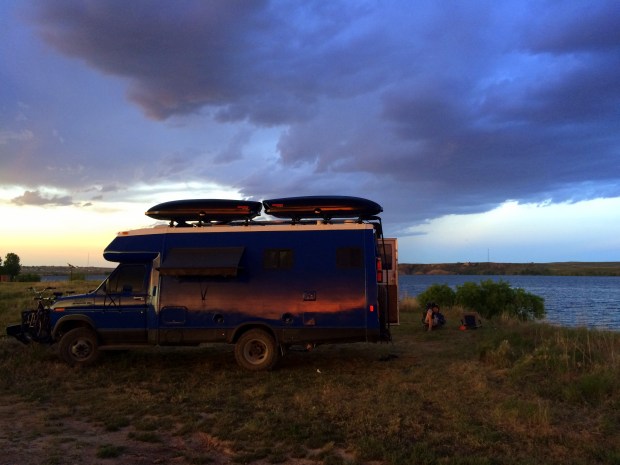
img_1990That time we lived on a lake

The very best part of an off-grid traveling life is that we get to try out being locals in towns all over the states, every day! We’ve really enjoyed the simplicity and flexibility it affords us, not to mention how inexpensive it is to visit new places. We can wake up in a city one day and in the woods the next. I can’t believe I waited this long to figure out that this was possible.

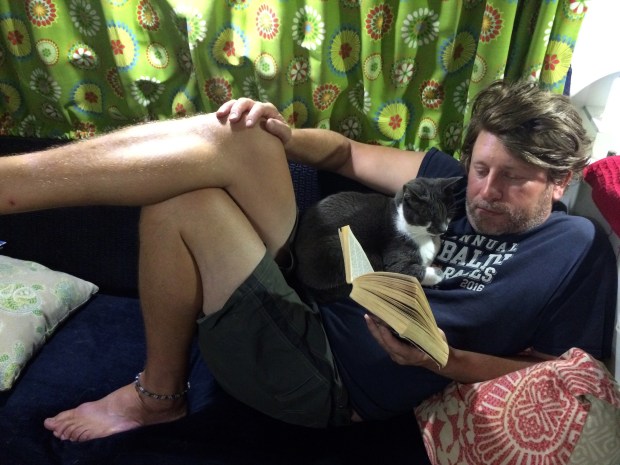
A lot of people are curious to know if we feel anxious about boondocking, especially in towns or populated areas. At first, yes, we were very aware of the fact that we were on a street and in an unfamiliar town. We took a very long time to find a spot, and when we found one we were careful to stay quiet and keep a low profile. After we understood the rules, though, and got a feel for what worked best for us, that completely dissolved. Now what’s remarkable is that we’re so used to it that when we close the door, we’re just home. We watch movies, listen to music, have friends over when we’re in town, and pop right out the back door in the morning to walk to a coffee shop or let the dog out. It’s so exciting to wake up in your own house, cuddled up to your person and your pets in your own warm bed, and in those first few seconds not to remember where you live!

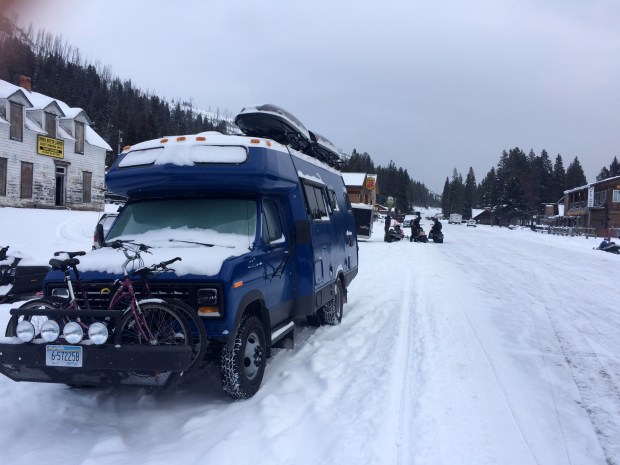
img_6483Cooke City, Montana. . . The morning we woke up to the roar of a town full of snowmobiles!

Every day really is a new adventure. And we’re ready to see what tomorrow will bring!


A Year of Vandwelling!

Guess what?

This Halloween marked our one year anniversary of being full-time vandwellers! It hardly seems possible that 12 whole months ago we were starting off with no idea what we were doing, not to mention where we’d be a year later. (Spoiler: It’s not as far away as we thought we’d be!)

It has been an incredible year—the best of my life so far—and we have loads of lessons to show for it. We get a lot of questions about the less glamorous side of our lives on the road, and sometimes while writing about our days I forget to include both the highs and the lows of the vandwelling lifestyle. I know it’s interesting to read about the difficult aspects, because I love reading about the obstacles other full-timers face too, but it’s never my first instinct to complain about the rough bits when we’re enjoying our dream life! But life is still life, and it’s not always perfect. And the people want to know the dirt!

So in honor of our one-year Turtleversary, here’s a list of both the easy and fun aspects of Turtle Life, and the stuff we didn’t realize was going to be hard.

THE EASY:

  1. Freedom & Adventure
    • Let’s be honest; this is the whole reason we hatched this plan in the first place! We were tired of working for an income that just went to pay rent and bills in our house in Portland that we loved but didn’t get to enjoy as much as we’d have liked, since we were always at work! Andy was working days and I was working evenings and nights, and in the slivers of time we did have together, all we wanted to do was get out, go camping, float the river, and explore the outdoors. We had the desire for adventure, but no freedom to truly embrace it. Now we go wherever we want as our whims dictate, and every day is an adventure. It’s delicious.
  2. Seeing Friends and Family
    • This has been an incredible side effect to our new life. In the last year, we’ve been around for more birthdays, moving days, celebration days, and regular days in the lives of our families and good friends than in the last 5 years combined!
  3. Getting to Know Each Other
    • I don’t care how long you’ve been with someone, when you move into a 100 square foot box with them full-time, you get to know them on a whole new level! And seriously you guys, this has been so much fun. (We’ll get to the “Time Alone” portion on the next list shortly, so you can take this all at face value, knowing I’m not trying to convince you that it’s all roses.)
    • But if you like your significant other, then this can be the adult equivalent of your 3rd grade best friend! All your shared experiences are new to both of you, and the world is your playground to explore together. You learn so much about each other as you try new things, learn how to compromise when there are unlimited options, and create new stories and inside jokes that are just yours. These days, our conversations are less about the day-to-day experiences we’ve had, and more about ideas, dreams and plans. Now we craft our days together, and the best-friend-ness that develops is super duper fun.
  4. Getting to Know Ourselves
    • I only realized how significant this one was after writing the last paragraph, so I added it in. This lifestyle is so outside the norm that as we learn more about each other and our surroundings, we are also reassessing who we are and discovering more about ourselves. We’ve had more time to try out new ideas and challenge ourselves and to be creative, and being outdoors is a great place to let your mind wander and see where it takes you.
  5. The Stuff We Get To See!
    • This one seems obvious, since we’re always moving and seeing new things. And as we anticipated, it’s been awesome! What’s surprised us about this, though, is that so much of what delights us lies in between the highlight reels of our travels. We meet incredible and intriguing people, we stumble across charming small-town spots, we pull off the road to let the dog out and find such a gorgeous chunk of public land that we decide to stay for the night and end up watching a storm roll in as we drink a beer under the awning, cuddled up under blankets in our camp chairs watching the animals run around together. Our happiest memories include both the destinations and the journey. We’ve got stories, you guys. 🙂
  6. Our Time Is Valuable
    • What I’ve really appreciated in this last year is the ability to determine how I spend the majority of my time, since we’re no longer going through the motions 40 or more hours a week. Andy’s favorite thing these days is to take on a project and make it absolutely perfect. Instead of just wiring the solar up for functionality, he gets to think it through from start to finish and has the time to make it not only functional but attractive. He adds that it’s also really fun that when you do have projects, it’s a lot easier to do a more detailed and professional job because everything is so much smaller. (Right now he’s building a new vanity in the bathroom, and it’s a much smaller project than a full-size bathroom vanity! So he can put a lot of care into it.) We get to nurture our hobbies while discovering new ones! The funny thing is how we still don’t have time to get everything done. . . some things don’t change no matter where you live.
  7. Learning New Things
    • Since we’re only a year into this life, we still have a bunch to learn. Slowly but surely we’re adding to our “life education,” both practical and just for fun. We’re learning more about the Turtle, about the U.S., about sweet hot-dog stick carving techniques, Andy’s learning to make fishing lures, I’m learning about edible wild plants, we’re learning to identify bird calls, I’m brushing up on my Spanish, and we now know all the state nicknames, just to name a few new skills. That last one is mostly worthless, but interesting to know that Arkansas is The Natural State, for example. The more you know, right?
  8. Our Animals Are So Happy
    • You’ve seen the pictures. They’re living the life! We’ve fielded some concerns about whether or not the animals are happy in such a small space, especially since we have a curious, active cat and the “Energetic Border Collie” poster-boy. And I agree that if we spent most of our time indoors, they’d go bonkers. Luckily, in Turtle life we spend a tiny fraction of our days indoors and are mostly busy playing outside! Nothing but mountains to climb, fields to race through, trees to climb, friends to meet, things to sniff, and rivers to swim in or sit cautiously by, depending on which animal we’re talking about on that one. When we worked full-time, the animals were home alone for multiple hours, whereas now they’re with us nearly all the time and are enjoying the open door policy giving them access to their enormous back yard.
  9. Amazon Delivers
    • We once ordered an inverter for the Turtle at a tent camping site near Wheeler, Oregon, and two days later the UPS truck came bumping down the dirt road with our package. We still crack up about it! We’re generally always able to get what we need, even without a permanent mailing address! Amazon rocks, and makes all our projects possible, even fairly of the grid.
  10. Simplicity
    • When we decide that we’ve done all we wanted to do and seen all we wanted to see, eventually we’ll settle down somewhere. (Luckily we’re test driving cities ahead of time, so we’ll know right away where that somewhere will be!) And when we do, I know the biggest take-away for me will be the joy of simplicity that we’ve discovered in this process.
    • We didn’t have much of a choice regarding how much “stuff” we could bring with us, and we decided right away that we didn’t want a huge storage unit full of miscellaneous junk waiting for us to deal with after our travels. So we sold and got rid of just about everything that we had stored up in our house. All that stuff we’d been carrying around for years and years and hauled in boxes from one house to the next, finding places to store in the house, and digging through when we were looking for something. The process was intense and looooong, but now that we’ve pared down to the barest of essentials, I can’t imagine going back to the piles of stuff. Right now, we know where everything is, and all our belongings are essential and valuable to us. It’s liberating, and I wish I had done it years ago.


THE HARD:

  1. The Mess
    • We didn’t see this one coming. It’s not something many people talk about in blogs, or share in the beautifully-staged Instagram shots of feet poking out the back doors of spotless van interiors. But I’m here to tell you that full-time vandwelling is messy! I just asked Andy what his first line item would be on this list, and after thinking for a minute he said “Well, it is quite a bit messier than we’d anticipated. . . ” Yep. We have to stay on top of clean-up nonstop, or we’d go nuts. Neither of us is fussy about cleanliness, but we certainly appreciate a tidy home. And since our space is so small, even a little clutter can feel oppressive, and a muddy dog can wreak havoc on every square inch of furniture in three happy bounds through the door.  I vacuum or sweep at least twice a day, and we’re on constant pet hair duty. Happily, we’ve established systems that work for us to combat the mess over this last year, but for a while it seemed like we’d never stop cleaning. I mean, we never will, but we’re used to it now. 🙂
  2. Laundry, Showers, Dishes
    • After the mess comes the clean-up, and this part is a challenge as well. The chores that we used to do at home without a thought must now be thoughtfully planned out well in advance, and they can dictate a whole day. The Turtle had a built-in shower when we bought it, but it was in the tiny bathroom and—aside from moisture damage issues—the awkwardness of showering while hovering over a toilet gave us the heebie-jeebies. Not to mention that since we have limited water on board, both showering and washing dishes can deplete our resources in a flash. And you know we’ve got no laundry room! So this aspect of our lives that used to be so simple is now quite a time consuming ordeal. When the weather is nice, we’re fine to bathe and wash clothes in the lake, but during colder weather we’ve had to coordinate our trips into town with visits to public pools, gyms, and laundromats. We discovered far too long into Turtle-life that many towns have free RV dumps that also supply potable water, so that’s been a lifesaver for washing dishes. Just wash and refill!
  3. Working Remotely
    • It definitely has been a challenge to balance the off-grid life with being places we get wi-fi. Of course if we had our way, we’d just stay off grid for months at a time and become the postmodern Swiss Family Robinson. We’re fortunate to work in fields where we can work on the road, and the income is helping prolong our travels, but if we’re talking about unforeseen obstacles this definitely is on the list.
  4. Boondocking
    • I’m way overdue for a full blog post on this topic. There is so much to say about boondocking! We feel much more prepared and comfortable living off the grid these days, but this first year has been a real crash course and it was challenging at times to figure it all out. We didn’t find a ton of information on it that applied to our specific situation, so we’ve really just been learning on the job. We originally pictured boondocking by rivers and tucked into trees somewhere, which is definitely part of it, but not always the case! We’ve stayed in parking lots, rest stops, on the side of the road in the middle of town, at scenic overlooks off the freeway, in public parks. . . you name it. This was hard at first because we always want to be parked legally and safely, and it took us a while to figure out how to find those places, especially without having to drive around for an hour or two looking for a place that suited us. This aspect is easy and awesome now, and it’s one of my favorite parts of Turtle life—not knowing where we’re going to sleep from one day to the next! But it definitely falls into the “Hard” list for how long it took us to nail it.
  5. Alone Time
    • Remember that time I talked about how much fun it is getting to know each other? Well the other side of the best friend coin is trying to find time for yourself. It can be difficult to admit to your buddy that you need a break from their face! After we moved in, because everything was so new and we were busy learning the ropes together, it took a long time to even get to the point where living in a van was regular life and we started wanting some time to ourselves. But it happens. When the weather is nice, it’s easy to split up and do our own thing outside, walking the dog, collecting firewood, going fishing.  But when we’re stuck in the Turtle for long periods of time, we’ve learned to not take it personally when the other person just decides to put in headphones.
  6.  Being In Other People’s Space
    • We really love that when visiting our friends and family, we’re able to “live next door” to them, as opposed to staying in their home and making them feel obligated to entertain. We love how much time we’re getting to spend with our people! The challenging part with the time we spend in people’s towns is that we’re living our daily life but also in visiting mode, and even though we have our own house and space, we’re still living on someone else’s schedule. And while the time together a treat and loads of fun, sometimes we visit people back to back to back, and it’s hard to explain to the friend at the end of the party train that while I’m excited to spend time together, I’ve been visiting for weeks straight with no personal time and I really just want to watch Project Runway on my couch with my pets for a bit.
    • P.S. This must be said. Just because we come out of the Turtle at noon, doesn’t mean we slept until noon! We sometimes get raised eyebrows for our “late start to the day.” Never in my old life would I wake up and race right over to a friend’s house first thing. We’re still in our house, and like to make coffee and hang out together and cuddle the animals and get ready and finish the chapter in the book that we fell asleep reading the night before. Yes, we like to sleep in. No, not until noon. Just to clarify. 😉
  7.  Pets’ Limitations
    • Despite the fact that Gracie and Scout are living their dream life, there are, of course, complications involved in traveling with your pets. There are some places we go that aren’t as pet friendly, such as the National Parks where they have to stay on their leashes and don’t get as much exercise. When we’re at less pet-friendly spots, such as friend’s houses or areas outdoors where we have safety concerns, they get a little stir crazy because they’ve gotten so used to having the run of the place, and don’t understand why we’re closing the door on them. If anyone speaks cat, please tell me the translation for “Stop yowling and clawing at the door! There are coyotes howling in the distance and I don’t care how high you climbed that tree yesterday, you’re not tougher than a coyote, dummy!” We’d appreciate it.
  8.  People’s Expectations
    • It never occurred to me how much we’d have to explain our lifestyle until we were living it! Full-time vandwelling is very polarizing. I told Andy while we were building the Turtle that the best part about making such a quirky vehicle is that it will more quickly make apparent the people we have the most in common with. And that’s been 100% true; we make friends on the road just getting out of the Turtle. People who appreciate what we’ve made always turn out to be people we’d love to spend time with, and often they have their own adventure-mobiles that we can check out and be excited about too.
    • Our supporters are the strong majority, however there are also a handful of people who can’t wrap their heads around it and have bunches of questions for us. We love answering questions, because we know it’s an uncommon lifestyle choice and hard to comprehend, but we’ve found we have to address many of the same questions from people who aren’t so sure about our decision and who are unwilling to alter their preconceptions about the right way to live. Here’s a short list of answers to these questions.
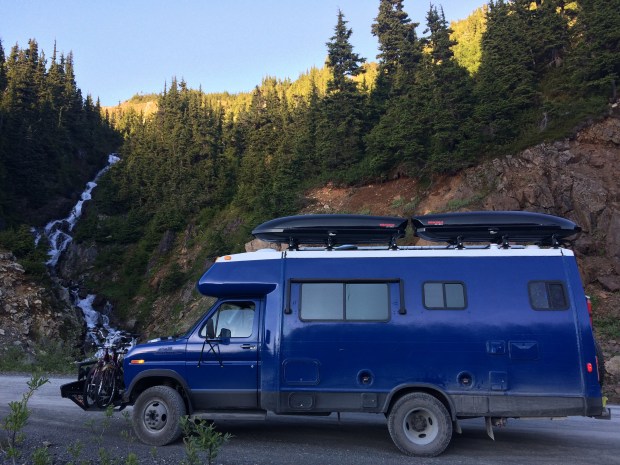
      • The Turtle is a conversion van, and we live in the Turtle.
      • Yes, we have a house. The Turtle is our house.
      • No, we don’t have a back-up house somewhere. Do you?
      • Yes, it’s a small space. We love living in our simple, cozy little space.
      • No, we don’t wish we lived in a bigger space. We gave up a bigger space for this.
      • Yes, when we’re done with Turtle living we will eventually live in a house again.
      • No, we don’t have plans for where we’ll live after this is all over.
      • No, we don’t know when that will be.
      • No, we’re definitely not ready to come back to regular life yet.
      • No, we don’t want to rent your cousin’s guest house.
      • Yes, I do appreciate your concern. But we have a house. The Turtle is our house.
  9. Finding Time, At Times
    • There are a few things that don’t change, no matter what lifestyle you’re working with. They always come as a surprise to me, because it seems like a huge shift in environment would bring a huge shift in lots of other areas of life too.
    • One that hasn’t changed is that there’s just never enough time! Between getting improvements on the Turtle done, Andy’s work, my freelancing work, writing blog posts, cleaning, cooking, travel time, planning upcoming travels, cleaning, staying in touch with friends, grooming the animals, exploring the surroundings, and cleaning, it’s hard to establish a routine. Additionally, these things also have to be coordinated with the weather, access to tools, the time between destinations, and availability of stores or facilities from place to place. We’re still working on finding the balance between work and play, just as we always were when we lived in Portland.
  10. Missing Friends
    •  ACK, this one is tricky! It’s funny because we’re getting to spend so much more time with our friends and family who are all spread out, but we miss our Portland friends SO much! We had a great bunch of strange and awesome people there, and it’s hard to be away from all the fun we had. Two of my sisters live right outside Portland too, so I’m also mourning the loss of sister and auntie time. Every choice comes with some sort of sacrifice, and we are regularly aware of how much we miss everyone.
    • It’s also worth noting that the more we see of our long-distance friends and reconnect, the more we miss them as the Turtle pulls away. So there’s that too.


Last but not least, we have an honorable mention! A list item that belonged in both lists:

  1. Breaking Down
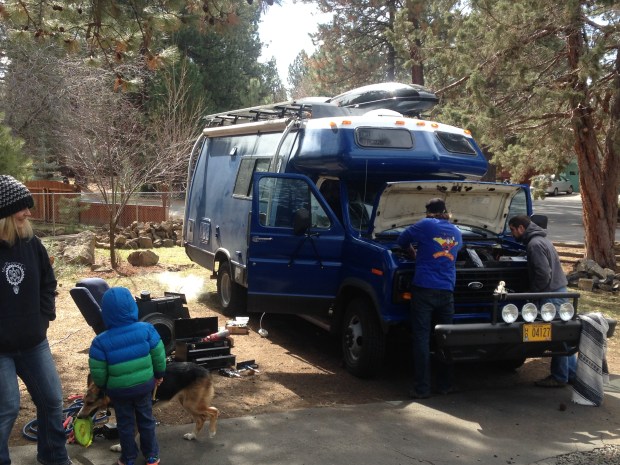
    • Con: The Turtle was made in 1985, so it’s no spring chicken. It has loads of quirks and issues, and we frequently break down. Sometimes it’s while we’re traveling down a snowy highway and we have to coast across 70 mph traffic to get to the only available pull-off before we roll to a complete stop, white-knuckled on the steering wheel. Sometimes it’s in front of our friends’ house, and we have to impose ourselves upon their lives for extra days (that one was actually a pro for us but you see what I’m getting at). Sometimes we pull off I90 to see why we’re losing power and there are burning flamedrops falling from under the hood, or “little hot spots” as Andy refers to them. All those hypothetical scenarios aside, though it’s annoying, it comes with one awesome. . .
    • Pro: If we are ever stranded somewhere, we’re stranded in our house! It’s like being snowed in. We don’t go anywhere for a bit, but we’ve got food and heat, our bed and blankets, and wine and games. So it’s not the panic that usually comes with breaking down. We make a lot of jokes about our house breaking down. 🙂
IMG_0909
Well, there you have it! We’re still learning as we go, and finding new positive and negative aspects to Turtle life all the time. I’ll be sure to mention both sides in future blog posts. That is, if I can find the time. . .