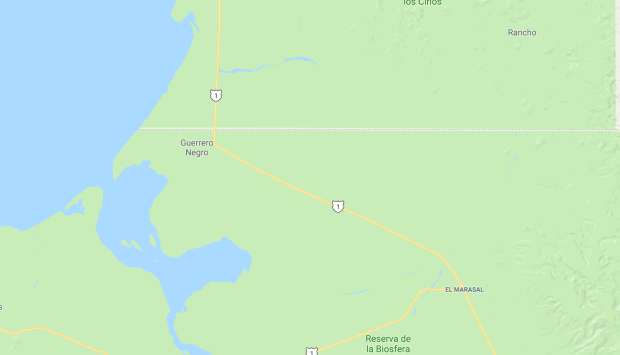
By the time we left Guerrero Negro, we’d officially made it into Baja Sur and and had been in Baja for 21 memorable days.
That dotted line just above Guerrero Negro is the border of Baja California and Baja Sur. Since we snuck in the back entrance on the remote dirt road, we missed that border inspection and the cost of being sprayed for bugs there. Hopefully we didn’t have any hitchhikers!
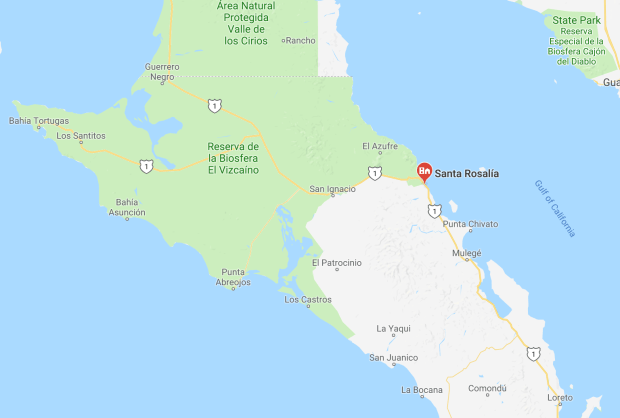
Our next stop was Mulegé, which we’d been told by most other travelers was the best town in all of Baja. In fact, many people drive down as far as Mulegé and then just stay the entire winter there, usually just south of town somewhere along the Bahía de Concepción. We were excited to see it!
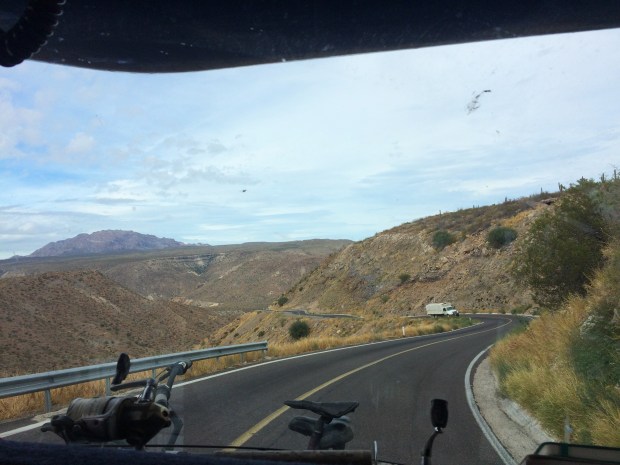
But first we passed through Santa Rosalía, a darling sleepy little town on the Sea of Cortez, a town unlike any other in Baja.
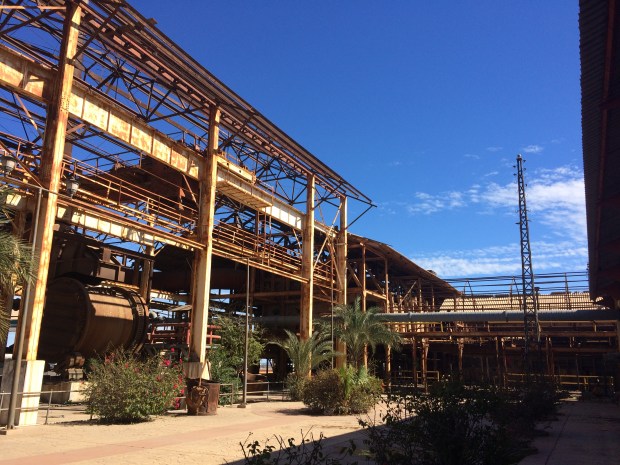
In the late 1800’s it was occupied by a French mining company who bought the rights to mine El Boleo copper mine there. The French influence can be seen throughout the town, from the remains of the mine, the wood architecture and the French bakery, Panadería El Boleo, that has been in constant operation since 1901 and is famous throughout the peninsula for its baguettes. I forgot to take a picture of it, but here some photos of the mining structures that were super neat.


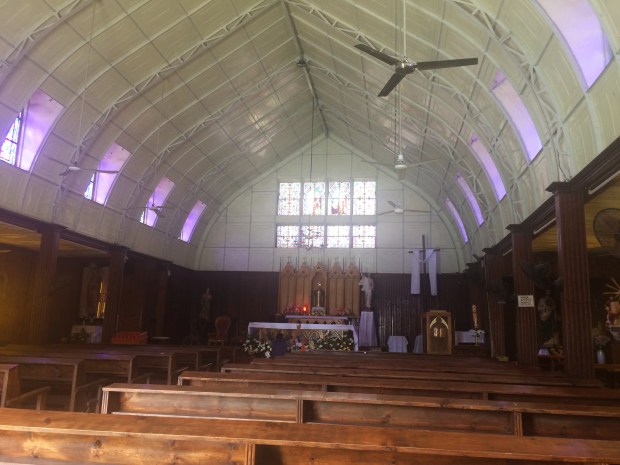
Santa Rosalía’s other claim to fame is the Iglesia Santa Barbara de Santa Rosalía church, designed by Alexandre Gustave Eiffel (who you may know best from another little project he built in Paris). The church is made almost entirely of iron, which was constructed in Europe and then shipped in sections to Santa Rosalía where it was reassembled.
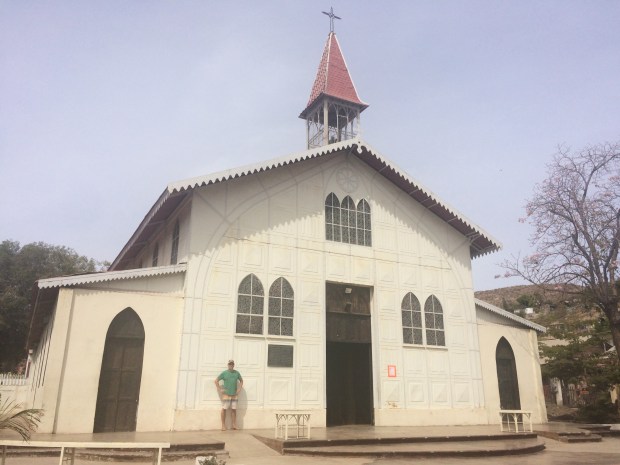

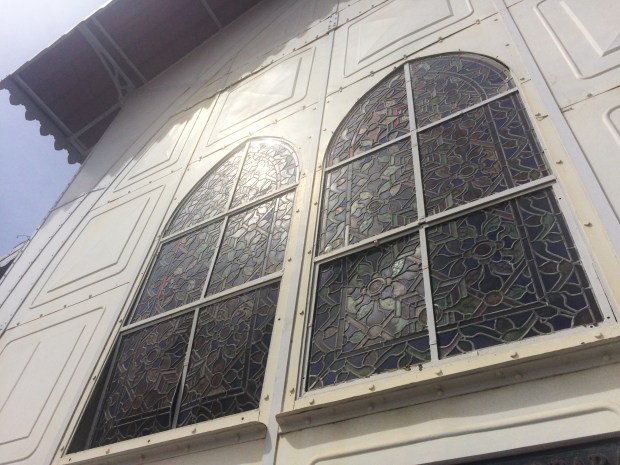
I discreetly took a quick photo of the interior before I saw the sign that asked me not to take any. But the damage had already been done, so the illicit photo remains here for your benefit.
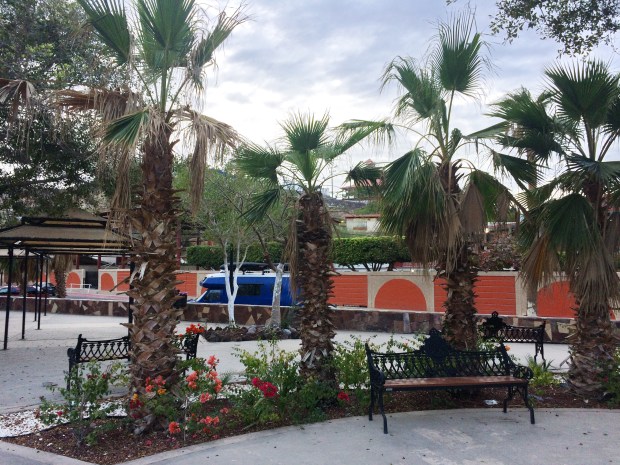
On our way into town we investigated the spot that we’d chosen from iOverlander before arriving, dubbed it “Playa Basura” (Garbage Beach) and decided not to stay there. The historic town is wonderful, but the beaches there are black and trashed, and I didn’t like the idea of the animals running around there. So Santa Rosalía became our first in-town boondocking spot in Baja! We parked next to the town square by the Mahatma Ghandi Library, and chose a single spot instead of the double-length spot that another traveler had reported getting double parked behind the morning after boondocking there.
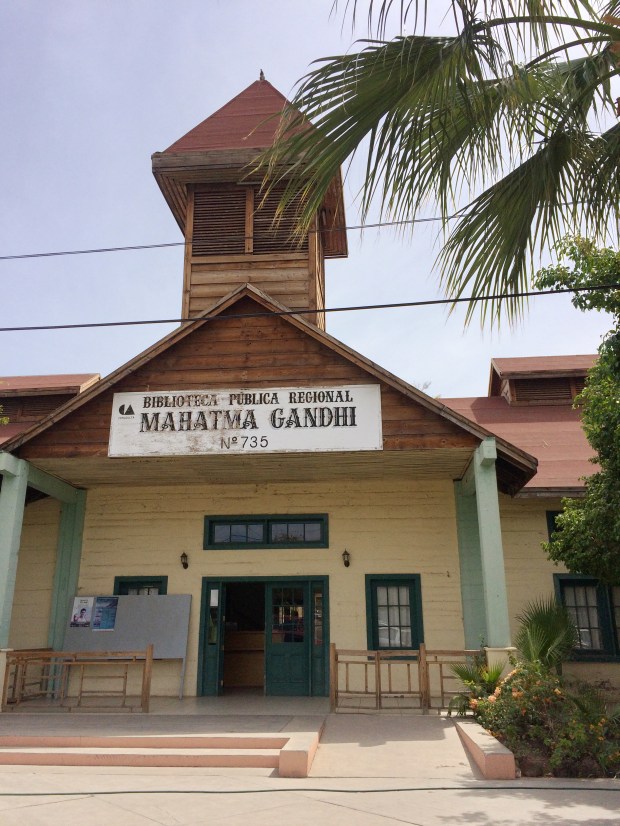
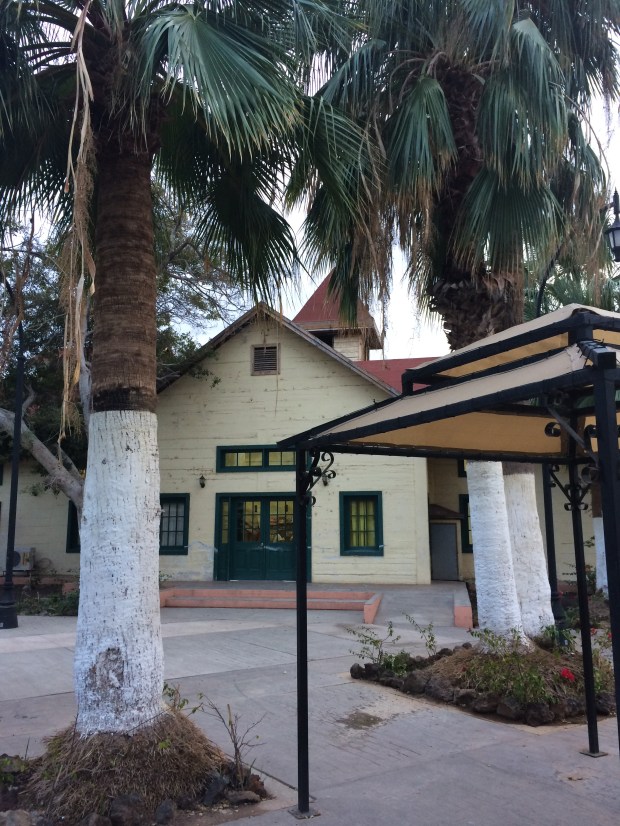
We walked around town for a while, visited a ferreteria where we learned the Spanish word for hardware store, and looked for a new backup bomba de combustible to replace the old backup that the Turtle was now using as its primary bomba de combustible. No luck there, but we had fun drawing pictures with the helpful guy behind the counter.
For dinner, we had two options: the place that looked like it had incredible tacos but was blaring club music so loud we couldn’t even hear our conversation about why we didn’t want to go there, or the place with the crazy menu. We chose crazy menu and decided to try out a Mexican pizza for the first time. Aside from the confounding addition of candied maraschino cherries on my Hawaiian side, it was pretty good!
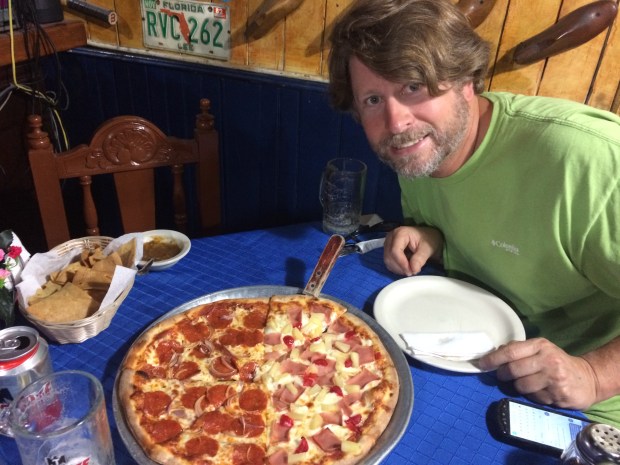
We slept great in the middle of town, and in the morning noted that every single long parking spot was double parked, so we were grateful for the tip from the other travelers on iOverlander. Then we went to Coffee Star for some Wifi and the best mango smoothie Andy has ever had.
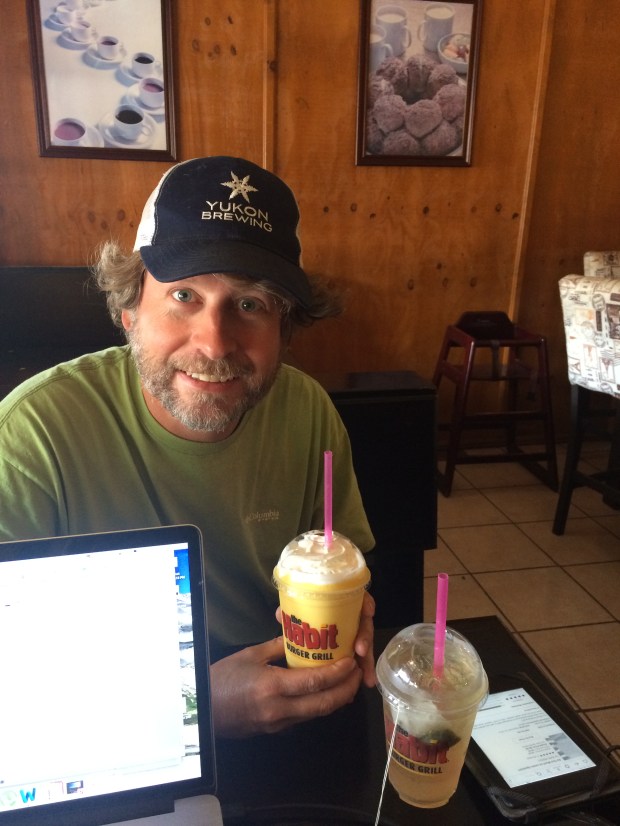
After trying my very best to catch up on the blog, I had to give up when I realized that uploading a single photo took 12 minutes every time. I tried, guys! The trickle of Wifi throughout Baja is the reason I’m still playing catch-up here. (We’re currently in California, but I promise we’ll get to that soon!)
We abandoned plans to get work done and went next door to a taco stand that advertised “Tacos de Guisado” which was a new term for us. I Googled it and learned that Tacos de Guisado are a stewed meat breakfast and lunch taco, and that the stands open early and close usually by 2 or 3 p.m. It was just before their 2 p.m. closing time, so after the patient woman showed us each pot of mouthwatering meat since my dictionary didn’t know any of the words on the board, we ordered a sampling of them and sat out in the shade to eat.
And holy cow. Remember when I said we were on a search for the best tacos in Baja? We did it! It’s like a pot roast taco, which might sound weird but I assure you it’s scrumptious.

Our other favorite feature of Santa Rosalía was the pink drive-through Six! And when I say drive-through, I don’t mean they have a window. Cars can drive right through the middle! We loved it.

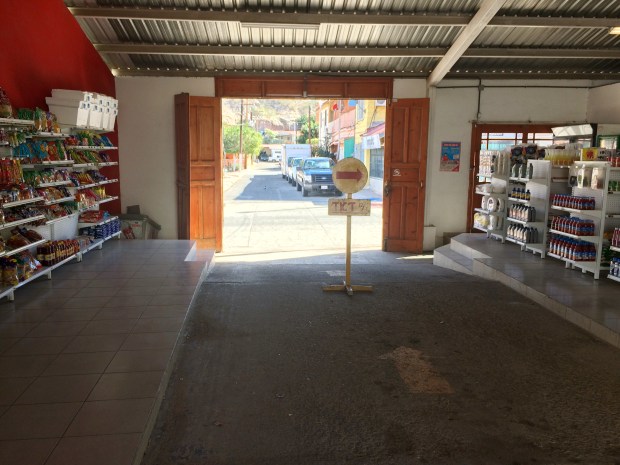
We left Santa Rosalía full and happy, and drove the short distance to Mulegé.
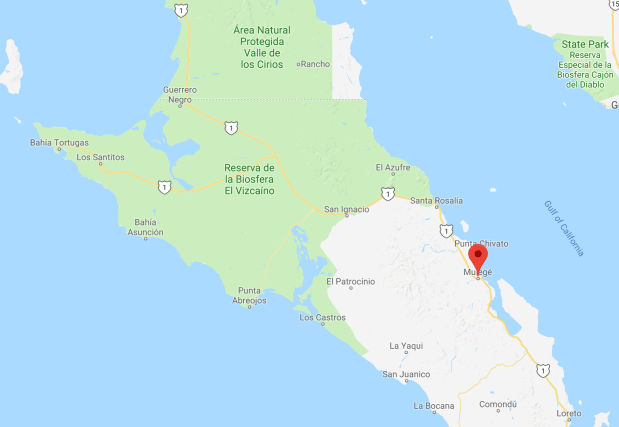
The town is quiet, clean and very friendly. We ran into Ransom and Casey, some friends we’d met on the whale tour in Ojo de Liebre, walked around town some, and then stopped by a well-hidden second-story bar for a beer.


Before the sun set we drove up to El Faro, a public beach at the lighthouse just north of town.
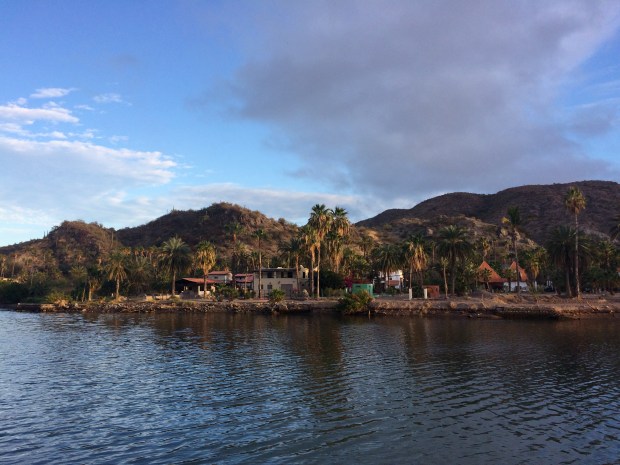
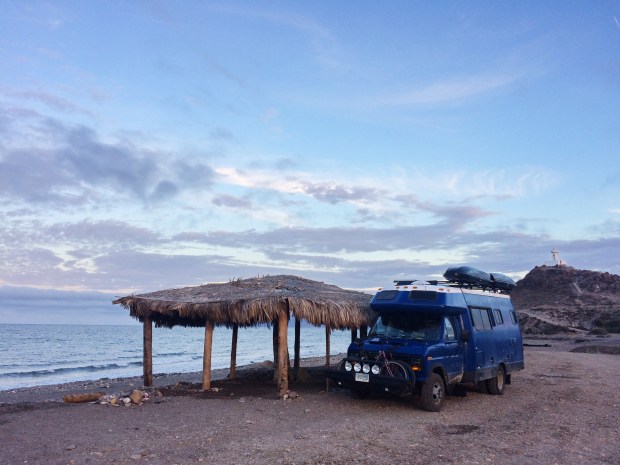
The first night was fairly quiet, and we enjoyed the spot very much. We walked down the beach to a little outdoor restaurant and had dinner and margaritas, then spent a pleasant night by the water.
The next day we walked around Mulegé, met Ransom and Casey for breakfast at a really cute cafe, explored the shops, did some laundry, and generally enjoyed everyone’s favorite town in Baja.
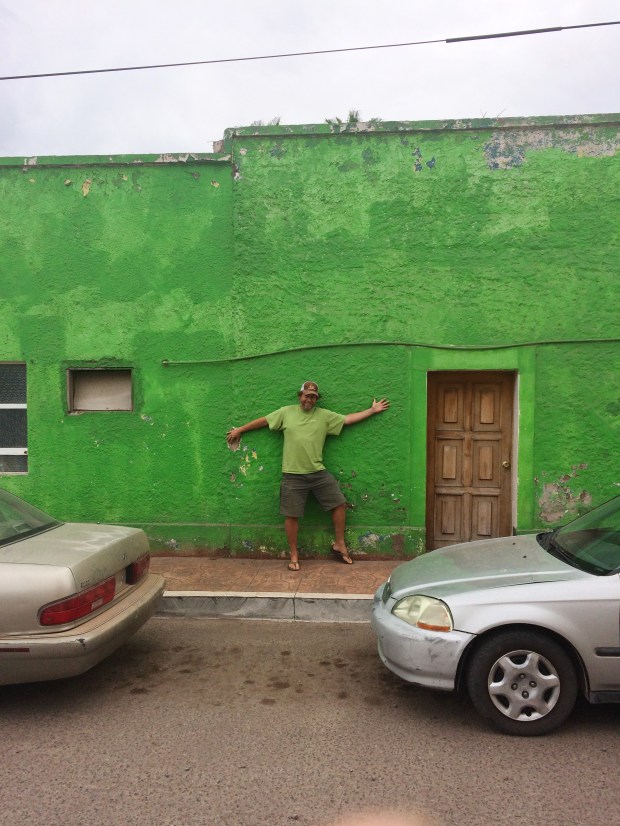

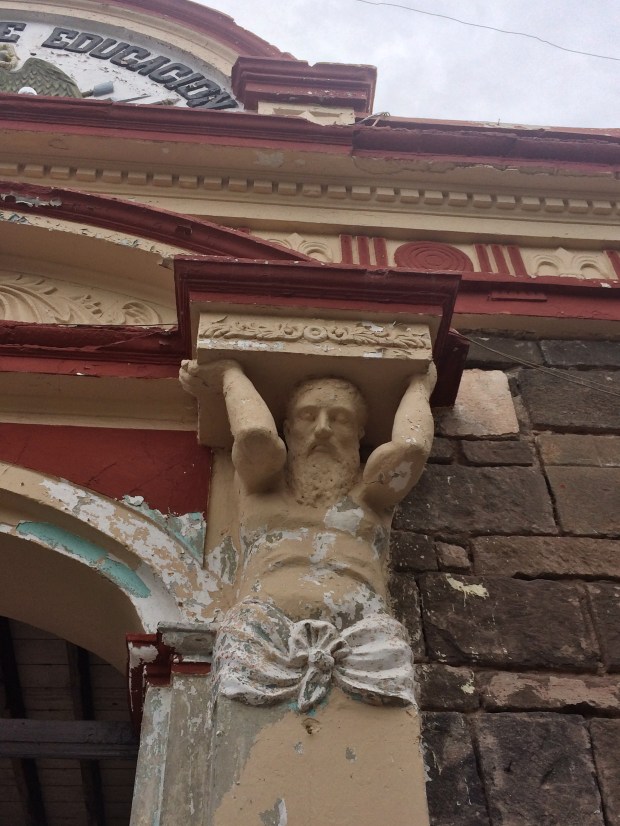
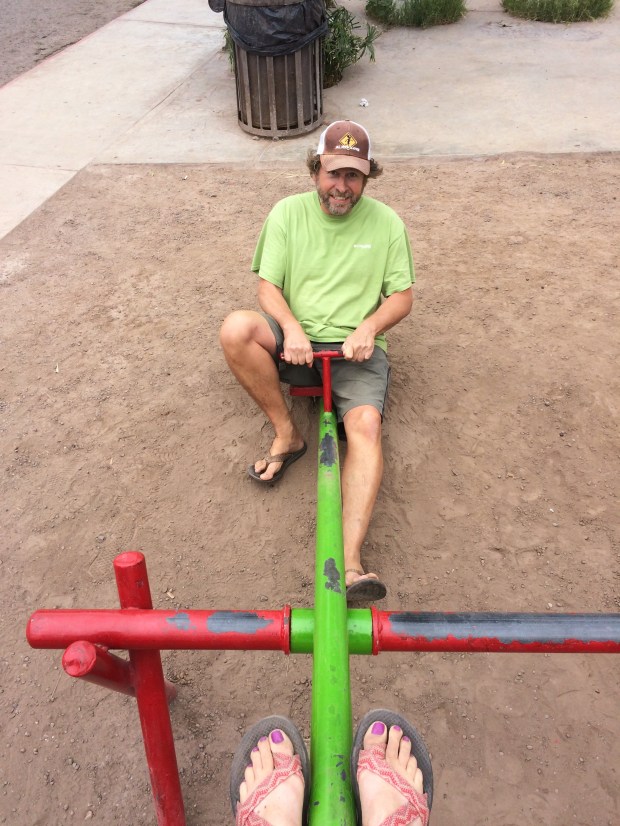

We camped on the beach at El Faro with Ransom and Casey and were adopted by the local beach dogs. When we parted ways we made plans to meet up again somewhere down the road.
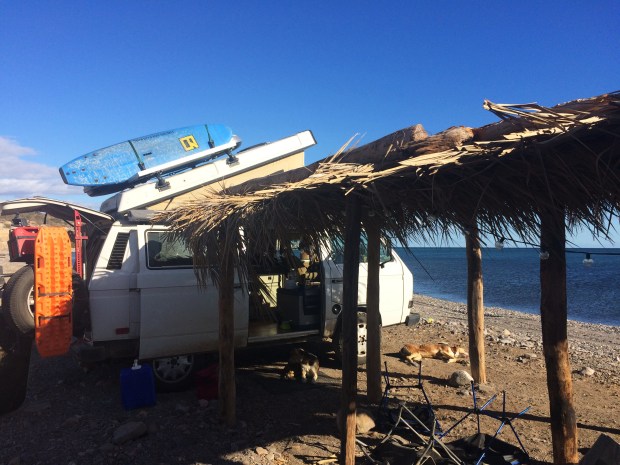
We loved Mulegé, but we had a bit of a deadline. . . our friend Jason was flying into Loreto in a few days, so we made it a quick stop and promised to spend more time there on our way up north. We’d been saying that a lot, actually. We were never ready to leave when the time came, but Baja is a big peninsula and there is a lot to see! So far we’d made it about two thirds of the way down, and the best was yet to come.





















 Blue Turtle Crossing