house

Heading South: North Pole and Chicken, AK Are Real Places

After our long journey up to Deadhorse and back, we needed a few days to recover.

IMG_1187

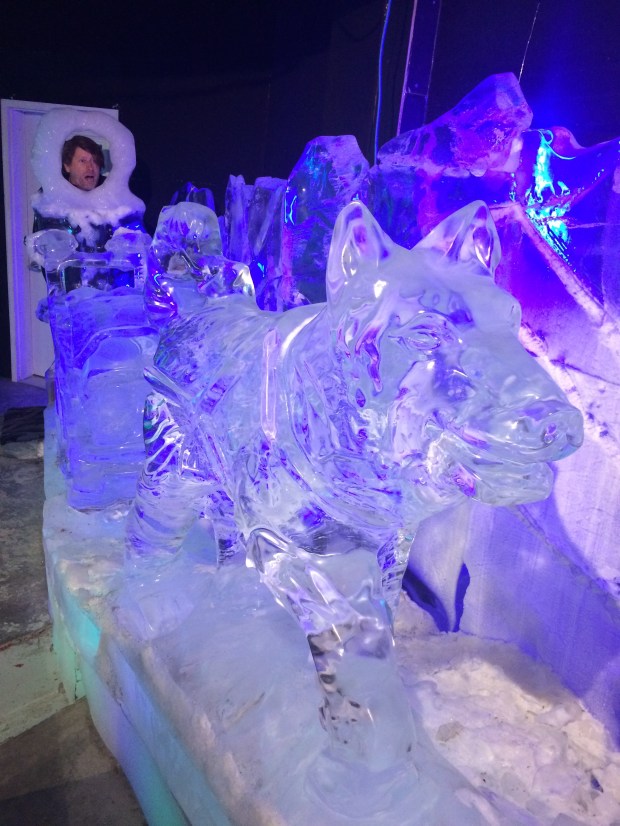
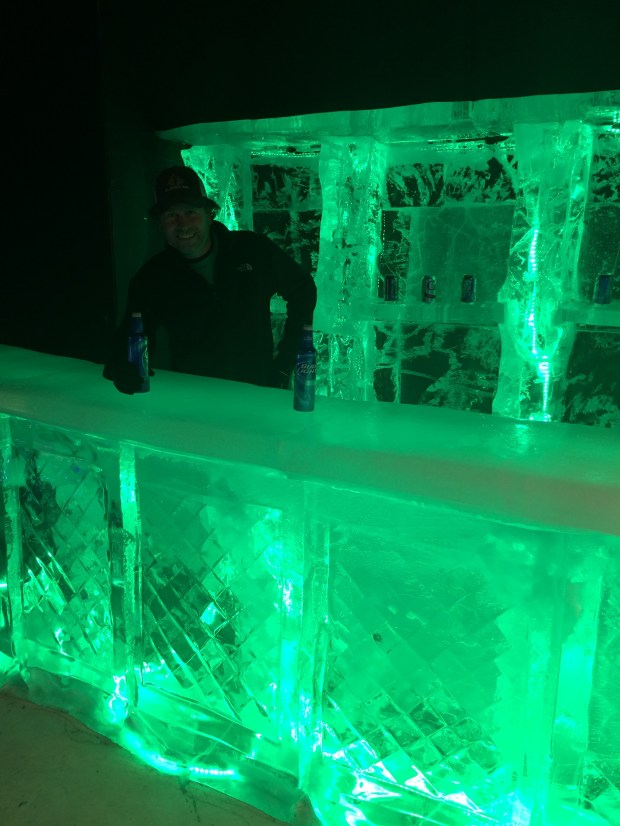
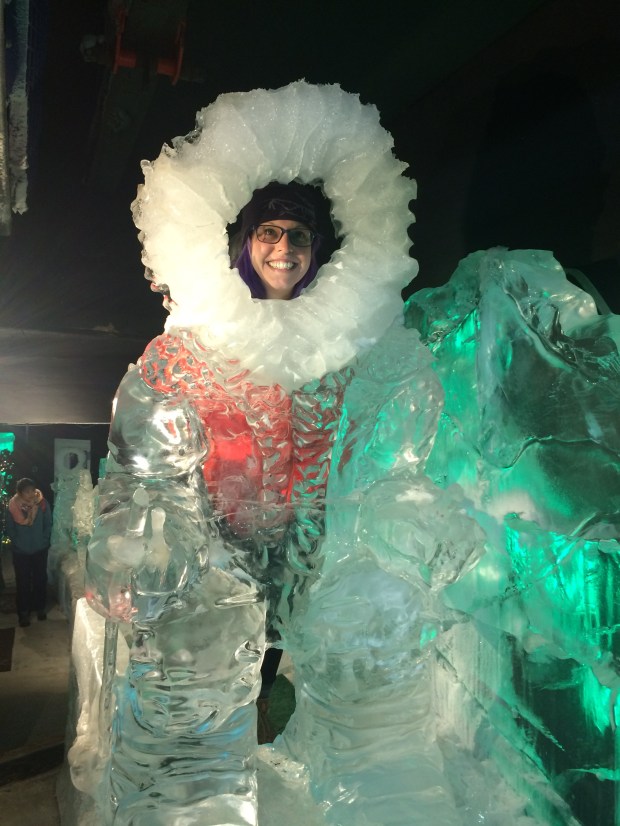
We decided to post up in Fairbanks for a day or two to do some laundry, resupply, see the Ice Museum, and just generally knock the dirt off of ourselves.

IMG_1197

IMG_1230

IMG_1213

IMG_1239

IMG_1250

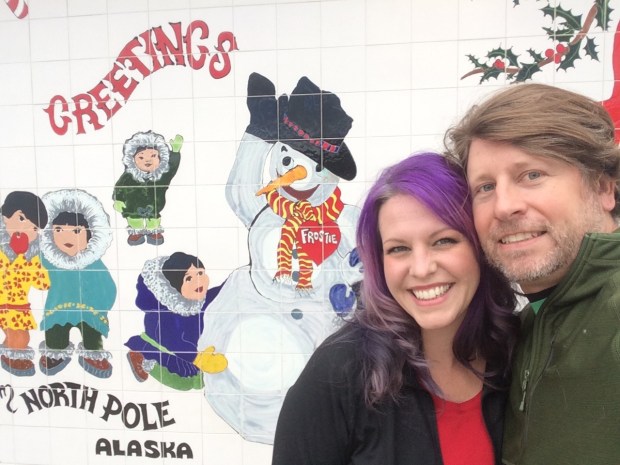
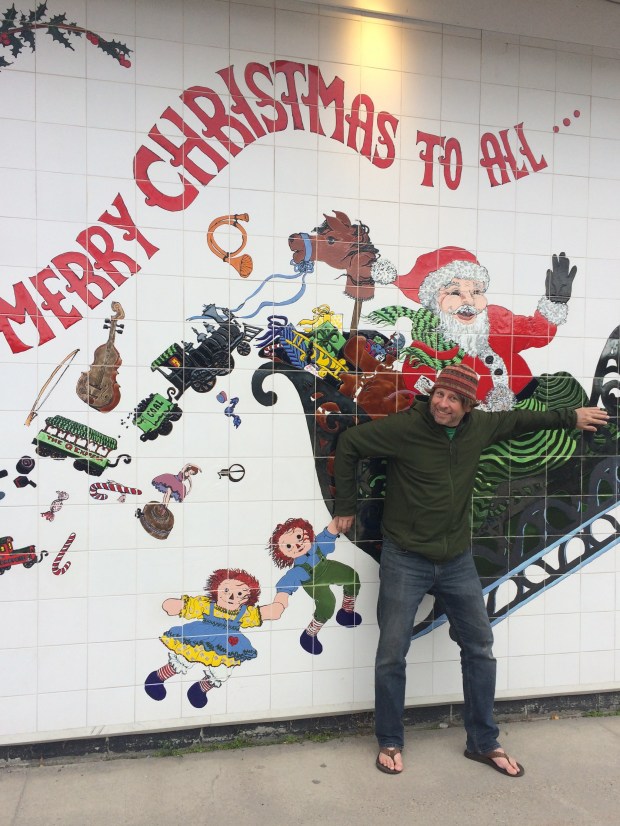
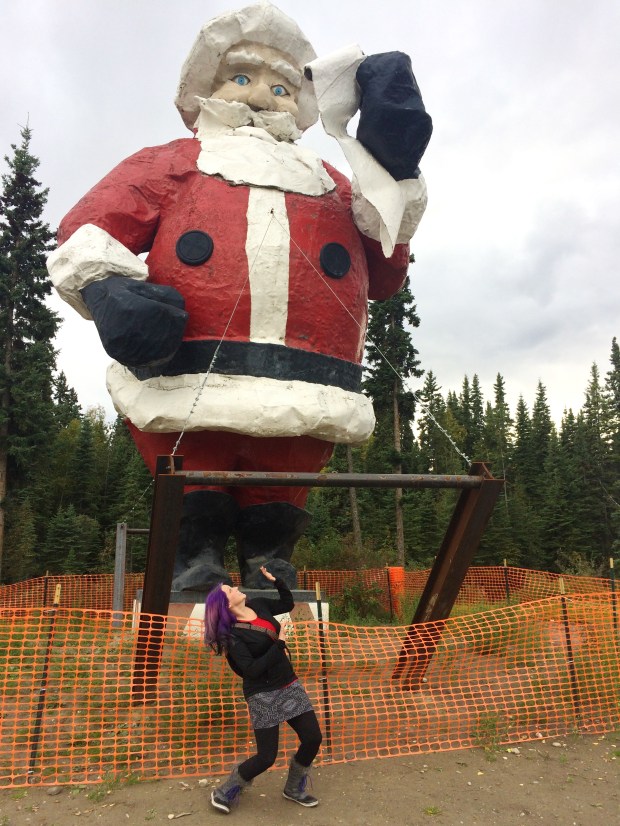
After a few days, we began the journey back down south which surprisingly brought us to the North Pole! Ok, not THE North Pole. But North Pole, Alaska which is as close as you can get to the real thing.

IMG_1289

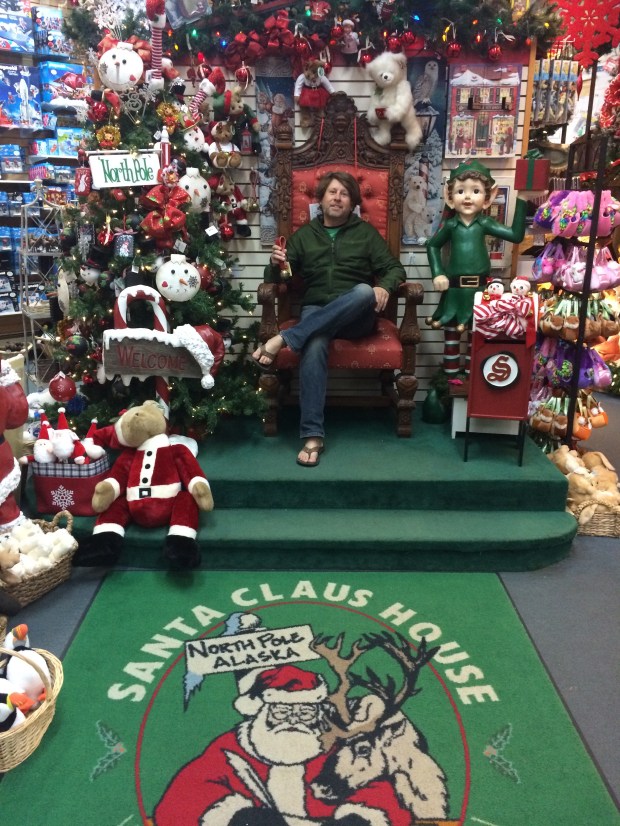
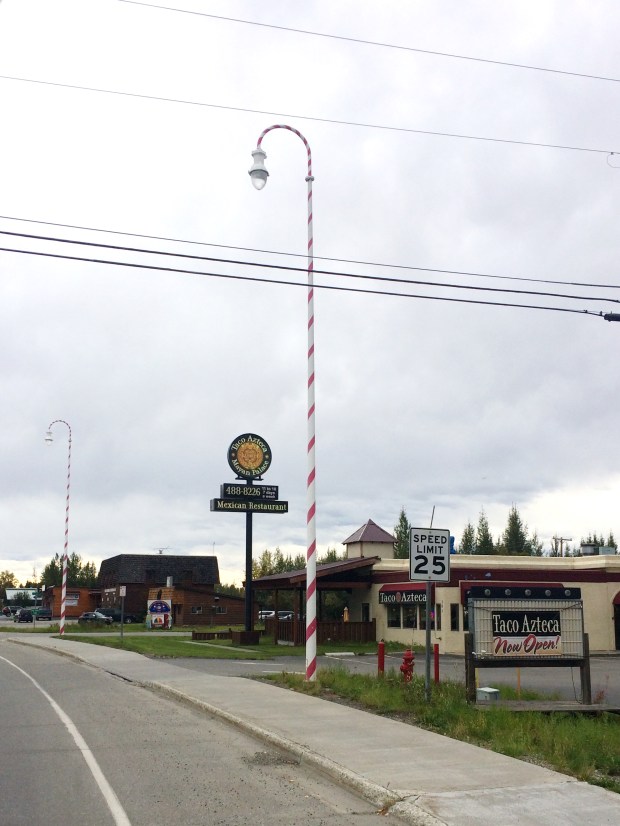
The whole town is Christmas themed year-round, from candy cane light poles to road names like “Mistletoe Drive” and “St. Nicholas Drive,” and there are resident reindeer who live next door to the Santa Claus house, where we spent some time getting in the spirit of Christmas a few months in advance.

IMG_1282

IMG_1366

IMG_1338

IMG_1272

IMG_1346

IMG_1351

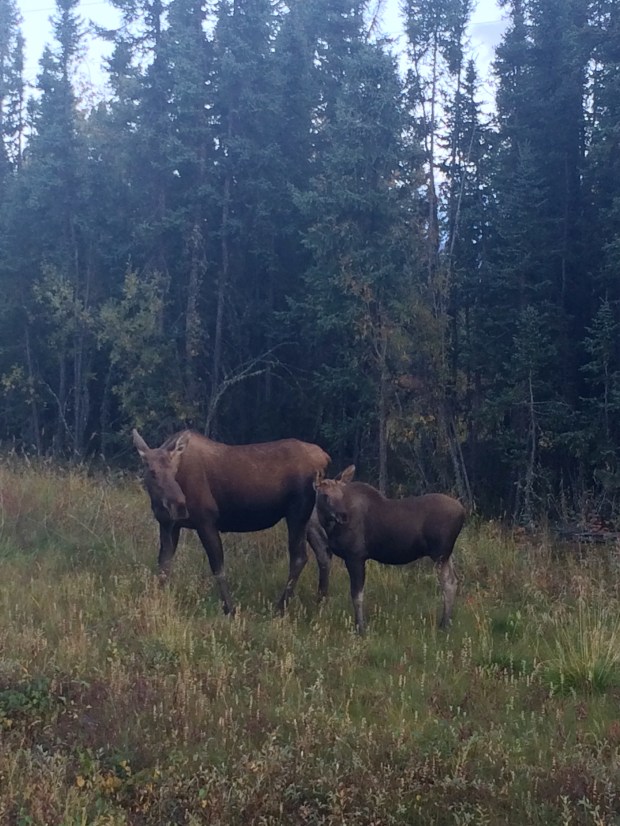
We’d had our hearts set on seeing a huge herd of caribou in the wild while we were up north, but we made do with Santa’s reindeer. (Which we learned on this trip are the same animal—reindeer are just domesticated caribou! The more you know.) But then on our way toward Tok, AK we came across a darling mama moose and her baby, and felt very lucky indeed. They hung around right alongside the road for over ten minutes before meandering back into the trees . . . but not before they posed for this glamour shot.

IMG_1432.jpg

The sun was setting as we neared Tok, which we’d traveled through on our way up and had stayed overnight with the dirt bike rally racers at an unused airstrip outside of town. We went back to the spot, and had the whole place to ourselves! That night we saw the best Northern Lights of the trip so far, and the next morning we raced around the track at Top Turtle Speed. I’ll let you speculate on what speed that could be, and hopefully you’re generous.

IMG_1520

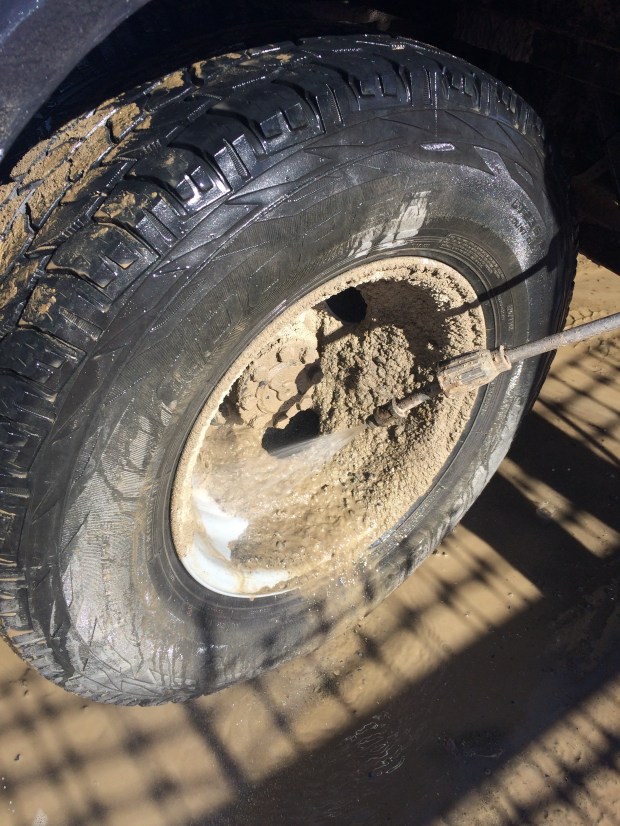
A much-needed Turtle bath afterwards helped us offload many of pounds of dirt, and we wondered if maybe we should have gone back to try the race track again to see if we could shave some time off our record. But we had more stops to go, and with the dirt highway ahead of us, we knew we were pressed for daylight.

IMG_1547

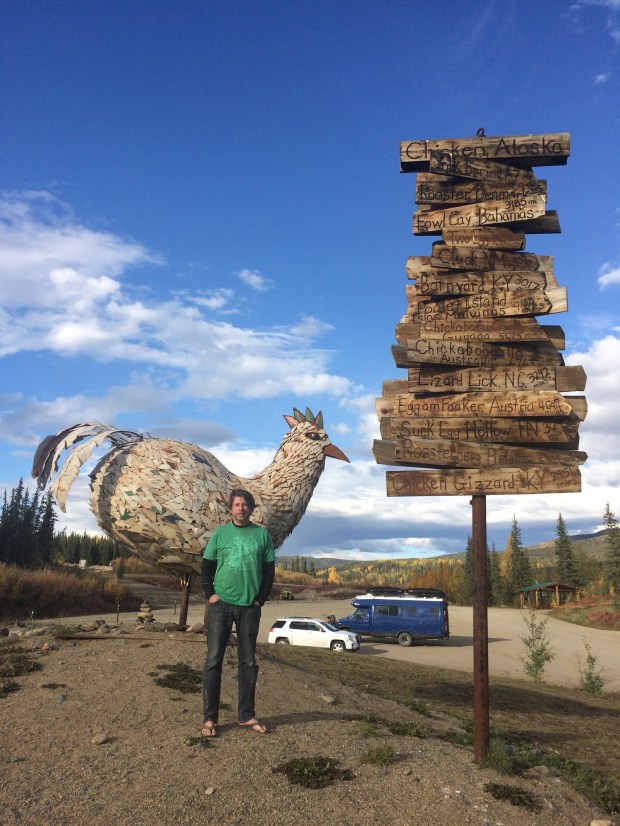
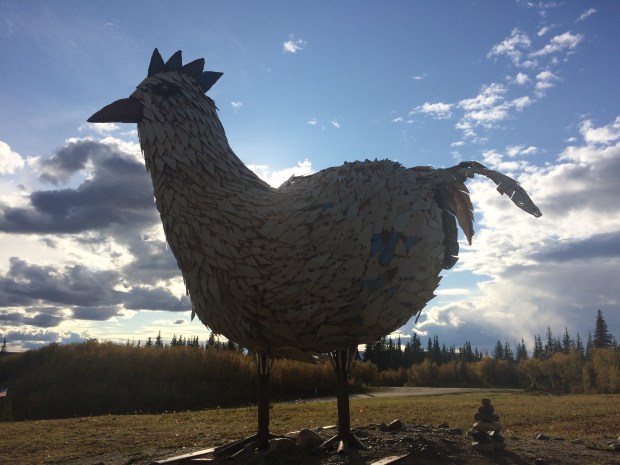
Beyond Tok lay Chicken, Alaska: a real place that I did not make up. We got to town shortly before the one store that was still open for the season was closing for the day, so we looked around, admired how wonderful the chicken soup smelled, took some enormous chicken photos, and drove on.

IMG_1562

IMG_1576

IMG_1580

The next portion of the road is a beautiful drive called “The Top of the World Highway” which was where we finally had to say farewell to Alaska as we crossed back over into Yukon once again.

IMG_1593

IMG_1602

We had an amazing vantage point to watch the sun set over the valleys far below.

IMG_1642

IMG_1645

IMG_1671

IMG_1683

IMG_1684

IMG_1693

IMG_1709

The sky was dark as we approached Dawson City, YT, and since we hadn’t had cell service for most of the last few days, I hadn’t noticed the map showed an unexpected break in the highway until we were right on top of it.

Screen Shot 2017-10-15 at 6.23.54 PM.png

The Yukon River divides the road right outside of Dawson City, so we got to take the Turtle on a small ferry that was luckily still operating on summer hours and ran every 15 minutes or so. Had we been two weeks later, I’m not sure what we would have done, but we took our accidental good timing and ran with it.

This actually might have been one of Andy’s favorite parts of the entire trip. He was so excited. He kept pointing ahead and telling me to look! even though I was of course looking already, but he just couldn’t help himself. It was pretty funny to be sitting in our Turtle and watching water flow by on all sides.

IMG_1712

We spent a few days in Dawson City, a historic town full of stories of the Gold Rush and prospecting and super-tough men and women. In the interest of time, and because they haven’t made many appearances in this post, I’ll just show you a few adorable pictures of Scout and Gracie at a nice site we found for an overnight stay as we left Dawson City.

IMG_2383

IMG_2382

IMG_2373

IMG_2371

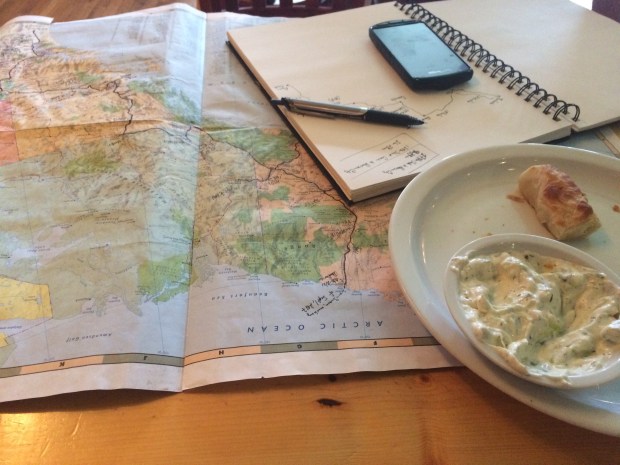
The Alaska chapter of our journey was done, but as we mapped out our progress over Tiropitas, it was clear that there was plenty of adventure ahead!

IMG_1730

Let’s Refurbish a Van – Part 6: Roof Rack (by Andy)

A post by Andy

{Note: The work detailed in this post was completed over the summer of 2015, before we moved into the Turtle. I am just getting the time to write the post now.}

So, we have stuff to carry. And we want a place to store our solar panels. And we want to stay cool. And, if possible, look cool. So, we need to put together a roof rack…

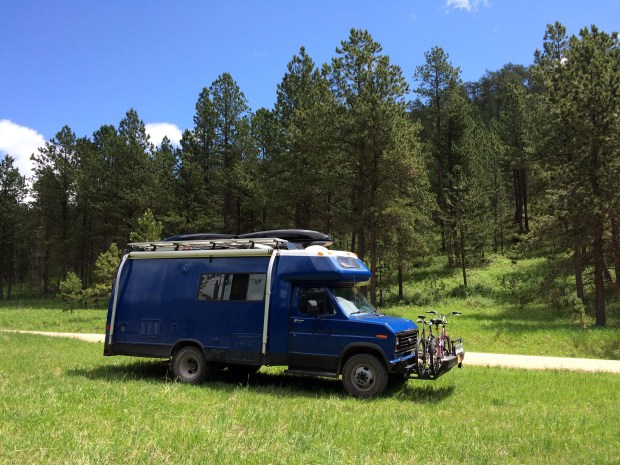
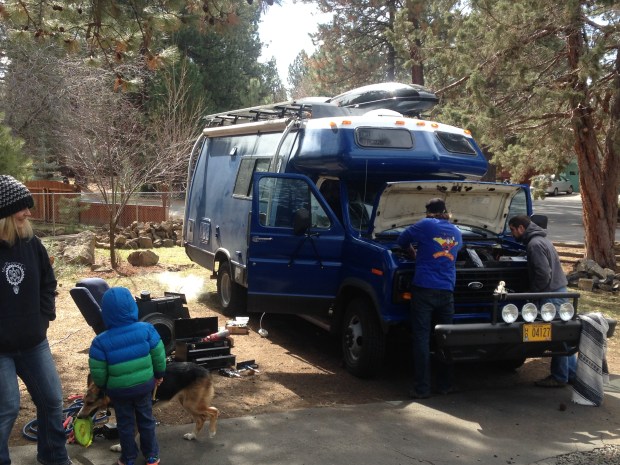
Here are a few pictures of the old RV when we got it. It had an aluminum ladder that was old and worn, along with the typical RV aluminum tube luggage rack at the back- all bits with some of the mounts loose. We also had a big plastic storage box bolted to the top, but it was cracked and would certainly leak. As you can see, there was also one solar panel and a mount for what I’m pretty sure was a TV antenna. Good stuff, but it was all pretty worn, as it had all traveled for close to 30 years and more than 250 thousand miles.


We wanted our rack and top equipment to do a few things for us:

  1. Have a dry and accessible place to store camping and fishing and other fun gear, out-of-season clothing, and some spare parts and equipment.
  2. Have the rack removable, so we can maintain and fix the roof when the need arises.
  3. Have a location to mount the planned solar panels.
  4. Design the rack to provide us shade.
  5. Have a system that we can change, add more solar to, move things around, etc.
  6. Be able to fill and seal up all the holes prior people made when mounting things to the roof, and have a system where moving forward we will not be drilling into the roof any more.

Anyway, roof racks look great! I hear they can be useful too. In truth, we have pretty limited room and storage inside, so having a bit of room up top for our extra supplies and garage-like stuff was essential for a successful voyage.

So, to the step of getting the old stuff off and sealing up the holes. Pretty much unbolt the bolts and pry everything else off. I then used fiberglass impregnated epoxy body filler for all the big holes (I love epoxy!), maybe adding wire to support it as it cured. I then added Geocel Proflex on the seams. I read about and tried a few things, but to date, it is my go-to for exterior sealing. Here is a link.

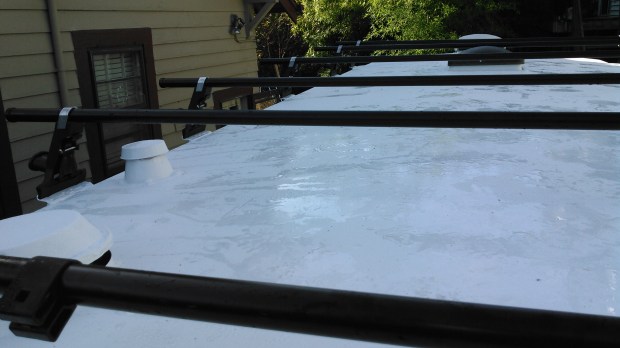
For the (many) smaller holes, I would first clean and fill with the Geocel, then screw in a stainless steel screw the size of the hole, then cover the head of the screw with another layer of Geocel. It is a technique I read about on the internet, and it seems to have worked well so far. Again, it is not worth buying any hardware but stainless or grade 8. It does cost a little bit more, but use the savings you get for doing this yourself to get the good hardware. Plus, you don’t have to worry about some interior rust and redoing the work down the road. After sealing the holes, I put down Rustoleum on all the modified spots. The following pictures show the antenna hole through the roof, and some of the removed parts scattered in the yard.

We were lucky enough to have a friend who worked for Yakima who gave us a VIP discount card for one purchase. With the card, we got 12 A1 rain gutter towers, 6 78″ crossbars, 12 wide body rain gutters, end caps, two 12-peice lock core sets, a Loadwarrior basket, and some cargo nets. A truly impressive amount of wonderful Yakima pieces at a great savings. Boxes and boxes of sweet components!

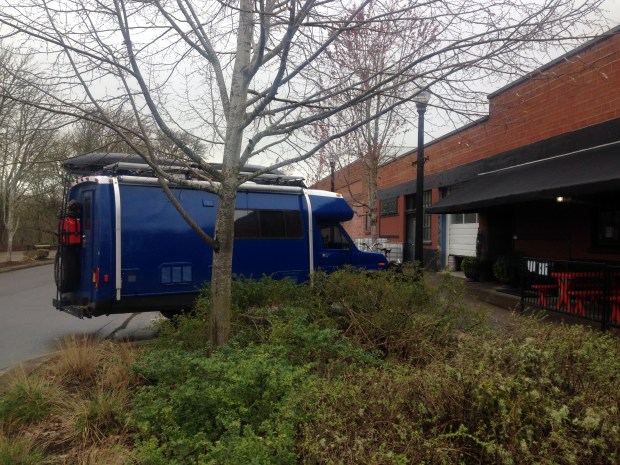
From REI, Amy and I used our one-item 20% member discount and each of us bought a Skybox Pro 12, shipped to the Portland REI for free. We got the long and narrow boxes to configure end-to-end, and not take up too much roof area width-wise. We effectively have the roof racks for 4 vehicles, all to put up top the Turtle. It added up to a lot of initial investment, but it has been working well, and added an important comfort to be able to store a reasonable amount of things to make our small world flexible, and I think it actually has a sleeker look being made from components—as opposed to a custom-fitted rack. Since we were doing all the work ourselves, we decided to invest a bit more on some nice new hardware. After popping down to REI and loading our new Skyboxes (in their own boxes) onto the top of the old Scout, we stopped for a bite in downtown Portland. Seems fairly reasonable to me, but I imagine to some people we made a sight…

The sky boxes, along with the other hardware, sat in the house for quite awhile. After stripping and sealing the roof, it was only logical to finish painting the Tutle blue, then do the white roof paint, and then finally get to the point where we could install the new roof rack. Consequently, this is what our place looked like for quite an amount of time. (As you can see, our front room was used to store a number of Turtle parts until they were ready to install.)

The pictures are few here, but after most of the painting was finished, I mounted the wide body mounts. I measured, marked, measured again, checked, and had the geometry figured out. On the corner of the Turtle roof, I would drill my two holes, fill with Geocel, cover the mounting surface with Geocel, align the bracket, screw in two (you guessed it) stainless steel lag bolts, then cover the seam and outside with Geocel. After it all cured, we repainted with the Interlux. It looked nicer with the black brackets and shinny bolts before the sealant and paint, but I didn’t want to risk it. And, just so you know, the asymmetric spacing along the length of the roof is due to needing to align the crossbars so they will not interfere with a roof vent when open, but also allow for the mounting points of the skyboxes. Here are the brackets installed:

kimg0798

It is a nice feeling to know that at any point we could unlock (all keyed alike, now) the 12 towers, unscrew, and remove the whole rack if we had to do some maintainence on the topside. Anyway, the pictures are limited at this point, but following are some involving the tower, crossbar, and rack install.
kimg0804

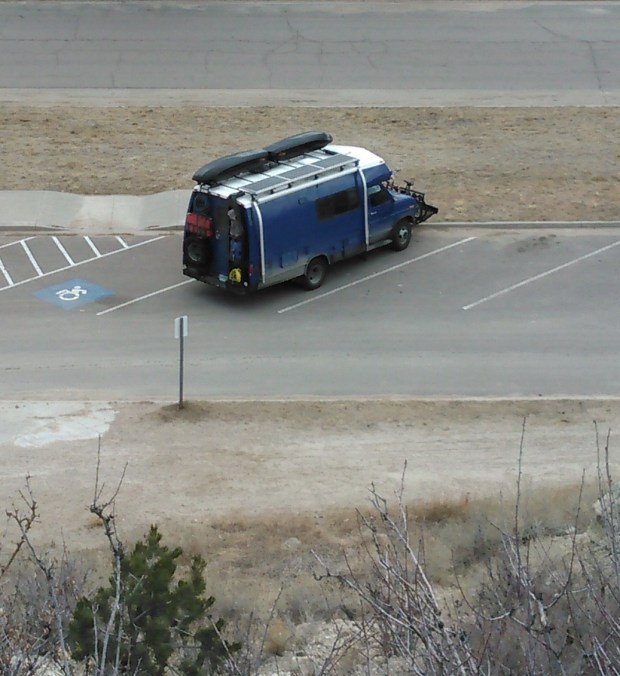
You might notice that the Yakima basket lost out to the solar panels. The basket is in the storage unit presently, and it would be great to get it up there at some point. When we were building and installing the rack, though, the geometric logistics were far too difficult for the time allocated. Anyway, to install the solar panels, I bolted two pieces of 12′ 6061 T6 aluminum square tubing to the crossbars with stainless steel carriage bolts and nuts fitted through the Yakima Universal Snaparounds.

I picked up used ones super cheap here. By the way, ReRack in Portland are nice people and can save you some money on roof racks, so check them out if you are in the area. Back to topic, after getting the aluminum properly spaced and installed, I then drilled and screwed the solar panel brackets to the the aluminum. That step was a breeze. Solar panels installed, photo taken probably a month in.

kimg0938

As to keeping it all cool. We planned on (and did), paint the roof surface with a couple of coats of Interlux topsides white boat paint. We actually painted the roof vent covers white as well. The assumption is that paint will reflect much of the sun’s heat, and be able to withstand the UV rays. So far, everything looks pretty good up there. We have some cracks in the paint where the caulking we used was not completely cured before we painted (I don’t blame the paint, we had time constraints), so we have some washing and fixing of some seams to do. Otherwise, all looks pretty good. A common approach for keeping a bit cooler is to have a couple of roofs, effectively carrying your own shade along with you.

The above old-school Rovers have a second roof with an airgap for passive cooling in the hot sun. (Side note, did anyone notice the tall skinny tyres the rovers are running on?) With the spacing added from the rack towers, and mounting the solar panels and boxes above the crossbars, we have a impressive air gap and continous shade on over 50% of the roof.

Currently, there is a middle strip free for walking, in which I will fit an additional panel at some point, then simply make some cheap synthetic or plywood panels and paint them white to increase our shade to close to 100%. So far, though, we have been to the Badlands of South Dakota in the summer, and have stayed with the ambient temperature with thoughtful venting and minimal electric fans.

To me, the goal is not to be cooler than the outside, all we need to do is not be hotter than the ambient temperature in all kinds of weather.
kimg0184

Oh, almost forgot, we want to access the roof! We need to clean the solar panels, get stuff into and take stuff out of the boxes, check on all the paint and seals, and most importantly, be able to climb up and yell with arms outstretched like you are in a movie! Anyway, the ladder…

We actually bought a car roof rack ladder as a start. The almost $200 ladder (seems crazy) was well worth the money, in the time saved. It always feels pretty weird to buy something new, remove it from the box, then start cutting it right away. So, the ladder, welding, adding more rungs for the proper length, and fixing the folding function.

Some close-to-final pictures here. We started with a 9-rung foldable ladder, and ended with a 12-rung rigid ladder that bolts to the bumper and the top rack. Again, it was designed to bolt to the bumper and rack, so it is removable…

I’m pleased with the removability of the ladder, because we crushed it a bit when we backed into a tree one day, about a week after it was finished and installed. The ladder was subsequently unbolted, straightened, and remounted. From the side, it now does have a bit of ripple (below the designed joint and by the spare tire)—this is what we call life.

kimg0186

To sum up a bit, up in the boxes right now we have a few fishing poles, extra wire and parts and unfinished projects, cloth for sewing projects, extra window insulation, snow shoes and masks and fins, river tubes, my old tent. A pair of driving lights I have yet to wire up. Some cheap speakers I plan on installing in the doors. You get the picture. We call it our attic.

img_1863

We have a completed rack now. It holds our solar panels, is our attic, and still has room to exapand.


Andy Wears Shorts in the Snow: Christmas In South Dakota

Happy New Year, everyone! Woo hoo!

2016 was a super exciting year in the Turtle, and the coming year should be equally full of challenges, victories, and vistas (and frisbee sessions for Scouty).

img_6685

Before I get into our plans for the upcoming months, let’s catch up with some photos of what we’ve been up to since we left Yellowstone National Park last month! Since that very chilly week living in single-digit temps, we’ve learned a bunch about what we needed to do in order to better winterize the Turtle. So before we left Montana, we headed back to Mom’s house in Bozeman and got busy buttoning everything up with layers of insulation over the windows, extra curtains to divide the colder cab and loft from the warmer living portions of the Turtle, and some modifications under the hood.

Naturally Andy was in charge of the under-the-hood tasks, and he spent the week in Mom’s garage finalizing work on the second alternator. With that new addition we can charge our house batteries while we drive, as the solar panels aren’t getting a lot of sun in these winter months. Not surprisingly, this guy took the opportunity for a wiring project and really brought it to the next level. Give an engineer an electrical mission, and he’ll buy all the toggle switches Home Depot has in stock and create a panel worthy of the dashboard of a UFO. I still need to take a photo of the installed panel, but the process picture gives you a pretty good idea of the extent to which this guy takes on a project!

img_6628

Meanwhile, in between my winterizing duties, I got an extra week to hang out with my mom, sister, brother-in-law, nieces and nephews. We crafted, played video games, and I took on a request for a Photoshop job: Clive wanted to see himself in his “boat” on the water. . . “with a beard!” Turns out that kid could totally pull off a beard.

Even Gracie appreciates how awesome these kids are.

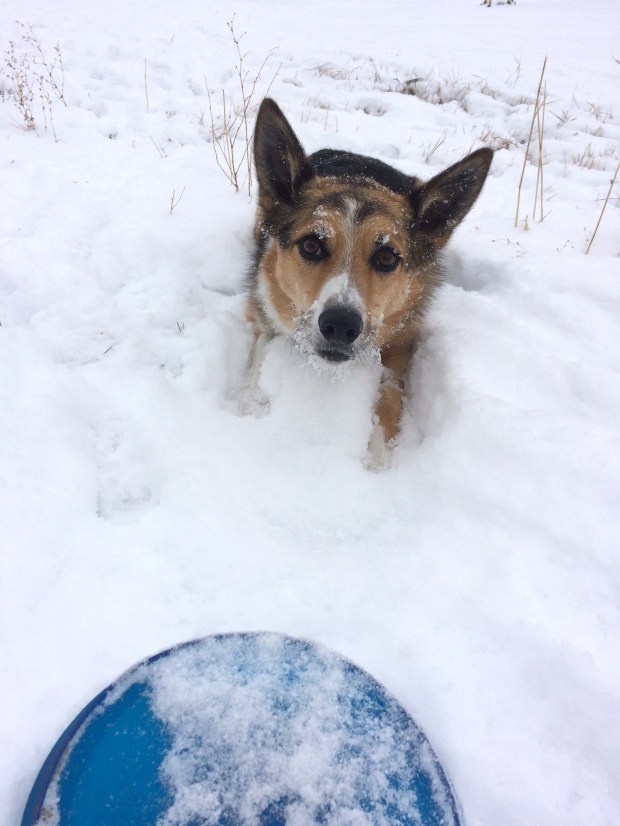
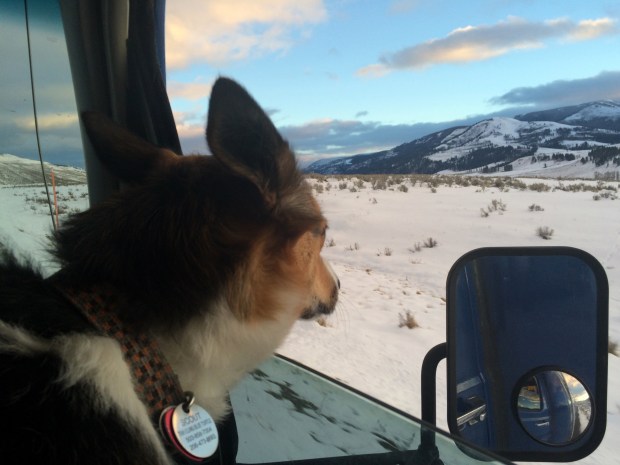
The snow continued during our stay, much to Scout’s delight. This border collie LOVES snow! He leaps through the drifts with abandon, and runs back and forth between us, trying to encourage us to run along with him.

img_6680

Gracie, on the other hand, finds the warmest covered spot and settles in.

img_6690

After getting used to living as locals, it was hard to leave all my favorite people. It was such a treat that we were able to spend so much time with them though. In the Pre-Turtle days, we were typically limited to a week each year at most for visiting family. So I can’t get too greedy when I just got to hang around for a whole couple of months!

Once the improvements were complete, and I felt confident that the kids were ready to love The Legend of Zelda without further encouragement from their auntie, we left Bozeman. After a quick stop in Billings to see Blake, Martha, Harper, and Grant, we then made our way toward South Dakota. We drove by Little Bighorn Battlefield right before it closed for the day, and took a brief walk through the grounds as the chilly winter sun set.

Then with the heater on full blast, we moved on to Gillette, WY for the night where I got so unbelievably sick. (I’ll only include this because I promised in a previous post that I wouldn’t overlook the portions of full-time vandwelling that are challenging, and this was just AWFUL.) I’ve gotten sick a few times since we moved into the Turtle, but they were mostly mild illnesses that were inconvenient but tolerable. I’ve never gotten violently ill while living in the Turtle until that night in Gillette, and it definitely was more challenging than getting sick in a house.

I thought I had food poisoning, as I got sick so abruptly, but in retrospect I think it was likely a severe flu. I was vomiting so much all night (essentially into a pit toilet) that I got massively dehydrated, and unfortunately since we were in freezing temperatures our water tank had frozen and cracked and we had been carrying water around in jugs. As luck would have it we were low on water that night, so I was rationing water and sucking on ice cubes and trying not to step on Andy on the pull-out couch as I got up every 20 minutes to vomit. And the next day we had to move along, so I was sleeping fitfully on a bed rocking and bumping at 65 mph on the freeway. Glamorous!

So, there you go. Full-time vandwelling is not all roses. But for the record, I’m not trading it for anything!

At any rate, while I was in my sicky fog Andy got us to Spearfish in time for Christmas with his family. Much to Scout’s delight, the ground was covered in snow, with a whole bunch more in the forecast.

img_7103

And much to Andy’s delight, there were plans to assemble a Lego train which would travel around the Christmas tree! I’m not sure how many total man hours were spent around the table between Will, Ellie, Andy and myself, but Andy outshone us all with his dedication to the cause, as well as his impressive Lego skills.

Between the four of us we created quite a spectacular Christmas train, if I do say so myself.


Ellie and I worked on Rudolph’s Christmas Car which led the way, and created bunches of Lego presents. Will put together the engine, the middle cars, the flatbeds, and made a magnificent cubist Christmas tree. Andy made a tippable car that he’d originally intended for imaginary molten metal, but that Ellie and I filled with our gifts instead. He also made a caboose equipped with a crane to hoist and deliver the packages, and it really works, and it’s awesome.

Each day we were surprised by the dramatic change in weather. One day: blizzard. (Andy wore shorts all day.)

The next day: sun.

The next day: more snow.

The next day: more sun!

Snow.

Sun.

You get the idea.

Highlights of our time in South Dakota also included:

  • Testing out the newly-wired Hella lights. . .
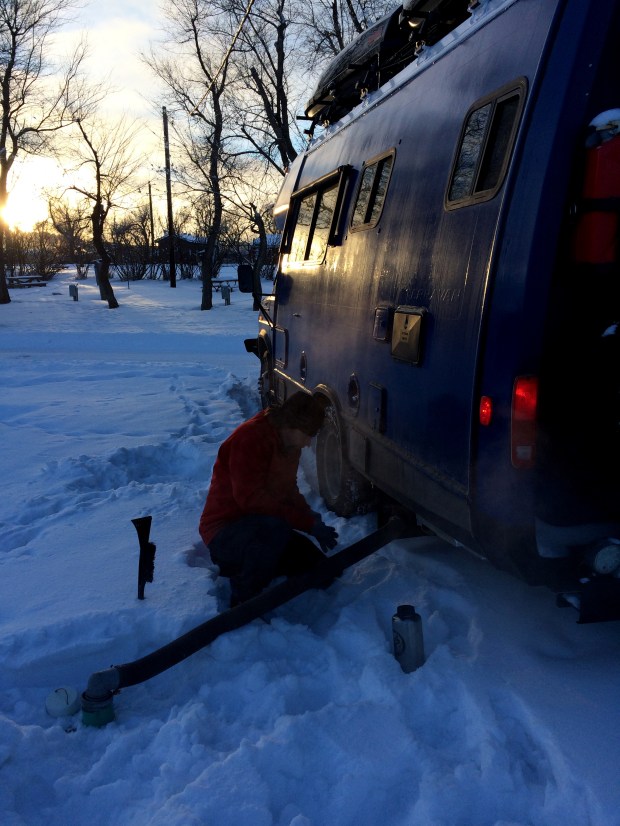
  • Learning about the difficulties of dumping tanks in winter when all the RV sites for miles around are closed for the season. . . (For those interested parties, it includes making friends with the on-site owner of a closed RV site and graciously being given permission to use the facilities if you can find it and not break anything, digging through the snow until you find the port, boiling hot water, filling a container with hot water, pouring it over the frozen cap until you can open it, taking a photo while your significant other waits for your assistance.)

img_7137

  • Being co-planner for a stuffed animal beach wedding. . .
  • Waiting to see how Andy will alter the “LOVE” Valentine’s decorations his sister put on the mantle. . .
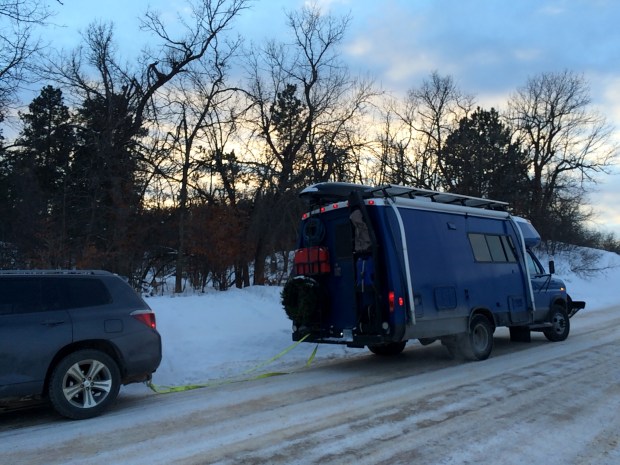
  • Towing stranded passengers out of a snow drift. . .

img_7195

  • Finding Gracie tucked into cozy spots on the coldest days. . .
  • Scout just driving around town. . .

img_7226

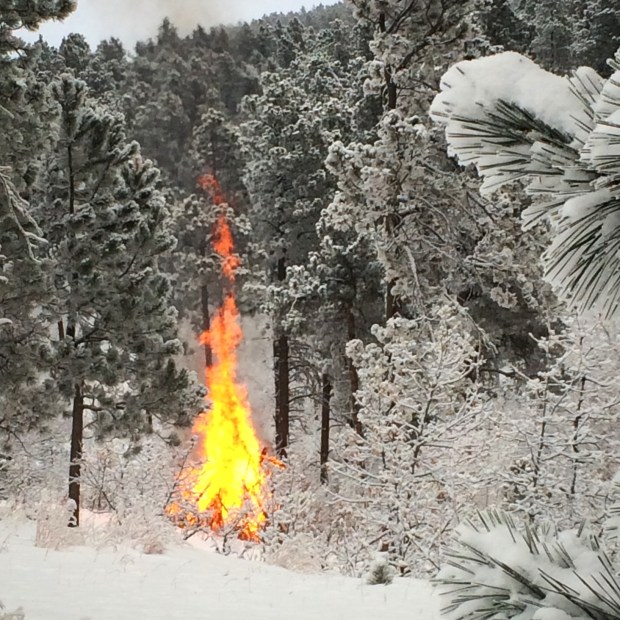
  • And knowing Christmas is officially over when you see the Christmas tree ablaze.

img_7206

Coming up: We’re done with snow and are going to Mexico!

P.S. If you enjoy following along with our blog, don’t forget to click the “Follow” button, and you’ll get an email whenever we post! 🙂


Sleepin’ On The Streets: A Beginner’s Guide To Boondocking

One of my favorite Andy quotes happened outside the Baghdad Theater in Portland a few summers ago, when we still lived in a house.

We were sitting on the patio after a matinee, drinking a beer and talking about how excited we were to begin our upcoming vandwelling life. I said something about wishing we lived in the Turtle already, and how much fun it would be if we could just walk a block down Hawthorne and be “home.” Andy beamed and said, “Isn’t it exciting? By this time next year we’ll be living the dream: sleeping on the street with our half-wild dog and our garbage cat.”

It’s become our motto.

On that note, I recently realized that I’ve neglected to discuss a topic that is super fun and potentially useful to other wanderers, so. . . let’s talk about boondocking!

img_0842A place we lived for a night in Corvallis, Oregon

One of our favorite things about full-time vandwelling is the freedom we have to roam around without worrying about where we’ll stop for the night, allowing ourselves to really live in the moment. We have the ability to go where our interests blow us without worrying about planning around a place to sleep. At this point we’re a year into off-grid Turtle Life and feel completely comfortable and confident pulling over and finding places to stay overnight, but when we started out it was pretty daunting and we spent a lot more money staying in RV parks and camp sites when we didn’t need to. I know we still have lots to learn, but I’m here to share what we wish we would have known a year ago!

*An important note here is that the type of boondocking I’m referring to is not a long-term off-grid stay in the woods. I’m talking about the type of boondocking common with full-timers, which is traveling down the road and stopping for the night as we pass through an area, waking up, packing up, and continuing along our travels. Once we get into long-term boondocking, we begin talking about on-board fuel supply, second alternators, etc. and that’s a whole different conversation.

img_2263
Some BLM Land near Jewel Cave National Monument, in South Dakota

It’s so liberating to realize how easy it is to get around when your house is on your back and you can just stop wherever you want! But you do need to get equipped first.


Let’s start off with the things we’ve determined necessary for comfortable boondocking:

  • Heat supply: Diesel or propane
    • We’ve got a propane heater wired into the Turtle which is wonderful, and effective in heating up our small space quickly. Diesel works great too.
  • Power supply: Either a generator or solar panels and batteries
    • Andy will write a technical post on this one at some point. Lots to say here! We’ve got solar panels and three batteries that, with regular sun, will keep us charged indefinitely. This includes our computers, interior lights, etc.
  • Water storage
    • The Turtle has a water tank plumbed to the sink and bathroom, but when we bought it the water pump wasn’t working, and we lived happily with refillable water jugs for a good long time.
  • “Some sort of bathroom” is how Andy worded it. . . 🙂
    • If you have a bathroom in your vehicle it’s pretty magical! If you don’t, you can get away with boondocking at rest areas, and using the facilities at the big box stores that let you stay overnight, and of course there’s always the great outdoors. (Andy suggests empty jugs, but he also lived way out in the bush in Kenya for a number of years, so. . .) But if you’re deciding between two vehicles and one has a bathroom, I recommend the one with the loo. It just frees up loads more off-grid options.
  • Food storage and preparation
    • This can be a simple plan, but it’s worth adding to the list. Keep some food with you and have a way to prepare it. You know, like life.
img_2968
Breakfast in Garnet Ghost Town Parking Lot

Now let’s talk about where you can stay:

  • Wherever you want!
  • Just kidding; there are restrictions. But fewer than you might think.

As I mentioned, when we started full-timing we weren’t sure how the boondocking was going to work out. Most of the literature we read about full-timing was written by and for an audience who planned on spending most of their time in RV parks. We enjoy when we stay in parks very much, but we’ve primarily got our sights set on simplifying and being independently mobile. Also, there were a few books we read in which the author was paranoid about getting harassed by the police for staying somewhere overnight, and at first we thought it was something to hide and be nervous about. (It’s not.) So it took us a while to find what worked best for us, and what we discovered is that there are loads of legal options!

img_2766
Public land somewhere between Bozeman and Missoula, Montana
img_2798The sunset at that spot, later that evening. . . a pretty nice backyard

Here are the things we’ve learned about where it’s legal to stay overnight:

  • Most states that we’ve researched allow for overnight parking unless otherwise posted, usually for 10-12 hours max. And where it’s not allowed, it’s very clearly posted. And where it is legal, you can usually find signs stating the rules.
  • This includes parking in towns, because in the states we’ve visited at least, it’s only illegal to “live” in a vehicle on the road for more than 72 hours. It will likely vary from state to state, but we’ve never had any trouble just staying overnight in an area that didn’t have posted parking restrictions.
  • Lots of spots that allow overnight parking will post “No Camping,” which we have learned means that you can’t have a camp fire, put chairs outside, extend any slide-outs, or roll down your awnings. Basically you can’t do anything but park, which is all we need! I always thought it meant no overnighting of any kind, but you can stay there as long as you don’t start setting up your living room outside your vehicle.
  • Rest stops are actually places to stop and rest! We see lots of other RV’s and vans parked overnight at rest stops now that we’re paying attention, and the nice thing is that they’re usually well-lit, have bathrooms and potable water, and often have nice spots to walk the dog (and if you’re us, the cat). It had honestly never occurred to me that you could spend the night at a rest stop, because I’d never needed to. But there you go!
  • We’ve enjoyed very much the realization that you can stay at scenic viewpoints and historic pull-outs along the interstate. Again, each state determines how long you can stay, but in our experience it’s always a night’s sleep worth—around 10-12 hours or so. We’ve woken up to gorgeous views of towering rocks and rivers in the middle of mountain ranges that we would have just blasted through. A lovely and novel spot to drink coffee while the dog does his morning business.
  • BLM land is available for dispersed camping, and has been a favorite of ours. According to their website, “camping on public lands away from developed recreation facilities is referred to as ‘dispersed camping.’  These sites are widely dispersed, undeveloped, and are generally not signed as campsites.”  You can stay for up to 14 days, have camp fires as long as you monitor them closely, and it’s a great spot for the pets to run and play.
  • As many of you know, lots of big box stores and travel plazas allow for overnight parking. We haven’t done that as much, because we love grass and so far there has been a lot of grassy spots available to us. But it’s an option, and a nice one if you need to grab supplies too.
  • At first we thought when parking in town we’d be happiest parking somewhere quiet without night traffic, like by a park or school, but then decided that a van parked overnight by a school could attract negative attention. After a fair number of trials, we’ve found that we’re most comfortable parking on—or on a side street of—the main drag of smaller towns. There’s not much night traffic typically, and it doesn’t look as sketchy to the neighbors if a vehicle is parked overnight on the road under street lights as it would in front of their house. Even though it’s legal to park in neighborhoods, we like to make sure that we’re not imposing on anyone either. Not to mention if we’re near any night life, we can explore town, hang out at the local spots, and then just walk 10 steps home without designating a driver. Safety first, guys.
  • There are bunches of resources for people like us, to help avoid the sometimes-annoying driving around looking for the ideal spot. The ones we like best are:
    • Overnightrvparking.com: Our first favorite, and the one that got our boondocking education started. It shows on a map where there are free places to park for the night so you can plan ahead. It tells you if it’s a rest stop, scenic viewpoint, etc. and what facilities are available at that spot. This site is user-driven, but the administrator evaluates all submissions and posts whether or not the spots are legal and safe. It was just $25 for the year, and right away we got well over our money’s worth for it!
    • Allstays.com: We love this one because it lists everything. As their website states, it shows “Over 29,000 Campgrounds: Independent, KOA, National/State Forest, State Parks, Public Lands, Army Corps, National Park, Military, County and City Parks, Casinos.” It tells you if it’s free or has a fee, how much it costs, and what amenities are available. The app also lets you see where there are dump sites, propane, potable water, and other resources. It’s a must-have.
    • iOverlander: Much like Allstays it’s got everything, but includes a lot of information about places to stay outside the United States and additionally shows points of customs and immigration.
img_1990That time we lived on a lake

The very best part of an off-grid traveling life is that we get to try out being locals in towns all over the states, every day! We’ve really enjoyed the simplicity and flexibility it affords us, not to mention how inexpensive it is to visit new places. We can wake up in a city one day and in the woods the next. I can’t believe I waited this long to figure out that this was possible.

A lot of people are curious to know if we feel anxious about boondocking, especially in towns or populated areas. At first, yes, we were very aware of the fact that we were on a street and in an unfamiliar town. We took a very long time to find a spot, and when we found one we were careful to stay quiet and keep a low profile. After we understood the rules, though, and got a feel for what worked best for us, that completely dissolved. Now what’s remarkable is that we’re so used to it that when we close the door, we’re just home. We watch movies, listen to music, have friends over when we’re in town, and pop right out the back door in the morning to walk to a coffee shop or let the dog out. It’s so exciting to wake up in your own house, cuddled up to your person and your pets in your own warm bed, and in those first few seconds not to remember where you live!

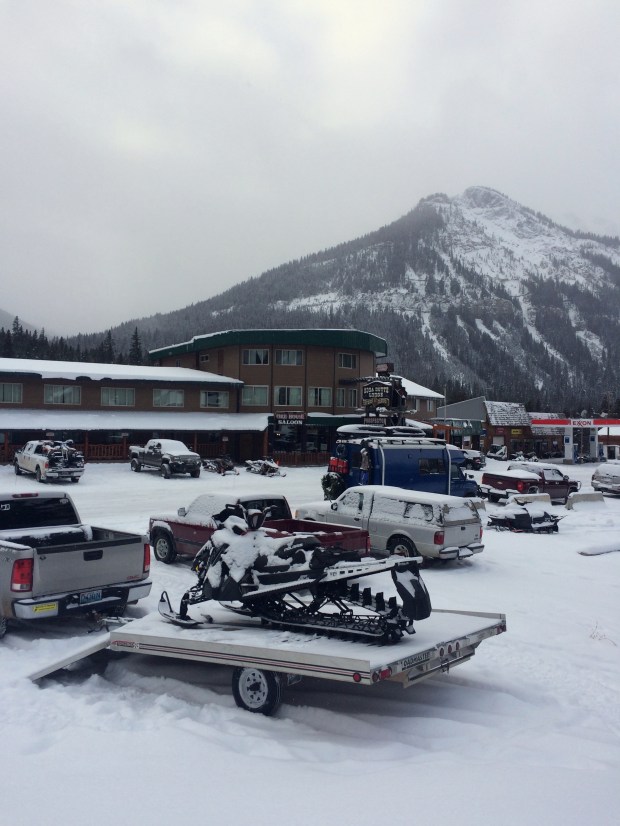
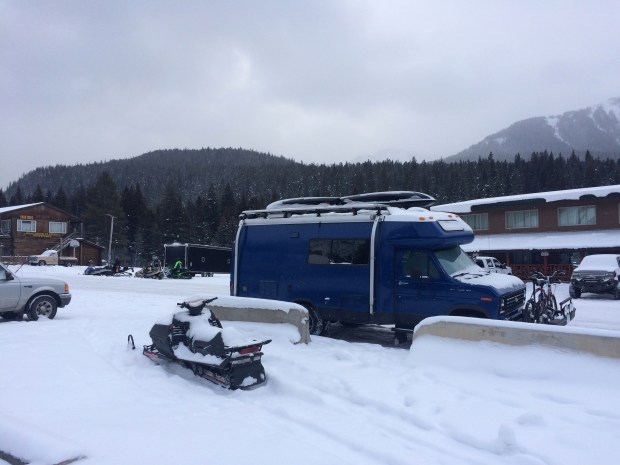
img_6483Cooke City, Montana. . . The morning we woke up to the roar of a town full of snowmobiles!

Every day really is a new adventure. And we’re ready to see what tomorrow will bring!


Winter Camping in Yellowstone National Park

Have you ever heard of a Chesapeake Start?

Well I can’t find anything on the internet to support that this is a thing, but here’s what I can tell you. Somewhere along our travels, someone told us about a “Chesapeake Start.” He said that when Lewis and Clark would leave for a long journey, everyone who was going on the trip would pack everything up and travel a mile down the road, then stop and stay the night. Once they had set up camp, they would quickly discover what necessary items they’d left at home, so the next day they could easily return to their home base and get what they needed for the long trek ahead. We love this idea in the context of Turtle travels. . . especially since in the scenario we get to be Lewis and Clark. 🙂

On our exit from Bozeman into our first wild winter weather in the Turtle, we’re especially happy that we opted for the Chesapeake Start. During our stay in Bozeman, Andy did a whole bunch to prepare us to be a Turtle For All Seasons, but there’s so much you can’t know to prepare for until you’re into it. So knowing that all Andy’s tools were only an hour and a half away, we left Bozeman on Sunday and drove to Yellowstone National Park!

img_6416img_6385

We arrived in Yellowstone mid-day, and it didn’t take long for the temperature to drop. Of course this time of year in Yellowstone is cold and icy, and this is the longest amount of time we’ve been completely off-grid in freezing temperatures! We’re still working out the finer points of living entirely from solar, so boondocking proved more challenging than ever before. Especially since we get so few hours of sun in these winter months and the sun we do get is weak, we had to really conserve our light and heat usage, as both are powered with the house batteries charged by the solar panels.

We were happy to have lots of blankets that evening. . .

img_6293

And to see sunshine in the morning!

img_6413

This isn’t the first time that I’ve been thankful that Andy is an engineer, and a motivated one at that. At the campsite, out in the wind and snow, he wired up a second alternator that he’d been working on and hadn’t yet completed, and got us extra power using wizardry and magic, and I think a little power from the engine.

We knew it would be cold in the park in November, and also that we’d be a little more limited in how much of the park we’d have access to. I’d done some research before we visited Yellowstone about its off-season, and here’s what I found:

  • The majority of the park is considered “closed” from early November to mid-April. That means that all the roads are closed except for the road from Gardiner to Cooke City. (And during the winter season, all roads out of Cooke City are closed save that same road back to Gardiner.)
  • In mid-December the park opens up to “oversnow” travel, which means you can only access the park by snowmobile or snowcoach.
  • In November and the beginning of December, the northern portion of the park is still open to visitors, and since it’s the off-est of the off-season, you have the place pretty much to yourself!

We’ll definitely return to check out the rest of the park when it warms up, but in the meantime, we found November to be an awesome time to visit the park!

img_6472

Here’s what you can do in the park in November:

  • Mammoth Campground is open year-round, and much easier to get a spot this time of year. We only had two neighbors the whole time we were there!

img_6219

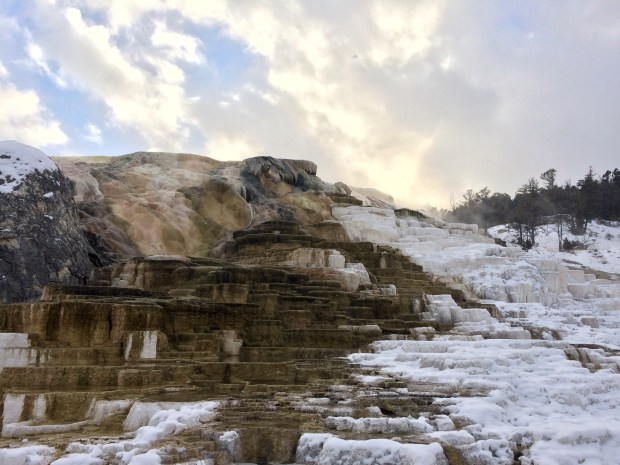
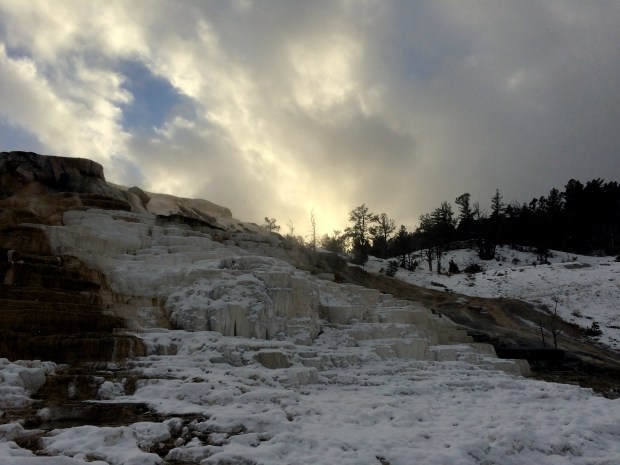
  • Mammoth Hot Springs and the Albright Visitor Center are right next door to one another and both are also open year round.

img_6266img_6267img_6278

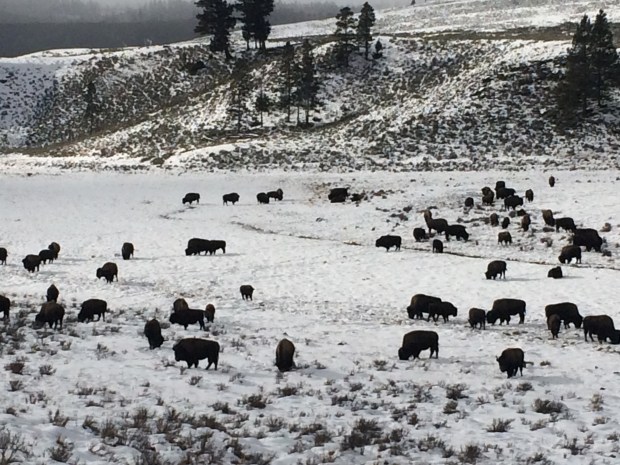
  • The animals are out in droves and grazing so close to the main road! We saw hundreds of bison, antelope, elk, deer, bighorn sheep, a few coyotes, and the sweetest little light-footed fox you can imagine. (My favorite, but don’t tell the other wildlife.)

img_6547img_6462img_6469img_6574img_6511

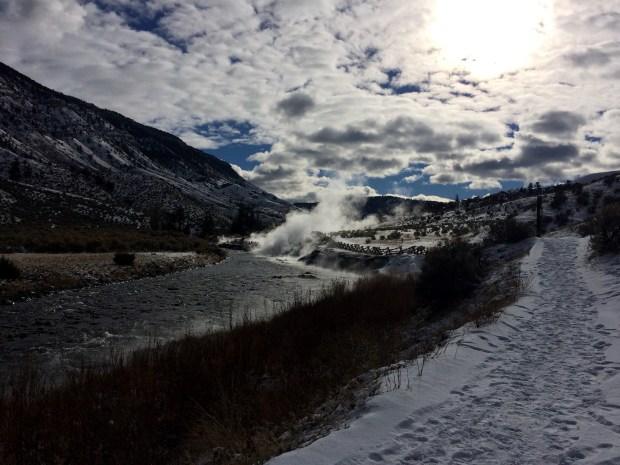
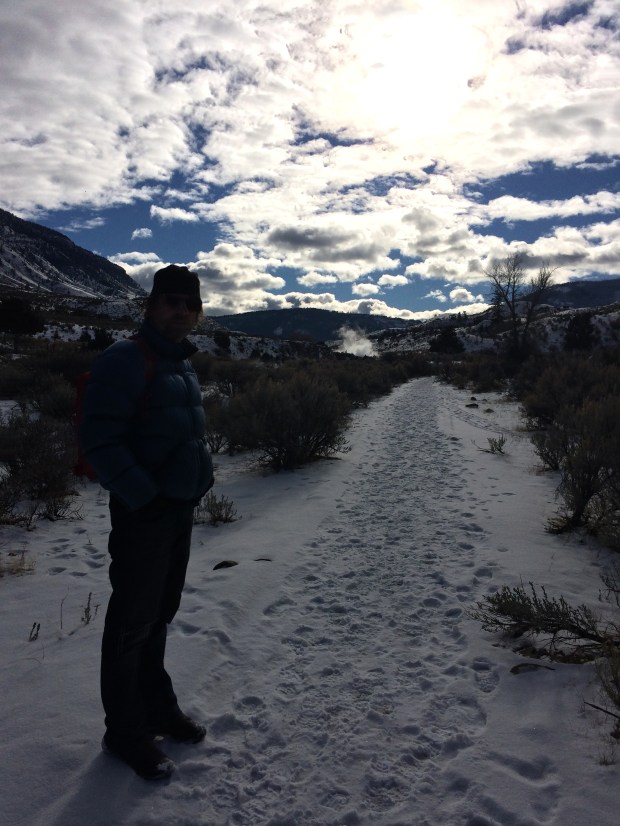
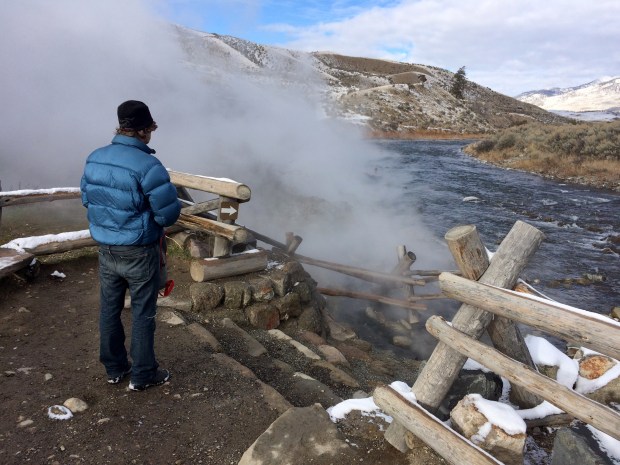
  • The Boiling River is also open year-round, and in my opinion, it’s best in winter. . . since that’s when I went, and it was awesome. I can’t imagine a more surreal and magical time to be submerged in a river than a snowy November. The Boiling River is a swimming spot at the confluence of the Gardiner River—which is of course frigid this time of year—and the Boiling River, a hot springs which reaches up to 140 degrees. You wade down to where the two begin to mix comfortably, and you’re in an outdoor hot tub in the middle of the snow and mountains! The steam pours and curls off the water, and the Boiling River gushes over the rocks and iced plants in a bubbling hot waterfall tumbling into the cold river. You’re sitting in the middle of it all, in one of the man-made terraces, adjusting your position to accommodate the sometimes burning, sometimes freezing, mostly perfectly-cozy warm water flowing past your body. We splashed and floated, counted the dozens of elk grazing on the mountainside, avoided staring at the high school couple making out near us, watched the shadows the sun cut through the steam, and laughed at how crazy it was to be swimming in a river in the mountains of Wyoming in December. We stayed for hours and hours, the final hour a procrastination knowing how cold we were going to be once we stood up and waded up the river back to our clothes! (I’m not going to lie; the walk back out was brutal. But it was so so worth it!)
    • If you’re planning to go, it’s not marked on the main road, so park at the lot just north of the 45th parallel, near the Montana/Wyoming border. It’s a straight, level hike along the Gardiner River, just 1/2 mile to the spot where the Boiling River converges. It’s all well-marked. My main recommendation is to bring water sandals. . . as you get in, you’re so cold and then so hot, trying to figure out where the separate currents are, that the slippery rocks are just another inconvenience that could be avoided with good footwear.

img_6438img_6441img_6443img_6452img_6456img_6455

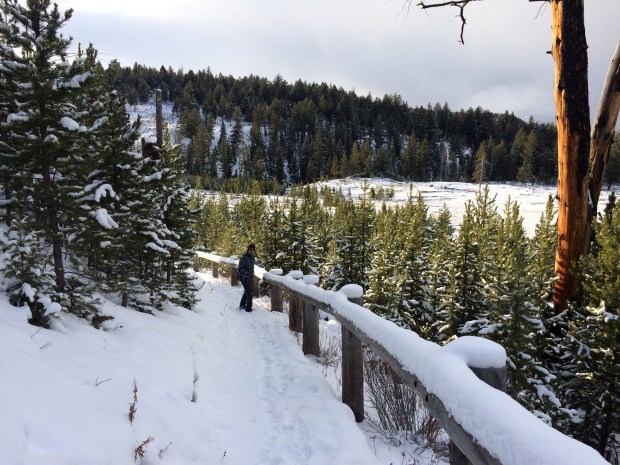
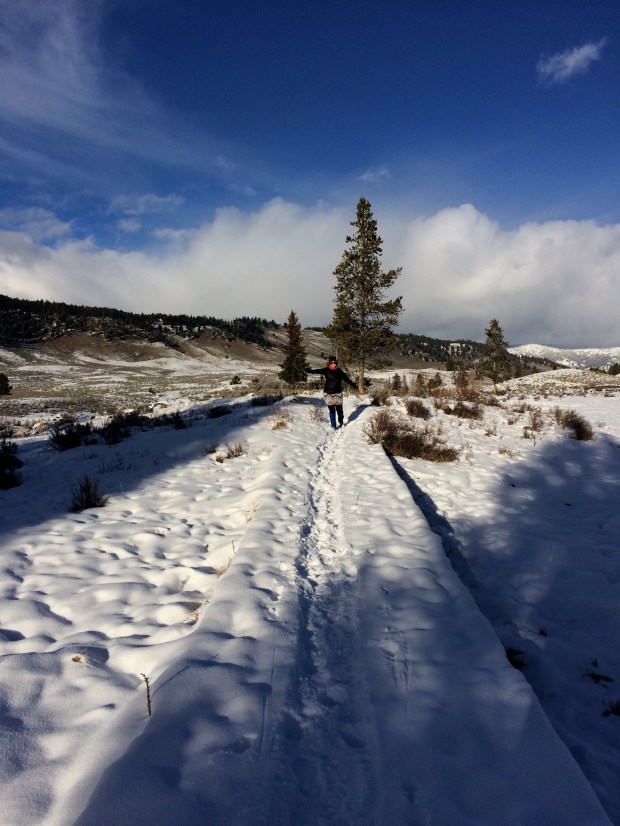
  • Lots of hiking. While we were there the snow wasn’t deep, so we were able to hike around without our snowshoes to lots of nice spots. If we’d spent more time in the park (a week when Andy wasn’t working so much), there were portions of the park we would have loved to have snowshoed through. Next time!


img_6404img_6392img_6253img_6397img_6332img_6340img_6524img_6406

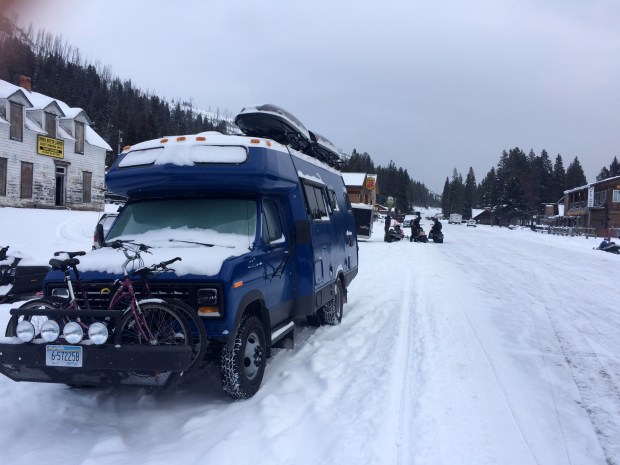
We spent so long in the Boiling River the day before we left that we didn’t have as much time as we would have liked to see the east side of the park. We decided to drive the distance up to Cooke City, stay the night and then make the drive back the next day to see the landscape and animals from the east gate back to the north entrance. We got to Cooke City right at dusk, and at almost 8,000 ft. elevation, the snowy mountain town was a twinkling haven in the middle of the frozen wilderness. We parked on the street, and woke up the next morning to find the streets bustling with people, all preparing to ride their snow machines, or zipping down the street on them! It was so much fun! Apparently when they close all the other roads into town for the winter, the snow machines (I guess they call them”sleds” now) can go nearly anywhere they want, and they do.

img_6487IMG_6485.JPGimg_6483

Everyone was having such a great time! And super duper nice.

We had coffee and hot breakfast at a friendly bakery that was also half snowmobile shop, and drove back through the park in the snow. We saw almost every animal on our wish list, and even after we left the park we saw a bald eagle and a moose!

The week was packed full of adventure, and that was just on the North road! Lewis and Clark would have approved. And they would have been especially pleased that, since we utilized their Chesapeake Start, we were able to take our frozen tanks and campsite-rigged alternator the short trip back to Bozeman where we can make the necessary updates. And then we’ll be ready for whatever weather we feel like driving into! Woohoo!

img_6492


A Year of Vandwelling!

Guess what?

This Halloween marked our one year anniversary of being full-time vandwellers! It hardly seems possible that 12 whole months ago we were starting off with no idea what we were doing, not to mention where we’d be a year later. (Spoiler: It’s not as far away as we thought we’d be!)

It has been an incredible year—the best of my life so far—and we have loads of lessons to show for it. We get a lot of questions about the less glamorous side of our lives on the road, and sometimes while writing about our days I forget to include both the highs and the lows of the vandwelling lifestyle. I know it’s interesting to read about the difficult aspects, because I love reading about the obstacles other full-timers face too, but it’s never my first instinct to complain about the rough bits when we’re enjoying our dream life! But life is still life, and it’s not always perfect. And the people want to know the dirt!

So in honor of our one-year Turtleversary, here’s a list of both the easy and fun aspects of Turtle Life, and the stuff we didn’t realize was going to be hard.

THE EASY:

  1. Freedom & Adventure
    • Let’s be honest; this is the whole reason we hatched this plan in the first place! We were tired of working for an income that just went to pay rent and bills in our house in Portland that we loved but didn’t get to enjoy as much as we’d have liked, since we were always at work! Andy was working days and I was working evenings and nights, and in the slivers of time we did have together, all we wanted to do was get out, go camping, float the river, and explore the outdoors. We had the desire for adventure, but no freedom to truly embrace it. Now we go wherever we want as our whims dictate, and every day is an adventure. It’s delicious.
  2. Seeing Friends and Family
    • This has been an incredible side effect to our new life. In the last year, we’ve been around for more birthdays, moving days, celebration days, and regular days in the lives of our families and good friends than in the last 5 years combined!
  3. Getting to Know Each Other
    • I don’t care how long you’ve been with someone, when you move into a 100 square foot box with them full-time, you get to know them on a whole new level! And seriously you guys, this has been so much fun. (We’ll get to the “Time Alone” portion on the next list shortly, so you can take this all at face value, knowing I’m not trying to convince you that it’s all roses.)
    • But if you like your significant other, then this can be the adult equivalent of your 3rd grade best friend! All your shared experiences are new to both of you, and the world is your playground to explore together. You learn so much about each other as you try new things, learn how to compromise when there are unlimited options, and create new stories and inside jokes that are just yours. These days, our conversations are less about the day-to-day experiences we’ve had, and more about ideas, dreams and plans. Now we craft our days together, and the best-friend-ness that develops is super duper fun.
  4. Getting to Know Ourselves
    • I only realized how significant this one was after writing the last paragraph, so I added it in. This lifestyle is so outside the norm that as we learn more about each other and our surroundings, we are also reassessing who we are and discovering more about ourselves. We’ve had more time to try out new ideas and challenge ourselves and to be creative, and being outdoors is a great place to let your mind wander and see where it takes you.
  5. The Stuff We Get To See!
    • This one seems obvious, since we’re always moving and seeing new things. And as we anticipated, it’s been awesome! What’s surprised us about this, though, is that so much of what delights us lies in between the highlight reels of our travels. We meet incredible and intriguing people, we stumble across charming small-town spots, we pull off the road to let the dog out and find such a gorgeous chunk of public land that we decide to stay for the night and end up watching a storm roll in as we drink a beer under the awning, cuddled up under blankets in our camp chairs watching the animals run around together. Our happiest memories include both the destinations and the journey. We’ve got stories, you guys. 🙂
  6. Our Time Is Valuable
    • What I’ve really appreciated in this last year is the ability to determine how I spend the majority of my time, since we’re no longer going through the motions 40 or more hours a week. Andy’s favorite thing these days is to take on a project and make it absolutely perfect. Instead of just wiring the solar up for functionality, he gets to think it through from start to finish and has the time to make it not only functional but attractive. He adds that it’s also really fun that when you do have projects, it’s a lot easier to do a more detailed and professional job because everything is so much smaller. (Right now he’s building a new vanity in the bathroom, and it’s a much smaller project than a full-size bathroom vanity! So he can put a lot of care into it.) We get to nurture our hobbies while discovering new ones! The funny thing is how we still don’t have time to get everything done. . . some things don’t change no matter where you live.
  7. Learning New Things
    • Since we’re only a year into this life, we still have a bunch to learn. Slowly but surely we’re adding to our “life education,” both practical and just for fun. We’re learning more about the Turtle, about the U.S., about sweet hot-dog stick carving techniques, Andy’s learning to make fishing lures, I’m learning about edible wild plants, we’re learning to identify bird calls, I’m brushing up on my Spanish, and we now know all the state nicknames, just to name a few new skills. That last one is mostly worthless, but interesting to know that Arkansas is The Natural State, for example. The more you know, right?
  8. Our Animals Are So Happy
    • You’ve seen the pictures. They’re living the life! We’ve fielded some concerns about whether or not the animals are happy in such a small space, especially since we have a curious, active cat and the “Energetic Border Collie” poster-boy. And I agree that if we spent most of our time indoors, they’d go bonkers. Luckily, in Turtle life we spend a tiny fraction of our days indoors and are mostly busy playing outside! Nothing but mountains to climb, fields to race through, trees to climb, friends to meet, things to sniff, and rivers to swim in or sit cautiously by, depending on which animal we’re talking about on that one. When we worked full-time, the animals were home alone for multiple hours, whereas now they’re with us nearly all the time and are enjoying the open door policy giving them access to their enormous back yard.
  9. Amazon Delivers
    • We once ordered an inverter for the Turtle at a tent camping site near Wheeler, Oregon, and two days later the UPS truck came bumping down the dirt road with our package. We still crack up about it! We’re generally always able to get what we need, even without a permanent mailing address! Amazon rocks, and makes all our projects possible, even fairly of the grid.
  10. Simplicity
    • When we decide that we’ve done all we wanted to do and seen all we wanted to see, eventually we’ll settle down somewhere. (Luckily we’re test driving cities ahead of time, so we’ll know right away where that somewhere will be!) And when we do, I know the biggest take-away for me will be the joy of simplicity that we’ve discovered in this process.
    • We didn’t have much of a choice regarding how much “stuff” we could bring with us, and we decided right away that we didn’t want a huge storage unit full of miscellaneous junk waiting for us to deal with after our travels. So we sold and got rid of just about everything that we had stored up in our house. All that stuff we’d been carrying around for years and years and hauled in boxes from one house to the next, finding places to store in the house, and digging through when we were looking for something. The process was intense and looooong, but now that we’ve pared down to the barest of essentials, I can’t imagine going back to the piles of stuff. Right now, we know where everything is, and all our belongings are essential and valuable to us. It’s liberating, and I wish I had done it years ago.


THE HARD:

  1. The Mess
    • We didn’t see this one coming. It’s not something many people talk about in blogs, or share in the beautifully-staged Instagram shots of feet poking out the back doors of spotless van interiors. But I’m here to tell you that full-time vandwelling is messy! I just asked Andy what his first line item would be on this list, and after thinking for a minute he said “Well, it is quite a bit messier than we’d anticipated. . . ” Yep. We have to stay on top of clean-up nonstop, or we’d go nuts. Neither of us is fussy about cleanliness, but we certainly appreciate a tidy home. And since our space is so small, even a little clutter can feel oppressive, and a muddy dog can wreak havoc on every square inch of furniture in three happy bounds through the door.  I vacuum or sweep at least twice a day, and we’re on constant pet hair duty. Happily, we’ve established systems that work for us to combat the mess over this last year, but for a while it seemed like we’d never stop cleaning. I mean, we never will, but we’re used to it now. 🙂
  2. Laundry, Showers, Dishes
    • After the mess comes the clean-up, and this part is a challenge as well. The chores that we used to do at home without a thought must now be thoughtfully planned out well in advance, and they can dictate a whole day. The Turtle had a built-in shower when we bought it, but it was in the tiny bathroom and—aside from moisture damage issues—the awkwardness of showering while hovering over a toilet gave us the heebie-jeebies. Not to mention that since we have limited water on board, both showering and washing dishes can deplete our resources in a flash. And you know we’ve got no laundry room! So this aspect of our lives that used to be so simple is now quite a time consuming ordeal. When the weather is nice, we’re fine to bathe and wash clothes in the lake, but during colder weather we’ve had to coordinate our trips into town with visits to public pools, gyms, and laundromats. We discovered far too long into Turtle-life that many towns have free RV dumps that also supply potable water, so that’s been a lifesaver for washing dishes. Just wash and refill!
  3. Working Remotely
    • It definitely has been a challenge to balance the off-grid life with being places we get wi-fi. Of course if we had our way, we’d just stay off grid for months at a time and become the postmodern Swiss Family Robinson. We’re fortunate to work in fields where we can work on the road, and the income is helping prolong our travels, but if we’re talking about unforeseen obstacles this definitely is on the list.
  4. Boondocking
    • I’m way overdue for a full blog post on this topic. There is so much to say about boondocking! We feel much more prepared and comfortable living off the grid these days, but this first year has been a real crash course and it was challenging at times to figure it all out. We didn’t find a ton of information on it that applied to our specific situation, so we’ve really just been learning on the job. We originally pictured boondocking by rivers and tucked into trees somewhere, which is definitely part of it, but not always the case! We’ve stayed in parking lots, rest stops, on the side of the road in the middle of town, at scenic overlooks off the freeway, in public parks. . . you name it. This was hard at first because we always want to be parked legally and safely, and it took us a while to figure out how to find those places, especially without having to drive around for an hour or two looking for a place that suited us. This aspect is easy and awesome now, and it’s one of my favorite parts of Turtle life—not knowing where we’re going to sleep from one day to the next! But it definitely falls into the “Hard” list for how long it took us to nail it.
  5. Alone Time
    • Remember that time I talked about how much fun it is getting to know each other? Well the other side of the best friend coin is trying to find time for yourself. It can be difficult to admit to your buddy that you need a break from their face! After we moved in, because everything was so new and we were busy learning the ropes together, it took a long time to even get to the point where living in a van was regular life and we started wanting some time to ourselves. But it happens. When the weather is nice, it’s easy to split up and do our own thing outside, walking the dog, collecting firewood, going fishing.  But when we’re stuck in the Turtle for long periods of time, we’ve learned to not take it personally when the other person just decides to put in headphones.
  6.  Being In Other People’s Space
    • We really love that when visiting our friends and family, we’re able to “live next door” to them, as opposed to staying in their home and making them feel obligated to entertain. We love how much time we’re getting to spend with our people! The challenging part with the time we spend in people’s towns is that we’re living our daily life but also in visiting mode, and even though we have our own house and space, we’re still living on someone else’s schedule. And while the time together a treat and loads of fun, sometimes we visit people back to back to back, and it’s hard to explain to the friend at the end of the party train that while I’m excited to spend time together, I’ve been visiting for weeks straight with no personal time and I really just want to watch Project Runway on my couch with my pets for a bit.
    • P.S. This must be said. Just because we come out of the Turtle at noon, doesn’t mean we slept until noon! We sometimes get raised eyebrows for our “late start to the day.” Never in my old life would I wake up and race right over to a friend’s house first thing. We’re still in our house, and like to make coffee and hang out together and cuddle the animals and get ready and finish the chapter in the book that we fell asleep reading the night before. Yes, we like to sleep in. No, not until noon. Just to clarify. 😉
  7.  Pets’ Limitations
    • Despite the fact that Gracie and Scout are living their dream life, there are, of course, complications involved in traveling with your pets. There are some places we go that aren’t as pet friendly, such as the National Parks where they have to stay on their leashes and don’t get as much exercise. When we’re at less pet-friendly spots, such as friend’s houses or areas outdoors where we have safety concerns, they get a little stir crazy because they’ve gotten so used to having the run of the place, and don’t understand why we’re closing the door on them. If anyone speaks cat, please tell me the translation for “Stop yowling and clawing at the door! There are coyotes howling in the distance and I don’t care how high you climbed that tree yesterday, you’re not tougher than a coyote, dummy!” We’d appreciate it.
  8.  People’s Expectations
    • It never occurred to me how much we’d have to explain our lifestyle until we were living it! Full-time vandwelling is very polarizing. I told Andy while we were building the Turtle that the best part about making such a quirky vehicle is that it will more quickly make apparent the people we have the most in common with. And that’s been 100% true; we make friends on the road just getting out of the Turtle. People who appreciate what we’ve made always turn out to be people we’d love to spend time with, and often they have their own adventure-mobiles that we can check out and be excited about too.
    • Our supporters are the strong majority, however there are also a handful of people who can’t wrap their heads around it and have bunches of questions for us. We love answering questions, because we know it’s an uncommon lifestyle choice and hard to comprehend, but we’ve found we have to address many of the same questions from people who aren’t so sure about our decision and who are unwilling to alter their preconceptions about the right way to live. Here’s a short list of answers to these questions.
      • The Turtle is a conversion van, and we live in the Turtle.
      • Yes, we have a house. The Turtle is our house.
      • No, we don’t have a back-up house somewhere. Do you?
      • Yes, it’s a small space. We love living in our simple, cozy little space.
      • No, we don’t wish we lived in a bigger space. We gave up a bigger space for this.
      • Yes, when we’re done with Turtle living we will eventually live in a house again.
      • No, we don’t have plans for where we’ll live after this is all over.
      • No, we don’t know when that will be.
      • No, we’re definitely not ready to come back to regular life yet.
      • No, we don’t want to rent your cousin’s guest house.
      • Yes, I do appreciate your concern. But we have a house. The Turtle is our house.
  9. Finding Time, At Times
    • There are a few things that don’t change, no matter what lifestyle you’re working with. They always come as a surprise to me, because it seems like a huge shift in environment would bring a huge shift in lots of other areas of life too.
    • One that hasn’t changed is that there’s just never enough time! Between getting improvements on the Turtle done, Andy’s work, my freelancing work, writing blog posts, cleaning, cooking, travel time, planning upcoming travels, cleaning, staying in touch with friends, grooming the animals, exploring the surroundings, and cleaning, it’s hard to establish a routine. Additionally, these things also have to be coordinated with the weather, access to tools, the time between destinations, and availability of stores or facilities from place to place. We’re still working on finding the balance between work and play, just as we always were when we lived in Portland.
  10. Missing Friends
    •  ACK, this one is tricky! It’s funny because we’re getting to spend so much more time with our friends and family who are all spread out, but we miss our Portland friends SO much! We had a great bunch of strange and awesome people there, and it’s hard to be away from all the fun we had. Two of my sisters live right outside Portland too, so I’m also mourning the loss of sister and auntie time. Every choice comes with some sort of sacrifice, and we are regularly aware of how much we miss everyone.
    • It’s also worth noting that the more we see of our long-distance friends and reconnect, the more we miss them as the Turtle pulls away. So there’s that too.


Last but not least, we have an honorable mention! A list item that belonged in both lists:

  1. Breaking Down
    • Con: The Turtle was made in 1985, so it’s no spring chicken. It has loads of quirks and issues, and we frequently break down. Sometimes it’s while we’re traveling down a snowy highway and we have to coast across 70 mph traffic to get to the only available pull-off before we roll to a complete stop, white-knuckled on the steering wheel. Sometimes it’s in front of our friends’ house, and we have to impose ourselves upon their lives for extra days (that one was actually a pro for us but you see what I’m getting at). Sometimes we pull off I90 to see why we’re losing power and there are burning flamedrops falling from under the hood, or “little hot spots” as Andy refers to them. All those hypothetical scenarios aside, though it’s annoying, it comes with one awesome. . .
    • Pro: If we are ever stranded somewhere, we’re stranded in our house! It’s like being snowed in. We don’t go anywhere for a bit, but we’ve got food and heat, our bed and blankets, and wine and games. So it’s not the panic that usually comes with breaking down. We make a lot of jokes about our house breaking down. 🙂

IMG_0909
Well, there you have it! We’re still learning as we go, and finding new positive and negative aspects to Turtle life all the time. I’ll be sure to mention both sides in future blog posts. That is, if I can find the time. . .