One of my favorite Andy quotes happened outside the Baghdad Theater in Portland a few summers ago, when we still lived in a house.
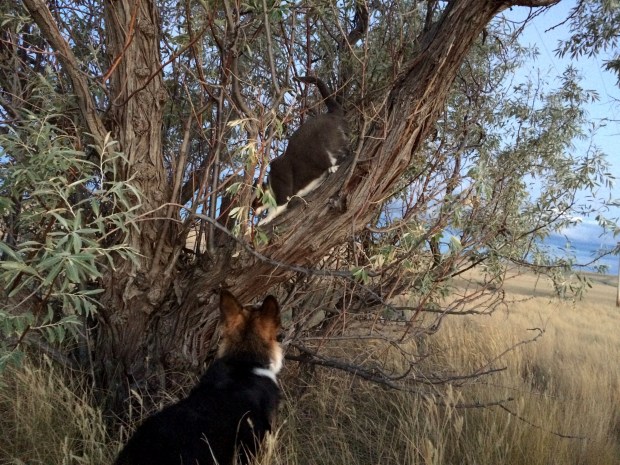
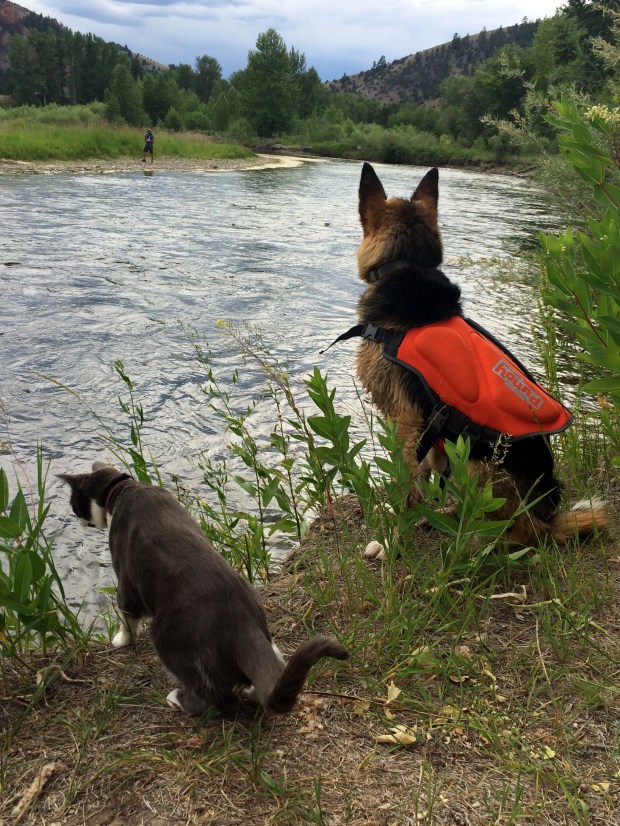
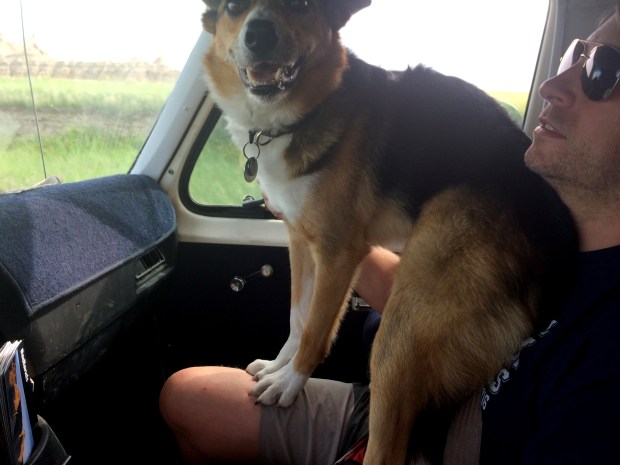
We were sitting on the patio after a matinee, drinking a beer and talking about how excited we were to begin our upcoming vandwelling life. I said something about wishing we lived in the Turtle already, and how much fun it would be if we could just walk a block down Hawthorne and be “home.” Andy beamed and said, “Isn’t it exciting? By this time next year we’ll be living the dream: sleeping on the street with our half-wild dog and our garbage cat.”
It’s become our motto.
On that note, I recently realized that I’ve neglected to discuss a topic that is super fun and potentially useful to other wanderers, so. . . let’s talk about boondocking!
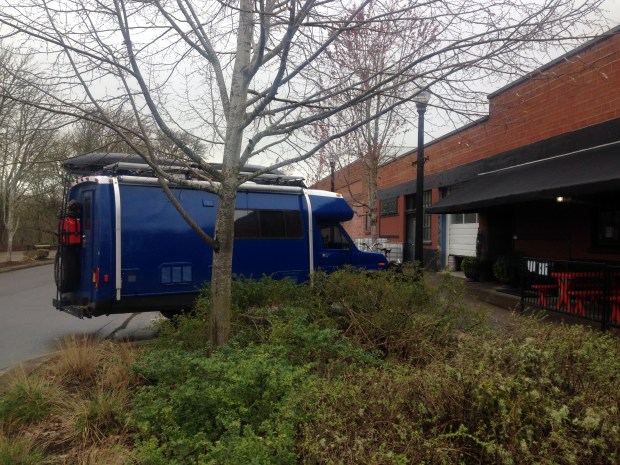 A place we lived for a night in Corvallis, Oregon
One of our favorite things about full-time vandwelling is the freedom we have to roam around without worrying about where we’ll stop for the night, allowing ourselves to really live in the moment. We have the ability to go where our interests blow us without worrying about planning around a place to sleep. At this point we’re a year into off-grid Turtle Life and feel completely comfortable and confident pulling over and finding places to stay overnight, but when we started out it was pretty daunting and we spent a lot more money staying in RV parks and camp sites when we didn’t need to. I know we still have lots to learn, but I’m here to share what we wish we would have known a year ago!
*An important note here is that the type of boondocking I’m referring to is not a long-term off-grid stay in the woods. I’m talking about the type of boondocking common with full-timers, which is traveling down the road and stopping for the night as we pass through an area, waking up, packing up, and continuing along our travels. Once we get into long-term boondocking, we begin talking about on-board fuel supply, second alternators, etc. and that’s a whole different conversation.

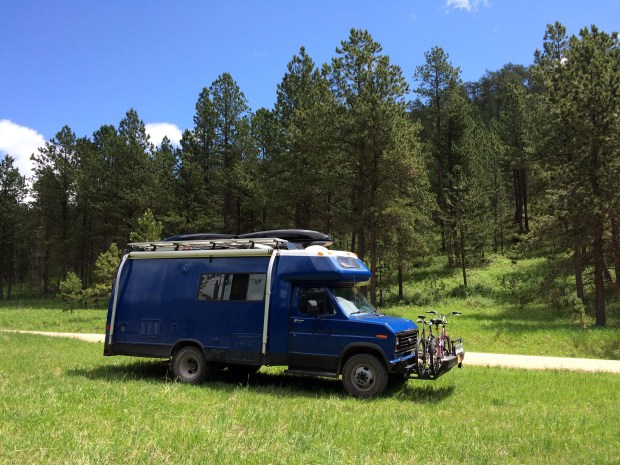
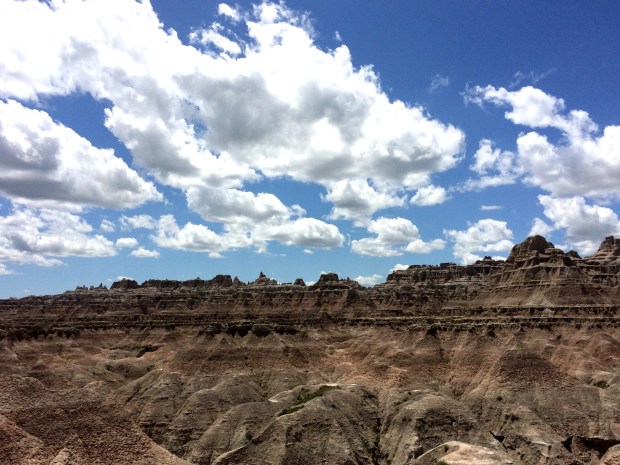
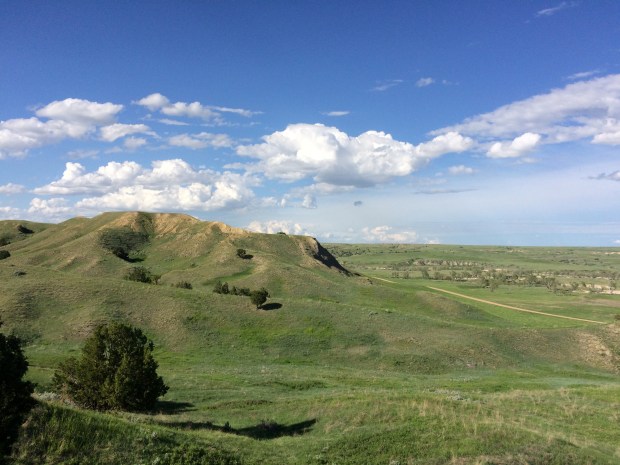
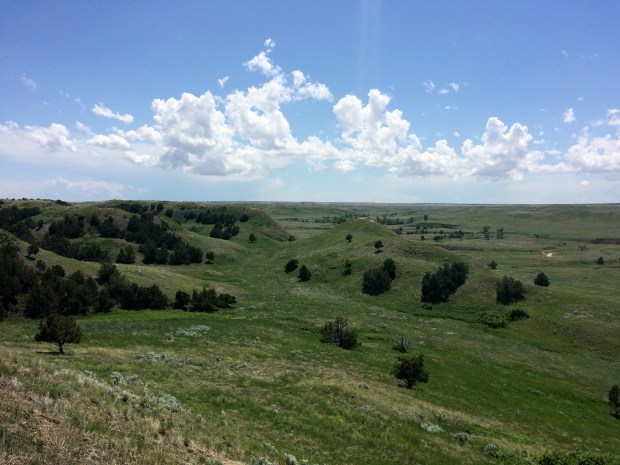
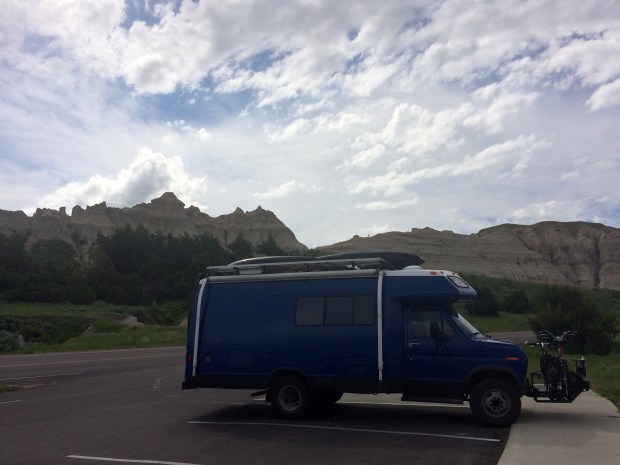
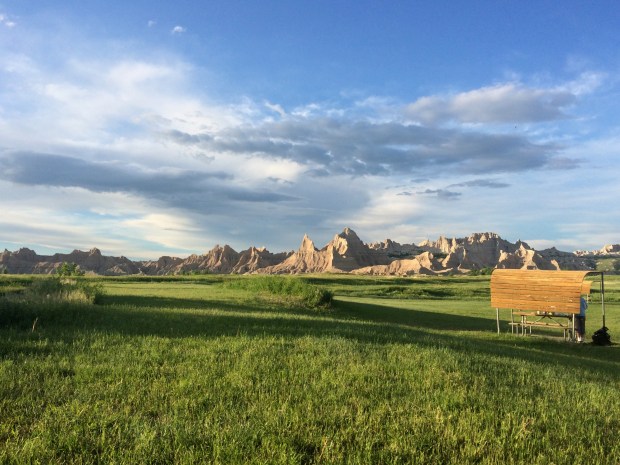
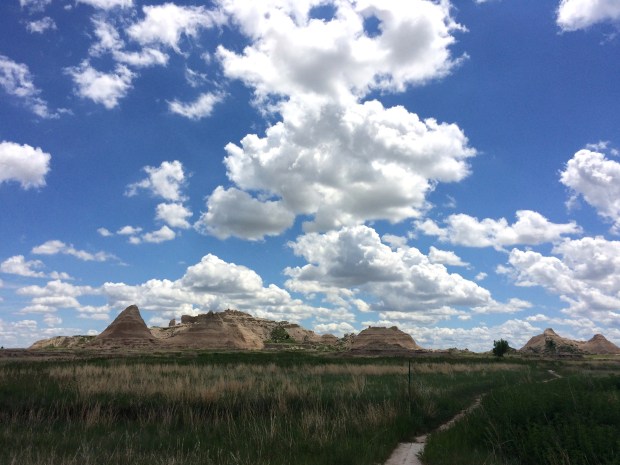
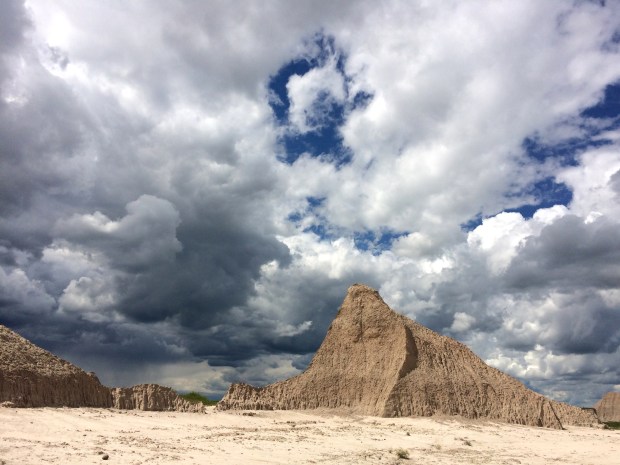
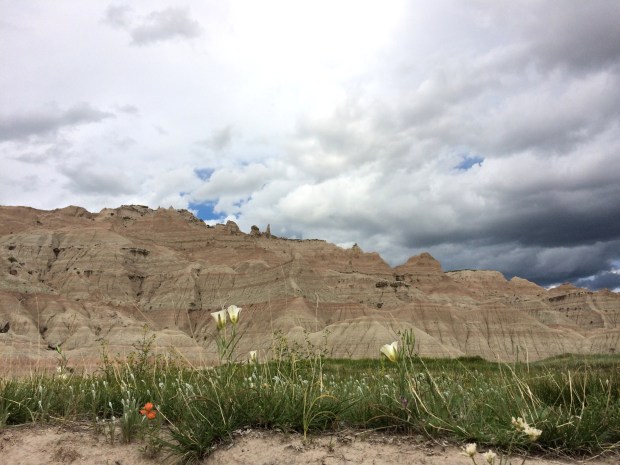
Some BLM Land near Jewel Cave National Monument, in South Dakota
It’s so liberating to realize how easy it is to get around when your house is on your back and you can just stop wherever you want! But you do need to get equipped first.
Let’s start off with the things we’ve determined necessary for comfortable boondocking:
- Heat supply: Diesel or propane
- We’ve got a propane heater wired into the Turtle which is wonderful, and effective in heating up our small space quickly. Diesel works great too.
- Power supply: Either a generator or solar panels and batteries
- Andy will write a technical post on this one at some point. Lots to say here! We’ve got solar panels and three batteries that, with regular sun, will keep us charged indefinitely. This includes our computers, interior lights, etc.
- Water storage
- The Turtle has a water tank plumbed to the sink and bathroom, but when we bought it the water pump wasn’t working, and we lived happily with refillable water jugs for a good long time.
- “Some sort of bathroom” is how Andy worded it. . . 🙂
- If you have a bathroom in your vehicle it’s pretty magical! If you don’t, you can get away with boondocking at rest areas, and using the facilities at the big box stores that let you stay overnight, and of course there’s always the great outdoors. (Andy suggests empty jugs, but he also lived way out in the bush in Kenya for a number of years, so. . .) But if you’re deciding between two vehicles and one has a bathroom, I recommend the one with the loo. It just frees up loads more off-grid options.
- Food storage and preparation
- This can be a simple plan, but it’s worth adding to the list. Keep some food with you and have a way to prepare it. You know, like life.

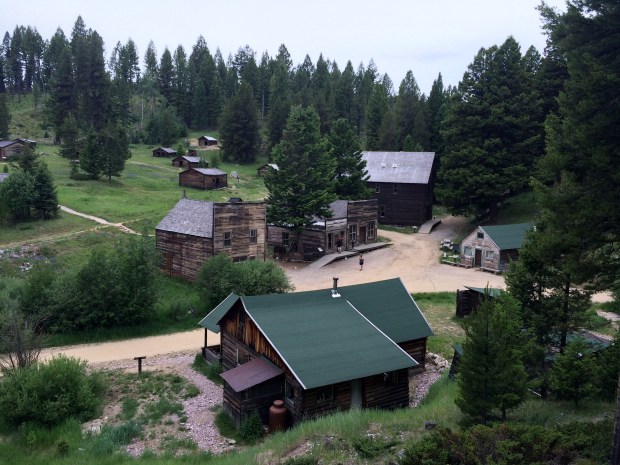
Breakfast in Garnet Ghost Town Parking Lot
Now let’s talk about where you can stay:
- Wherever you want!
- Just kidding; there are restrictions. But fewer than you might think.
As I mentioned, when we started full-timing we weren’t sure how the boondocking was going to work out. Most of the literature we read about full-timing was written by and for an audience who planned on spending most of their time in RV parks. We enjoy when we stay in parks very much, but we’ve primarily got our sights set on simplifying and being independently mobile. Also, there were a few books we read in which the author was paranoid about getting harassed by the police for staying somewhere overnight, and at first we thought it was something to hide and be nervous about. (It’s not.) So it took us a while to find what worked best for us, and what we discovered is that there are loads of legal options!
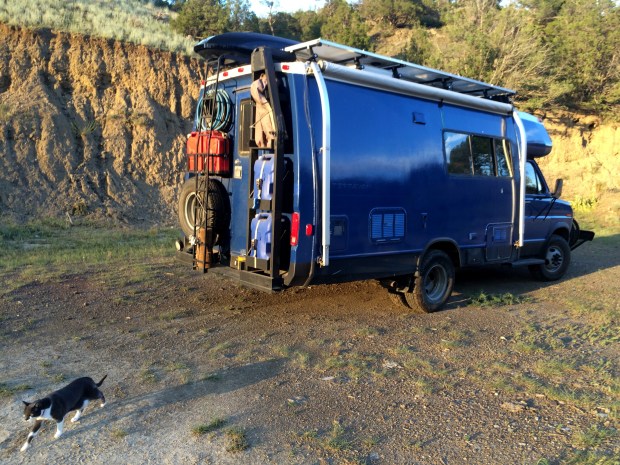
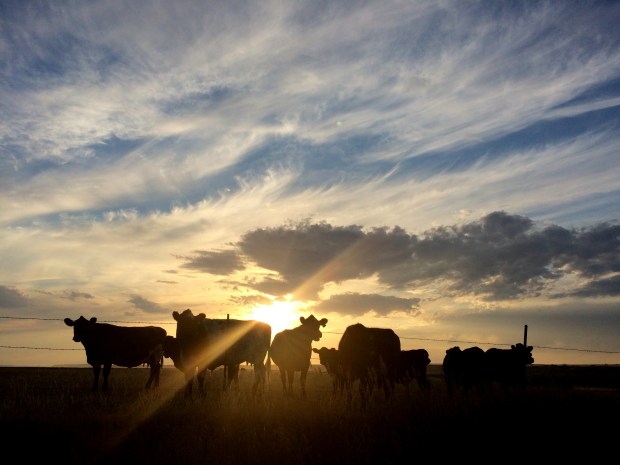
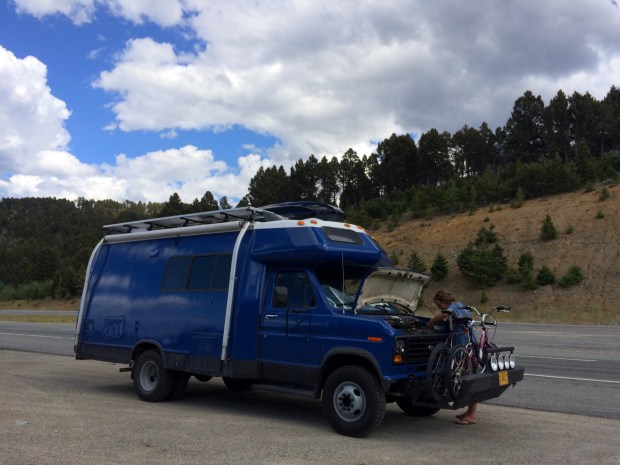
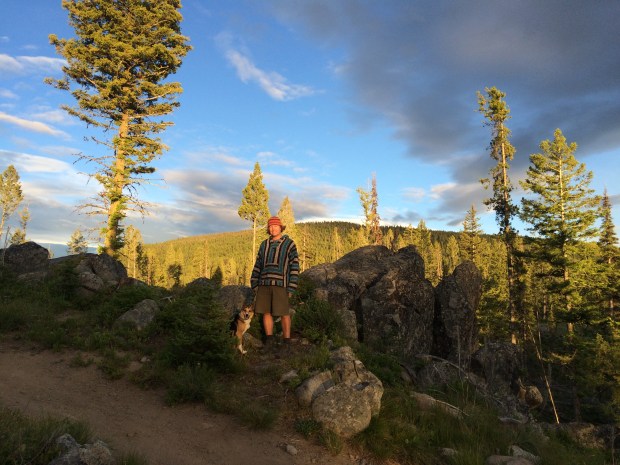
Public land somewhere between Bozeman and Missoula, Montana
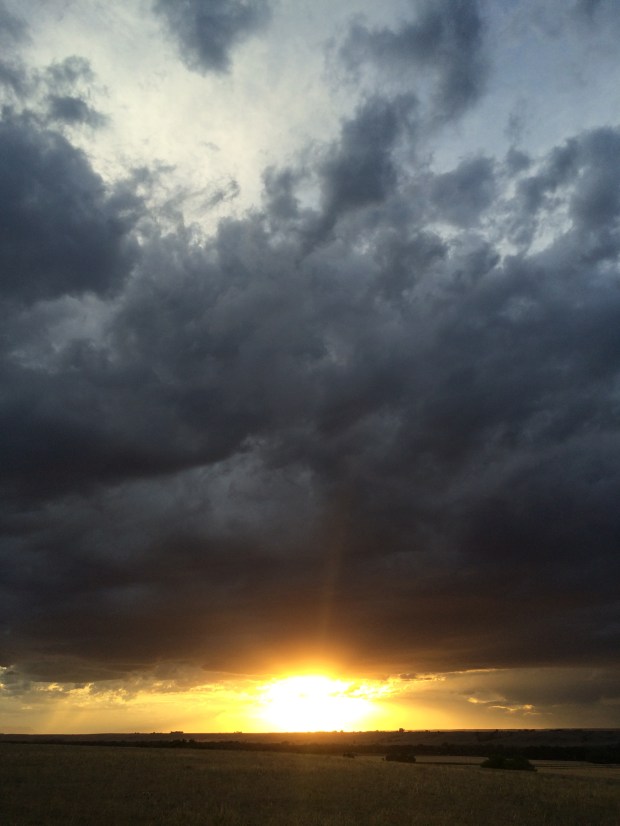
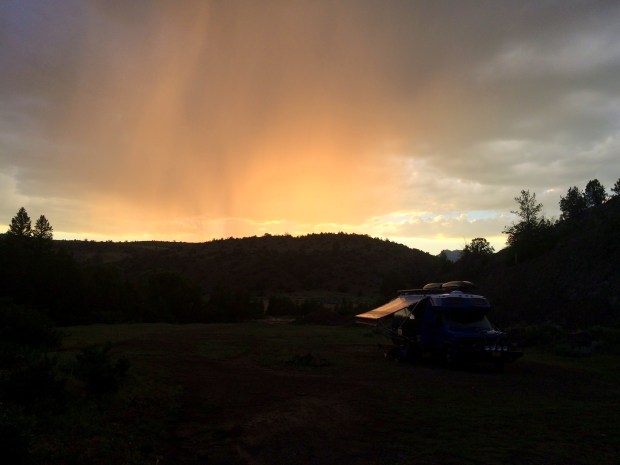 The sunset at that spot, later that evening. . . a pretty nice backyard
Here are the things we’ve learned about where it’s legal to stay overnight:
- Most states that we’ve researched allow for overnight parking unless otherwise posted, usually for 10-12 hours max. And where it’s not allowed, it’s very clearly posted. And where it is legal, you can usually find signs stating the rules.
- This includes parking in towns, because in the states we’ve visited at least, it’s only illegal to “live” in a vehicle on the road for more than 72 hours. It will likely vary from state to state, but we’ve never had any trouble just staying overnight in an area that didn’t have posted parking restrictions.
- Lots of spots that allow overnight parking will post “No Camping,” which we have learned means that you can’t have a camp fire, put chairs outside, extend any slide-outs, or roll down your awnings. Basically you can’t do anything but park, which is all we need! I always thought it meant no overnighting of any kind, but you can stay there as long as you don’t start setting up your living room outside your vehicle.
- Rest stops are actually places to stop and rest! We see lots of other RV’s and vans parked overnight at rest stops now that we’re paying attention, and the nice thing is that they’re usually well-lit, have bathrooms and potable water, and often have nice spots to walk the dog (and if you’re us, the cat). It had honestly never occurred to me that you could spend the night at a rest stop, because I’d never needed to. But there you go!
- We’ve enjoyed very much the realization that you can stay at scenic viewpoints and historic pull-outs along the interstate. Again, each state determines how long you can stay, but in our experience it’s always a night’s sleep worth—around 10-12 hours or so. We’ve woken up to gorgeous views of towering rocks and rivers in the middle of mountain ranges that we would have just blasted through. A lovely and novel spot to drink coffee while the dog does his morning business.
- BLM land is available for dispersed camping, and has been a favorite of ours. According to their website, “camping on public lands away from developed recreation facilities is referred to as ‘dispersed camping.’ These sites are widely dispersed, undeveloped, and are generally not signed as campsites.” You can stay for up to 14 days, have camp fires as long as you monitor them closely, and it’s a great spot for the pets to run and play.
- As many of you know, lots of big box stores and travel plazas allow for overnight parking. We haven’t done that as much, because we love grass and so far there has been a lot of grassy spots available to us. But it’s an option, and a nice one if you need to grab supplies too.
- At first we thought when parking in town we’d be happiest parking somewhere quiet without night traffic, like by a park or school, but then decided that a van parked overnight by a school could attract negative attention. After a fair number of trials, we’ve found that we’re most comfortable parking on—or on a side street of—the main drag of smaller towns. There’s not much night traffic typically, and it doesn’t look as sketchy to the neighbors if a vehicle is parked overnight on the road under street lights as it would in front of their house. Even though it’s legal to park in neighborhoods, we like to make sure that we’re not imposing on anyone either. Not to mention if we’re near any night life, we can explore town, hang out at the local spots, and then just walk 10 steps home without designating a driver. Safety first, guys.
- There are bunches of resources for people like us, to help avoid the sometimes-annoying driving around looking for the ideal spot. The ones we like best are:
- Overnightrvparking.com: Our first favorite, and the one that got our boondocking education started. It shows on a map where there are free places to park for the night so you can plan ahead. It tells you if it’s a rest stop, scenic viewpoint, etc. and what facilities are available at that spot. This site is user-driven, but the administrator evaluates all submissions and posts whether or not the spots are legal and safe. It was just $25 for the year, and right away we got well over our money’s worth for it!
- Allstays.com: We love this one because it lists everything. As their website states, it shows “Over 29,000 Campgrounds: Independent, KOA, National/State Forest, State Parks, Public Lands, Army Corps, National Park, Military, County and City Parks, Casinos.” It tells you if it’s free or has a fee, how much it costs, and what amenities are available. The app also lets you see where there are dump sites, propane, potable water, and other resources. It’s a must-have.
- iOverlander: Much like Allstays it’s got everything, but includes a lot of information about places to stay outside the United States and additionally shows points of customs and immigration.
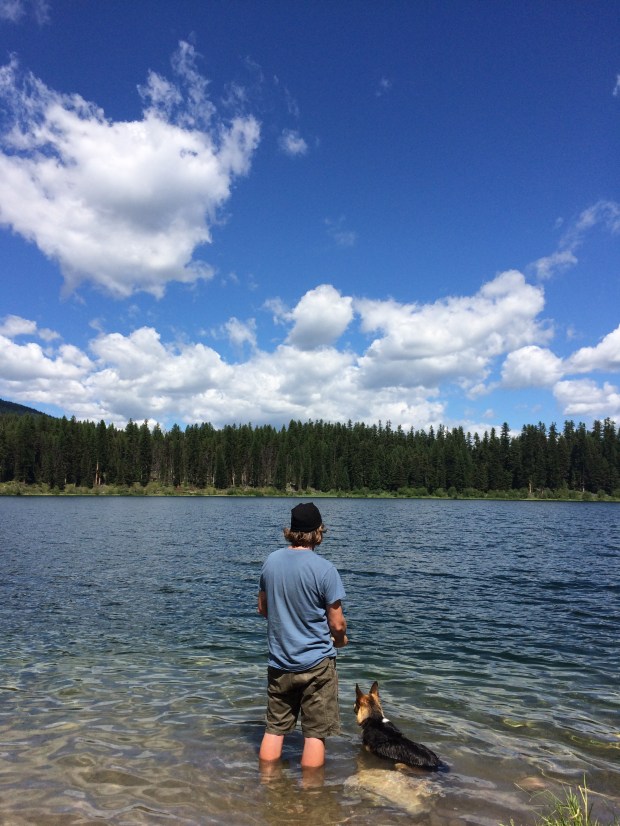
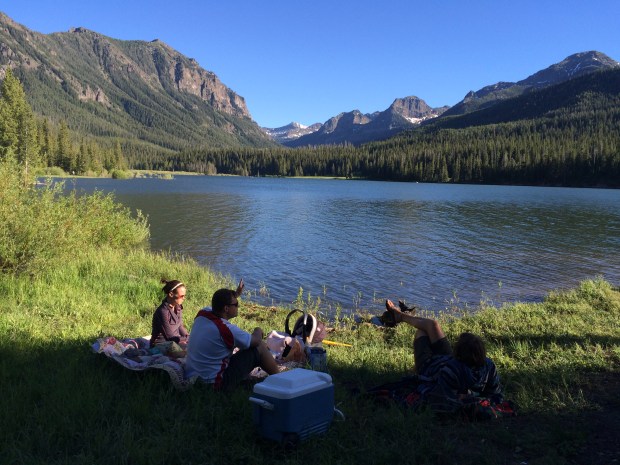
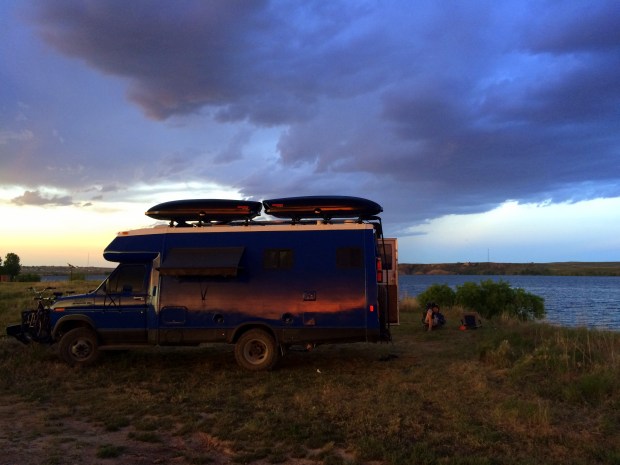 That time we lived on a lake
The very best part of an off-grid traveling life is that we get to try out being locals in towns all over the states, every day! We’ve really enjoyed the simplicity and flexibility it affords us, not to mention how inexpensive it is to visit new places. We can wake up in a city one day and in the woods the next. I can’t believe I waited this long to figure out that this was possible.
A lot of people are curious to know if we feel anxious about boondocking, especially in towns or populated areas. At first, yes, we were very aware of the fact that we were on a street and in an unfamiliar town. We took a very long time to find a spot, and when we found one we were careful to stay quiet and keep a low profile. After we understood the rules, though, and got a feel for what worked best for us, that completely dissolved. Now what’s remarkable is that we’re so used to it that when we close the door, we’re just home. We watch movies, listen to music, have friends over when we’re in town, and pop right out the back door in the morning to walk to a coffee shop or let the dog out. It’s so exciting to wake up in your own house, cuddled up to your person and your pets in your own warm bed, and in those first few seconds not to remember where you live!
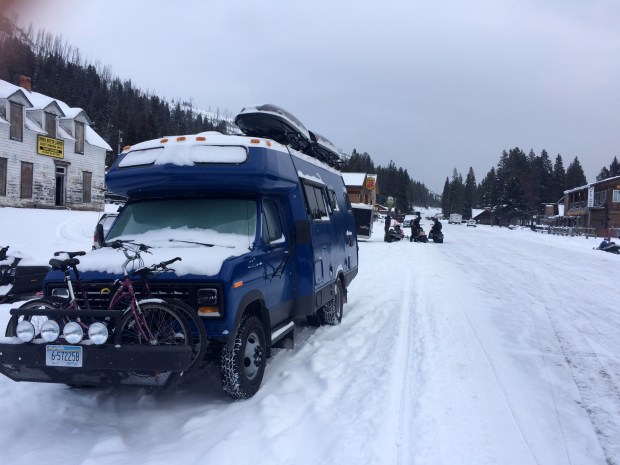 Cooke City, Montana. . . The morning we woke up to the roar of a town full of snowmobiles!
Every day really is a new adventure. And we’re ready to see what tomorrow will bring!




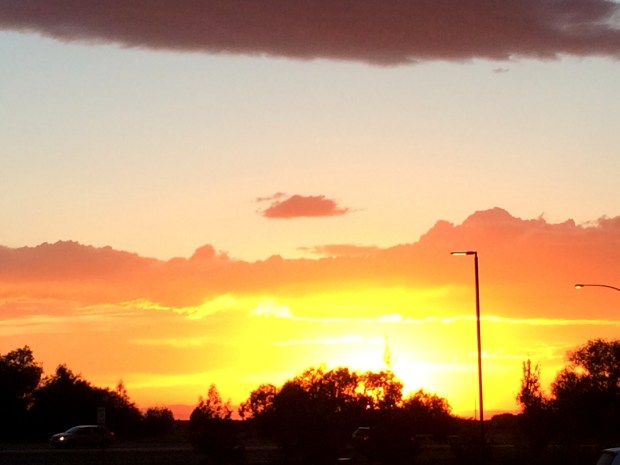
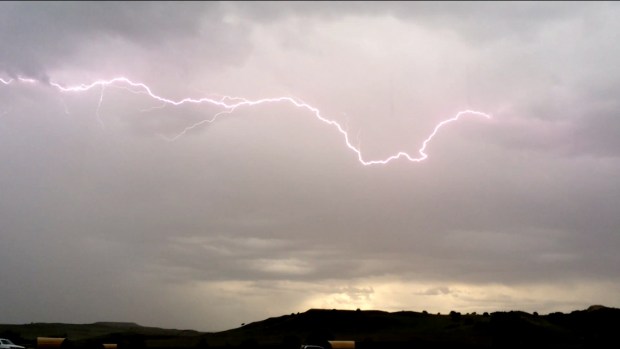
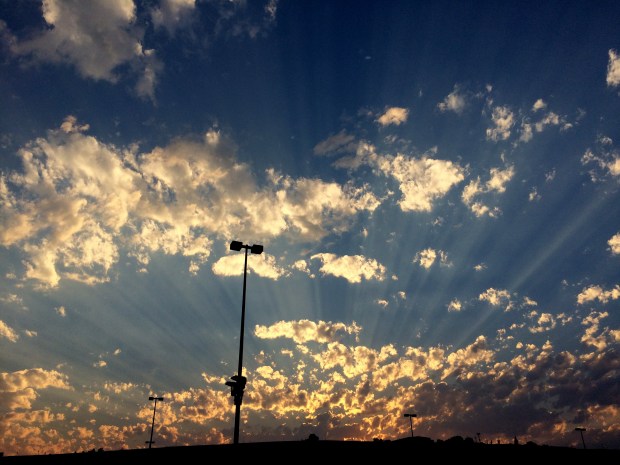 This picture was literally taken from the Home Depot parking lot.

















































 Blue Turtle Crossing