Have you ever heard of a Chesapeake Start?
Well I can’t find anything on the internet to support that this is a thing, but here’s what I can tell you. Somewhere along our travels, someone told us about a “Chesapeake Start.” He said that when Lewis and Clark would leave for a long journey, everyone who was going on the trip would pack everything up and travel a mile down the road, then stop and stay the night. Once they had set up camp, they would quickly discover what necessary items they’d left at home, so the next day they could easily return to their home base and get what they needed for the long trek ahead. We love this idea in the context of Turtle travels. . . especially since in the scenario we get to be Lewis and Clark. 🙂
On our exit from Bozeman into our first wild winter weather in the Turtle, we’re especially happy that we opted for the Chesapeake Start. During our stay in Bozeman, Andy did a whole bunch to prepare us to be a Turtle For All Seasons, but there’s so much you can’t know to prepare for until you’re into it. So knowing that all Andy’s tools were only an hour and a half away, we left Bozeman on Sunday and drove to Yellowstone National Park!
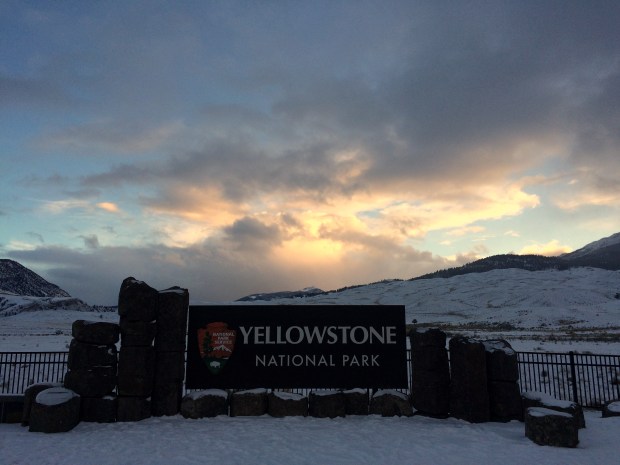

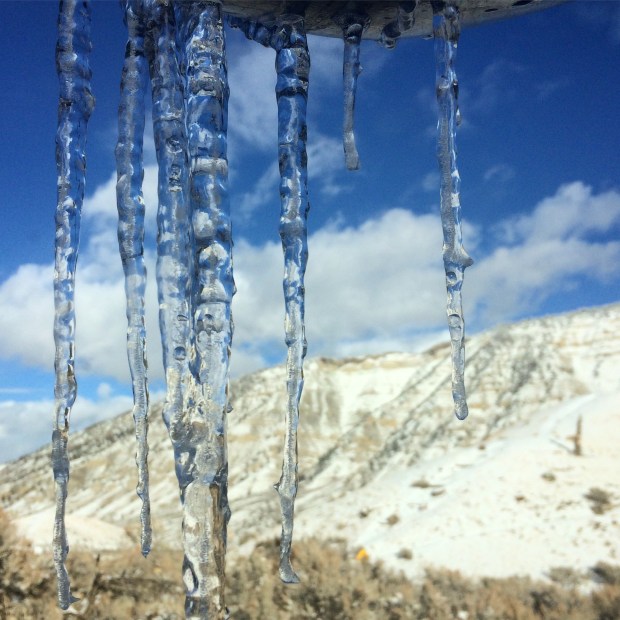
We arrived in Yellowstone mid-day, and it didn’t take long for the temperature to drop. Of course this time of year in Yellowstone is cold and icy, and this is the longest amount of time we’ve been completely off-grid in freezing temperatures! We’re still working out the finer points of living entirely from solar, so boondocking proved more challenging than ever before. Especially since we get so few hours of sun in these winter months and the sun we do get is weak, we had to really conserve our light and heat usage, as both are powered with the house batteries charged by the solar panels.
We were happy to have lots of blankets that evening. . .

And to see sunshine in the morning!
This isn’t the first time that I’ve been thankful that Andy is an engineer, and a motivated one at that. At the campsite, out in the wind and snow, he wired up a second alternator that he’d been working on and hadn’t yet completed, and got us extra power using wizardry and magic, and I think a little power from the engine.
We knew it would be cold in the park in November, and also that we’d be a little more limited in how much of the park we’d have access to. I’d done some research before we visited Yellowstone about its off-season, and here’s what I found:
- The majority of the park is considered “closed” from early November to mid-April. That means that all the roads are closed except for the road from Gardiner to Cooke City. (And during the winter season, all roads out of Cooke City are closed save that same road back to Gardiner.)
- In mid-December the park opens up to “oversnow” travel, which means you can only access the park by snowmobile or snowcoach.
- In November and the beginning of December, the northern portion of the park is still open to visitors, and since it’s the off-est of the off-season, you have the place pretty much to yourself!
We’ll definitely return to check out the rest of the park when it warms up, but in the meantime, we found November to be an awesome time to visit the park!
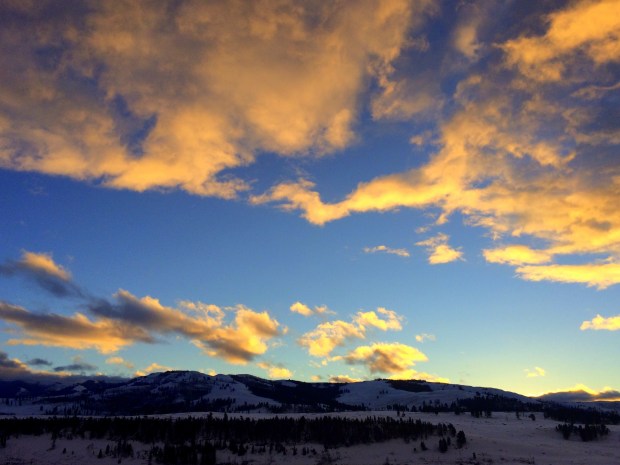
Here’s what you can do in the park in November:
- Mammoth Campground is open year-round, and much easier to get a spot this time of year. We only had two neighbors the whole time we were there!

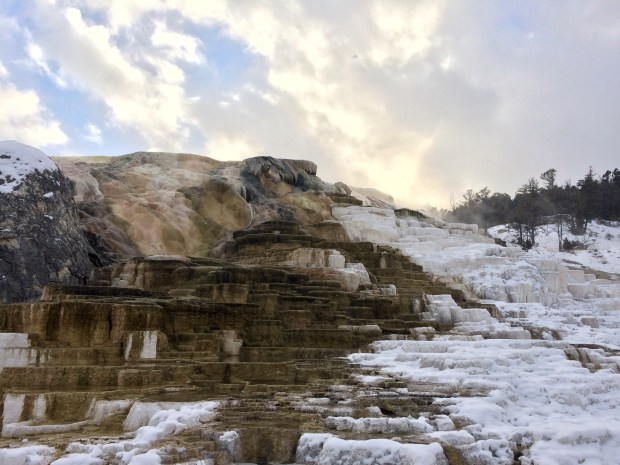
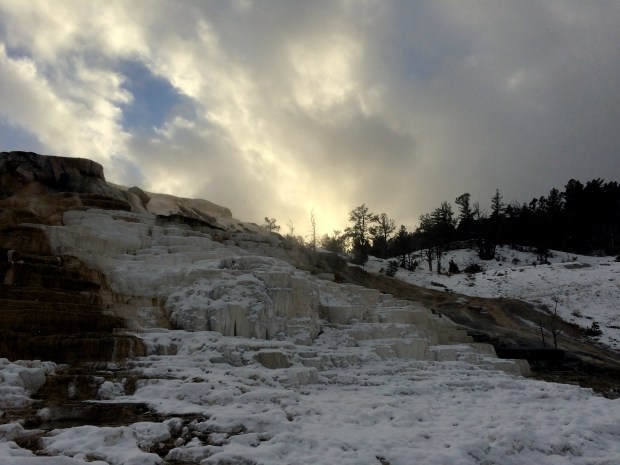
- Mammoth Hot Springs and the Albright Visitor Center are right next door to one another and both are also open year round.

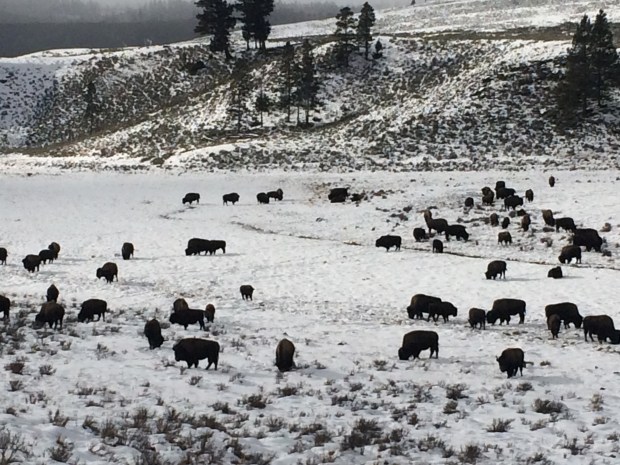
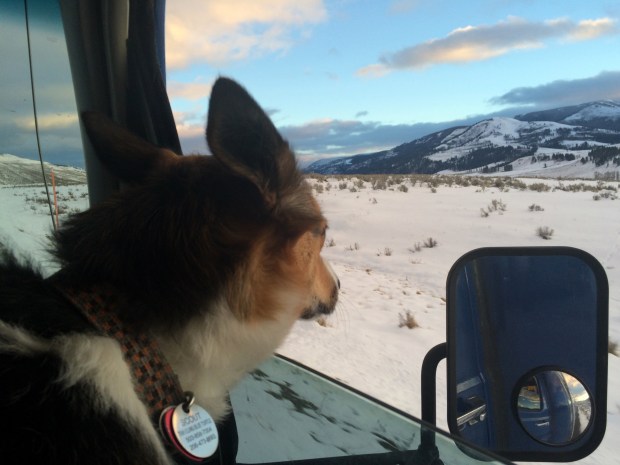
- The animals are out in droves and grazing so close to the main road! We saw hundreds of bison, antelope, elk, deer, bighorn sheep, a few coyotes, and the sweetest little light-footed fox you can imagine. (My favorite, but don’t tell the other wildlife.)



- The Boiling River is also open year-round, and in my opinion, it’s best in winter. . . since that’s when I went, and it was awesome. I can’t imagine a more surreal and magical time to be submerged in a river than a snowy November. The Boiling River is a swimming spot at the confluence of the Gardiner River—which is of course frigid this time of year—and the Boiling River, a hot springs which reaches up to 140 degrees. You wade down to where the two begin to mix comfortably, and you’re in an outdoor hot tub in the middle of the snow and mountains! The steam pours and curls off the water, and the Boiling River gushes over the rocks and iced plants in a bubbling hot waterfall tumbling into the cold river. You’re sitting in the middle of it all, in one of the man-made terraces, adjusting your position to accommodate the sometimes burning, sometimes freezing, mostly perfectly-cozy warm water flowing past your body. We splashed and floated, counted the dozens of elk grazing on the mountainside, avoided staring at the high school couple making out near us, watched the shadows the sun cut through the steam, and laughed at how crazy it was to be swimming in a river in the mountains of Wyoming in December. We stayed for hours and hours, the final hour a procrastination knowing how cold we were going to be once we stood up and waded up the river back to our clothes! (I’m not going to lie; the walk back out was brutal. But it was so so worth it!)
- If you’re planning to go, it’s not marked on the main road, so park at the lot just north of the 45th parallel, near the Montana/Wyoming border. It’s a straight, level hike along the Gardiner River, just 1/2 mile to the spot where the Boiling River converges. It’s all well-marked. My main recommendation is to bring water sandals. . . as you get in, you’re so cold and then so hot, trying to figure out where the separate currents are, that the slippery rocks are just another inconvenience that could be avoided with good footwear.
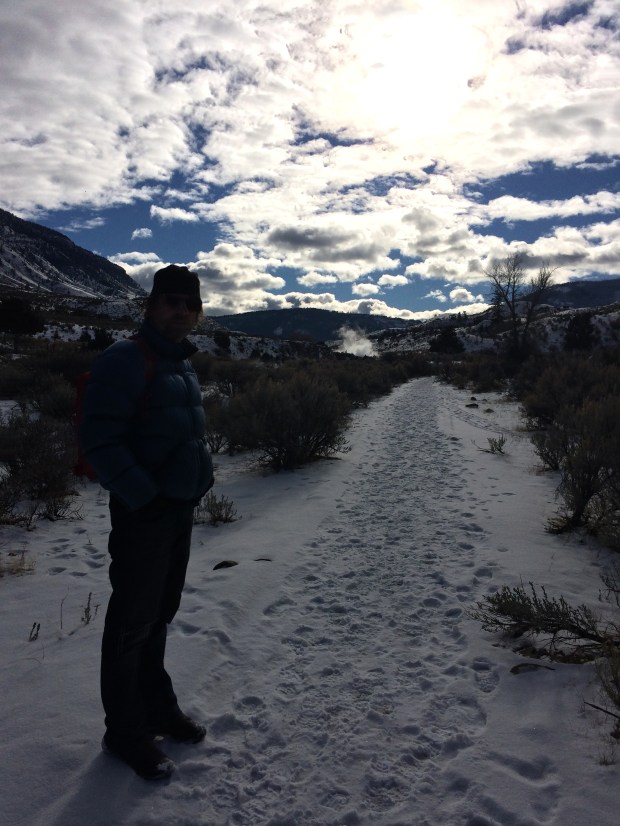

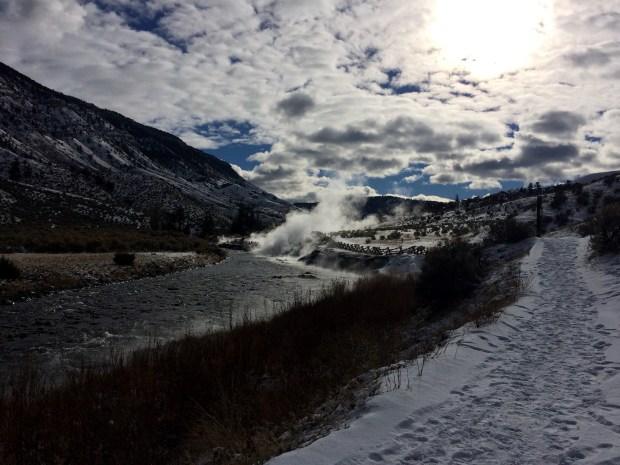


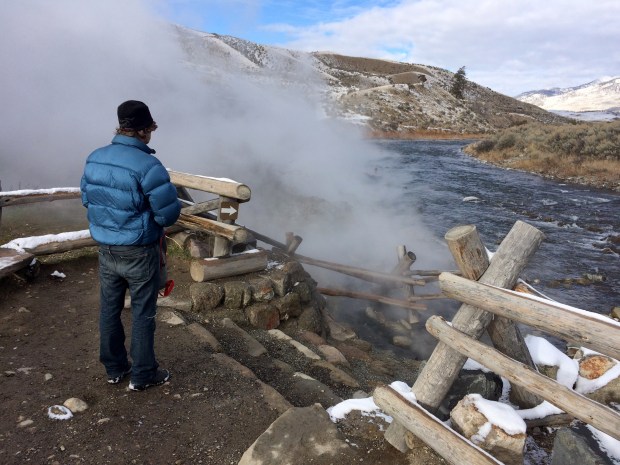
- Lots of hiking. While we were there the snow wasn’t deep, so we were able to hike around without our snowshoes to lots of nice spots. If we’d spent more time in the park (a week when Andy wasn’t working so much), there were portions of the park we would have loved to have snowshoed through. Next time!
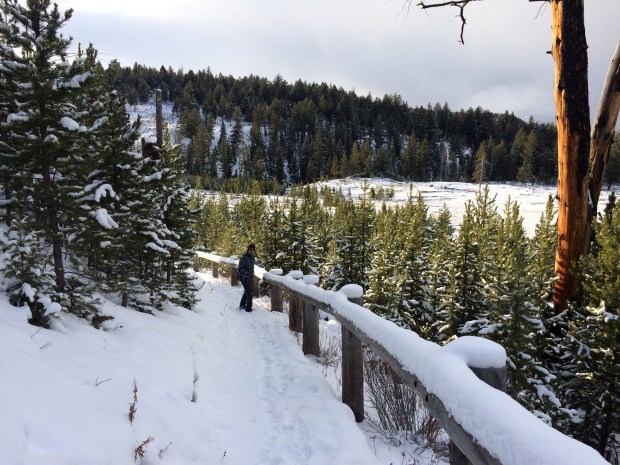
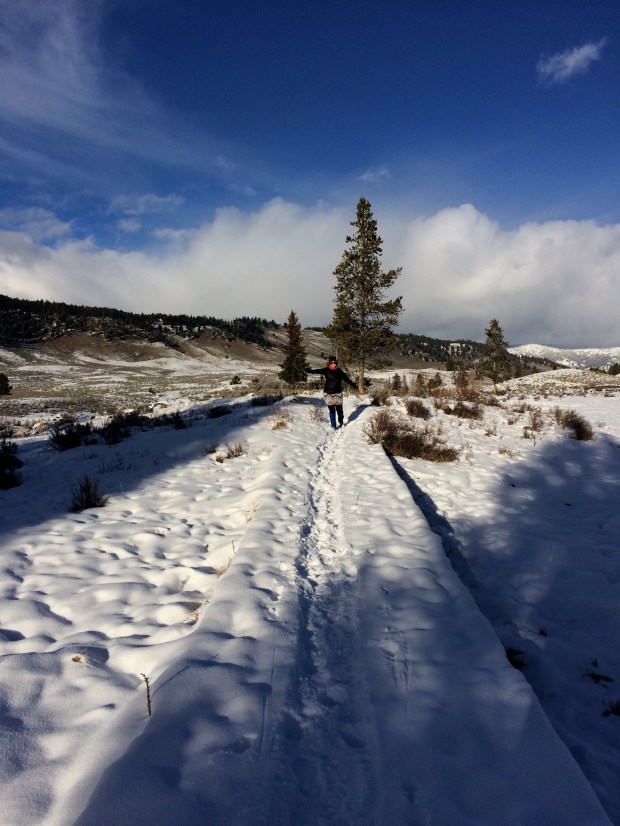
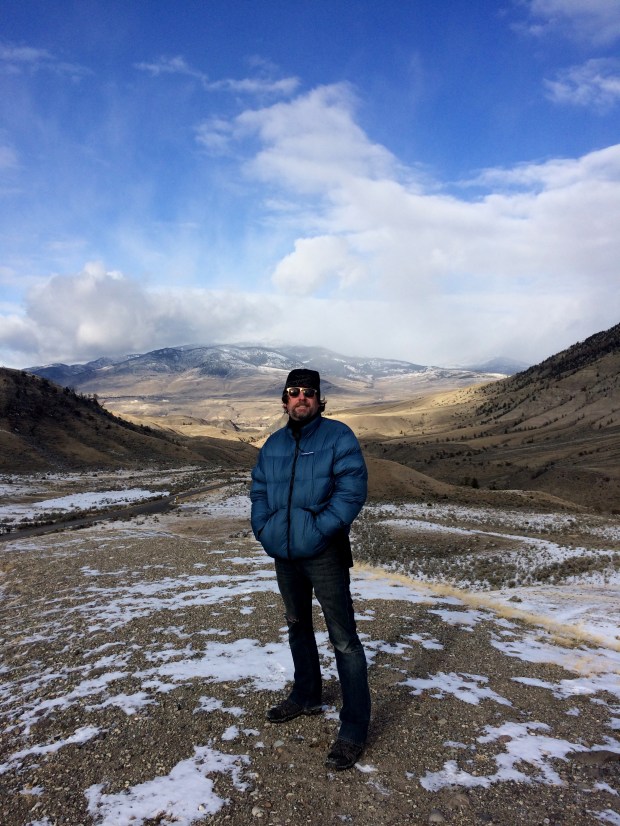
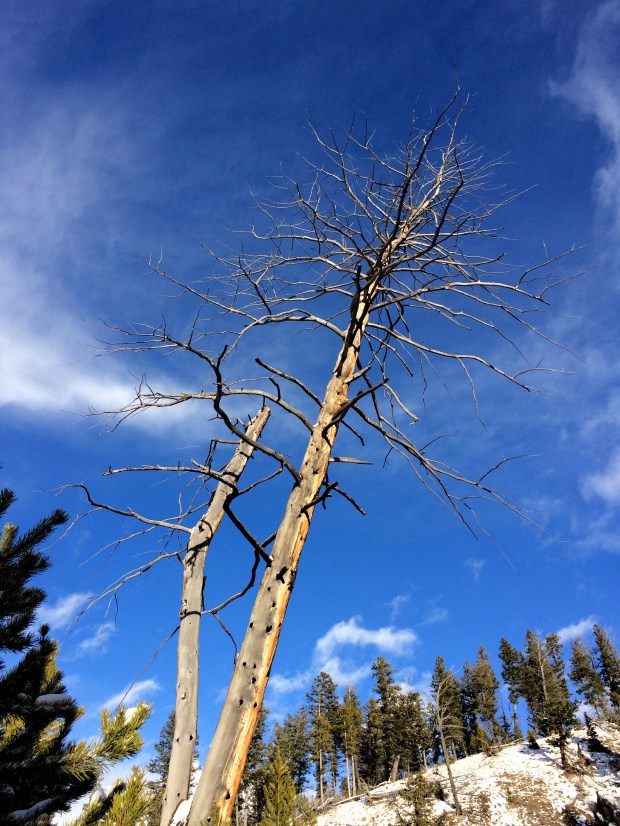
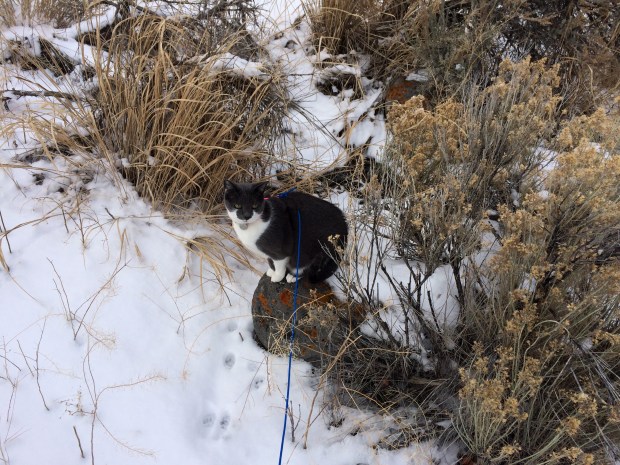

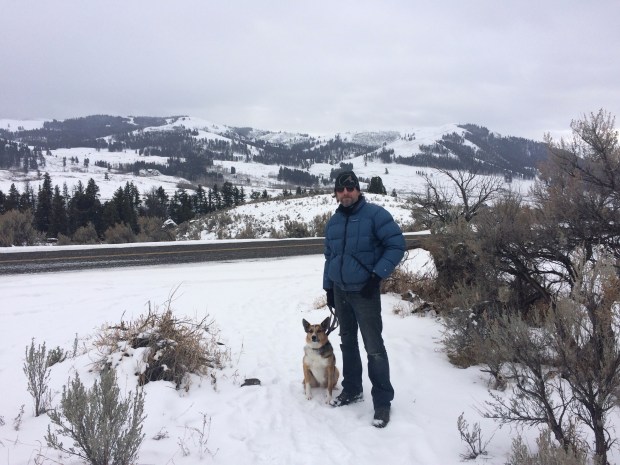

We spent so long in the Boiling River the day before we left that we didn’t have as much time as we would have liked to see the east side of the park. We decided to drive the distance up to Cooke City, stay the night and then make the drive back the next day to see the landscape and animals from the east gate back to the north entrance. We got to Cooke City right at dusk, and at almost 8,000 ft. elevation, the snowy mountain town was a twinkling haven in the middle of the frozen wilderness. We parked on the street, and woke up the next morning to find the streets bustling with people, all preparing to ride their snow machines, or zipping down the street on them! It was so much fun! Apparently when they close all the other roads into town for the winter, the snow machines (I guess they call them”sleds” now) can go nearly anywhere they want, and they do.
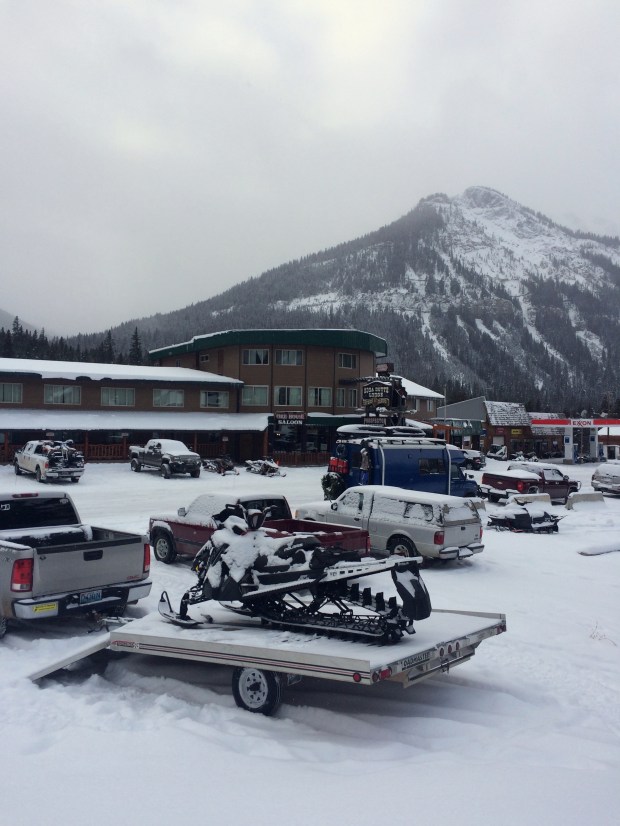
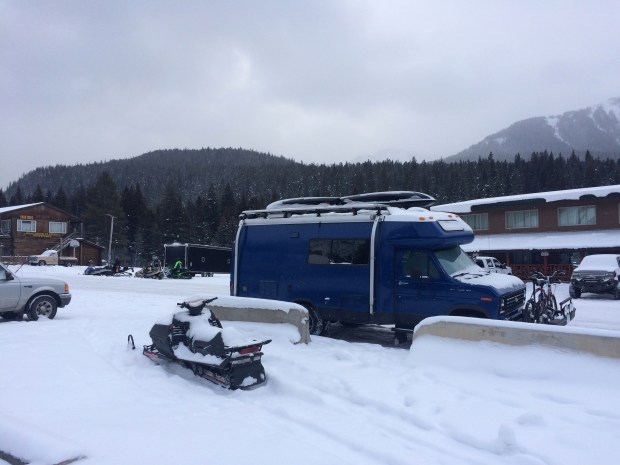
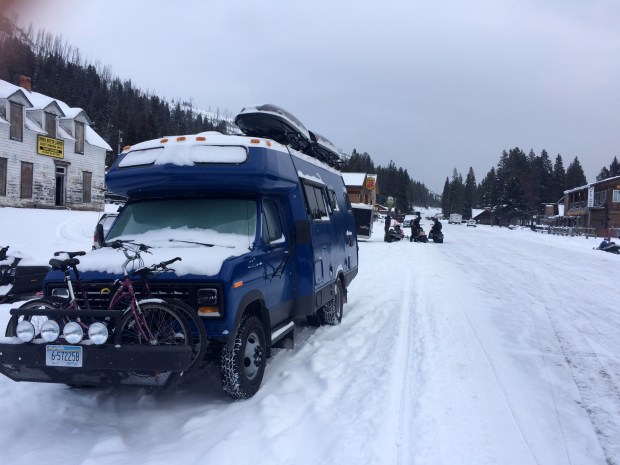
Everyone was having such a great time! And super duper nice.
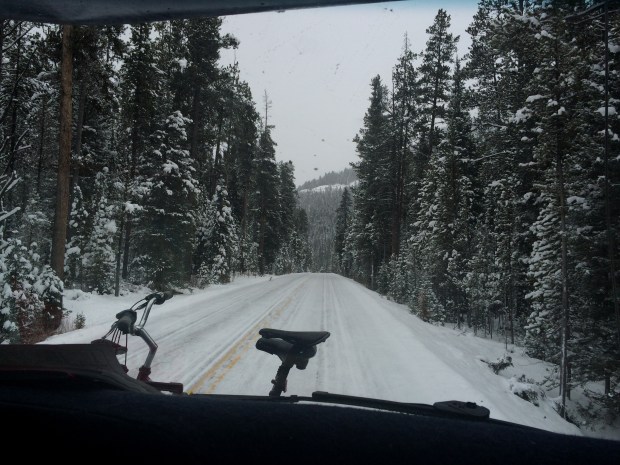
We had coffee and hot breakfast at a friendly bakery that was also half snowmobile shop, and drove back through the park in the snow. We saw almost every animal on our wish list, and even after we left the park we saw a bald eagle and a moose!
The week was packed full of adventure, and that was just on the North road! Lewis and Clark would have approved. And they would have been especially pleased that, since we utilized their Chesapeake Start, we were able to take our frozen tanks and campsite-rigged alternator the short trip back to Bozeman where we can make the necessary updates. And then we’ll be ready for whatever weather we feel like driving into! Woohoo!
 Blue Turtle Crossing