project

The Road to Alaska – Part 2: British Columbia, Eh?

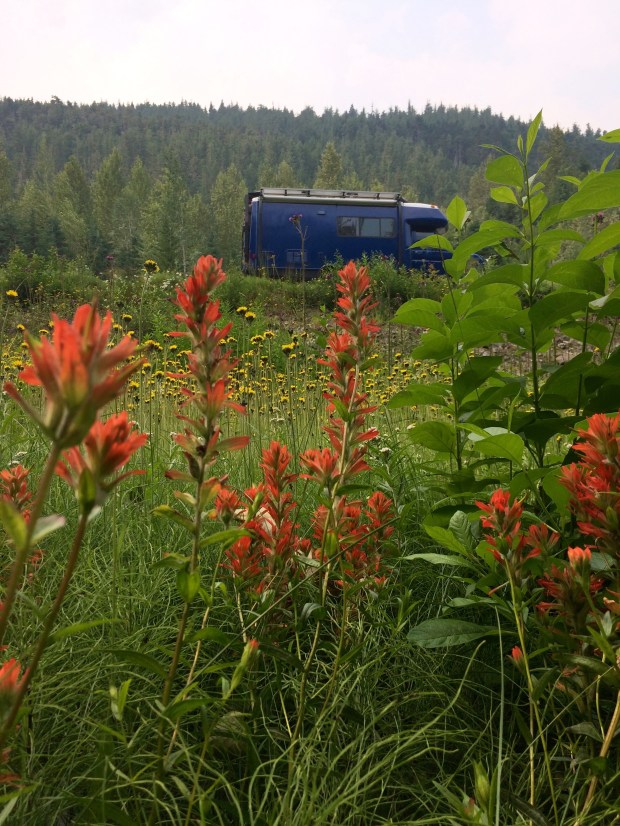
Greetings from Beautiful British Columbia!
IMG_6107

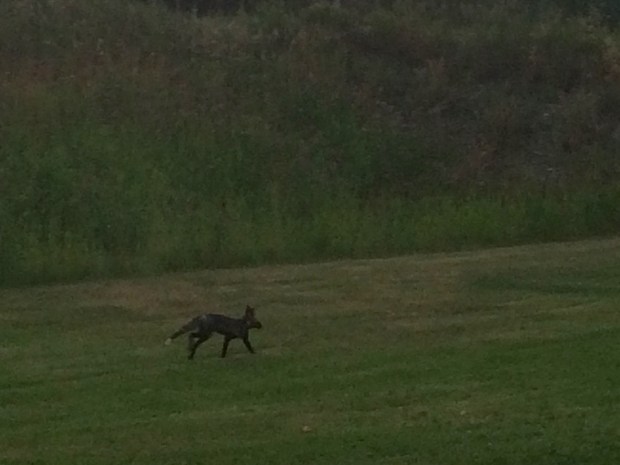
It’s been an exciting first few weeks in Canada as we make our way north to Alaska. We’ve covered some ground and have been really enjoying watching the landscape change and become less and less familiar. The road signs are more frequently featuring moose, and though we haven’t yet spotted one yet, we did see a sleek little silver fox slinking around a park as we pulled in for the evening in Prince George! So that will tide me over for quite some time.

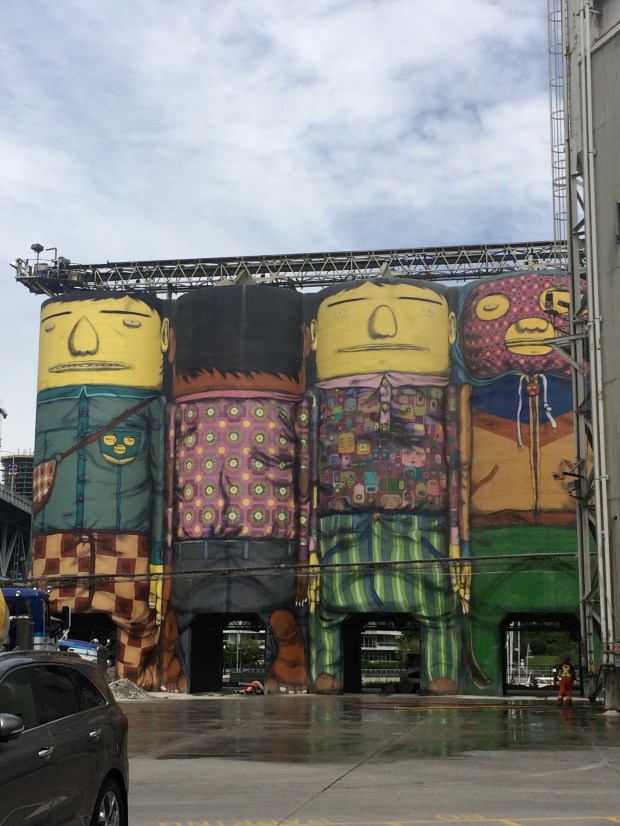
Our first adventure over the border began in Vancouver, BC. I briefly mentioned our stay in Vancouver in my last post, but now that I have all the photos uploaded I thought I’d fill you in further on the fun we had while we were there. Especially since, despite the fact that both of us have lived in Seattle, neither had ever been to nearby Vancouver so we were really looking forward to seeing the city.
IMG_5964

One of my favorite resources as we visit new cities has been the online Atlas Obscura site, which suggests interesting attractions that aren’t found on most other “Things To Do In _______” sites. This time I told Andy that I was going to take him on a surprise tour of Vancouver and lead him to all the spots I thought sounded fun without telling him what they would be. He’s a good sport and agreed!

Our first stop was the VanDusen Botanical Gardens, which was one of the loveliest botanical gardens I’ve ever visited. The grounds are enormous, and the circuitous layout lends itself to a full day of wandering through paths and gardens reminiscent of Alice’s Wonderland.

IMG_5885 (1).jpg

Check out this delphinium garden:

IMG_5917

IMG_5919.jpg

Ok so if I’m being honest, the gardens were lovely, but the real reason for going here was something that’s been on my to-do list for as long as I can remember:

IMG_5953

A hedge maze!

It’s one of only six Elizabethan hedge mazes in North America, and it was so much fun and more challenging than we gave it credit for going in.

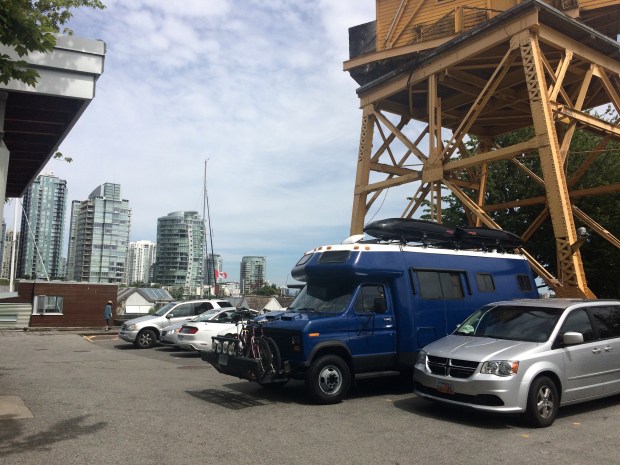
Afterwards we went to the Granville Island Market, which my uncles in Seattle had highly recommended to us. It took us some time to find a spot to park, and it came in handy that Andy is a wizard. Look at this park job!
IMG_5960

We wandered around the market and were totally in love. It was a bustling throng of people and the wonderful smells of hot espresso, cooking meats, fresh flowers and herby soaps. After picking up some darling wood map pins, we had lunch at a tiny Chinese restaurant downtown and then hit the road for the next stop on the secret tour . . .

IMG_5983

The Steam Clock in Gastown. It’s a working steam clock built in 1977, which you can look inside and see the gears and levers moving. We were even there to hear the hourly musical whistles blow. In honor of the clock, we popped into nearby Steamworks Brewing Company for a beer.

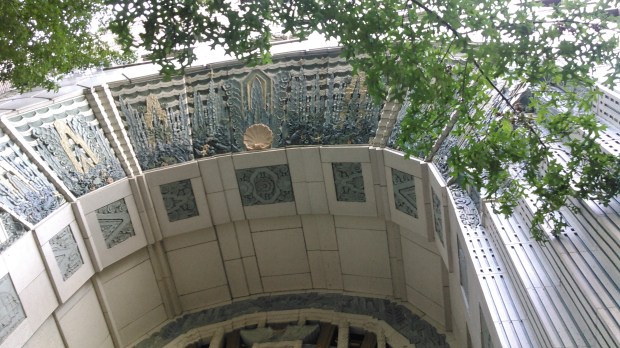
Next we walked a number of blocks to the Marine Building, a remarkable Art Deco building that was conceived to look like it had risen from the sea, and it truly does. I mean it looks like something from a movie . . . oh wait, it is! To my fellow nerds out there, it’s also been featured in a number of movies, as the Baxter Building in Fantastic Four and for The Daily Planet in Smallville. Fun!

KIMG0583.jpg

KIMG0584.jpg

Afterwards we walked to see the Digital Orca sculpture, which we weren’t able to see up close due to an event that had the terrace roped off. (If you look closely, you can see empty glassware at the tail.)

KIMG0587.jpg

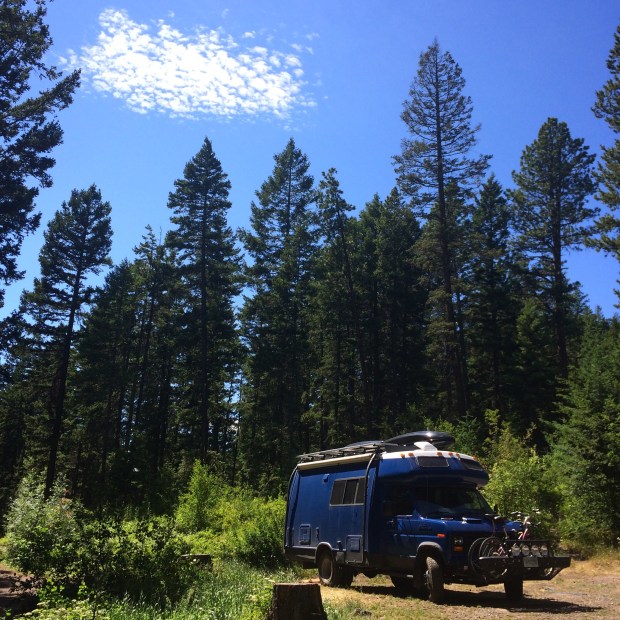
It was a full day in Vancouver, and we left very satisfied. But after over a month staying in cities, I’d been so looking forward to getting back outside, and was happy to arrive at our next campsite at Gillis Lake. We stayed two nights, and got plenty of reading and swimming done.
IMG_6067

IMG_6039

IMG_6059

IMG_6014

IMG_6053

IMG_6004

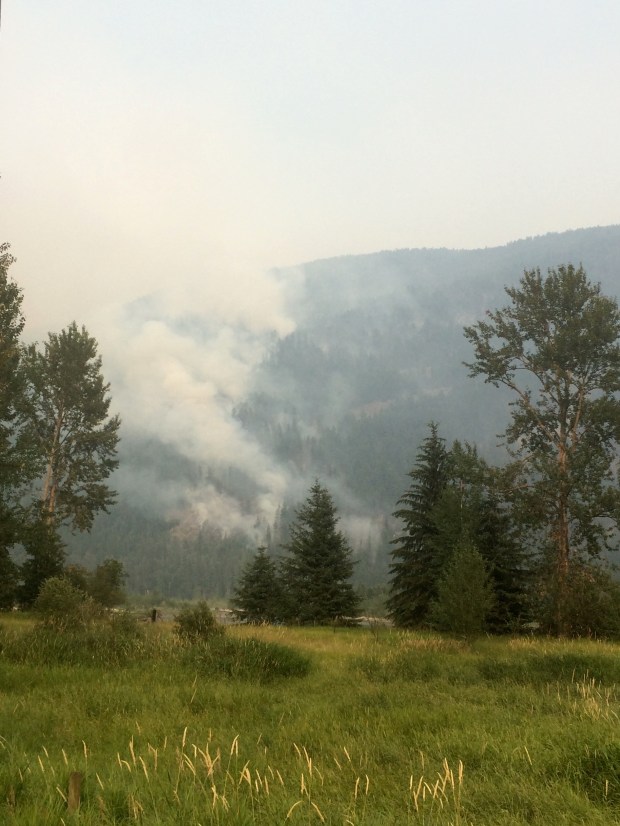
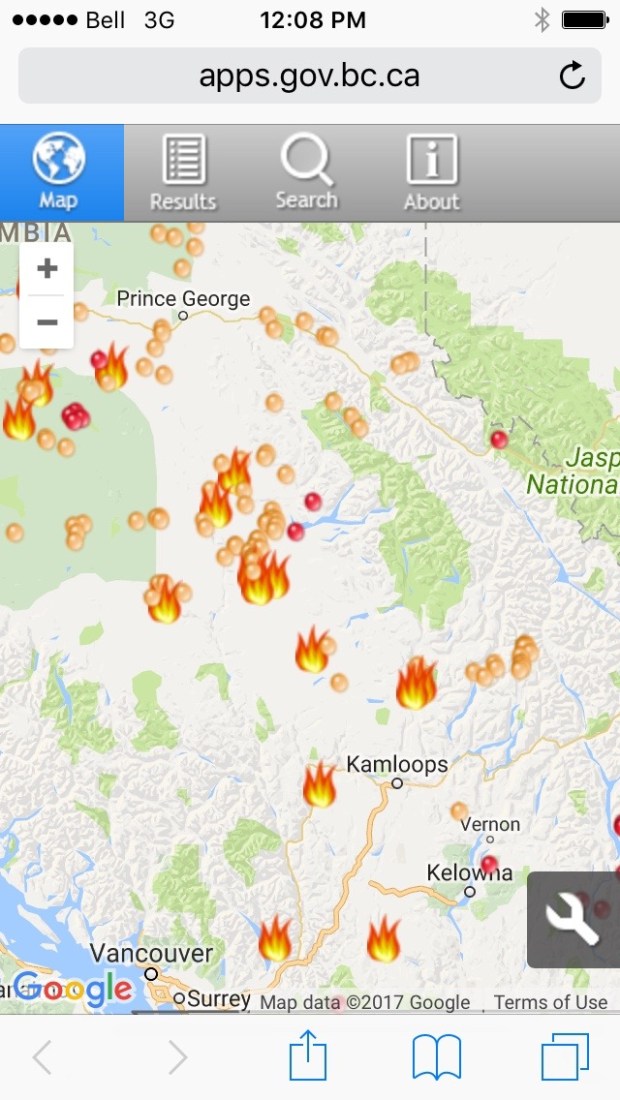
When we woke up the morning of third day, the entire forest was flooded with smoke, which we later found out was due to dozens of forest fires throughout BC. A handful of towns had been evacuated, and the road we’d planned to take was closed. So we rerouted and drove through Kamloops to Prince George, windows rolled up to minimize our smoke inhalation. It was so thick my eyes watered, and you couldn’t even see the mountains beyond the freeway through the grey. And in the areas that we could see a fair distance, we saw fires licking the mountainsides. It was unreal.
IMG_6091

IMG_6076

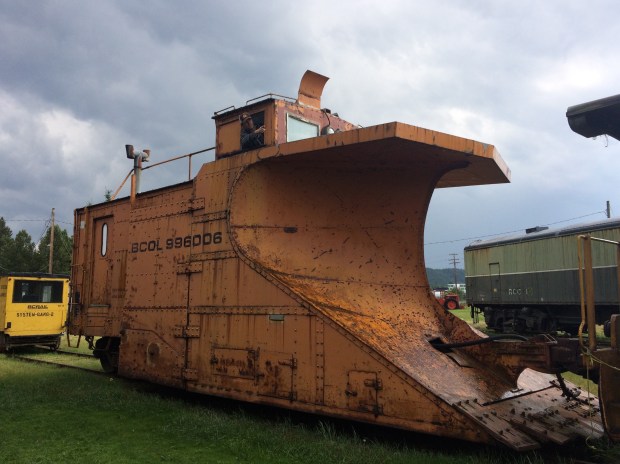
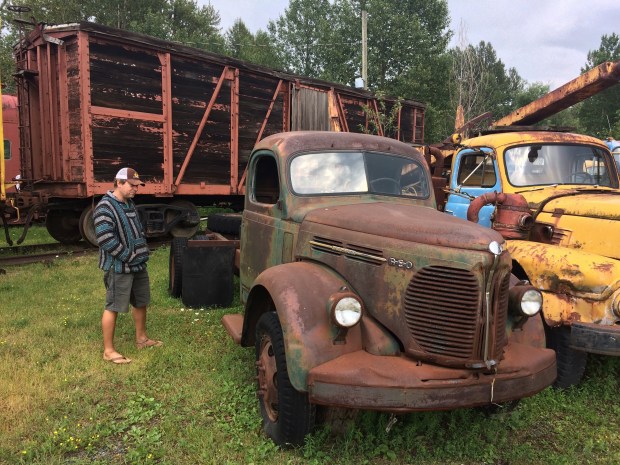
We spent a two days in Prince George, or “PG” as the locals call it. (Which is pretty cute for a city in Canada, where everything is sweet and friendly and very “rated PG”.) When we got to town, we went to one of the best Railway Museums we’ve been to so far, and that’s saying something! We go to a lot of railroad museums, apparently.
IMG_6181

IMG_6196

IMG_6205

IMG_6214

IMG_6230

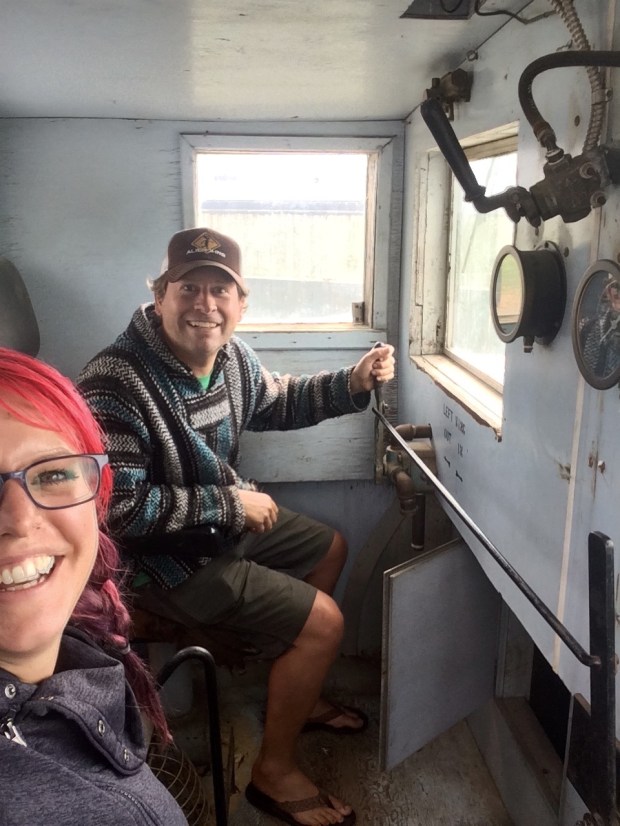
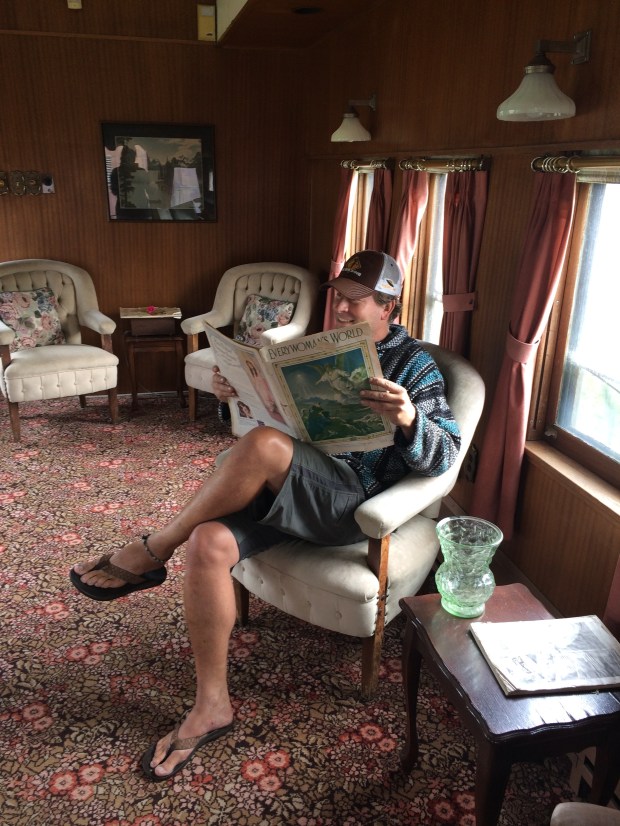
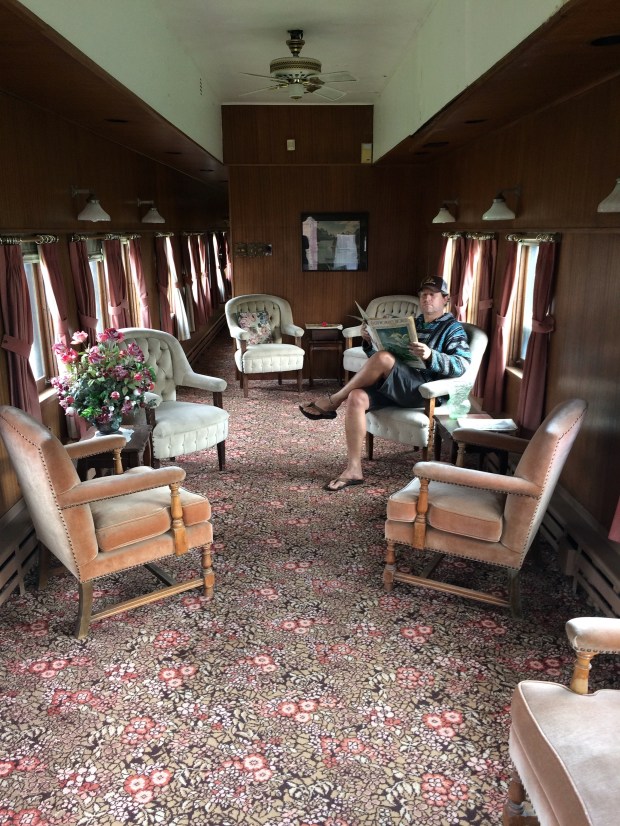
We rode the little train around the grounds, and got to go inside most of the cars and engines. Andy had more fun than all the other museum-goers combined.
IMG_6234

IMG_6251

IMG_6256

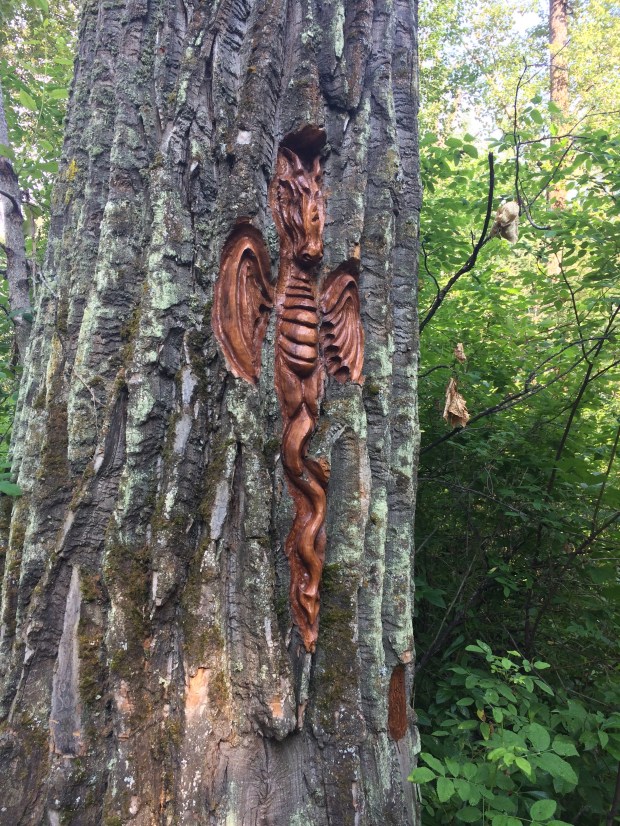
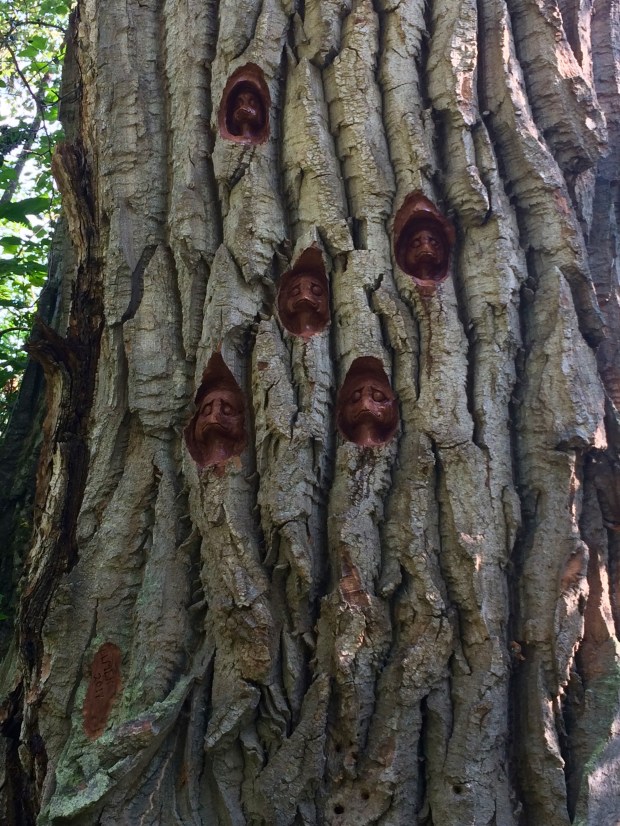
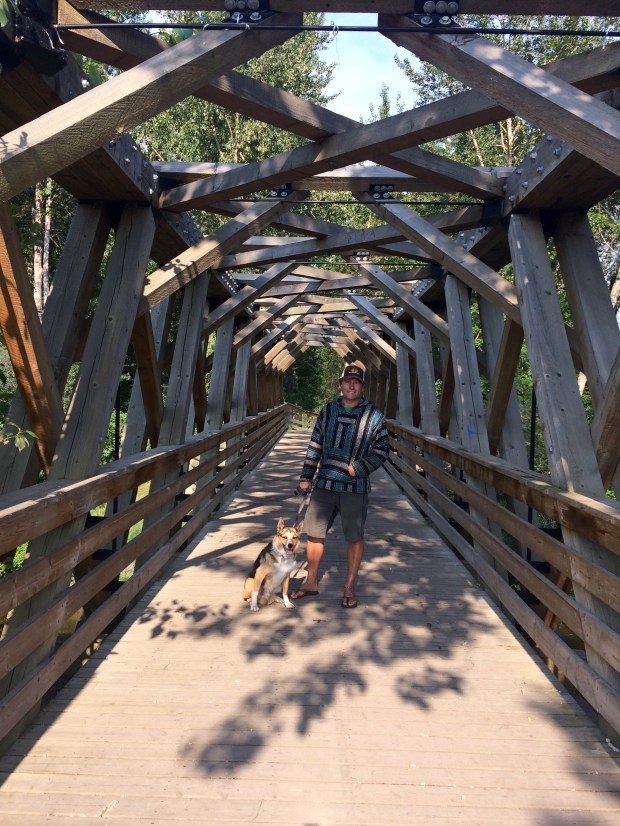
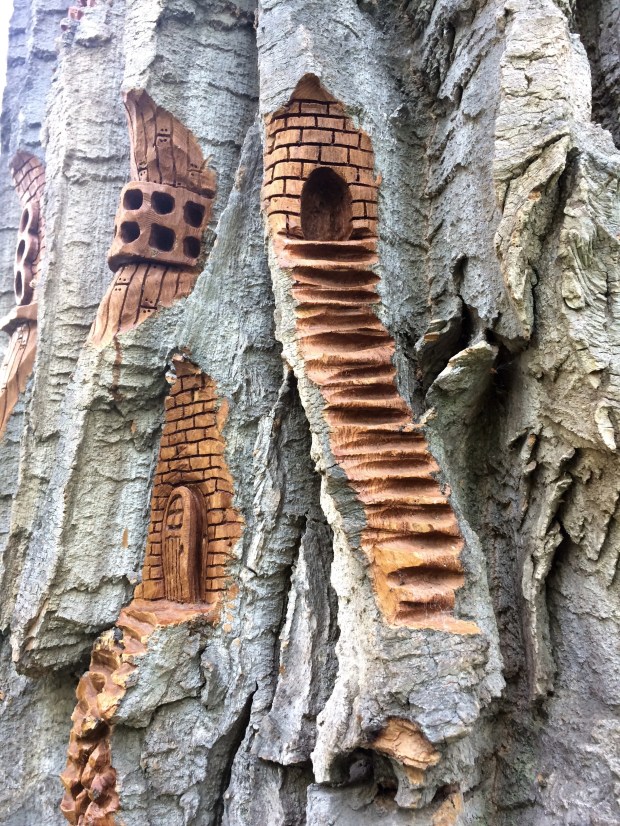
We stayed until they closed, then walked right next door to Cottonwood Island Park. I’d read that a local artist sculpted little pieces right into the trees, and as you walk through you can treasure hunt for them.
IMG_6320

IMG_6267

IMG_6274

IMG_6280

IMG_6282

IMG_6296

It likely comes as a huge surprise to nobody that my favorite was the gnome houses.
IMG_6308

We stayed the night at the park’s lot and that’s where we saw the silver fox!
IMG_6346

It’s a poor picture, but it was the best I could do at twilight while squealing with joy.

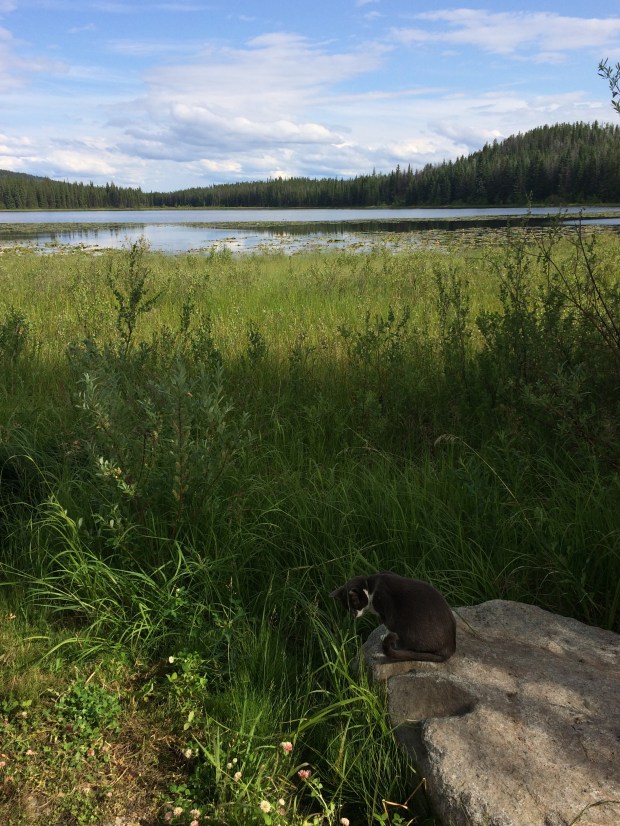
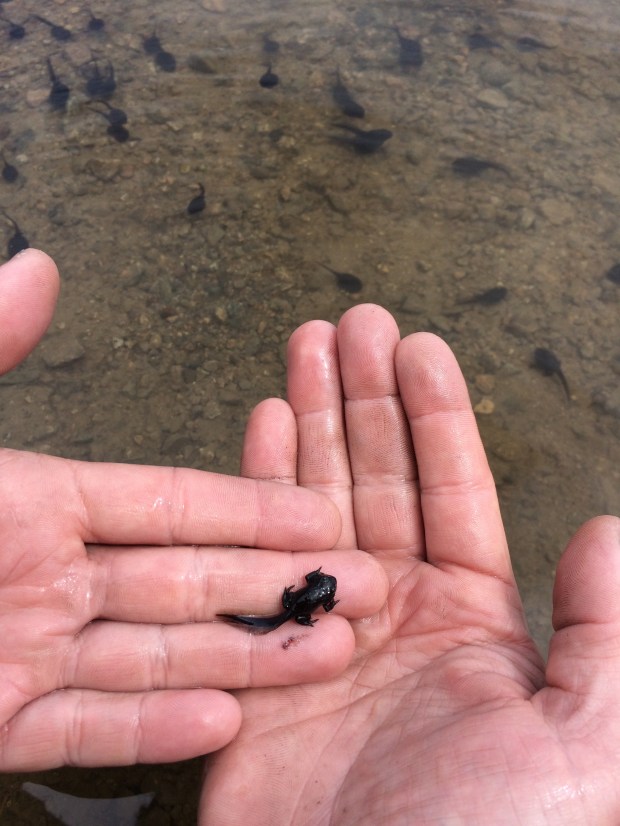
Over the next few days, we found ourselves in more picture-perfect campsites, all of which are free! We stayed a few nights at Co-op Lake, where we noticed a strange bubbling at the shoreline. As we got nearer to investigate, we saw that it was a massive mob of tadpoles!
IMG_6457

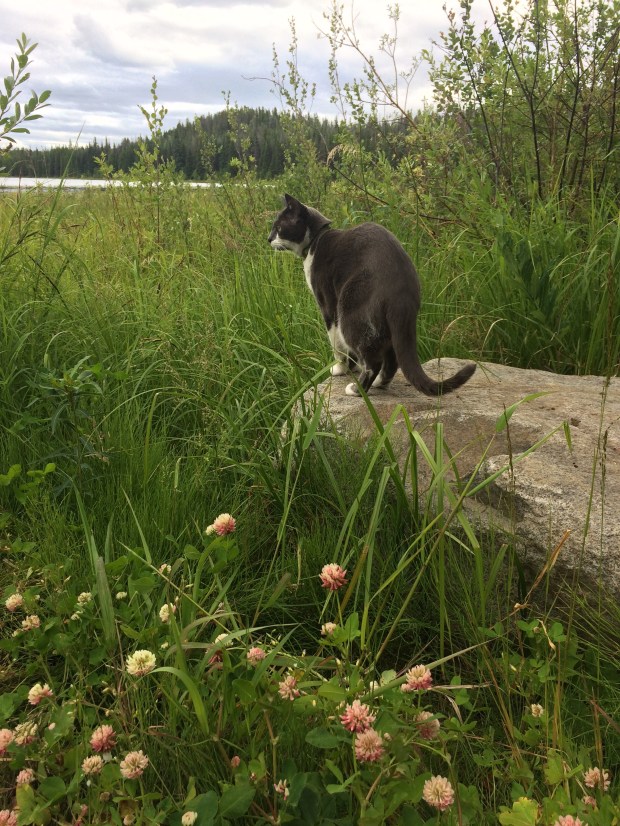
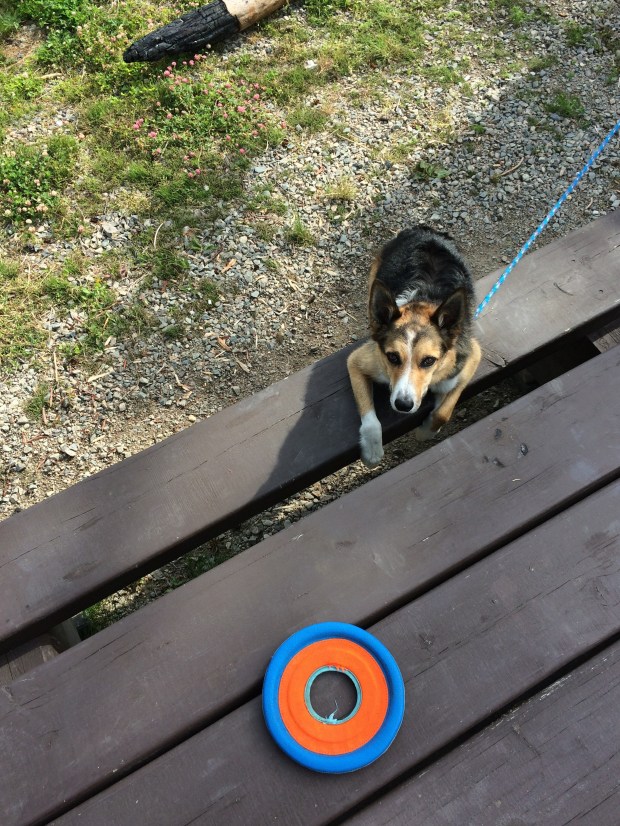
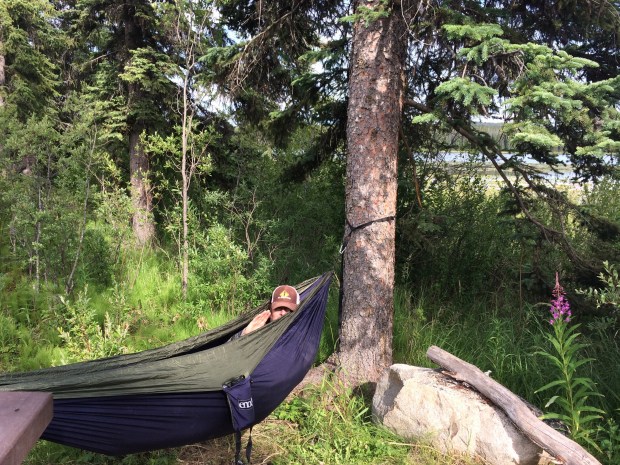
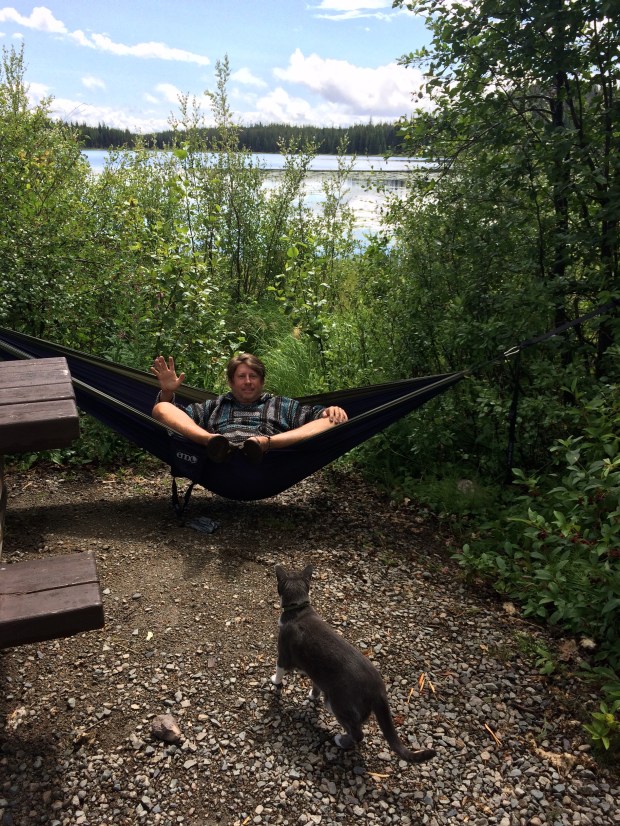
We all had a wonderful time there, reading, hammock-ing, swimming, fetching frisbees in the lake, pouncing on bugs, paddling out to the middle of the lake in our floaties and watching the clouds roll by.

IMG_6452

IMG_6449

IMG_6401

IMG_6424

IMG_6421

IMG_6461

IMG_6418

IMG_6417

IMG_6379

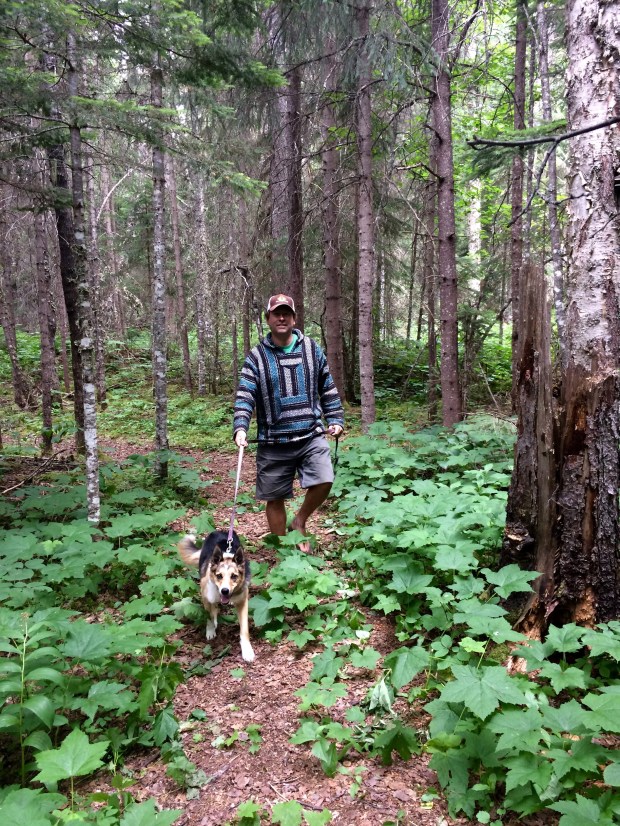
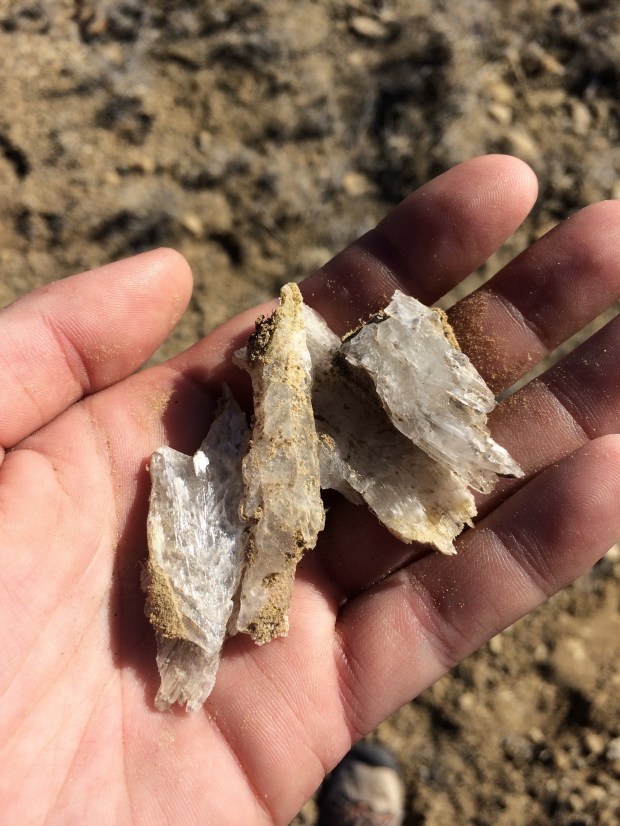
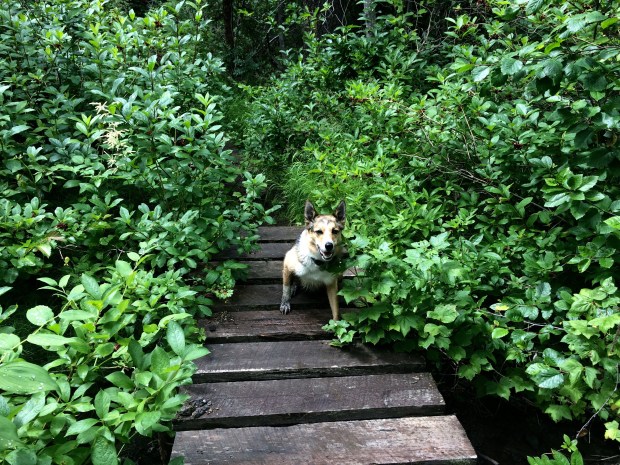
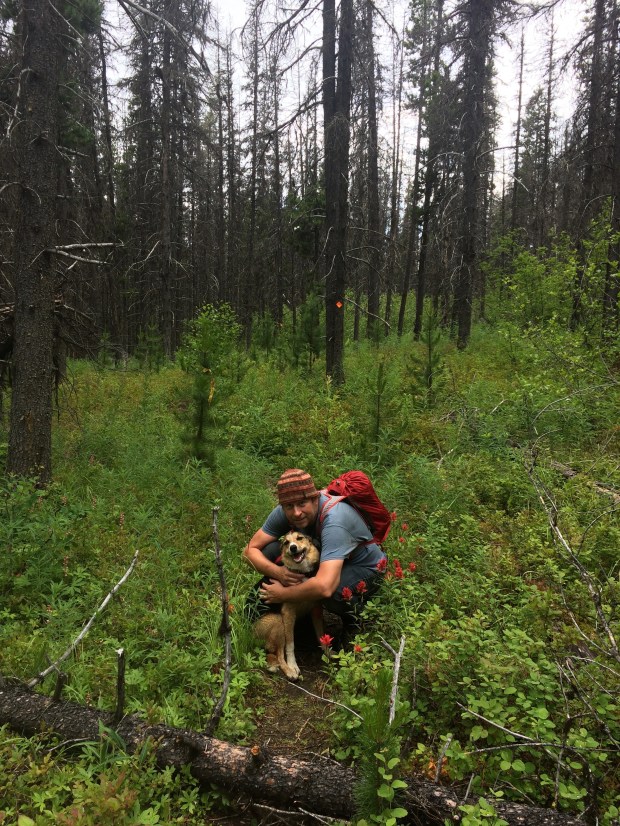
We then moved to another great campsite at the Eagle Creek Opal Beds, where we went on a gorgeous hike, hunted for—and found!—raw opals, discovered and ate the huckleberries along the path, and then hiked up a hill at midnight where we saw the Northern Lights flickering on the horizon. It was a pretty magical spot.
IMG_6492

IMG_6501

IMG_6530

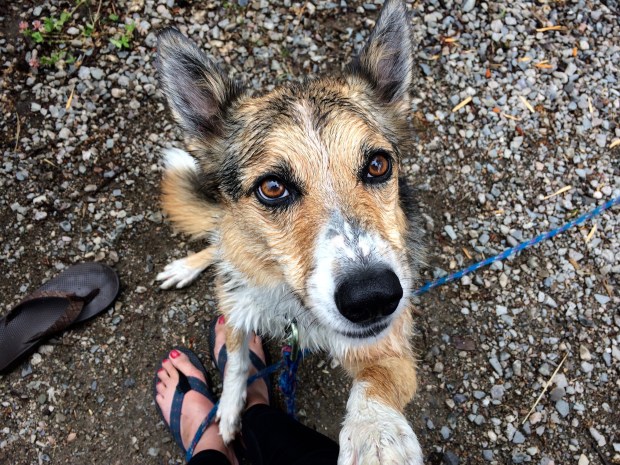
Scout even remembered how to pick huckleberries!


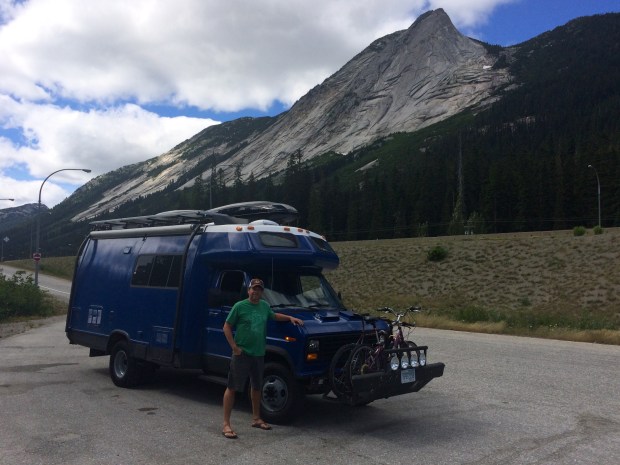
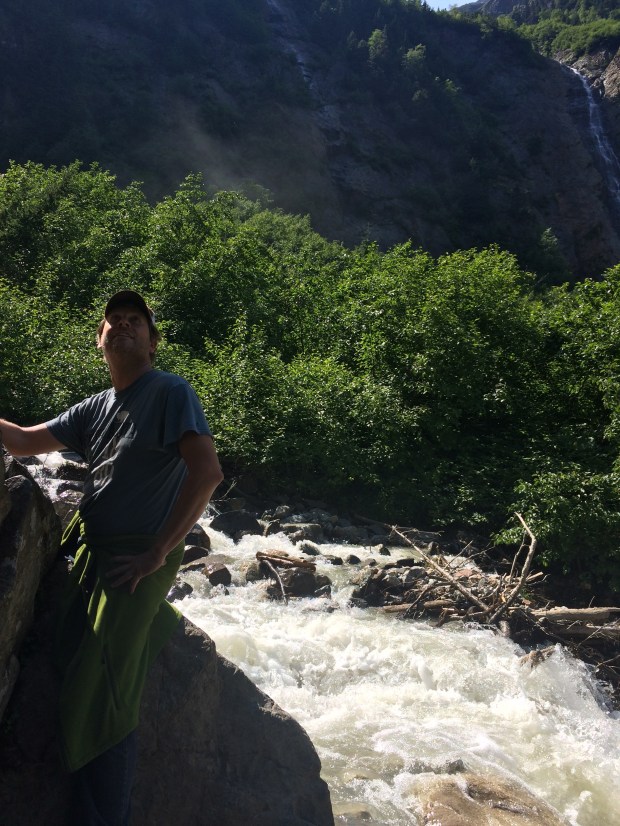
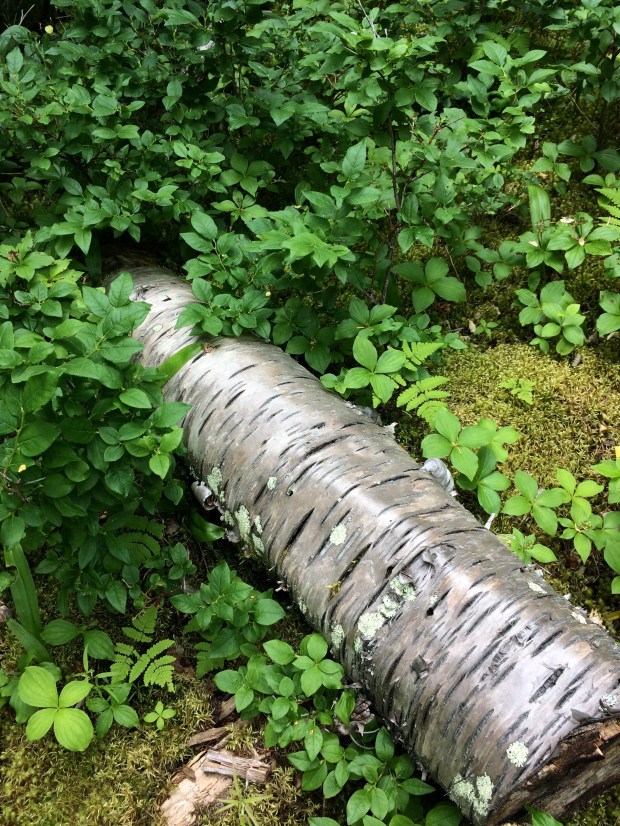
I could have stayed in any one of those campsites for weeks, but there is much to see in these parts, so we pressed on. We wanted to see Prince Rupert, a darling coastal town in northwestern BC, even though it was a few hours out of the way. On our way there, other things happened and they looked like this:
IMG_5971

IMG_6158

IMG_6149

IMG_5994

IMG_6326

IMG_6358

IMG_6467

IMG_6536

IMG_6583

IMG_6608

IMG_6616

IMG_6666

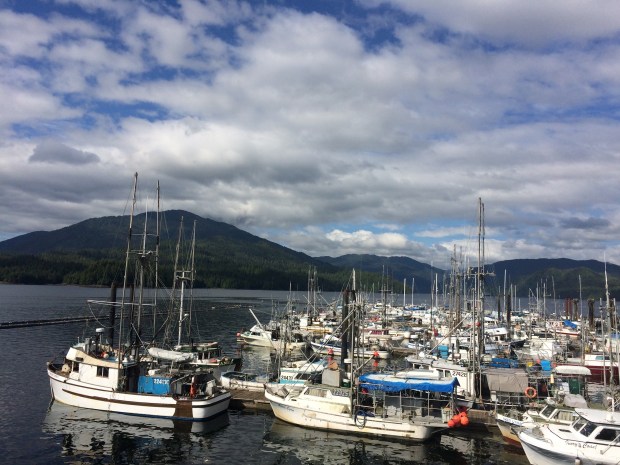
When we got to Prince Rupert it was a brilliant sunny day, which—we were informed by the locals—is not usually the case. We walked all around town, in and out of cute little shops, through the Museum of Northern British Columbia, and ended up on a bright patio overlooking the ocean.

IMG_6695

IMG_6688

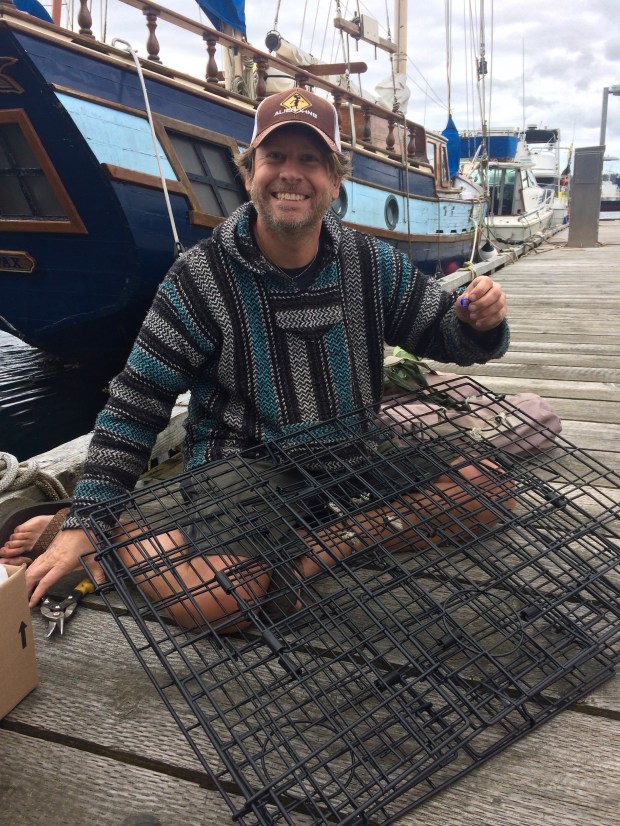
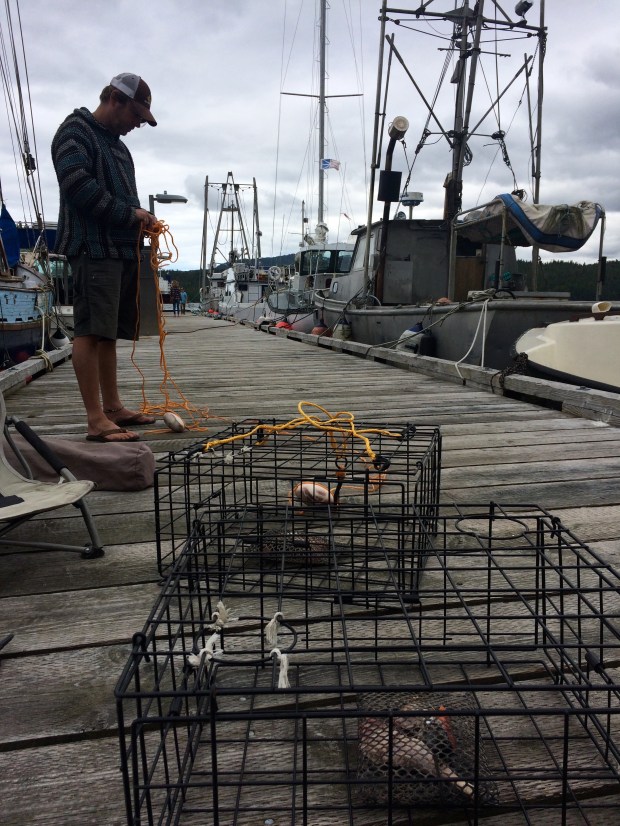
We looked down and noticed crabs walking along the ocean floor, and the next day’s plan was born. After all, we’ve been carrying our crab traps around for over a year!
IMG_6705

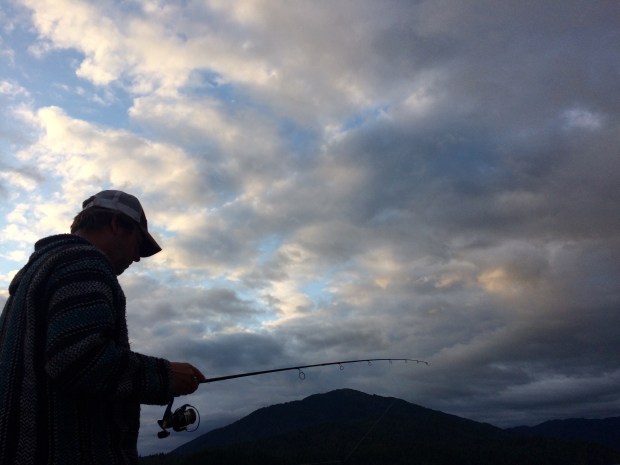
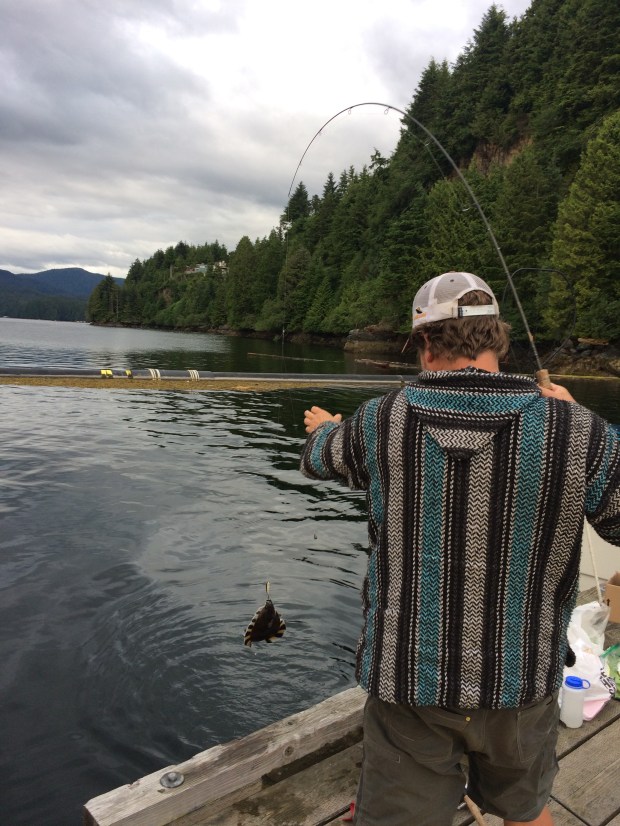
The next day we got our licenses and some bait, and headed down to the docks, where we discovered the depth off the edge was around 80 feet! We spent the entire afternoon into the evening sitting on the dock, chatting with locals, fishing, and reading books. We caught three crabs, one was a keeper, and Andy caught a small flounder.
IMG_6709

IMG_6764

IMG_6805

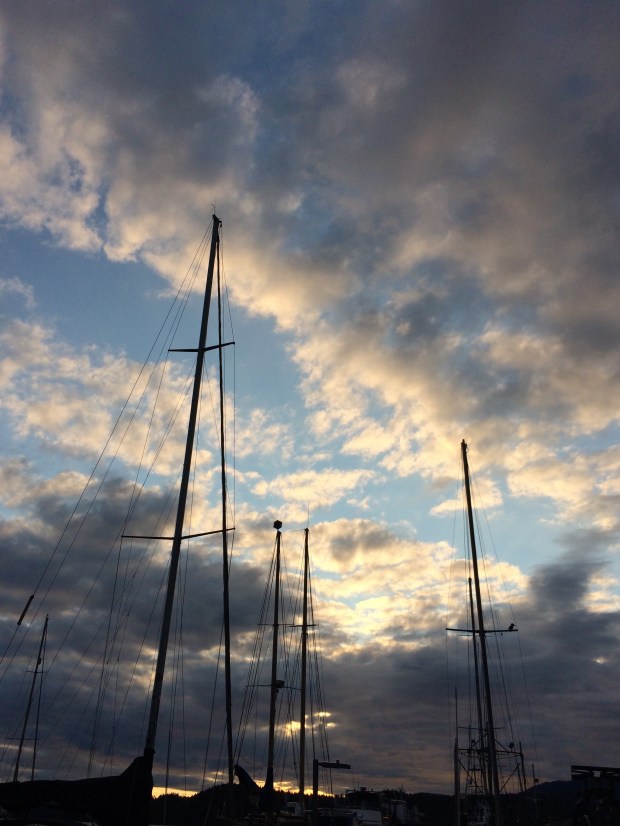
So all in all the day was a success, and as we packed up we were treated to a perfectly picturesque coastal sunset.
IMG_6822

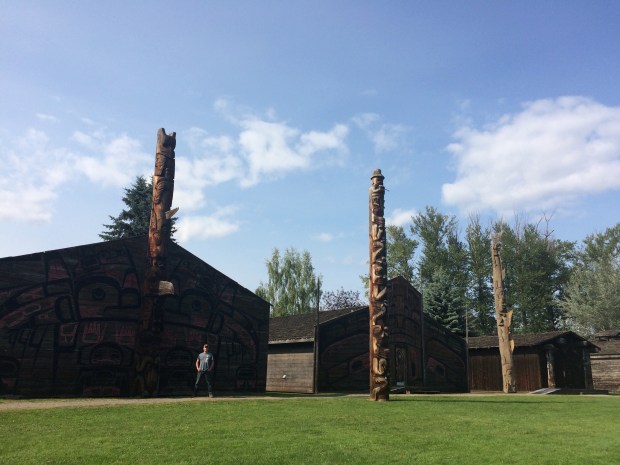
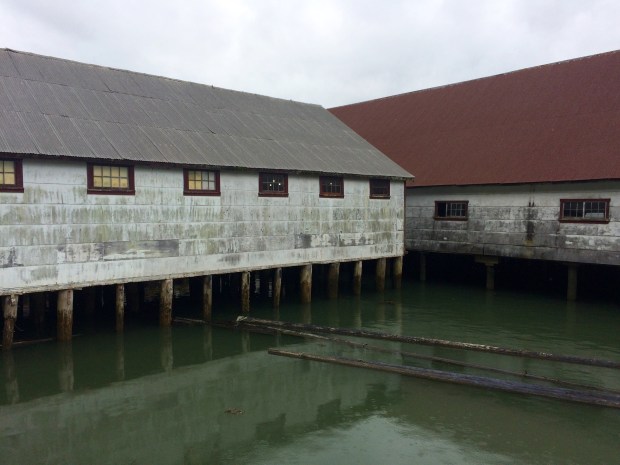
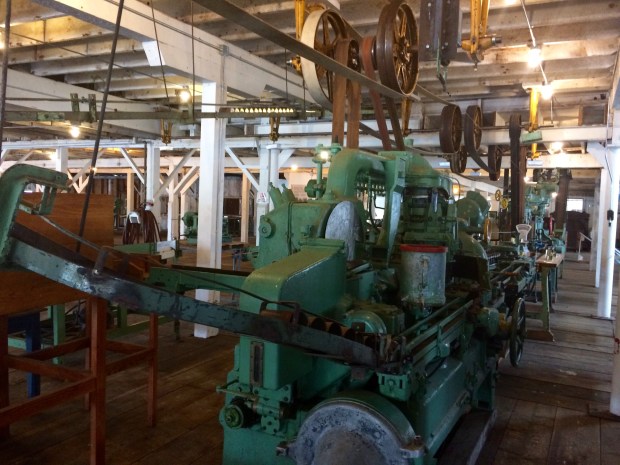
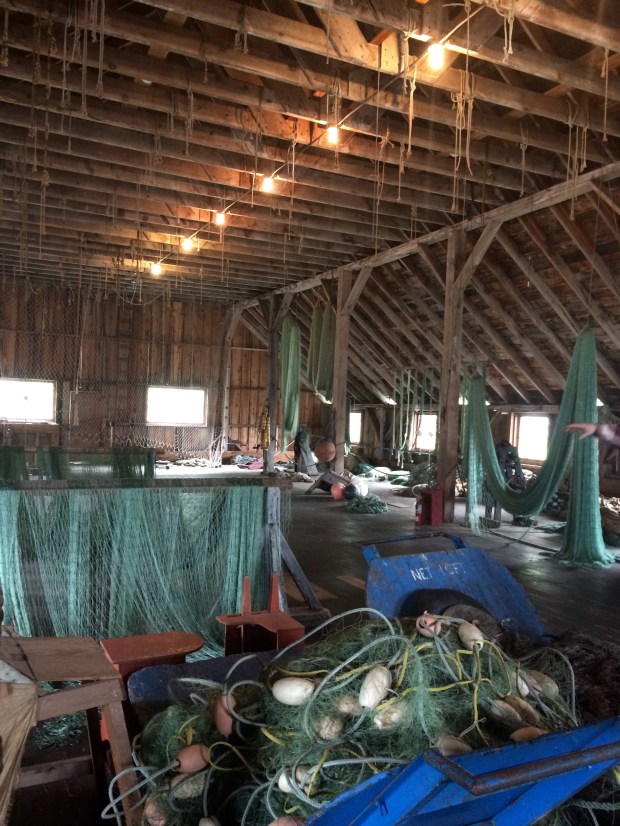
Today was our last day in Prince Rupert, and we visited the North Pacific Cannery Museum on our way out of town. We accidentally stayed three hours, and enjoyed every last minute.

IMG_6830

IMG_6833

IMG_6841

IMG_6843

We’re now back in Terrace, BC, heading north for some serious camping way-off-grid, so the next post will be on the other side of the wilderness when we have service again. And though the silver fox was a superior thrill, here’s hoping that next post will include some photos of a moose. 🙂


Let’s Refurbish a Van – Part 8: Hood Scoops (By Andy)

A post by Andy

{Modified the title theme some. We think of ourselves much more as a big van than a small RV. I now want to start prefacing this and future posts to be more representative of our self-image.}

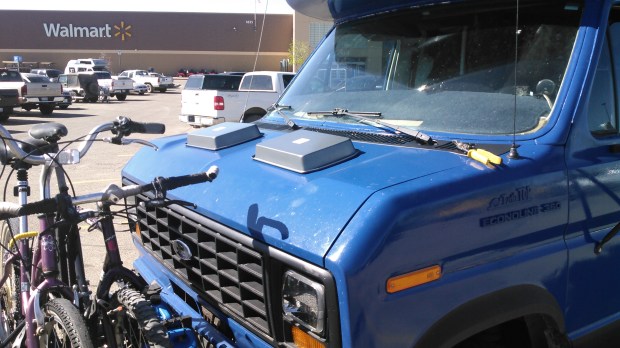
So, to the meat of the subject. I just finished our hood scoops! Why did I make hood scoops? Well, for one, they look pretty cool and I needed a prominent place to put my new go-fast emblems that I ordered from Amazon.

KIMG0530

Mainly, we are trying to get as much power out of the engine so we can get our heavy old self up the high steep hills. In that vein, I have been playing with the spark timing, carb mixture, and intake airflow. By tweaking and adjusting these parameters we are working to get the most power and efficiency out of our old engine. Specifically, advancing the timing can get the engine to produce more power, but too much spark advance causes engine problems—pinging and preignition. If the engine is cooler, one can run with more advance. Another way to look at it is that with a given timing advance, if the engine and intake air get hotter, then the timing is too far advanced.

Maybe a side note about my “go-fast” emblems. Car companies try to sell cars. Sometime fancy cars come with racing stripes, cool graphics, and badges on the side about engine stuff. A joke among car people is the question “How much horsepower do the stripes add?” The answer is, of course, none. But… they do look cool. Look around, they are everywhere: M3, AMG, Hemi, 440, HiPo. The only thing the badge or stripes could actually do is add an immeasurably small increase in drag, or some unneeded paint weight. They are simply for the people in the car next to you. All the same, they look sporty, so I bought some that state the displacement of our engine and say it is “High Performance”. What I’m saying here is they do nothing, but they truly do look great!

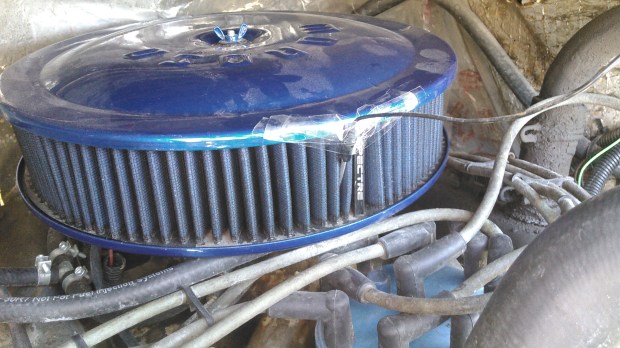
So, I wanted more air to get in and out of the engine compartment to cool the engine, and have the air flowing into the air cleaner be as cool (and dense) as possible. To make sure I had an understanding of the pre-hood-scoop environment, I first taped the probe end of my digital temperature gauge to the air cleaner. Over a few weeks in different driving conditions and different altitudes, we took notes about the temperature measurements of the air cleaner and air filter. You can see the wire to the probe, and the tape holding it in one location.

KIMG0451

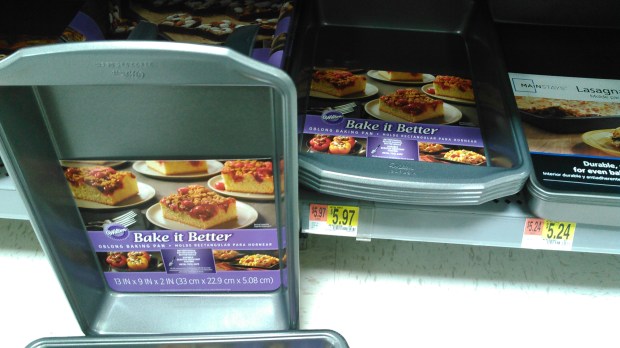
Overall, we are in the 150º–160ºF range under the hood after the engine gets warmed up and when the ambient temperature is in the 70º–80ºF range. So, to get more outside air in and more inside air out we need some kind of venting. I looked online, and $50+ plastic vents and scoops can be found, but they were not really van-sized, and seem flimsy. Metal ones can also be found, but are more expensive, and again, really don’t fit. Apparently there is an untapped market of people who want to mod 1985 Ford vans! (Investors be wary—the market may be small.) I finally hit on the idea that rectangle cake pans are about the size I wanted, and they are inexpensive, and they are made of metal designed to withstand 500ºF+. Going with this thought, while we were camping in El Malpais National Monument, I made some cake pan-sized cardboard mockups and spray painted them with a blue that I had.

Test fitting…

I thought that looked good, so a few days later when we were in a town, we got some cake pans.

KIMG0454

KIMG0455

One morning, a few weeks later, when we where camping at the Great Salt Lake, I got out the pans, tin snips, sandpaper, and primer, and got to work remaking our sweet cake pans into even sweeter performance hood scoops (please note the word play).

Here they are.

Test fitting.

We stashed them away for a bit and traveled onward. Another week later we had a free day while visiting our friends the Higdems in Kimberly, ID. I measured, moved, marked, measured, and measured and marked again. Then I started drilling holes in the hood.

Lots of little holes now!

After fitting and drilling the mounting holes, I now knew what piece of the hood (bonnet, for any Brits out there) to cut out. Out with the jig saw.

Another side note here: When putting the Turtle together, we set ourselves up with a few DeWalt cordless tools and the battery charger that plugs into a 12V cigarette lighter. The tool charger is now wired to our solar-charged batteries, so we are using the sun’s energy to drill, cut, and modify our hood. It feels fun to know that when working on projects such as this!

For the final install, I put down a small bead of RTV sealant, aligned the scoops, and screwed in the 6 screws per scoop that I had already pre-drilled. After the RTV cured a bit, I got out our boat paint and went at it.

Included above is, obviously, a photo of what Scout and Gracie were doing at the time. A few days later, at Dave and Ryann’s place, I added more RTV to smooth the transition and put on more paint to finish it all off.

All finished now, after the last painting and with the great go-fast badges installed.

We should call this the conclusions section of the post, for you science people out there. Well, they have been on now for a week, and we don’t move fast, so we have only driven a few hundred miles. We will need to collect more data, but so far the maximum under-hood temperature we have seen in 135ºF, and most of the time it has been in the 100º-120ºF range (and we are actually in hotter weather than when we took our non-hood scoop measurements). We have also driven through crazy heavy rain and, as expected and hoped for, the small amount of water that enters through the scoops has no adverse effects on the engine. Generally, a pretty solid success, and I have since advanced the ignition timing just a bit with no pinging.

Oh, maybe a cost breakdown. The sum total of the cake pans, primer, quantity of screws, RTV, and paint used is less than $20. The go-fast badges were $11 each. Dave suggests I sell it as “The whole project was less than 45 dollars.” I think I shall adopt that tract!

All that for less than 45 dollars!!!

Our New Favorite Places: The Million Dollar Highway & Ouray, CO

We left Durango the next day and drove toward Silverton, CO which was a very exciting drive considering the elevation was greater than the Turtle had ever attempted.

IMG_3006

We passed the 10,000′ elevation sign and cheered!

IMG_3030

Then we got to the 10,640′ elevation sign and cheered!

IMG_3046

IMG_3053

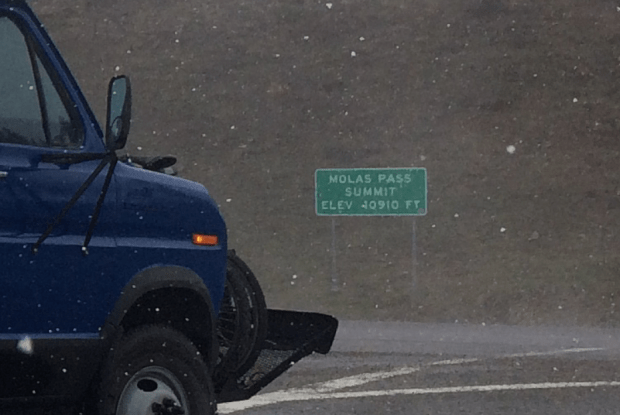
Then we got to the 10,910′ elevation sign and cheered!

Screen Shot 2017-05-22 at 10.31.26 PM

IMG_3092

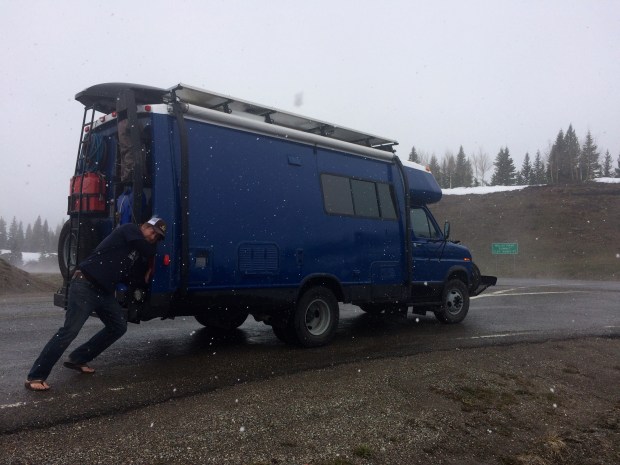
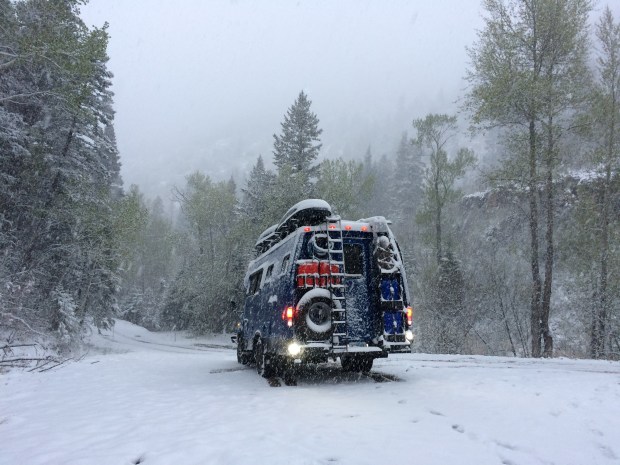
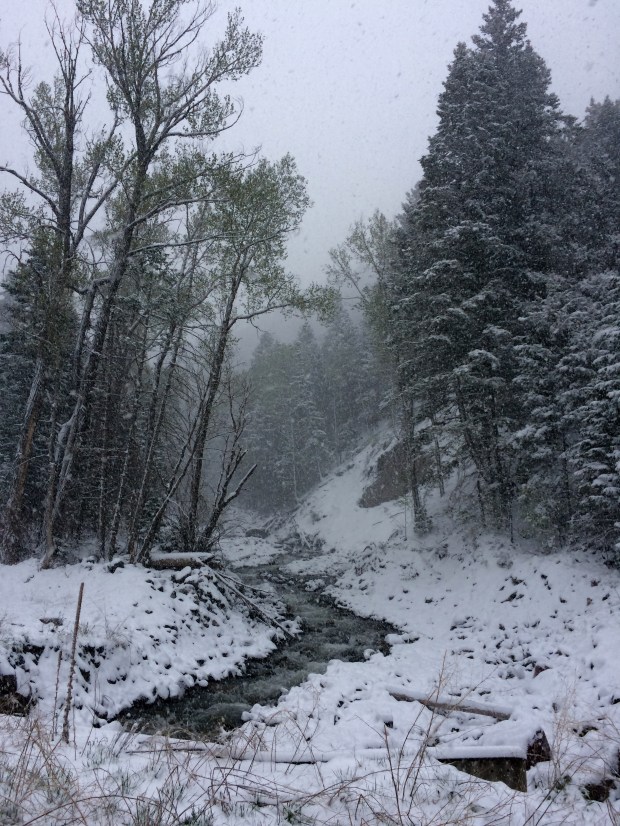
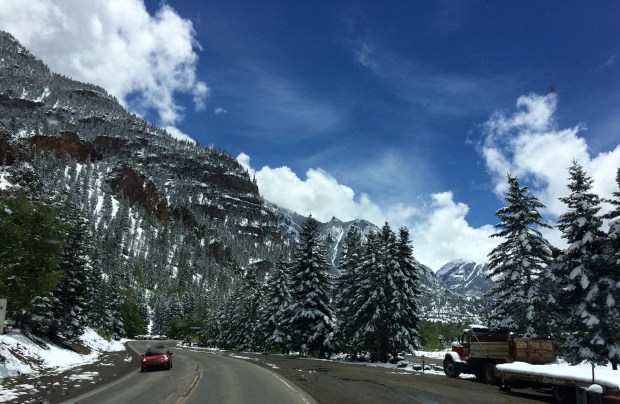
We made it all the way up with no issues, but there were definitely some “Little Engine That Could” moments. Especially once it started to snow.

That’s right, everyone who doesn’t live in Montana—snow in May!

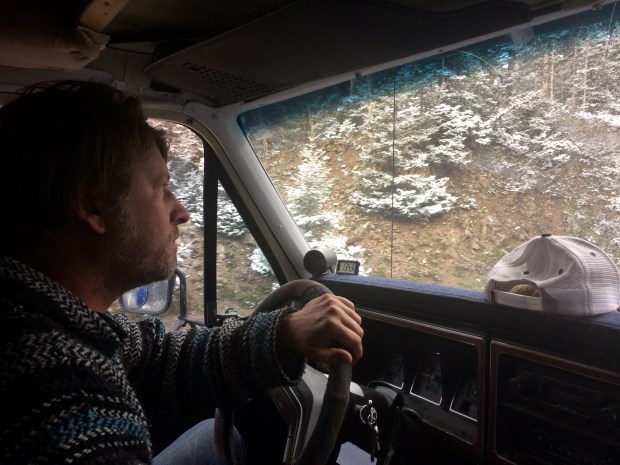
We were not prepared to see it, but it was very lovely up there in the mountains. As the road got more windy and the snow fell harder, I was glad Andy was in the driver’s seat. Especially considering the previous post about our break-downs! 🙂

IMG_3075

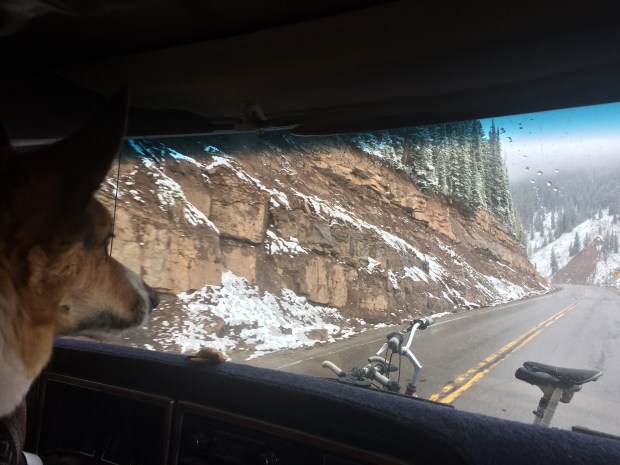
We made it to Silverton, which I pronounced The Cutest Town I’ve Seen All Year, and then on to the Million Dollar Highway. Our friend Rob told us about this route, which is the reason we went this way. It’s a very twisty-turny road at high elevations and sheer drop-offs on the side with no guard rails. Rocks fall from the cliffs above regularly, and when it’s rainy, the road gets fully washed out. Andy was sold.

So we traversed the Million Dollar Highway, and toward the end of the trek we saw why this route got its nickname. Holy moly.

IMG_3116

IMG_3123

Oh, and we just upgraded the WordPress account, so now we can post videos! This just got twice as fun.

Our surprise to encounter snow and freezing temps is evidenced in this photo of Andy changing from flip flops to boots at the viewpoint.

IMG_3130

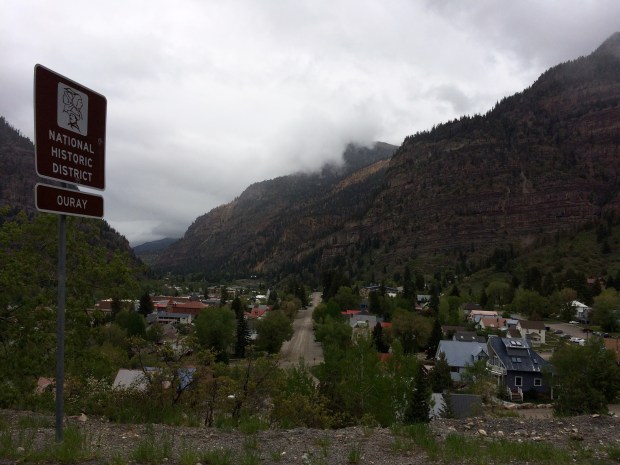
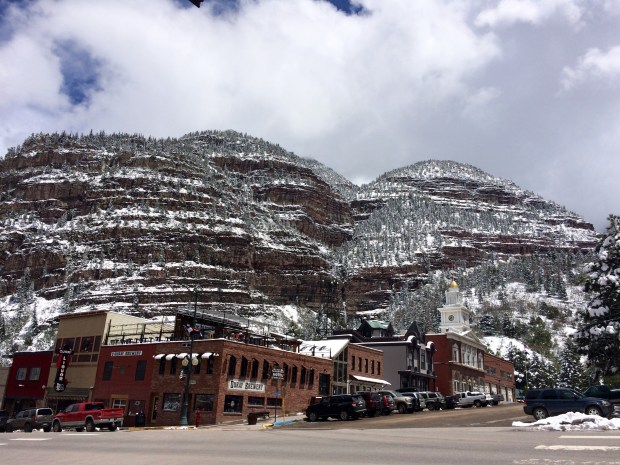
At the end of the Million Dollar Highway sits the new title-holder for Cutest Town I’ve Seen All Year, and also my top pick for a town to live for a little while in the future. It’s Ouray, CO and it’s so charming that words can’t describe it. It reminds me of my other favorite little town, Wallace, ID, in that it’s a sweet little town tucked into the mountains, but the mountains surrounding Ouray are even closer on all sides and so dramatic. It was even cold, foggy and overcast and still I was fully in love.

IMG_3150

IMG_3166

And dirt roads downtown, you guys.

IMG_3174 (1)

Also dramatic? The weather. As we sat at the brewery our first day there, we looked outside to see the snow storm had reached us down in Ouray! (If you’re wondering about pronunciation, all I can tell you is that we heard locals say both “yer-ay” and “oo-ray” and we landed on “yer-ay” as our favorite. I think I like it best because it rhymes with “hurray” and that’s how I felt the whole time we were there.)

IMG_3176

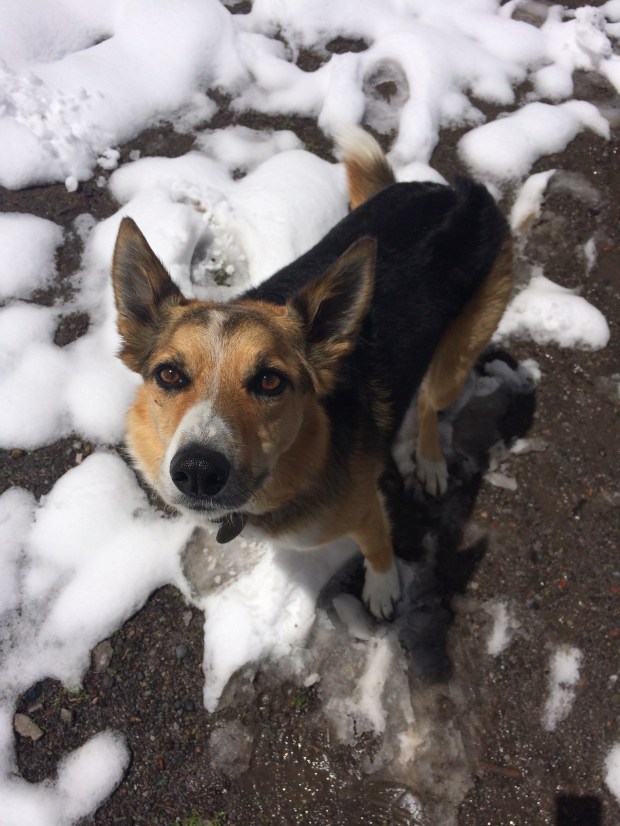
We camped out for the next few days out a Forest Service road by a river. We found the spot with a new app recommended to us by our new friends Gary and Kiki, called iOverlander. A great new tool in our arsenal! Everyone had a lovely time. All our winterizing gear was up in the attic, so we buttoned up the Turtle against the cold the best we could and got cozy!

IMG_3209

IMG_3196

IMG_3242

We also spent a fair amount of time working away on our computers at Mouse’s cafe and sweets shop downtown, which is how I finally got caught up on our adventures here on the blog.

IMG_3254

We’d planned on staying just two days in Ouray, as we were waiting to have some ballots sent to us from Andy’s mom in Montana.

By the way, fellow full-time travelers, we’ve discovered how easy it is to receive mail on the road—just have the sender address it to Your Name, General Delivery, Town, State, Zipcode, and the mail will make it to the main branch of the Post Office in the town you’ll be in! You just go to the post office and tell them you have mail waiting in General Delivery and there it is! Andy’s mom has sent us mail twice now, and we’re pleased that we can receive important letters even while on the move.

The delivery was delayed this time, though we couldn’t have been more excited to have an excuse to stick around town. Ouray is so darling, and everyone we met was welcoming and friendly that we felt right at home there for four days.

The morning of our third day there, the sun came out in full force, and we played outside and then spent the day in town.

IMG_3289

IMG_3312

IMG_3296

IMG_3285

IMG_3305

On the fourth day, our mail arrived and it was time to continue down the road. We would have loved to stay longer (and get jobs and become locals), but our goal to make it to see family in Portland in a few weeks and then make it to Alaska by July compels us to move a little more quickly than our usual Turtle Time dictates. So on to Salt Lake City.

But we’ll see you again soon, Ouray!

A Busy Few Weeks: The VLA, ABQ, Boise, The Bisti Badlands, Four Corners, & Mesa Verde NP

Our current location is generally a mystery to anyone trying to keep track of us—including us—mostly due to the fact that we’re so busy having fun that I forget how long it’s been since I last updated the blog or Instagram! I promise that by the end of the next post both you and I will be completely caught up.

As I type this, I’m sitting at an adorable cafe and sweets shop in a town that, I announced immediately before consulting anyone else in the Turtle, we will one day live, even if just for a season. This place is a dream. But we’ll get to that next time. We have so much to cover right now!

IMG_1910

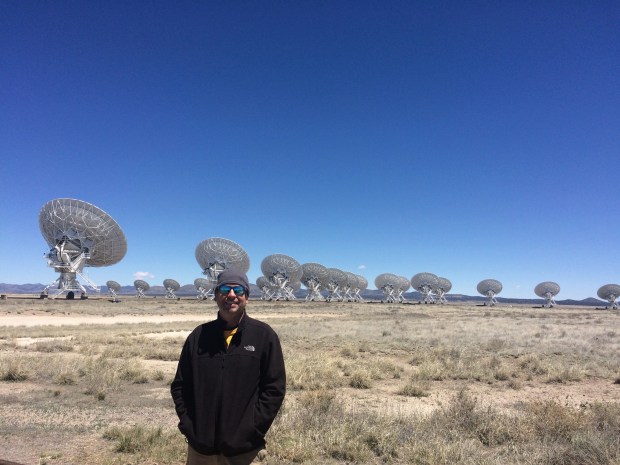
We left our last story outside the Very Large Array near Socorro, NM, having a delicious evening treat of a pie sampler from Pie Town. We found a great pull-out to stay the night just a few minutes from the VLA. That night before bed, we watched Contact with a view of the VLA right outside our window! It was awesome. In the movie, the VLA plays a prominent role in Jodie Foster’s research and makes a really dramatic background. And it’s just as impressive in person.

IMG_1917

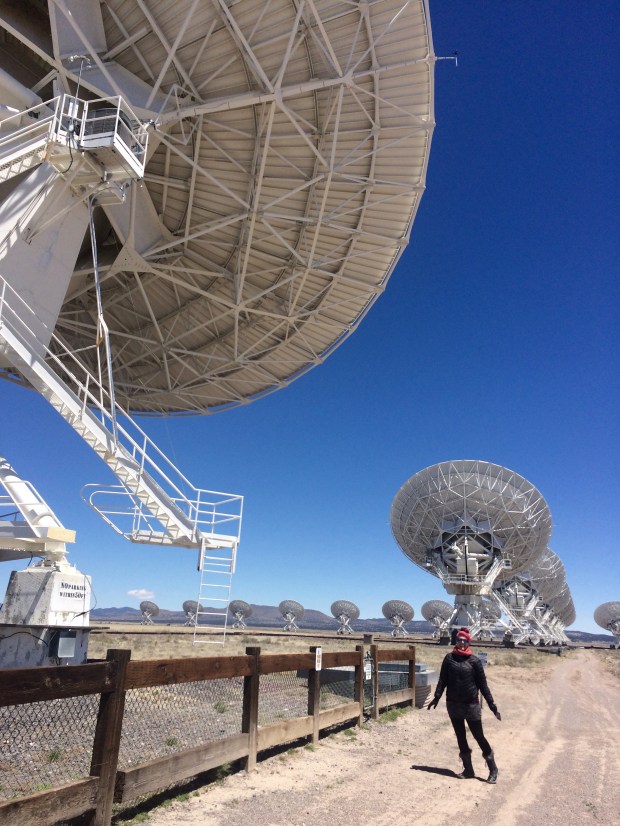
The VLA is an astronomical radio observatory made up of 27 antennas that are each 82′ in diameter. They’ve helped with the investigation of black holes, quasars, pulsars, planets, and loads more. It’s astonishing to see them up close.

IMG_1921

IMG_1949

(Not quite sure what I was up to in this photo, but it’s the only one I’ve got, so you’re stuck with my unexplainable dance number.)

IMG_1953

After getting our science on, we made our way back to Albuquerque where I had a flight to catch in a few days to Boise to visit my girlfriends Beth and Lexie.

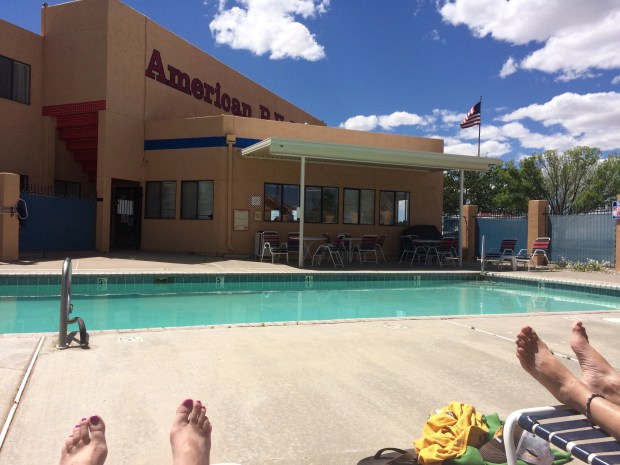
But first, Andy and I had a mission: to get poolside as soon as possible. I’m not sure how we got the idea in our heads, but suddenly we couldn’t live without a swim. So we headed to the only RV park in Albuquerque that had their pool open before Memorial Day—American RV Park.

IMG_1985

IMG_1998

IMG_2003

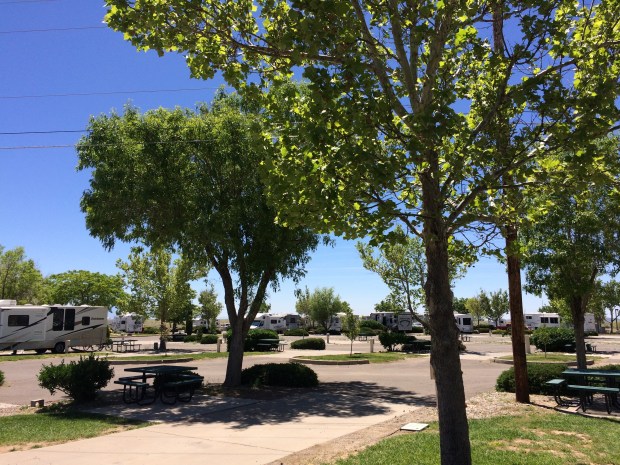
We came for the pool and stayed for the lovely park, yummy continental breakfast, clean showers and laundromat, and beyond-friendly staff. We really did stay another day. It’s a great park that I can’t recommend highly enough! We realized that it had been over a year since we had stayed in an RV park, which was fun because we’ve really gotten the hang of boondocking and have saved lots of money by not going to parks unless we need to take advantage of their amenities. Turtle power!

We stayed two nights, and the next day I left this guy:

IMG_1975

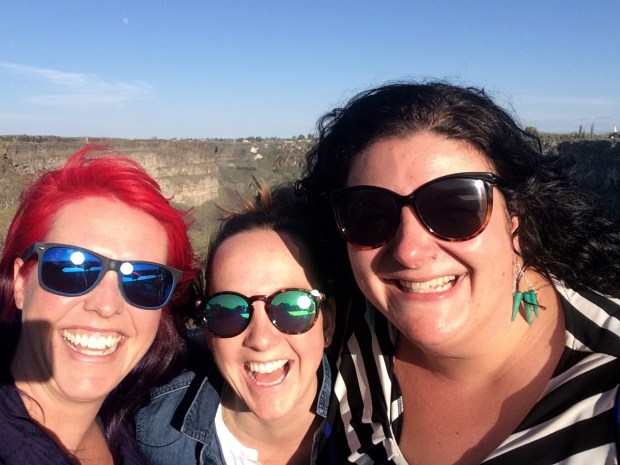
To hang out with these guys:

IMG_2040

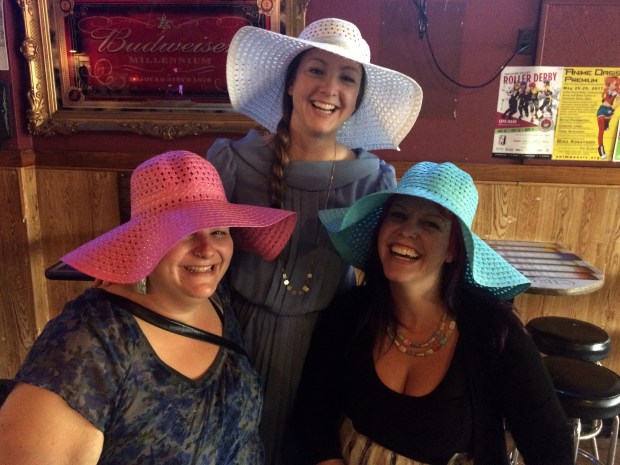
It was a bunch of fun. We painted the town red, and even got dressed up to go watch the Kentucky Derby.

IMG_2088

IMG_2138

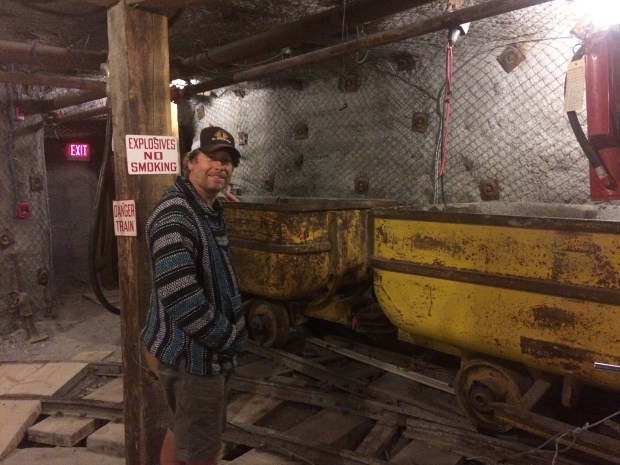
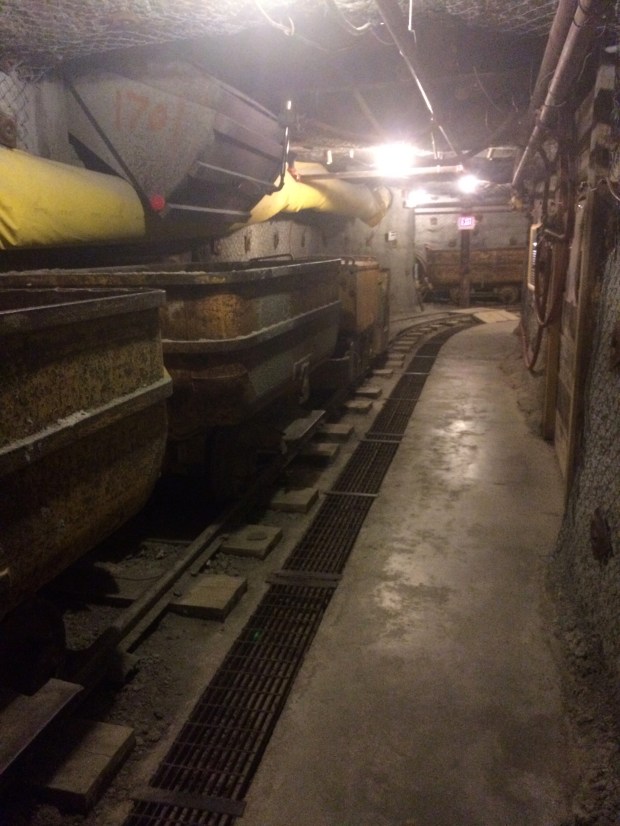
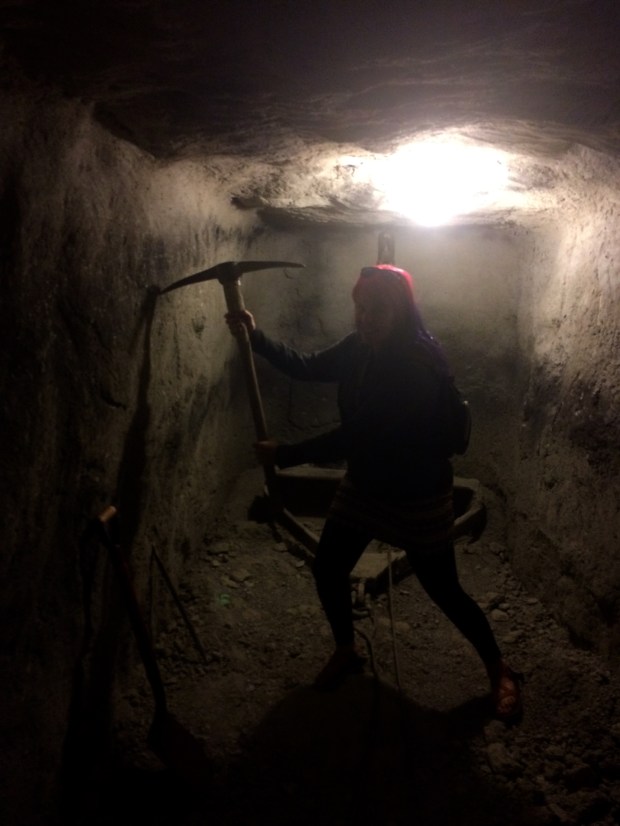
After a whirlwind few days, I was back in Albuquerque and the four of us were back on the road. Andy and I went to a fantastic mining museum in Grants called the New Mexico Mining Museum, which has a replica uranium mine underground. The man at the front desk had worked in mining for about 35 years, and had worked his way up from the bottom to be the head of his mine and even got an award for safety, with the longest time without a death in the mine or serious injuries. He had lots of information, was adorable, and gave me a goldstone to remember the mine by.

IMG_2151

IMG_2158

IMG_2164

Outside of Grants, we stayed at the Joe Skeen campground near El Malpais.

IMG_2173

IMG_2200

I was happy to be reunited with this guy:

IMG_2271

And this guy:

IMG_1981

And this guy:

IMG_2420

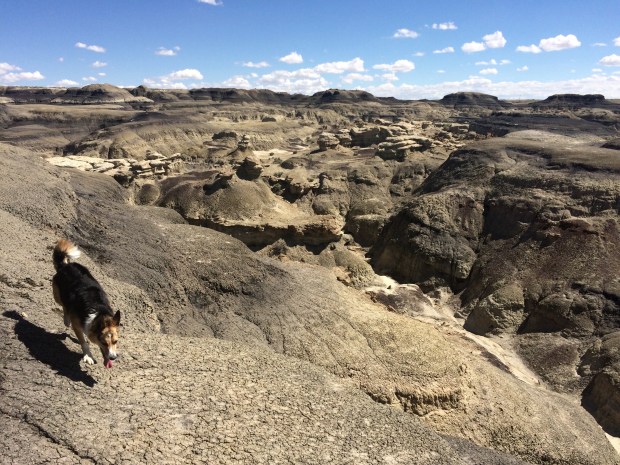
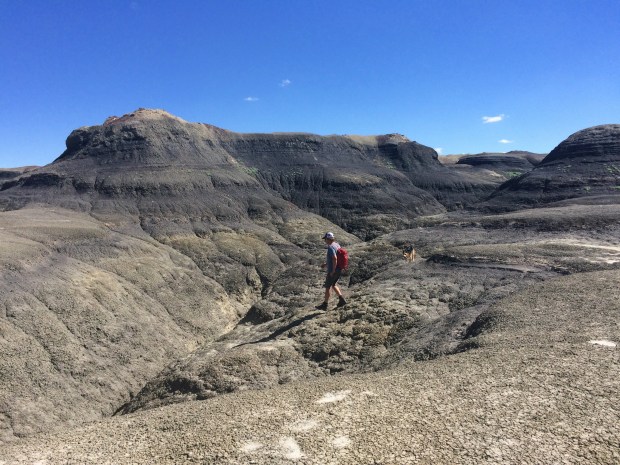
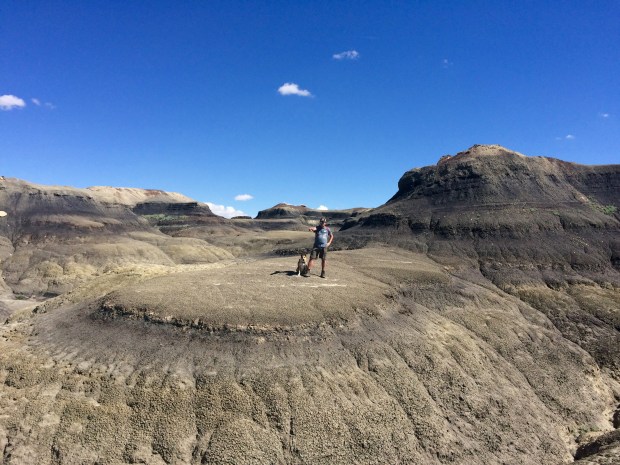
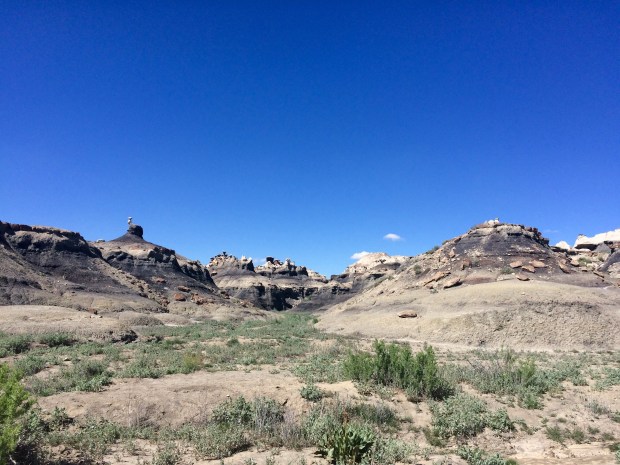
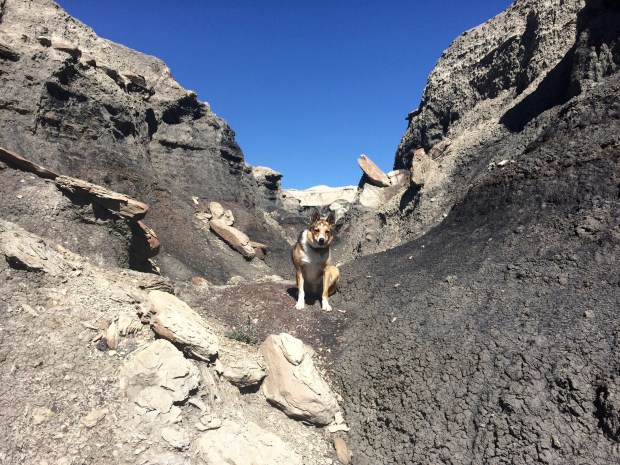
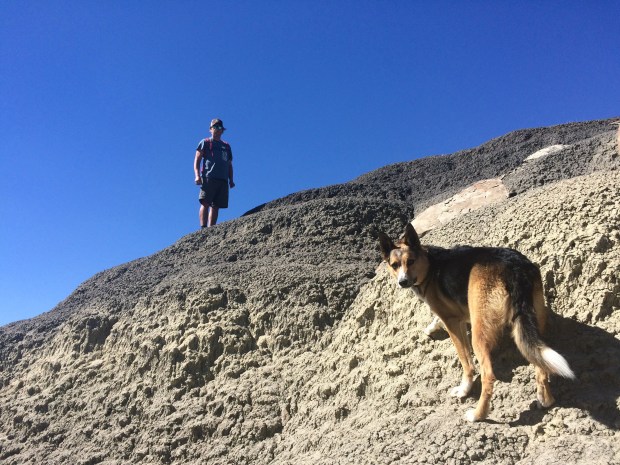
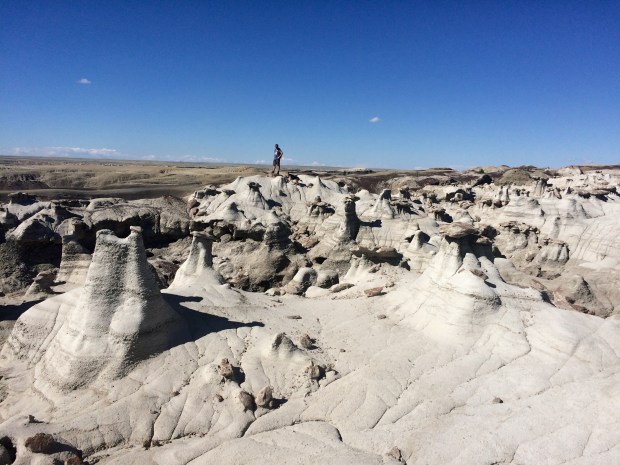
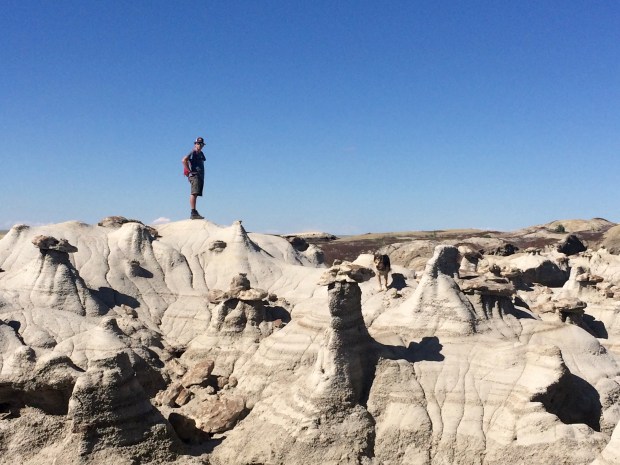
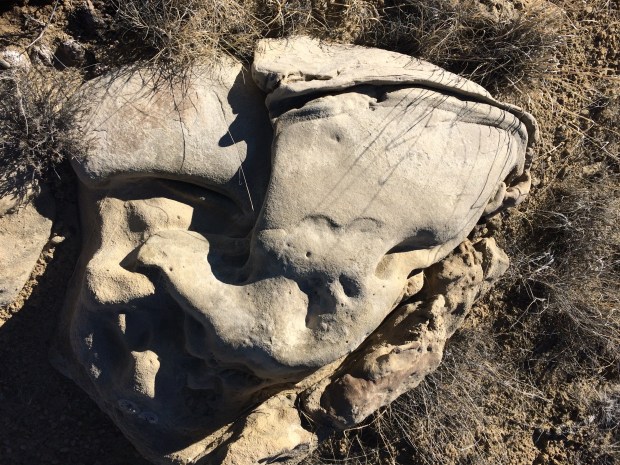
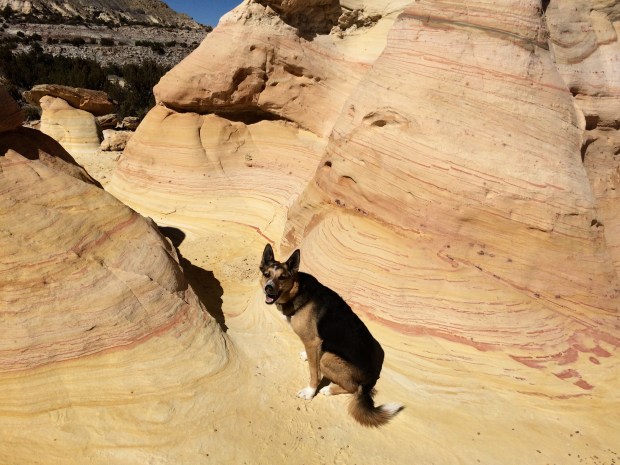
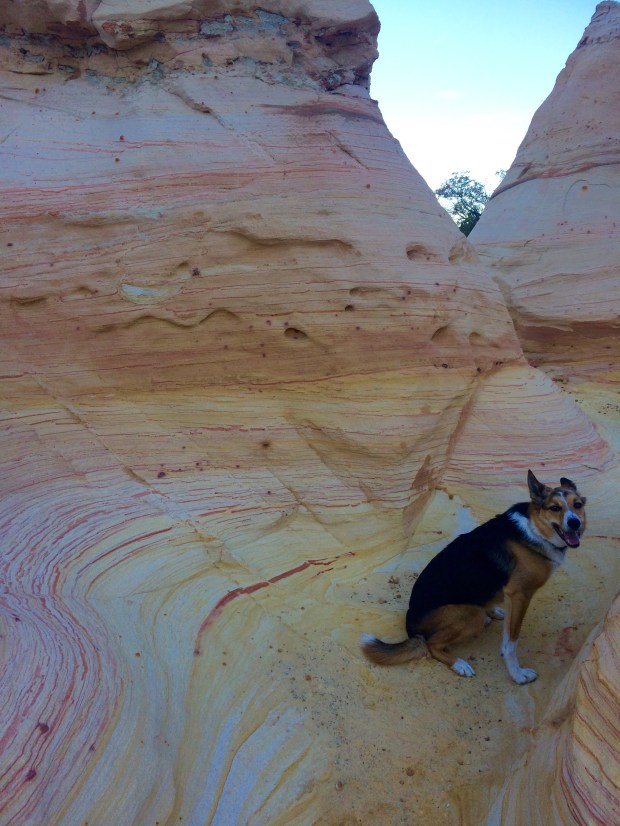
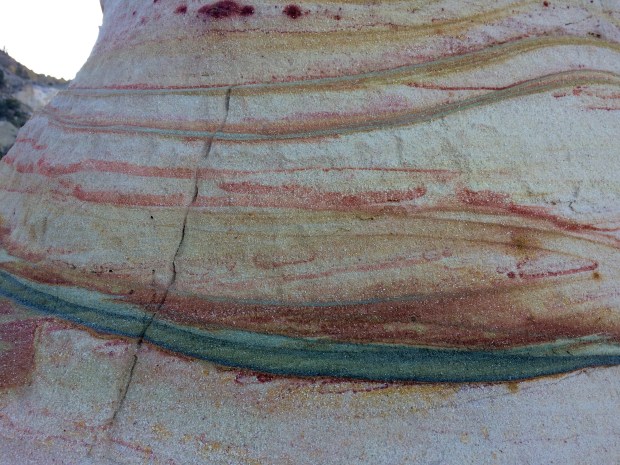
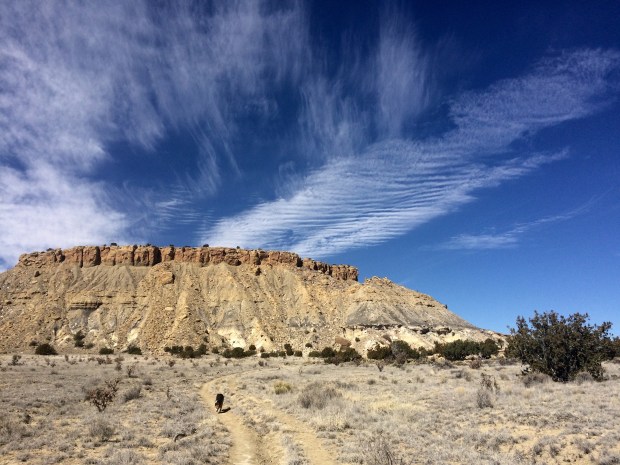
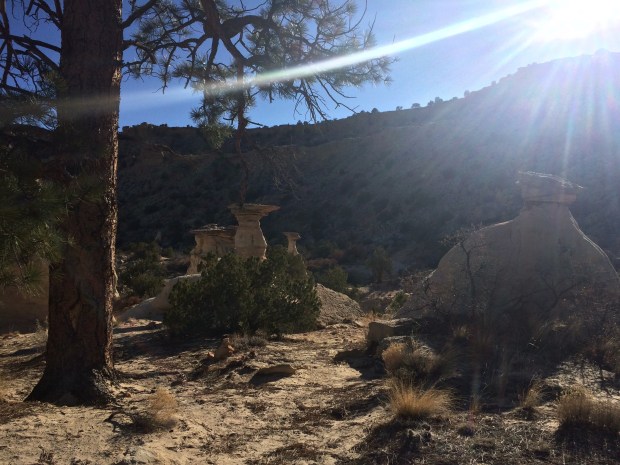
We drove to the Bisti Badlands wilderness, where you can stay overnight in the parking area for free! It was especially appreciated that we got to stay after we climbed for hours over the crazy hills that changed in appearance every few minutes. It felt like a walking tour of 10 different planets.

IMG_2439

IMG_2448

IMG_2444

IMG_2461

IMG_2472

IMG_2478

IMG_2490

IMG_2548

IMG_2555

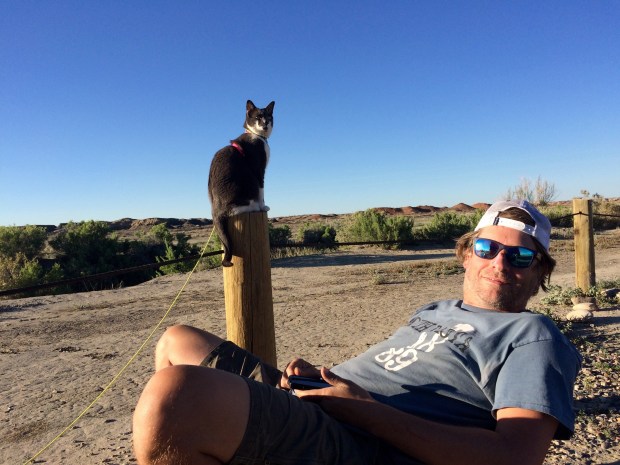
It was a hot day, and when we got back to the parking lot, we relaxed in our chairs and read books with Scout and Gracie. Gracie has become a real champ with her harness and leash these days. I think she’s figured out that sometimes it’s her only ticket outside, so she wears it without any problem, and even comes to my feet meowing when she hears me get it out.

IMG_2575

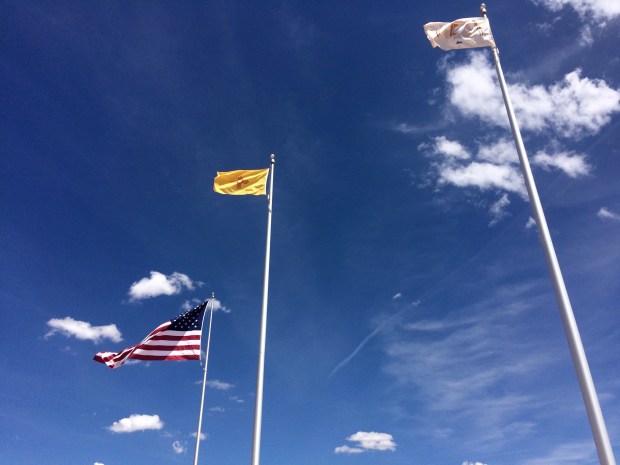
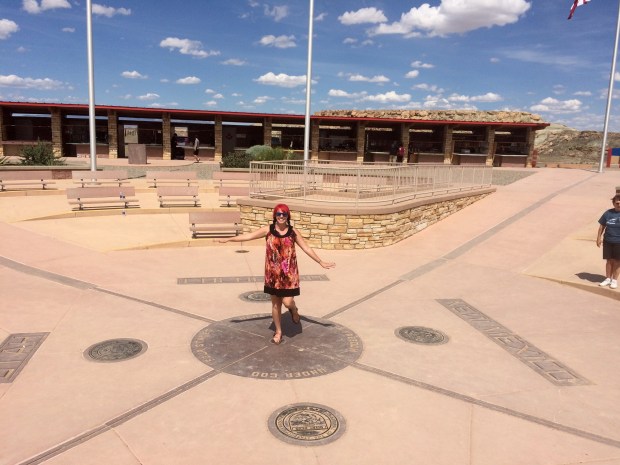
The next day we made it to Four Corners with beautiful skies above us.

IMG_2583

IMG_2585

IMG_2605

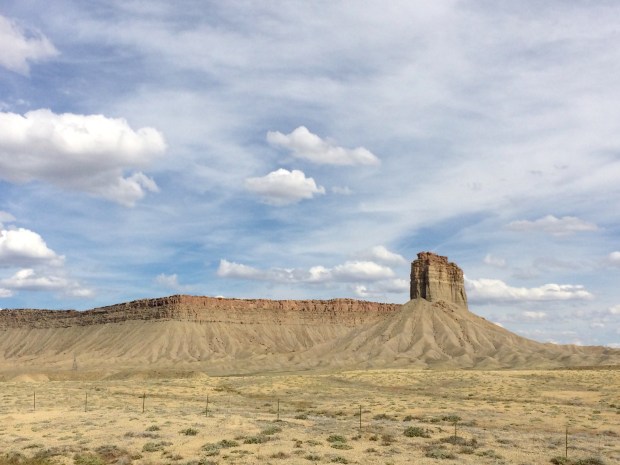
Then we drove on toward Mesa Verde National Park. The landscape on the way to the park was a destination unto itself. I swear this is not a painting.

IMG_2617

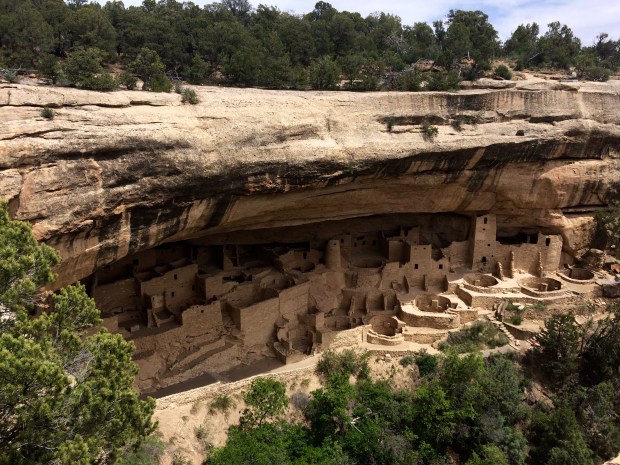
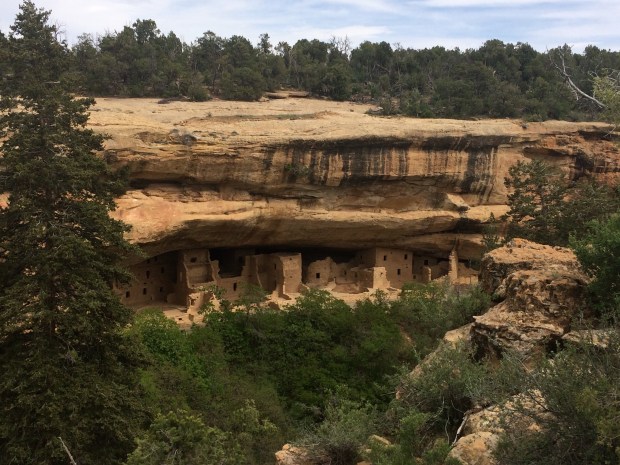
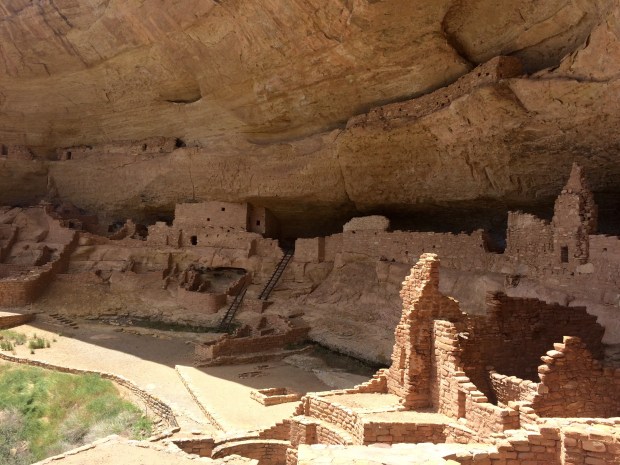
In the last year, we’ve been to two other cliff dwellings sites: Bandelier NM and Gila Cliff Dwellings NM. We really enjoyed both, but agreed once we made it to Mesa Verde that this is our favorite site so far.

IMG_2700 (1)

IMG_2870

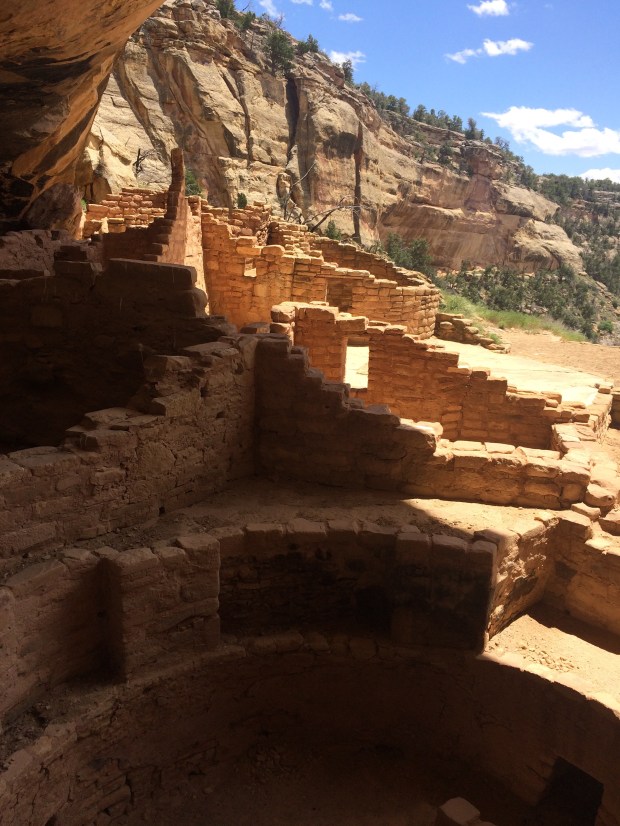
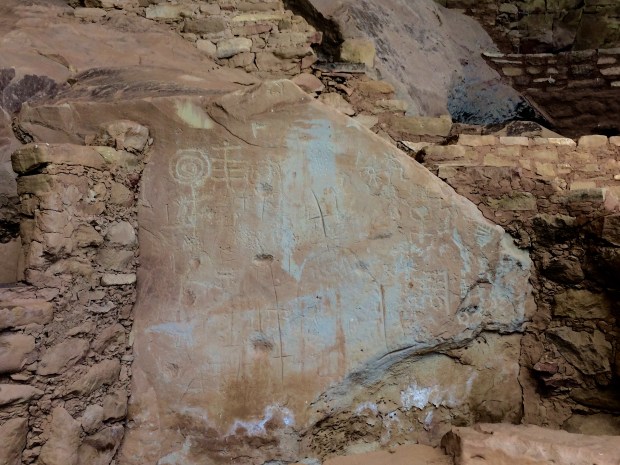
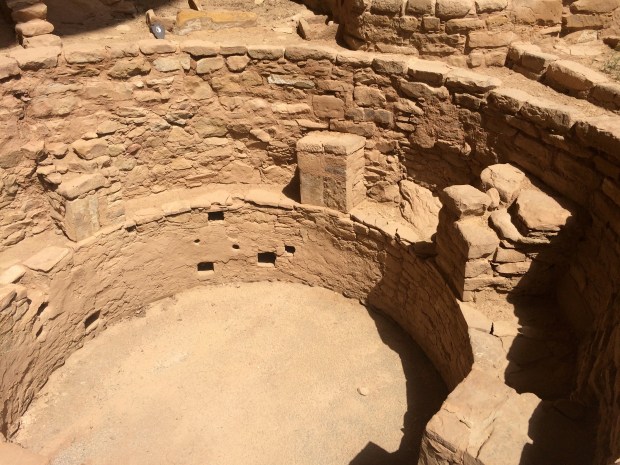
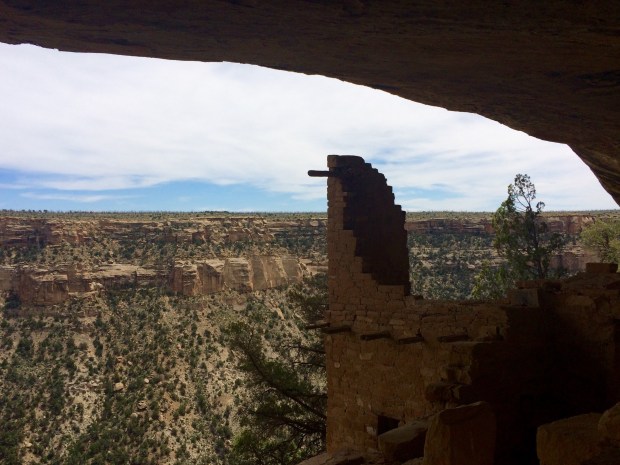
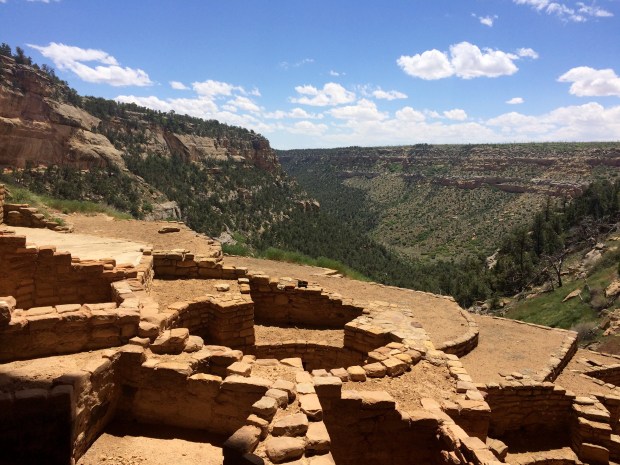
In the park are 600 beautifully preserved cliff dwellings of the Ancestral Pueblo people, many of which you can tour or see clearly from various vistas. Depending on the site, the tours are just $5 or $10 each, which gets you 1-2 hours of information and a walk right through the dwellings. You can see petroglyphs and pictographs, the different styles of construction each group used, and the actual tools they used to grind corn and make food. And the views are so vast and unreal that we both said more than once that we’d pay just to hike the trails on the mesa! There are also self-guided tours you can take, so we did all of those too.

IMG_2838

IMG_2774

IMG_2799

IMG_2817IMG_2733

IMG_2819

IMG_2672

IMG_2666

IMG_2675IMG_2871

Our second day there, as we parked at Balcony House for our tour we noticed another van that could be the Turtle’s long-lost cousin, so we parked by it as we often do when we see a van we like. After traveling around for the last year and a half, we’ve found that we can usually tell by someone’s van if they are kindred spirits, and our track record is pretty good so far. This time was no exception! We ran into Gary and Kiki as we returned from our tour, and found out that they’re just starting out on their full-time vandwelling adventure (though they’ve already been on many, many adventures of other sorts). We’d all already purchased tickets for the same tour the following day, so we got to hang out even more during the Long House tour.

IMG_2881

IMG_2864

We super enjoyed getting to know you guys, and I’m certain that our paths will cross down the road. (When they do, we’ll let you know what Turtle theme song we came up with; hopefully one as cool as Birdy’s.) You guys were a pleasure to hang out with. Stay in touch! 🙂

After the tour, we did a quick 6-mile loop on top of the mesa to check out the other cliff dwelling overlooks.

IMG_2908

We would have loved to stay and visit (both the park and the new friends) longer, but the storm clouds were rolling in and the skies were getting darker. Our first rule of overlanding is “Never Drive at Night”, which is comparable to driving in terrible weather, so we hit the road to make it to Durango, CO to find a spot before the weather hit.

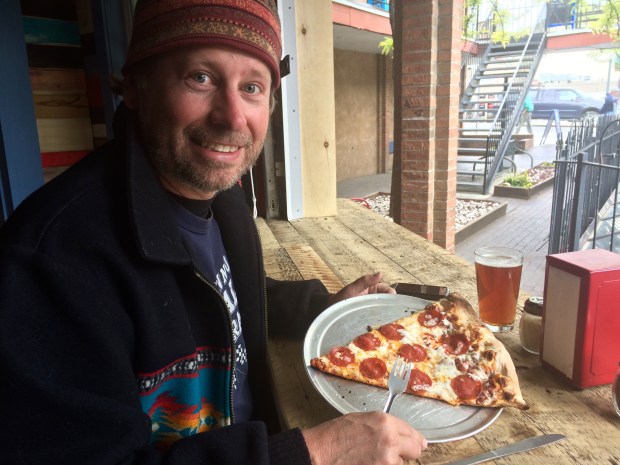
We hung out in Durango for the evening, a town that I already loved and knew Andy would too. The weather was unfortunate, with frigid winds and constant cloud cover, but we had a great time anyway. If you can involve pizza in the plans, Andy is a happy camper.

IMG_2994

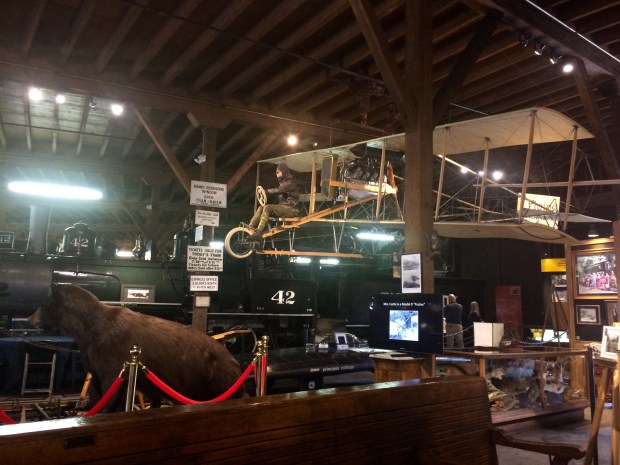
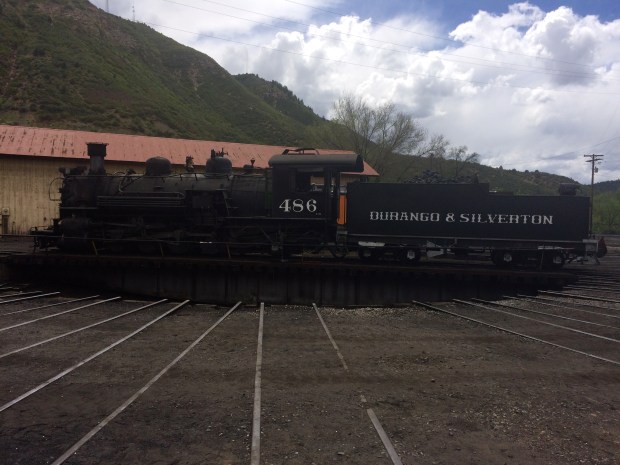
If you can also include a free trip to the coolest railroad museum ever, Durango and Silverton Narrow Gauge Railroad Museum, he will be even happier.

IMG_2975IMG_2965IMG_2968IMG_2976IMG_2984

And if you really want to make his day, cap it all off with a little performance testing at the highest altitudes the Turtle has ever attempted. . .

IMG_3092.jpg

Which, unbeknownst to us, was the next leg of the trip. And one that would bring us to where I sit now, in my new very favorite town of all time! But that’s up next.


We Love NPS: Carlsbad Caverns, Guadalupe Mountains, White Sands & Gila Cliff Dwellings

It’s no secret that we love the National Parks System. In fact, part of our five-year plan (or as close as full-time wanderers get to a plan) involves taking occasional breaks from the road to work at National Parks and Monuments as we travel around. Not only will it be soooo fun to live at a park, but we can also make a little extra travel money while giving back to the Parks System that has basically been our landlord for a good portion of the last year and a half. We’ve boondocked on NPS land at National Parks, campgrounds, and dispersed camping areas. And not only to we get access to astonishingly beautiful and unique gems around the United States, we’ve also been provided at many sites with potable water, RV dump stations, showers, bathrooms, and garbage services. Oh, and a surprise favorite—ranger talks around campfires under the stars! At Wind Cave the fireflies were flying around us as we walked to the amphitheater to hear a ranger tell us all about the history of bison in South Dakota, and another ranger sang us a song on her ukulele that she wrote about Native American folklore. Pretty fancy, right?

Immediately after hitting the road, we got our NPS annual Interagency Pass and it’s no surprise that we’ve gotten our $80 worth and feel pretty happy about it! The last few weeks have been especially National Parks-y.

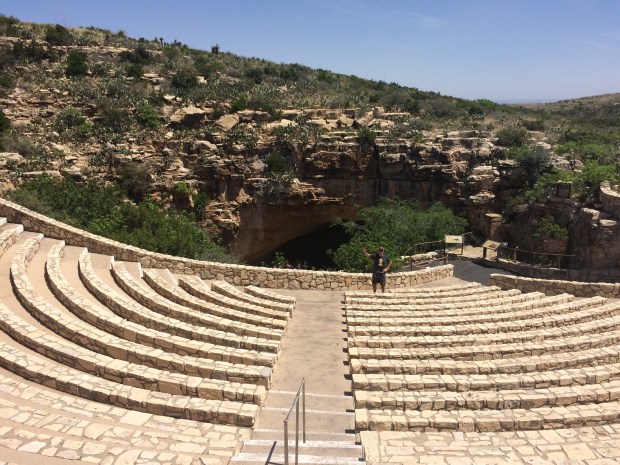
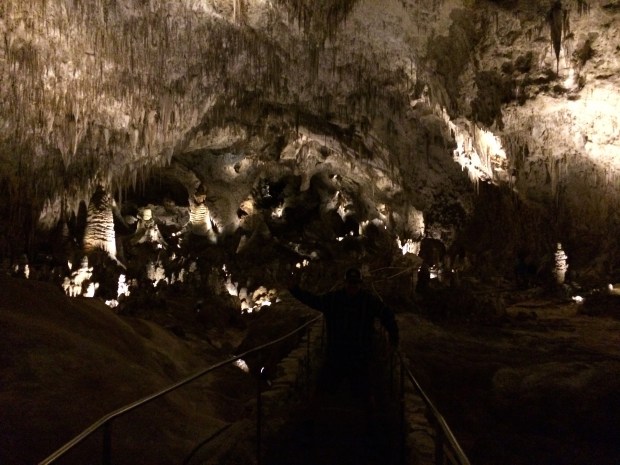
We began the streak at Carlsbad Caverns National Park, hiking down to the Big Room from the Natural Entrance.

IMG_0900

IMG_0910

IMG_0914

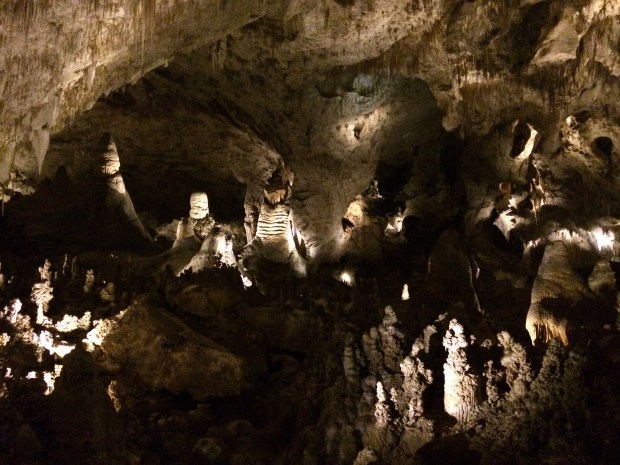
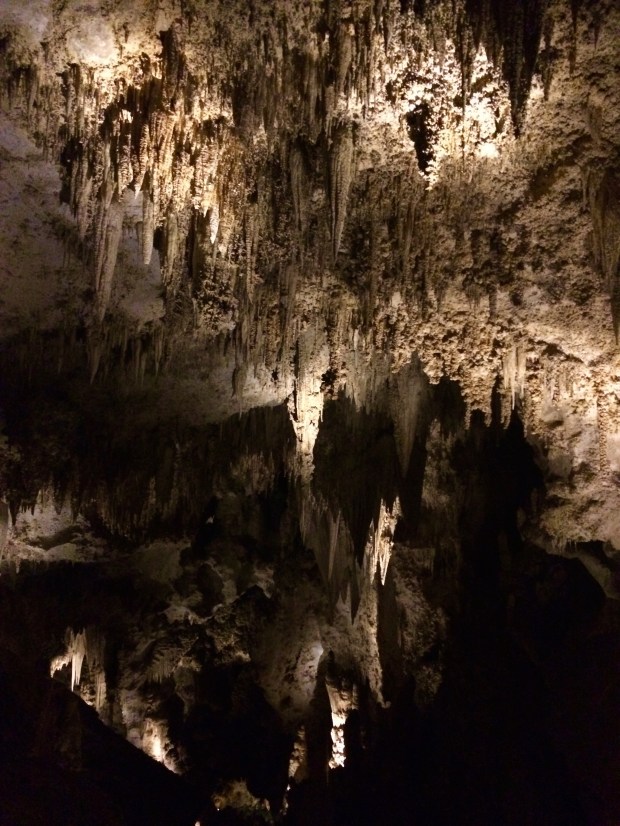
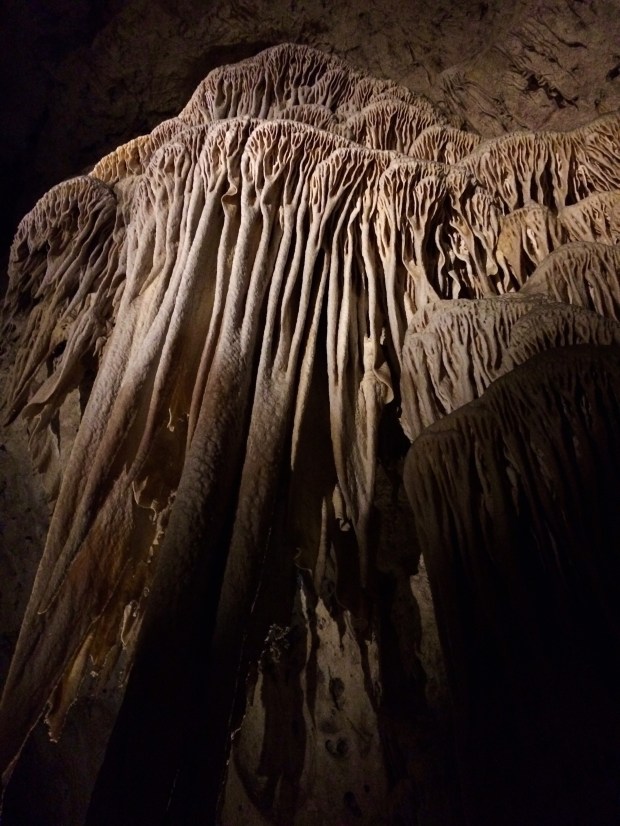
There were some beautiful intricate formations on the way down, but the real thrill was the 1.25 mile loop around the Big Room at the bottom. We’ve been in a bunch of caves, but never anything like this! The photos do it no justice, but the scale of these stalactites and stalagmites is staggering.

IMG_0935

IMG_0951

IMG_0955

IMG_0956

IMG_0963

IMG_0964

We were thankful for the railings along the path, which made it possible to just stare upward with our mouths hanging open, pinballing our way down the walkway. It’s Andy’s Favorite Cave To Date, and for me it’s Tied For First with all the other caves I’ve explored. (I just really like being in caves.)

We stayed the night somewhere outside the park, and then the following day—Easter Sunday!—we arrived at Guadalupe Mountains National Park for a holiday hike.

IMG_0985

IMG_0996

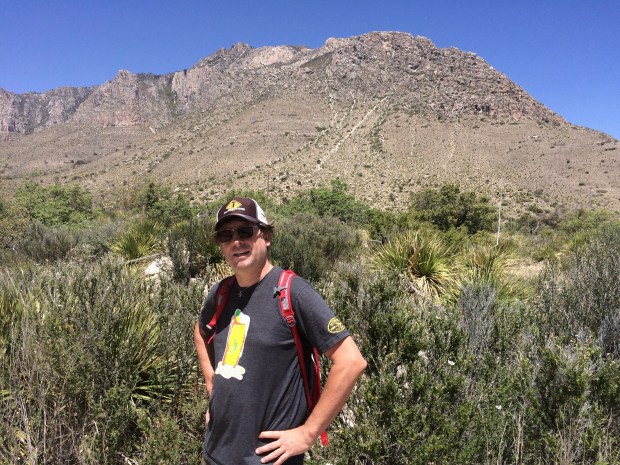
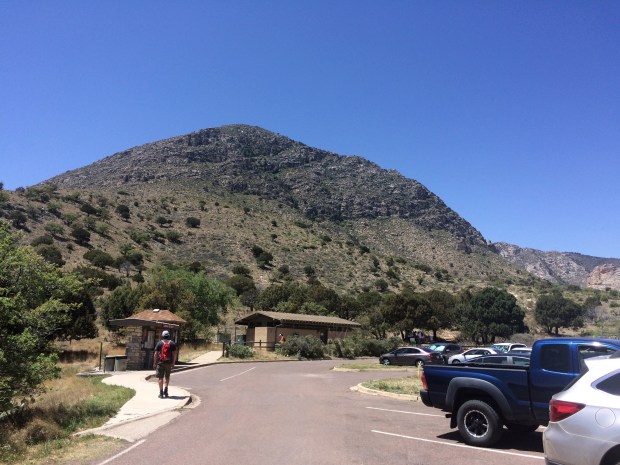
Of course we had to investigate the potable water situation, and they had a nice spigot near the RV camping area, so we made a note of it and hiked on into the hills. This park is home to El Capitan, which is a celebrity rock, and Guadalupe Peak, which is the highest mountain in Texas. We didn’t hike either of them; it was 90 degrees with full sunshine, so neither of us felt bad about choosing a less strenuous trail.

IMG_0999

IMG_1006

IMG_1039

IMG_1046

After the hike and a water fill, we proceeded to El Paso for a Costco run and then on to Alamogordo and saw. . . well, look.

IMG_1059

IMG_1066

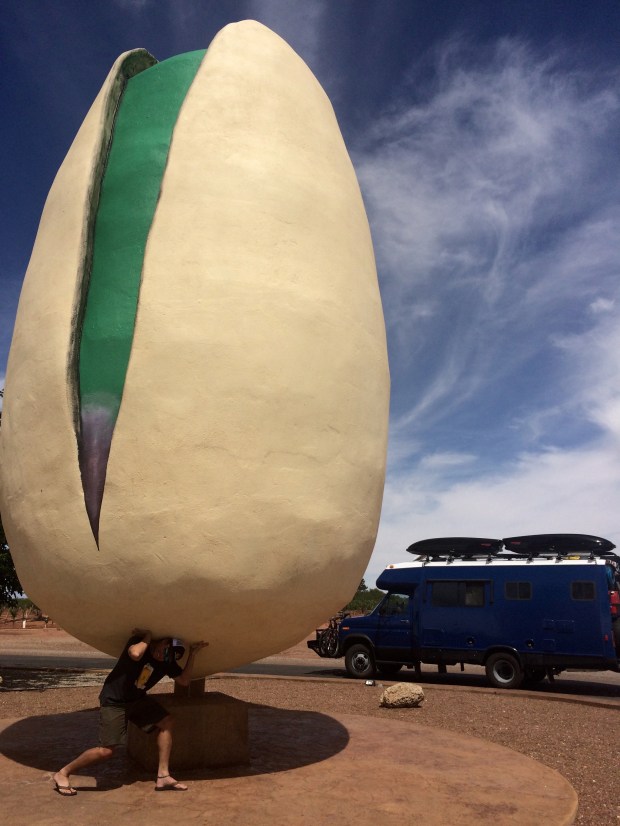
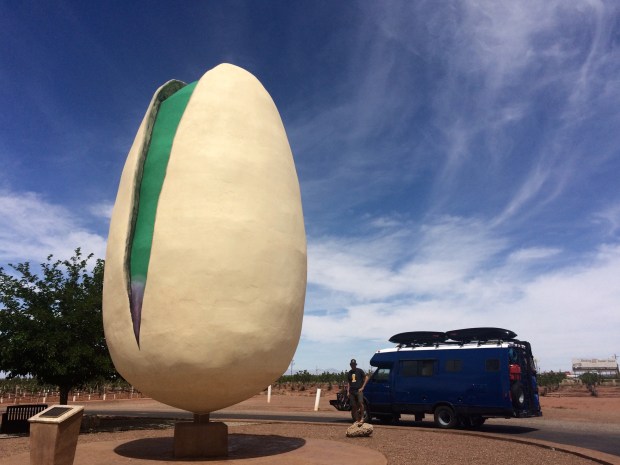
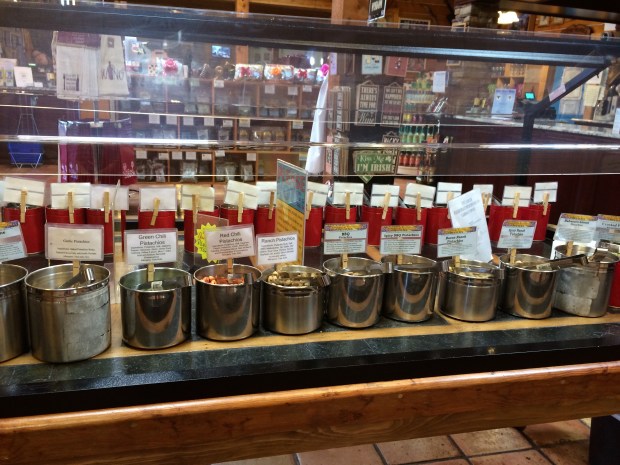
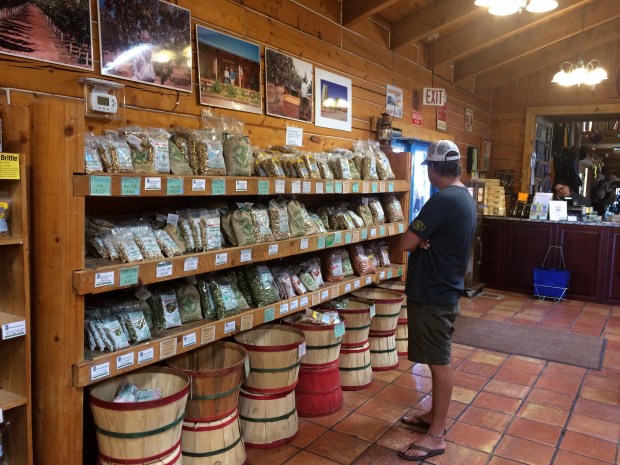
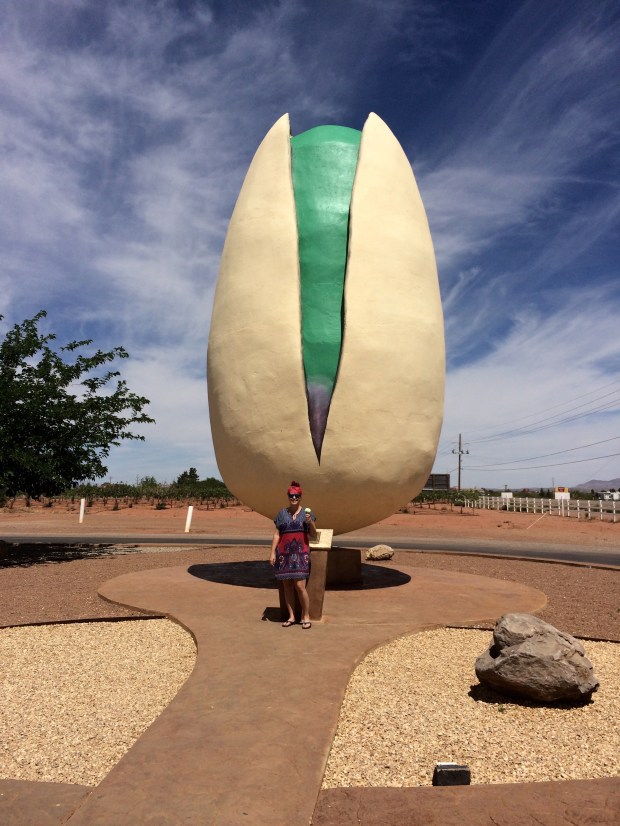
That’s right; it’s the World’s Largest Pistachio! It’s a sculpture at the McGinn’s Pistachio Tree Ranch, which is a really fun stop if you’re in the area. There’s a lot to see and eat there. We sampled dozens of flavored pistachios and pistachio candy, bought some bags to take home, and got some pistachio ice cream to eat under a pistachio tree by the huge pistachio sculpture.

I’ve never written the word “pistachio” so many times in my life combined.

IMG_1069

IMG_1070

IMG_1073

Then another stop in Alamogordo at the Alameda Park Zoo, recommended to me by my buddy Daren who used to live in the area. And I’m so glad he did; we wouldn’t have thought to stop by this tiny zoo in a park in the middle of town, but it was one of the coolest zoos either of us has ever visited! It’s only $2.50 to get in, the grounds are lovely and nicely manicured, and the animals are happy and well-cared for in their clean and green enclosures.

IMG_1085

IMG_1097

IMG_1101

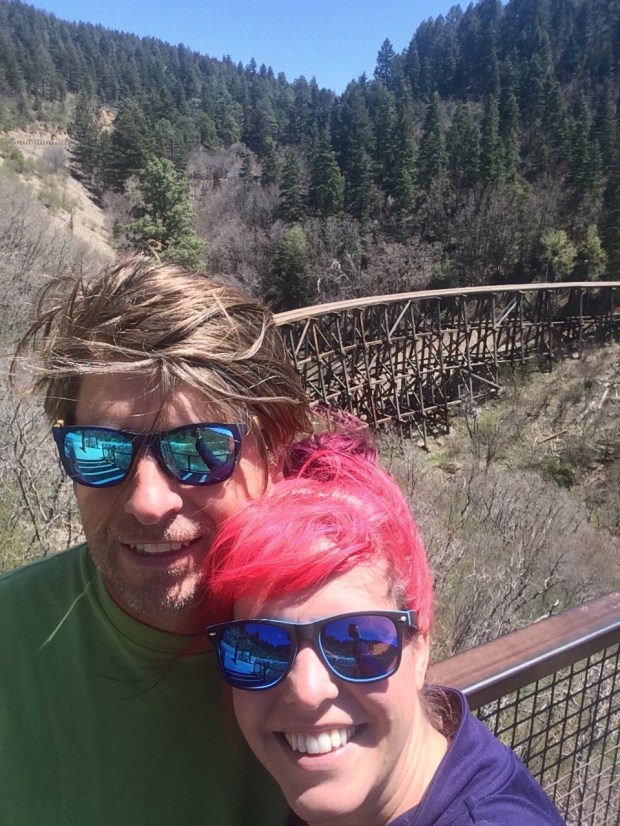
We left the zoo while we still had plenty of light so that we could make the big climb up to Cloudcroft, an adorable town 19 miles outside of and 4,000 feet higher than Alamogordo. And our little Turtle made it! We may have been going 2 mph, but we made it! We stopped at the scenic train trestle outside of Cloudcroft, and then found a cool dispersed campsite nearby to stay for the night.

IMG_1139

IMG_1186

We stayed two days, and drove back down.

. . .Don’t get me wrong, lots of fun things happened in Cloudcroft, but I promised you a National Parks post so I’m going to try to stay on topic here. 🙂
IMG_1204

A lot of National Parks that we go to feel like being on another planet, which is a shared characteristic of all the parks I’ve liked best. So you can probably guess my approval rating for White Sands National Monument! This place was bizarre in the very best way.

IMG_1212

IMG_1225

IMG_1238

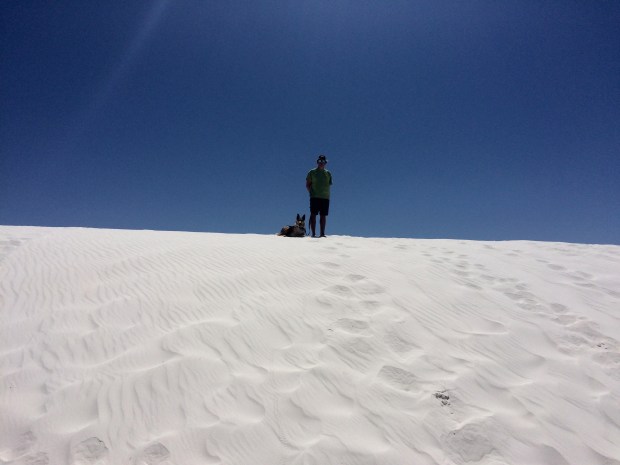
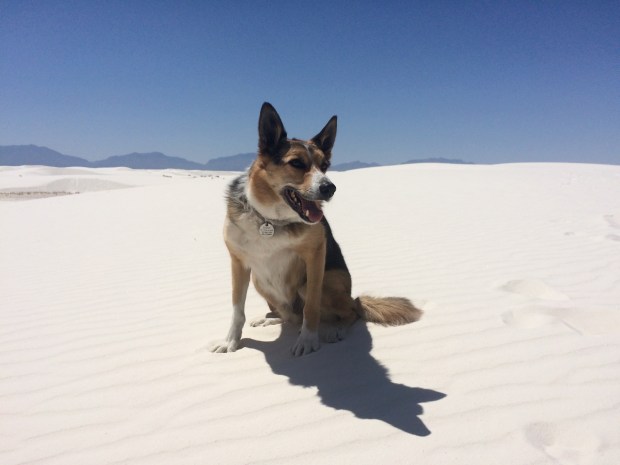
It was magical. Hills and hills as far as the eye can see of gypsum sand.

It played tricks on our minds, as hills of white usually mean snow and winter, but it was 85 degrees and we were roasting! I made a sand angel anyway. Also strange was the sensation that we were walking on sand in that heat, but it wasn’t hot on our feet at all.

IMG_1250

IMG_1269IMG_1282

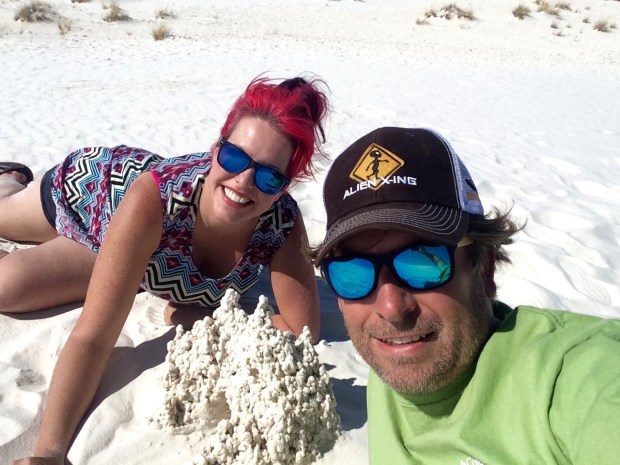
Before we began walking back to the Turtle, Andy joked that we should fill our bucket with water and make a white sand castle. We both got quiet and looked at each other, and then went to get the bucket.

IMG_1334IMG_1338

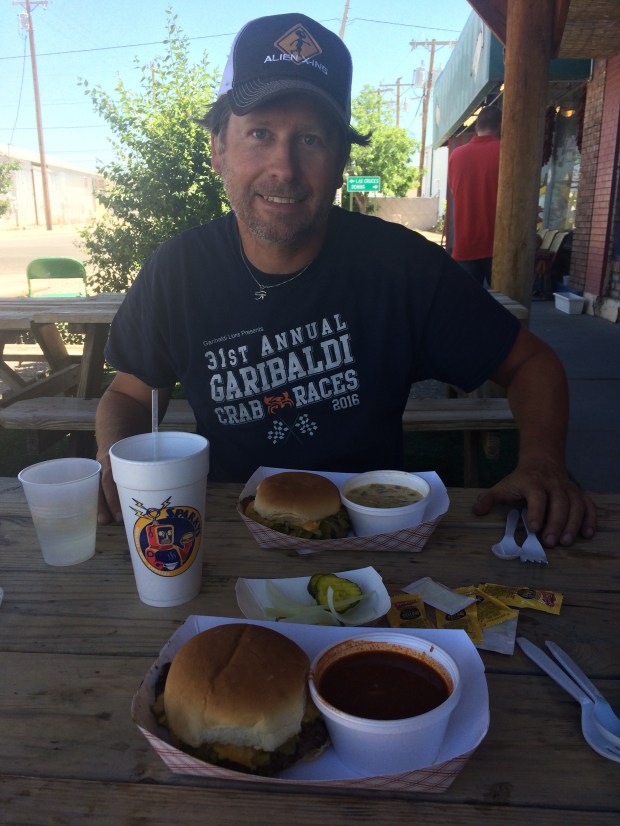
The next day we went to Hatch, NM to get ourselves the epic green chile cheeseburger at Sparky’s that some hot springs friends had told us about a few months ago.

IMG_1367

IMG_1370

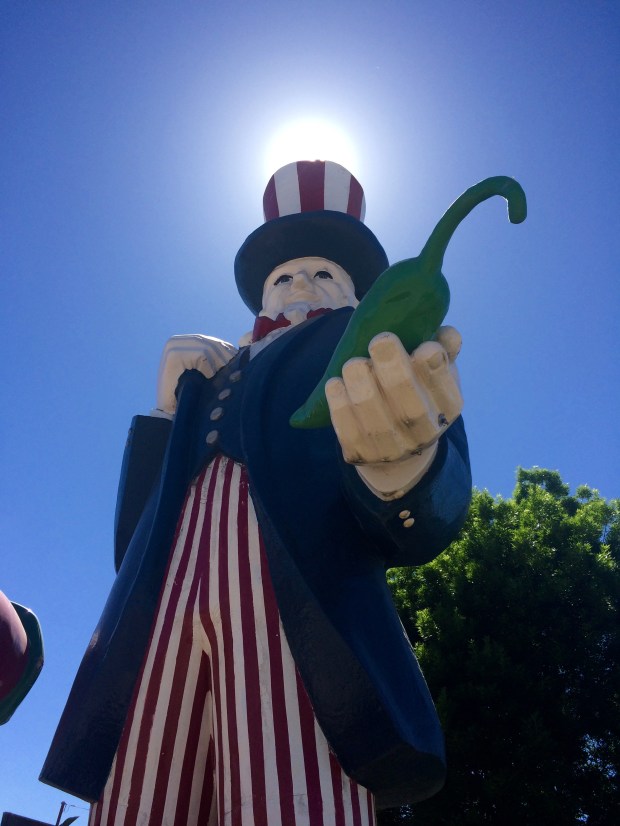
It was legitimately one of the best burgers I’ve ever had. Thanks for the recommendation, guys! On our way out of Hatch, we got some green chiles from a roadside market, Andy hassled one of the locals, and then we hit the road for Spaceport America.

IMG_1380

Spaceport America is incredible to see, even though it’s not open to the public right now. We’d read that there was a visitor’s center, but it’s in nearby Truth or Consequences (actual town name) so we just got a long-distance view of “the world’s first purpose-built commercial spaceport” and some really neat info from the hospitable guard at the gate. The sci-fi nerd in me was already picturing the next time I drive out there, this time with my flight ticket in hand. To infinity and beyond!

IMG_1470

That night and the next we stayed at Elephant Butte Dam in Truth or Consequences. We swam, read by the water, got some sun, and threw Scout’s frisbee into the water a thousand times before continuing onto the next leg of our journey.

IMG_1493

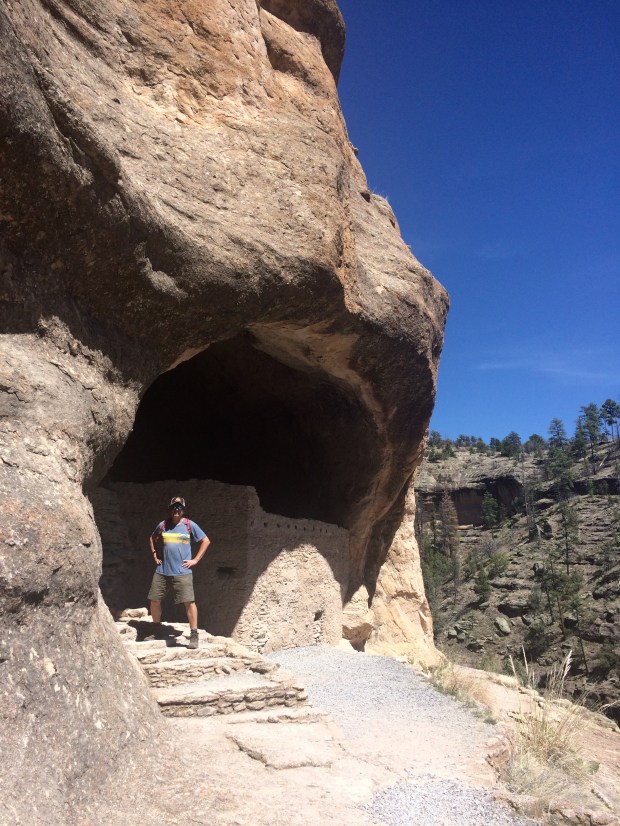
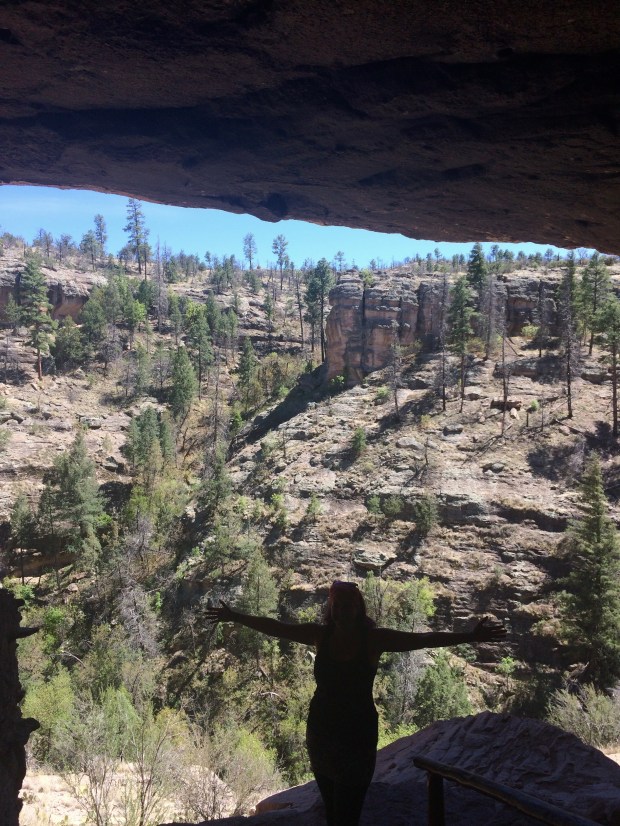
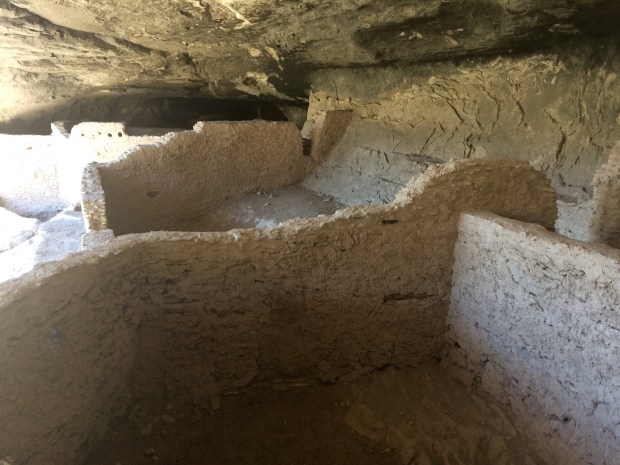
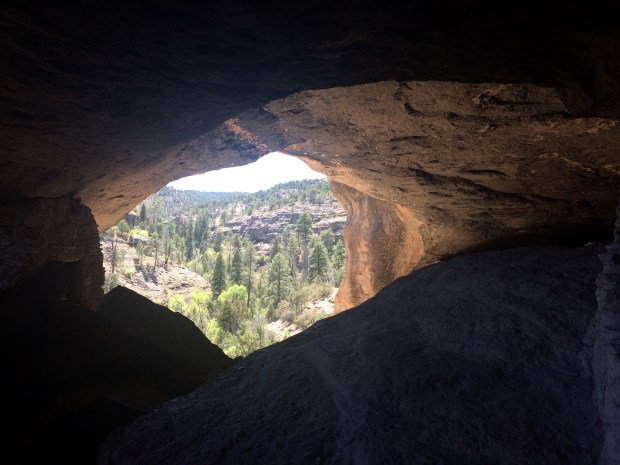
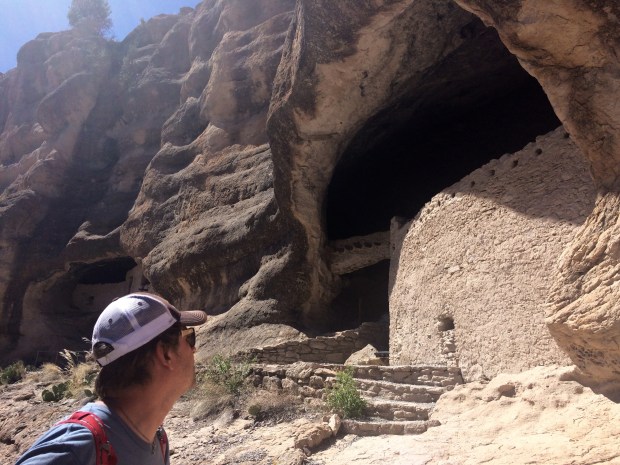
Which was Gila Cliff Dwellings National Monument! Another new favorite, and another great NPS spot to visit at the top of a very windy road that tops out at about 8,300 ft. The Turtle was wheezing, but we made it up this one too! And the reward was worth it.

IMG_1681

IMG_1649

IMG_1660

IMG_1697

IMG_1702

IMG_1705

IMG_1716

IMG_1722

IMG_1731

IMG_1678

There are free campsites all around the monument, as well as an oasis just right outside—a privately-owned hot springs with three pools and camping available. If they hadn’t been booked up, we would have gladly stayed the night too!

IMG_1774

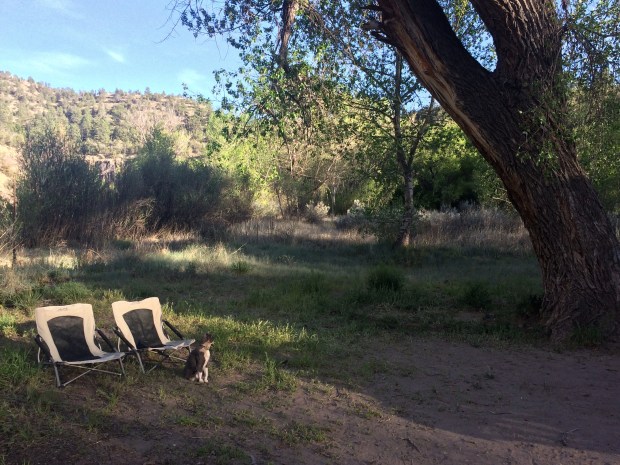
But we already had a site we’d found the night before that we loved, so we were happy to return to our little house by the river.

IMG_1614

IMG_1794

IMG_1598

It was a great place to relax and catch our breath before moving on to the next National Park! It was also a great place for catching other things too.

IMG_1816

After returning our new friend to his home by the river, we returned to the road—the Turtle’s natural habitat! And on to the next National Park—the Turtle’s second home.

Albuquerque to the Ojito Wilderness, New Mexico

Before a month ago, neither of us had ever been to New Mexico, and both of us were super excited to explore the state. It certainly never disappointed! (Except Taos; that city didn’t live up to the hype at all.)  We loved Santa Fe and Diablo Canyon, and next on the list was a night in Albuquerque on the way to the Ojito Wilderness.

We went to Old Town in Albuquerque and walked around the shops, had tacos for lunch, chatted with some charming locals, and visited the historic church in the middle of Old Town.

img_9130

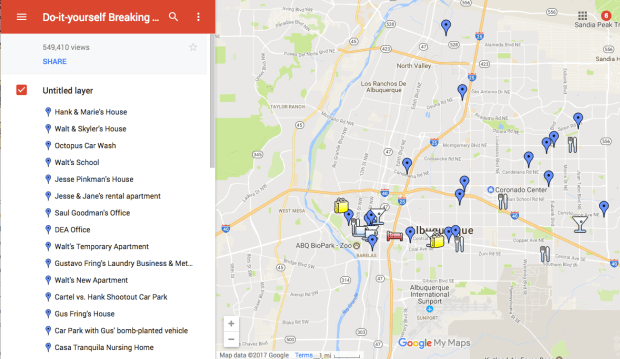
While we were in one of the touristy shops, I noticed a whole wall full of Breaking Bad paraphernalia. We remembered that the show was set in Albuquerque, and as we walked through Old Town, I saw a flier for a Breaking Bad tour that takes you to a dozen or so places from the show. Andy wasn’t a fan of the series, so he watched me curiously as I frantically found a post from Lonely Planet with a map of a do-it-yourself Breaking Bad tour and ran for the Turtle.

screen-shot-2017-03-02-at-2-36-50-pm

I didn’t want to take over Andy’s day with my Breaking Bad fandom, so I picked a few of the locations I most wanted to see, and luckily (for Andy) they happened to be fairly close to one another.

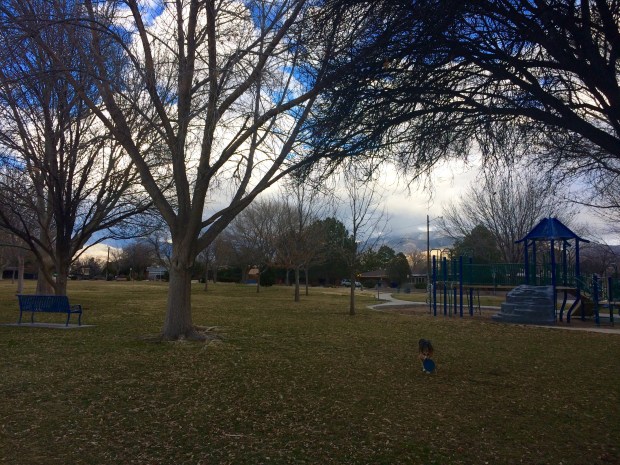
First, we went to the park where Mike always went with his granddaughter.

img_9139img_9154

And of course we had to go to Walt and Skyler’s house, which has been painted and gated.

img_9162

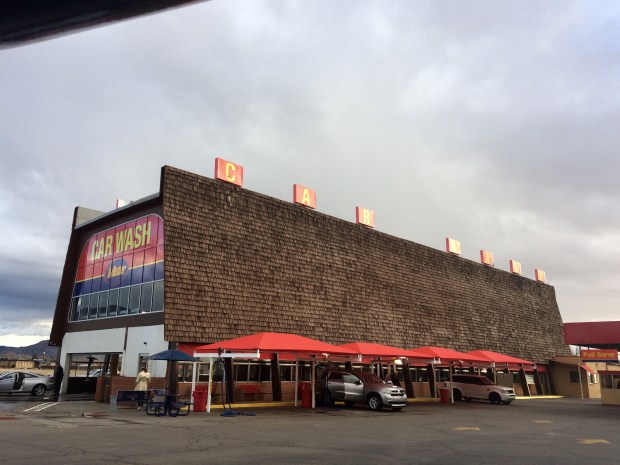
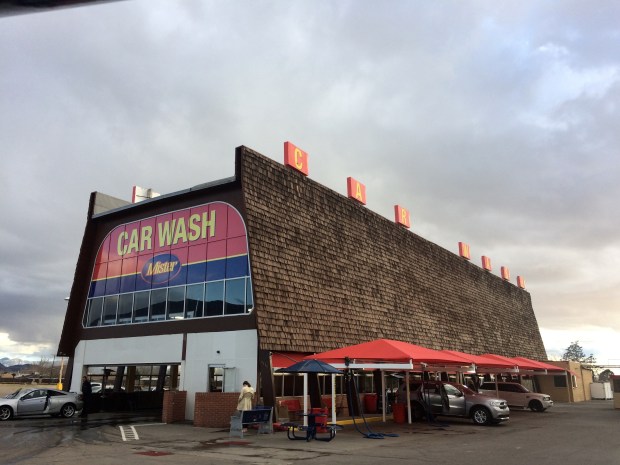
And the A1A Car Wash!

img_9169img_9170

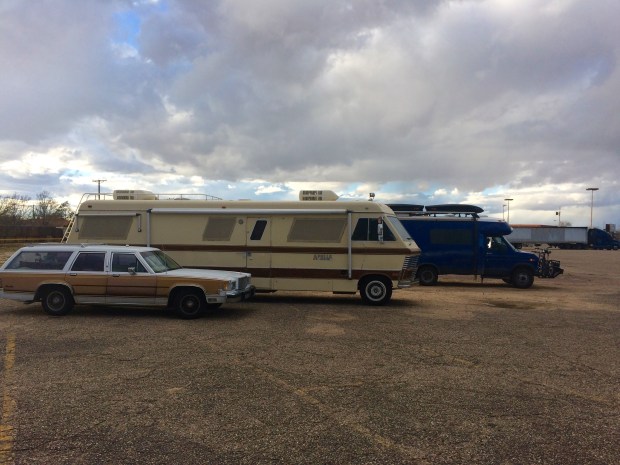
In the far end of the car wash parking lot, we ran into a familiar-looking RV. It’s not the same one, but close, and we guessed that it’s part of the $75 tour we saw advertised, which was arriving at the car wash as we were pulling out.

img_9179

We also ran by Gus’ Laundromat, but the sun had almost set so we just looked and then went and grabbed a beer at the Red Door Brewery, just a few doors down.

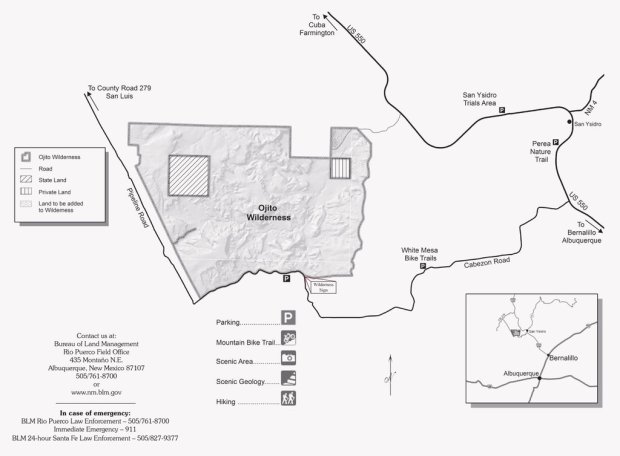
The next day, we got supplies and drove to the Ojito Wilderness, about 45 minutes outside of Albuquerque.

img_9220

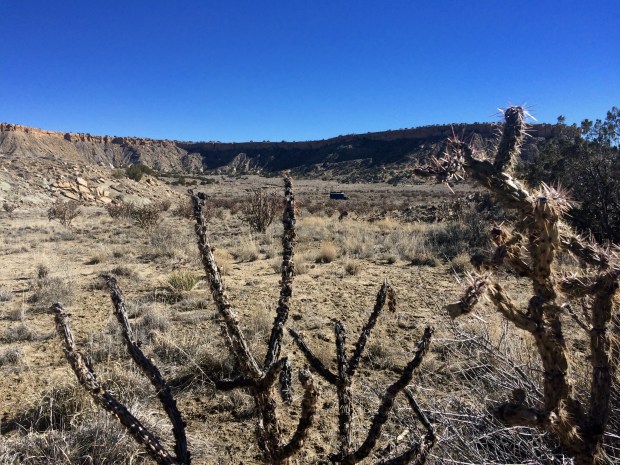
It’s a gorgeous desert spot on BLM land just west of San Ysidro. Lots of people go there to ride bikes on the White Mesa Bike Trails outside of the wilderness area, and to shoot guns various places just inside the entrance.

6168_thumbnail-1024

We kept driving in until we got to the Hoodoo trailhead, on the west side of the wilderness, where we made camp—a.k.a. parked the Turtle and opened the door.

img_9231

Ojito is a great spot because you have access to over 11,000 acres of wilderness! You have to park on the edge of the actual wilderness area, but it’s all BLM land so you can hike in and camp anywhere you like. There are two marked hiking trails that get you out into the wilderness, or you can just blaze your own trail. We did both, and loved both equally.

img_9248img_9257img_9270img_9278

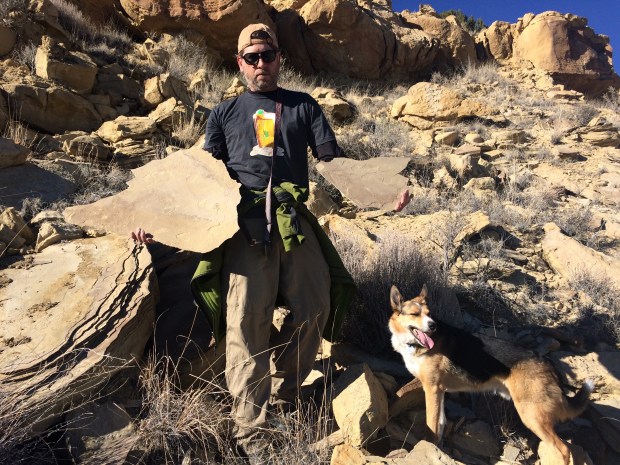
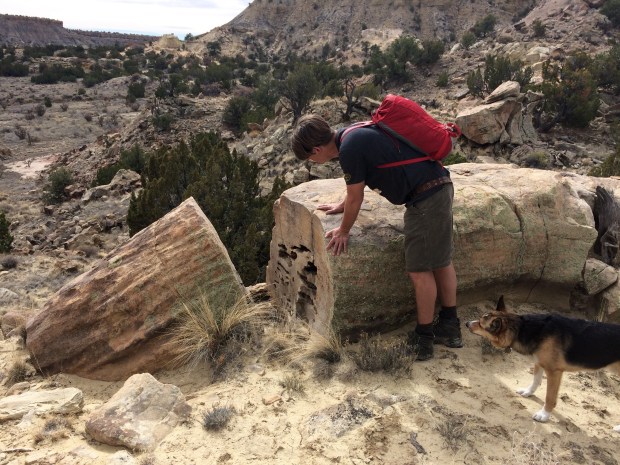
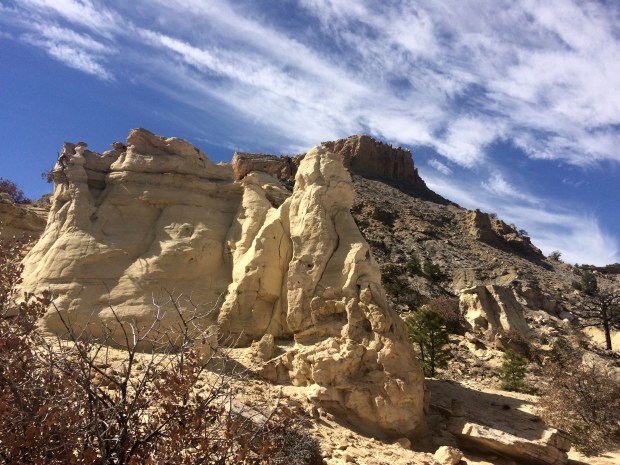
The rocks and formations out there are diverse and lovely. There is an abundance of sandstone, gypsum, quartz, volcanic rock, and even fossils, which of course you can’t take but are really fun to find!

img_9550img_9280img_9285img_9336img_9334img_9335img_9352img_9370

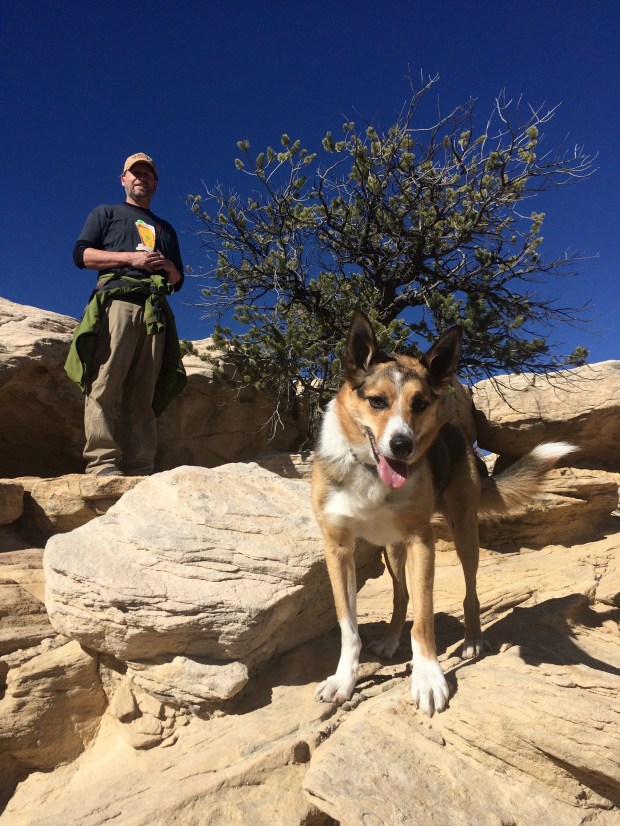
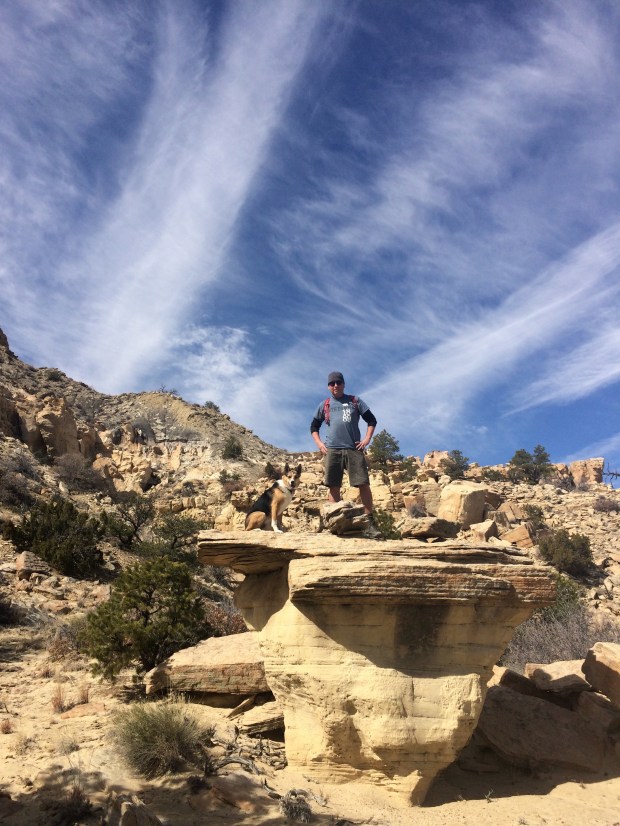
I’m beginning to suspect that the desert is Andy’s natural habitat.

img_9398img_9403img_9404img_9310

Gracie loves it because she gets to run and roll in the dirt all day, nap in the sun when we leave for hikes, and ever since she learned to climb the ladder at Diablo Canyon, she’s made the top of the Turtle her personal patio.

img_9437

Check out this enormous sliced cucumber rock!

img_9445img_9458

Both animals were so happy here that they were even more sweet with each other than usual. This is what I woke up to on my stomach one morning:

Gracie was so pleased that we finally found sunshine that she did her best to soak it all up, and I think she succeeded.

img_9470img_9477

On our last day there, we got a day without wind, which was exciting because the previous two days we were hit so hard that Gracie and I opted to stay inside and read all day! We celebrated the sunny day by taking our favorite four-hour hike for a final picnic and rock-collecting mission.

img_9482img_9485img_9500img_9507img_9538img_9584img_9585

We left this idyllic site only because we saw rain in the forecast, and the dirt roads would be nearly impossible to drive on for a Turtle if we were caught in wet weather! So we began our journey south to Roswell, not knowing that halfway there we’d decide to make a last-minute detour to Oklahoma City to see our friends Beth and Jonathan!

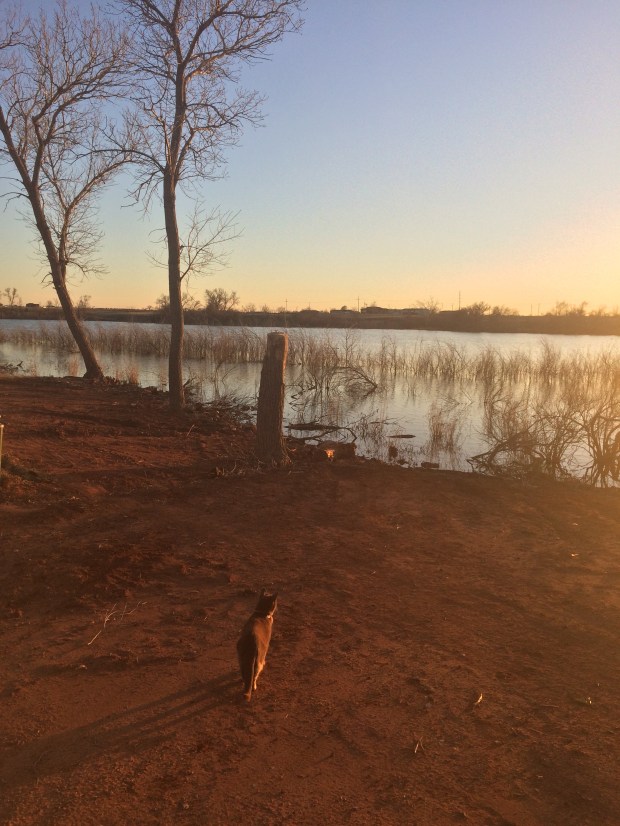
Which is why as I write this, we are in Elk City, Oklahoma. We found a great free spot for RV’s just south of town on a lake, and it even has water, electric, and lot of nice red dirt for Gracie to roll in! So everyone’s happy.

img_9783

img_9803

Two Weeks in Diablo Canyon, New Mexico

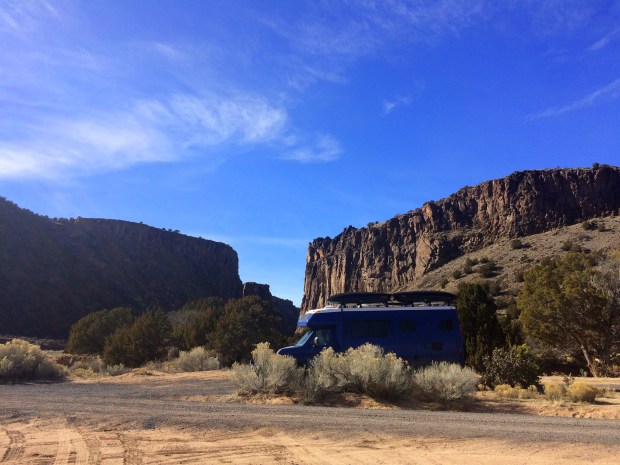
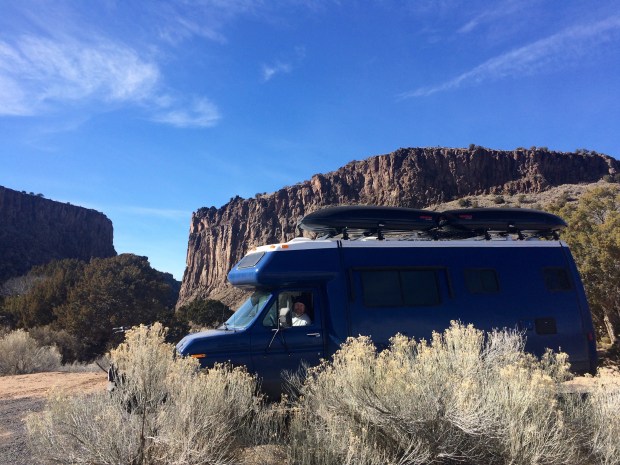
One of our favorite places to “live” is on BLM land, and if they didn’t have a rule that you can only stay a maximum of 14 days, we would likely still be in Diablo Canyon right now.

img_8205img_8213

We were looking for some sunshine, and we got it! This spot is great. It has four primitive camp sites, which is our favorite since we come equipped with everything we need, and we get far fewer neighbors.

We did see loads of people, though, as it’s a really popular spot for climbers. The edge of the canyon is a really clean vertical, and we saw climbers up there every day.

img_8441

The weather was warm and sunny, and we all got to do our favorite things outside.

Andy got to work on the Turtle.

Scout got to go for 3-hour walks and hikes almost every day.

Gracie got to roll in the dirt, climb things, and explore outside. She just learned how to climb the ladder to get on top of the Turtle, and now we’ve gotten used to hearing the thumping of paws on the roof!

And I was in rock-collecting heaven. Everywhere we walked there was an endless array of beautiful rocks, and my pockets were constantly full. I couldn’t help it!

Over the course of our time there, we hiked to the top of the canyon, around the opposite edge of it and up and over, and all the way through to the Rio Grande.

img_8705

We played all day, and earned our naps.

img_8560img_8382img_8269img_8547-001

After a day of exploring, we were happy to put our feet up and watch the desert sunsets, around the fire or under the awning wrapped in blankets.

img_8222img_8532img_8537img_8529-001img_8609-001

We also met our neighbors, full-time travelers Eric and his darling dog Willow, and spent some time with them swapping travel stories. They’ve been all around, and also blog about their time on the road here. Go say hello! 🙂

They even gifted a squeaky stuffed worm to Scout, which he loves and has been dropped into our lap many, many, many times. Thanks guys!

img_8519

On our last day there, we woke up to a bizarre surprise:

img_8829

Snow!

We thought that was pretty well timed, since we’d reached our 14-day limit! So we traveled back into Santa Fe to plan our next desert destination.


Let’s Refurbish a Van – Part 6: Roof Rack (by Andy)

A post by Andy

{Note: The work detailed in this post was completed over the summer of 2015, before we moved into the Turtle. I am just getting the time to write the post now.}

So, we have stuff to carry. And we want a place to store our solar panels. And we want to stay cool. And, if possible, look cool. So, we need to put together a roof rack…

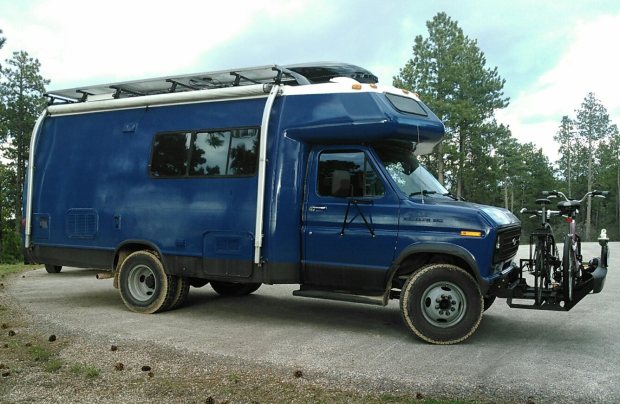
Here are a few pictures of the old RV when we got it. It had an aluminum ladder that was old and worn, along with the typical RV aluminum tube luggage rack at the back- all bits with some of the mounts loose. We also had a big plastic storage box bolted to the top, but it was cracked and would certainly leak. As you can see, there was also one solar panel and a mount for what I’m pretty sure was a TV antenna. Good stuff, but it was all pretty worn, as it had all traveled for close to 30 years and more than 250 thousand miles.


We wanted our rack and top equipment to do a few things for us:

  1. Have a dry and accessible place to store camping and fishing and other fun gear, out-of-season clothing, and some spare parts and equipment.
  2. Have the rack removable, so we can maintain and fix the roof when the need arises.
  3. Have a location to mount the planned solar panels.
  4. Design the rack to provide us shade.
  5. Have a system that we can change, add more solar to, move things around, etc.
  6. Be able to fill and seal up all the holes prior people made when mounting things to the roof, and have a system where moving forward we will not be drilling into the roof any more.

Anyway, roof racks look great! I hear they can be useful too. In truth, we have pretty limited room and storage inside, so having a bit of room up top for our extra supplies and garage-like stuff was essential for a successful voyage.

So, to the step of getting the old stuff off and sealing up the holes. Pretty much unbolt the bolts and pry everything else off. I then used fiberglass impregnated epoxy body filler for all the big holes (I love epoxy!), maybe adding wire to support it as it cured. I then added Geocel Proflex on the seams. I read about and tried a few things, but to date, it is my go-to for exterior sealing. Here is a link.

For the (many) smaller holes, I would first clean and fill with the Geocel, then screw in a stainless steel screw the size of the hole, then cover the head of the screw with another layer of Geocel. It is a technique I read about on the internet, and it seems to have worked well so far. Again, it is not worth buying any hardware but stainless or grade 8. It does cost a little bit more, but use the savings you get for doing this yourself to get the good hardware. Plus, you don’t have to worry about some interior rust and redoing the work down the road. After sealing the holes, I put down Rustoleum on all the modified spots. The following pictures show the antenna hole through the roof, and some of the removed parts scattered in the yard.

We were lucky enough to have a friend who worked for Yakima who gave us a VIP discount card for one purchase. With the card, we got 12 A1 rain gutter towers, 6 78″ crossbars, 12 wide body rain gutters, end caps, two 12-peice lock core sets, a Loadwarrior basket, and some cargo nets. A truly impressive amount of wonderful Yakima pieces at a great savings. Boxes and boxes of sweet components!

From REI, Amy and I used our one-item 20% member discount and each of us bought a Skybox Pro 12, shipped to the Portland REI for free. We got the long and narrow boxes to configure end-to-end, and not take up too much roof area width-wise. We effectively have the roof racks for 4 vehicles, all to put up top the Turtle. It added up to a lot of initial investment, but it has been working well, and added an important comfort to be able to store a reasonable amount of things to make our small world flexible, and I think it actually has a sleeker look being made from components—as opposed to a custom-fitted rack. Since we were doing all the work ourselves, we decided to invest a bit more on some nice new hardware. After popping down to REI and loading our new Skyboxes (in their own boxes) onto the top of the old Scout, we stopped for a bite in downtown Portland. Seems fairly reasonable to me, but I imagine to some people we made a sight…

The sky boxes, along with the other hardware, sat in the house for quite awhile. After stripping and sealing the roof, it was only logical to finish painting the Tutle blue, then do the white roof paint, and then finally get to the point where we could install the new roof rack. Consequently, this is what our place looked like for quite an amount of time. (As you can see, our front room was used to store a number of Turtle parts until they were ready to install.)

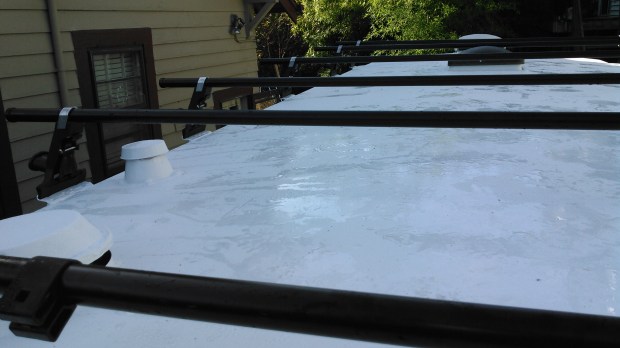
The pictures are few here, but after most of the painting was finished, I mounted the wide body mounts. I measured, marked, measured again, checked, and had the geometry figured out. On the corner of the Turtle roof, I would drill my two holes, fill with Geocel, cover the mounting surface with Geocel, align the bracket, screw in two (you guessed it) stainless steel lag bolts, then cover the seam and outside with Geocel. After it all cured, we repainted with the Interlux. It looked nicer with the black brackets and shinny bolts before the sealant and paint, but I didn’t want to risk it. And, just so you know, the asymmetric spacing along the length of the roof is due to needing to align the crossbars so they will not interfere with a roof vent when open, but also allow for the mounting points of the skyboxes. Here are the brackets installed:

kimg0798

It is a nice feeling to know that at any point we could unlock (all keyed alike, now) the 12 towers, unscrew, and remove the whole rack if we had to do some maintainence on the topside. Anyway, the pictures are limited at this point, but following are some involving the tower, crossbar, and rack install.

kimg0804

You might notice that the Yakima basket lost out to the solar panels. The basket is in the storage unit presently, and it would be great to get it up there at some point. When we were building and installing the rack, though, the geometric logistics were far too difficult for the time allocated. Anyway, to install the solar panels, I bolted two pieces of 12′ 6061 T6 aluminum square tubing to the crossbars with stainless steel carriage bolts and nuts fitted through the Yakima Universal Snaparounds.

I picked up used ones super cheap here. By the way, ReRack in Portland are nice people and can save you some money on roof racks, so check them out if you are in the area. Back to topic, after getting the aluminum properly spaced and installed, I then drilled and screwed the solar panel brackets to the the aluminum. That step was a breeze. Solar panels installed, photo taken probably a month in.

kimg0938

As to keeping it all cool. We planned on (and did), paint the roof surface with a couple of coats of Interlux topsides white boat paint. We actually painted the roof vent covers white as well. The assumption is that paint will reflect much of the sun’s heat, and be able to withstand the UV rays. So far, everything looks pretty good up there. We have some cracks in the paint where the caulking we used was not completely cured before we painted (I don’t blame the paint, we had time constraints), so we have some washing and fixing of some seams to do. Otherwise, all looks pretty good. A common approach for keeping a bit cooler is to have a couple of roofs, effectively carrying your own shade along with you.

The above old-school Rovers have a second roof with an airgap for passive cooling in the hot sun. (Side note, did anyone notice the tall skinny tyres the rovers are running on?) With the spacing added from the rack towers, and mounting the solar panels and boxes above the crossbars, we have a impressive air gap and continous shade on over 50% of the roof.

Currently, there is a middle strip free for walking, in which I will fit an additional panel at some point, then simply make some cheap synthetic or plywood panels and paint them white to increase our shade to close to 100%. So far, though, we have been to the Badlands of South Dakota in the summer, and have stayed with the ambient temperature with thoughtful venting and minimal electric fans.

To me, the goal is not to be cooler than the outside, all we need to do is not be hotter than the ambient temperature in all kinds of weather.

kimg0184

Oh, almost forgot, we want to access the roof! We need to clean the solar panels, get stuff into and take stuff out of the boxes, check on all the paint and seals, and most importantly, be able to climb up and yell with arms outstretched like you are in a movie! Anyway, the ladder…

We actually bought a car roof rack ladder as a start. The almost $200 ladder (seems crazy) was well worth the money, in the time saved. It always feels pretty weird to buy something new, remove it from the box, then start cutting it right away. So, the ladder, welding, adding more rungs for the proper length, and fixing the folding function.

Some close-to-final pictures here. We started with a 9-rung foldable ladder, and ended with a 12-rung rigid ladder that bolts to the bumper and the top rack. Again, it was designed to bolt to the bumper and rack, so it is removable…

I’m pleased with the removability of the ladder, because we crushed it a bit when we backed into a tree one day, about a week after it was finished and installed. The ladder was subsequently unbolted, straightened, and remounted. From the side, it now does have a bit of ripple (below the designed joint and by the spare tire)—this is what we call life.

kimg0186

To sum up a bit, up in the boxes right now we have a few fishing poles, extra wire and parts and unfinished projects, cloth for sewing projects, extra window insulation, snow shoes and masks and fins, river tubes, my old tent. A pair of driving lights I have yet to wire up. Some cheap speakers I plan on installing in the doors. You get the picture. We call it our attic.

img_1863

We have a completed rack now. It holds our solar panels, is our attic, and still has room to exapand.


Let’s Refurbish a Van – Part 5: Suspension (By Andy)

A post by Andy.

{Note: The work detailed in this post was completed over the summer of 2015, before we moved into the Turtle. I am just getting the time to write the post now.}

We wanted a little more ground clearance, fender and frame spacing for the taller tires, and a good, safe ride. We initially hoped to find an off-the-shelf lift kit. . . no soap. People make them for Ford trucks and Broncos, nothing for 80’s vans. I suppose that makes sense; the van market must be pretty small. So I guess we’ll just have to design and install a complete suspension overhaul and customization ourselves. This is where we started…

KIMG0366.jpg

In the front we have what Ford calls a twin I-beam suspension with what I infer is an aftermarket sway bar, and the rear is just a simple leaf spring configuration, though there are functional aftermarket Firestone airbags that have been added.

Let’s address the rear first; that is comparatively easy. We found some 2″ lift blocks from Action Van (http://www.actionvansuspension.com), that fit between the axle and leaf spring. Action Van actually makes full lift kits, but only for ’92 and newer Ford vans. Lucky, the rear suspension was the same, so we were able to use their blocks for the back.

With some breaker bars on the end of the socket wrench and a little groaning, the blocks were pretty easy to install. Lots of jacks and heavy-duty jack stands were employed in this step! Here is a poor photo of the suspension when I was starting the modification.

1433618343139.jpg

Here is a photo of the installed blocks. Always remember that it is a good idea to drive a bit and then retorque all the bolts for suspension components after making changes- things can settle under the vibration.

kimg0176

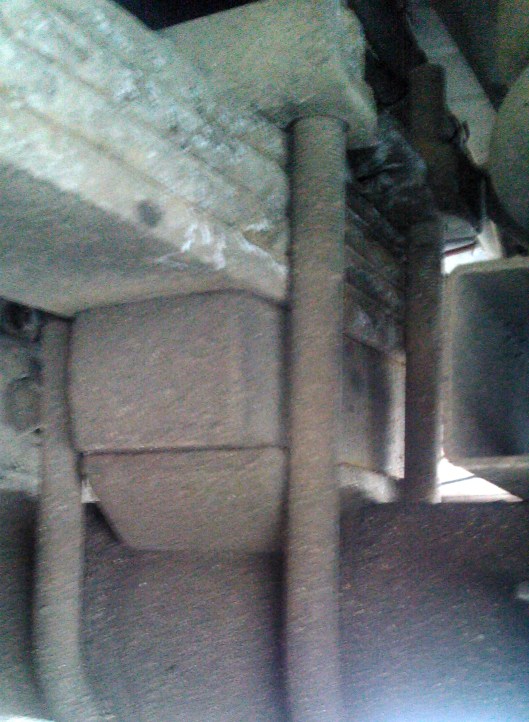
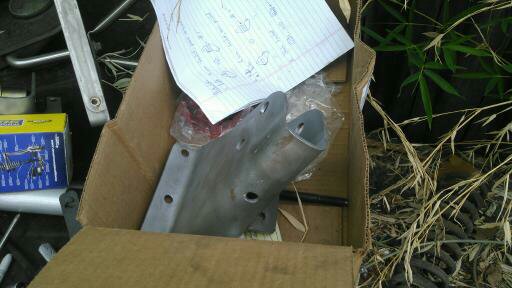
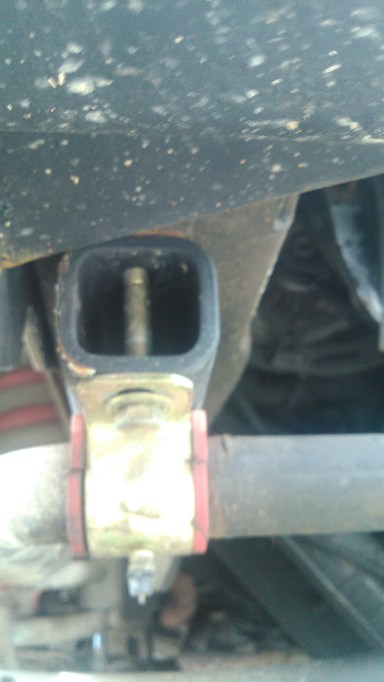
After adding the lift blocks, the rear airbags were adjusted by cutting, drilling, and painting 2″spacers from hollow square tubing and bolting into place between the axle and bottom of the air bags with new grade 8 hardware. Sorry for the bad photos (at the time, the important thing was to get stuff done, so the documentation suffered), but what you can see in the following is the original airbags and the blocks and hardware cut, drilled, and painted.

And a current photo of the final installed version- a little dirty, as we have been trekking about for a little over a year now.

Pretty straight-forward modification, and after a few thousand of miles everything is very solid.

cropped_1

Now the front suspension. The modifications needed were: 1) taller coil springs 2) adding air bags 3) fitting the new shocks 4) dropping the sway bar 5) dropping all 4 I-beam pivot points 6) replacing all the suspension bushings in the process.

I was able to find taller MOOG coil springs and front airbags, cranked everything apart, and got those pieces installed.

You can see that at this point with the added spring height but no change to any of the I-beam pivot points, the camber is extreme.

KIMG0371.jpg

The next step was to remove the suspension mounts. This was a true pain, as there were many frame rivets to remove. Depending on the accessability, I would drill, grind, hammer, cold chisel, or simply swear at for long enough to remove. I would consider it a solid success if I came home from work, spent all evening, and got only one removed. I blocked it out, but there were somewhere between 16 and 20. Anyway, after getting the pivot points removed, I made some drawings describing the desired changes needed to drop the pivot points 2″ lower, then took the parts to a fabricator. I weld myself, and made the grill guard, and all other metal modifications on the Turtle, but I wanted really great welds on these parts, so we paid to have someone with more skills do the modification. Plus, it was pretty darn magical to just drop the parts off and pick up the finished pieces a few weeks later. So, some of the suspension pieces back from the welder:

1440187262716

Painting, almost ready to install. I had ordered new MOOG bushings for all the pivot points, so these were installed at this point too.

1440192040722

Except for reusing a few special Ford bolts, the bolts and frame rivet locations were replaced with 1/2″ grade 8 hardware. Some current pictures of the completed front suspension.

Here is a photo of the dropped sway bar pivots with the new greasable bushings installed, again, everything is grade 8 hardware. I never buy anything else (except maybe stainless for chassis fixturing or the interior).

kimg0182

New Bilstein shocks were ordered for all four corners. The stock fit for the rear has enough travel to handle the 2″ lift, so we got the heavy-duty RV ones, and that was easy. We had to calculate the new front geometry to size the front, and went extra fancy with the front shocks and got an external reservoir setup. They look cool! (I ordered them from shockwarehouse.com, part number 25-177480 and 24-184663.)

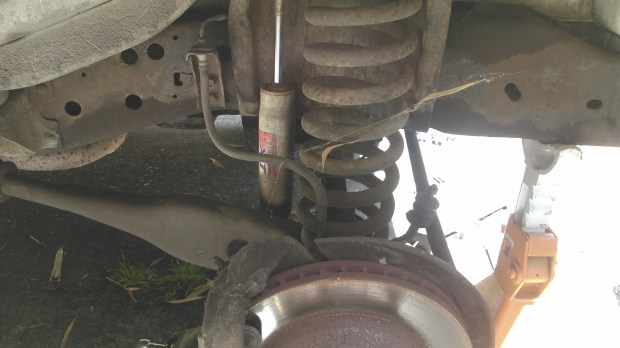
Here is the front suspension a year into our travels. I was replacing the brake pads, so I took the opportunity to clean everything up, and also paint the hub with Rustoleum. We have had no problems with the suspension thus far.

kimg0047

The lift was added to enable us to have the taller tires, and to have more ground clearance. There have already been a number of cases where we figure we would have likely damaged something on the underside if we did not have the clearance we have. Additionally, with the clearance and narrow tires, we have made it through some pretty deep snow without problems. It has proven to be a successful modification. Plus, it makes the Turtle look cool!

Sleepin’ On The Streets: A Beginner’s Guide To Boondocking

One of my favorite Andy quotes happened outside the Baghdad Theater in Portland a few summers ago, when we still lived in a house.

We were sitting on the patio after a matinee, drinking a beer and talking about how excited we were to begin our upcoming vandwelling life. I said something about wishing we lived in the Turtle already, and how much fun it would be if we could just walk a block down Hawthorne and be “home.” Andy beamed and said, “Isn’t it exciting? By this time next year we’ll be living the dream: sleeping on the street with our half-wild dog and our garbage cat.”

It’s become our motto.

On that note, I recently realized that I’ve neglected to discuss a topic that is super fun and potentially useful to other wanderers, so. . . let’s talk about boondocking!

img_0842A place we lived for a night in Corvallis, Oregon

One of our favorite things about full-time vandwelling is the freedom we have to roam around without worrying about where we’ll stop for the night, allowing ourselves to really live in the moment. We have the ability to go where our interests blow us without worrying about planning around a place to sleep. At this point we’re a year into off-grid Turtle Life and feel completely comfortable and confident pulling over and finding places to stay overnight, but when we started out it was pretty daunting and we spent a lot more money staying in RV parks and camp sites when we didn’t need to. I know we still have lots to learn, but I’m here to share what we wish we would have known a year ago!

*An important note here is that the type of boondocking I’m referring to is not a long-term off-grid stay in the woods. I’m talking about the type of boondocking common with full-timers, which is traveling down the road and stopping for the night as we pass through an area, waking up, packing up, and continuing along our travels. Once we get into long-term boondocking, we begin talking about on-board fuel supply, second alternators, etc. and that’s a whole different conversation.

img_2263
Some BLM Land near Jewel Cave National Monument, in South Dakota

It’s so liberating to realize how easy it is to get around when your house is on your back and you can just stop wherever you want! But you do need to get equipped first.


Let’s start off with the things we’ve determined necessary for comfortable boondocking:

  • Heat supply: Diesel or propane
    • We’ve got a propane heater wired into the Turtle which is wonderful, and effective in heating up our small space quickly. Diesel works great too.
  • Power supply: Either a generator or solar panels and batteries
    • Andy will write a technical post on this one at some point. Lots to say here! We’ve got solar panels and three batteries that, with regular sun, will keep us charged indefinitely. This includes our computers, interior lights, etc.
  • Water storage
    • The Turtle has a water tank plumbed to the sink and bathroom, but when we bought it the water pump wasn’t working, and we lived happily with refillable water jugs for a good long time.
  • “Some sort of bathroom” is how Andy worded it. . . 🙂
    • If you have a bathroom in your vehicle it’s pretty magical! If you don’t, you can get away with boondocking at rest areas, and using the facilities at the big box stores that let you stay overnight, and of course there’s always the great outdoors. (Andy suggests empty jugs, but he also lived way out in the bush in Kenya for a number of years, so. . .) But if you’re deciding between two vehicles and one has a bathroom, I recommend the one with the loo. It just frees up loads more off-grid options.
  • Food storage and preparation
    • This can be a simple plan, but it’s worth adding to the list. Keep some food with you and have a way to prepare it. You know, like life.
img_2968
Breakfast in Garnet Ghost Town Parking Lot

Now let’s talk about where you can stay:

  • Wherever you want!
  • Just kidding; there are restrictions. But fewer than you might think.

As I mentioned, when we started full-timing we weren’t sure how the boondocking was going to work out. Most of the literature we read about full-timing was written by and for an audience who planned on spending most of their time in RV parks. We enjoy when we stay in parks very much, but we’ve primarily got our sights set on simplifying and being independently mobile. Also, there were a few books we read in which the author was paranoid about getting harassed by the police for staying somewhere overnight, and at first we thought it was something to hide and be nervous about. (It’s not.) So it took us a while to find what worked best for us, and what we discovered is that there are loads of legal options!

img_2766
Public land somewhere between Bozeman and Missoula, Montana
img_2798The sunset at that spot, later that evening. . . a pretty nice backyard
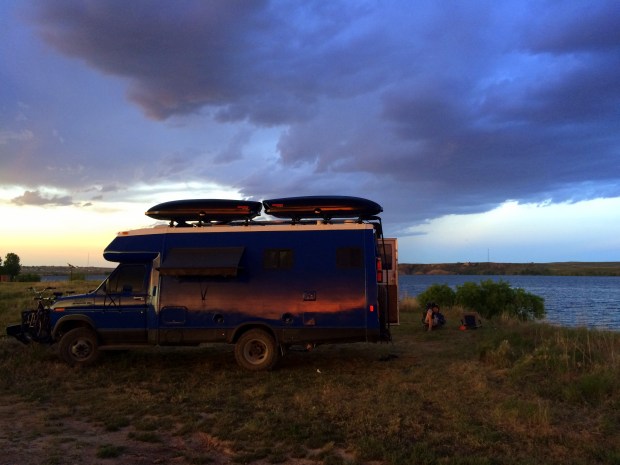
Here are the things we’ve learned about where it’s legal to stay overnight:

  • Most states that we’ve researched allow for overnight parking unless otherwise posted, usually for 10-12 hours max. And where it’s not allowed, it’s very clearly posted. And where it is legal, you can usually find signs stating the rules.
  • This includes parking in towns, because in the states we’ve visited at least, it’s only illegal to “live” in a vehicle on the road for more than 72 hours. It will likely vary from state to state, but we’ve never had any trouble just staying overnight in an area that didn’t have posted parking restrictions.
  • Lots of spots that allow overnight parking will post “No Camping,” which we have learned means that you can’t have a camp fire, put chairs outside, extend any slide-outs, or roll down your awnings. Basically you can’t do anything but park, which is all we need! I always thought it meant no overnighting of any kind, but you can stay there as long as you don’t start setting up your living room outside your vehicle.
  • Rest stops are actually places to stop and rest! We see lots of other RV’s and vans parked overnight at rest stops now that we’re paying attention, and the nice thing is that they’re usually well-lit, have bathrooms and potable water, and often have nice spots to walk the dog (and if you’re us, the cat). It had honestly never occurred to me that you could spend the night at a rest stop, because I’d never needed to. But there you go!
  • We’ve enjoyed very much the realization that you can stay at scenic viewpoints and historic pull-outs along the interstate. Again, each state determines how long you can stay, but in our experience it’s always a night’s sleep worth—around 10-12 hours or so. We’ve woken up to gorgeous views of towering rocks and rivers in the middle of mountain ranges that we would have just blasted through. A lovely and novel spot to drink coffee while the dog does his morning business.
  • BLM land is available for dispersed camping, and has been a favorite of ours. According to their website, “camping on public lands away from developed recreation facilities is referred to as ‘dispersed camping.’  These sites are widely dispersed, undeveloped, and are generally not signed as campsites.”  You can stay for up to 14 days, have camp fires as long as you monitor them closely, and it’s a great spot for the pets to run and play.
  • As many of you know, lots of big box stores and travel plazas allow for overnight parking. We haven’t done that as much, because we love grass and so far there has been a lot of grassy spots available to us. But it’s an option, and a nice one if you need to grab supplies too.
  • At first we thought when parking in town we’d be happiest parking somewhere quiet without night traffic, like by a park or school, but then decided that a van parked overnight by a school could attract negative attention. After a fair number of trials, we’ve found that we’re most comfortable parking on—or on a side street of—the main drag of smaller towns. There’s not much night traffic typically, and it doesn’t look as sketchy to the neighbors if a vehicle is parked overnight on the road under street lights as it would in front of their house. Even though it’s legal to park in neighborhoods, we like to make sure that we’re not imposing on anyone either. Not to mention if we’re near any night life, we can explore town, hang out at the local spots, and then just walk 10 steps home without designating a driver. Safety first, guys.
  • There are bunches of resources for people like us, to help avoid the sometimes-annoying driving around looking for the ideal spot. The ones we like best are:
    • Overnightrvparking.com: Our first favorite, and the one that got our boondocking education started. It shows on a map where there are free places to park for the night so you can plan ahead. It tells you if it’s a rest stop, scenic viewpoint, etc. and what facilities are available at that spot. This site is user-driven, but the administrator evaluates all submissions and posts whether or not the spots are legal and safe. It was just $25 for the year, and right away we got well over our money’s worth for it!
    • Allstays.com: We love this one because it lists everything. As their website states, it shows “Over 29,000 Campgrounds: Independent, KOA, National/State Forest, State Parks, Public Lands, Army Corps, National Park, Military, County and City Parks, Casinos.” It tells you if it’s free or has a fee, how much it costs, and what amenities are available. The app also lets you see where there are dump sites, propane, potable water, and other resources. It’s a must-have.
    • iOverlander: Much like Allstays it’s got everything, but includes a lot of information about places to stay outside the United States and additionally shows points of customs and immigration.
img_1990That time we lived on a lake

The very best part of an off-grid traveling life is that we get to try out being locals in towns all over the states, every day! We’ve really enjoyed the simplicity and flexibility it affords us, not to mention how inexpensive it is to visit new places. We can wake up in a city one day and in the woods the next. I can’t believe I waited this long to figure out that this was possible.

A lot of people are curious to know if we feel anxious about boondocking, especially in towns or populated areas. At first, yes, we were very aware of the fact that we were on a street and in an unfamiliar town. We took a very long time to find a spot, and when we found one we were careful to stay quiet and keep a low profile. After we understood the rules, though, and got a feel for what worked best for us, that completely dissolved. Now what’s remarkable is that we’re so used to it that when we close the door, we’re just home. We watch movies, listen to music, have friends over when we’re in town, and pop right out the back door in the morning to walk to a coffee shop or let the dog out. It’s so exciting to wake up in your own house, cuddled up to your person and your pets in your own warm bed, and in those first few seconds not to remember where you live!

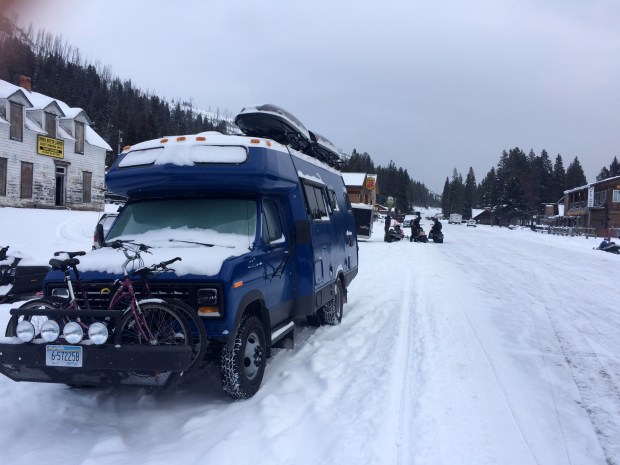
img_6483Cooke City, Montana. . . The morning we woke up to the roar of a town full of snowmobiles!

Every day really is a new adventure. And we’re ready to see what tomorrow will bring!